
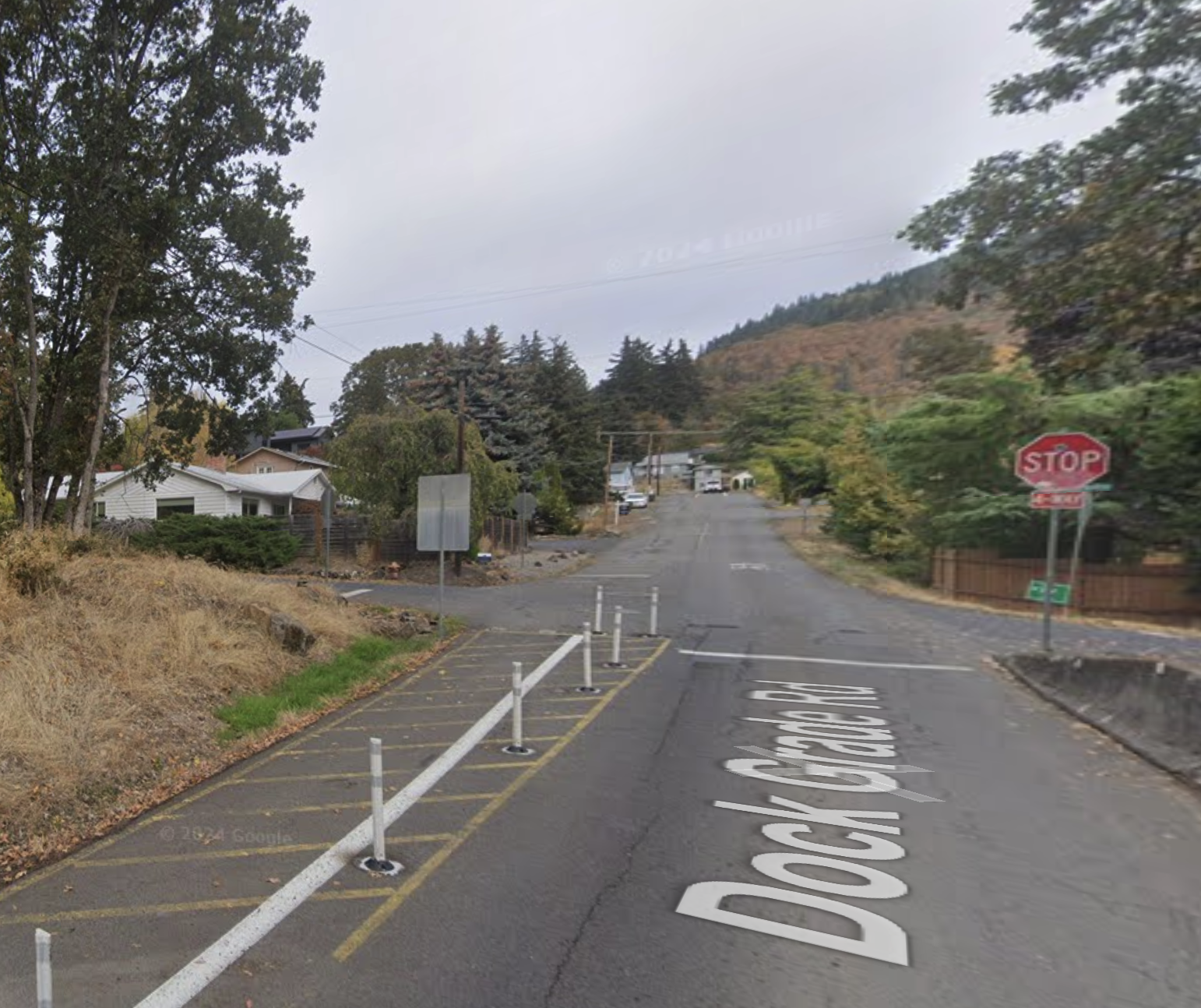
White Salmon considers Fed grant to remedy city’s highest crash risks
White Salmon will pursue federally funded safety upgrades at high-crash intersections and along Jewett Boulevard, targeting stop-controlled intersections and lighting improvements outlined in the city’s 2025 safety plan.
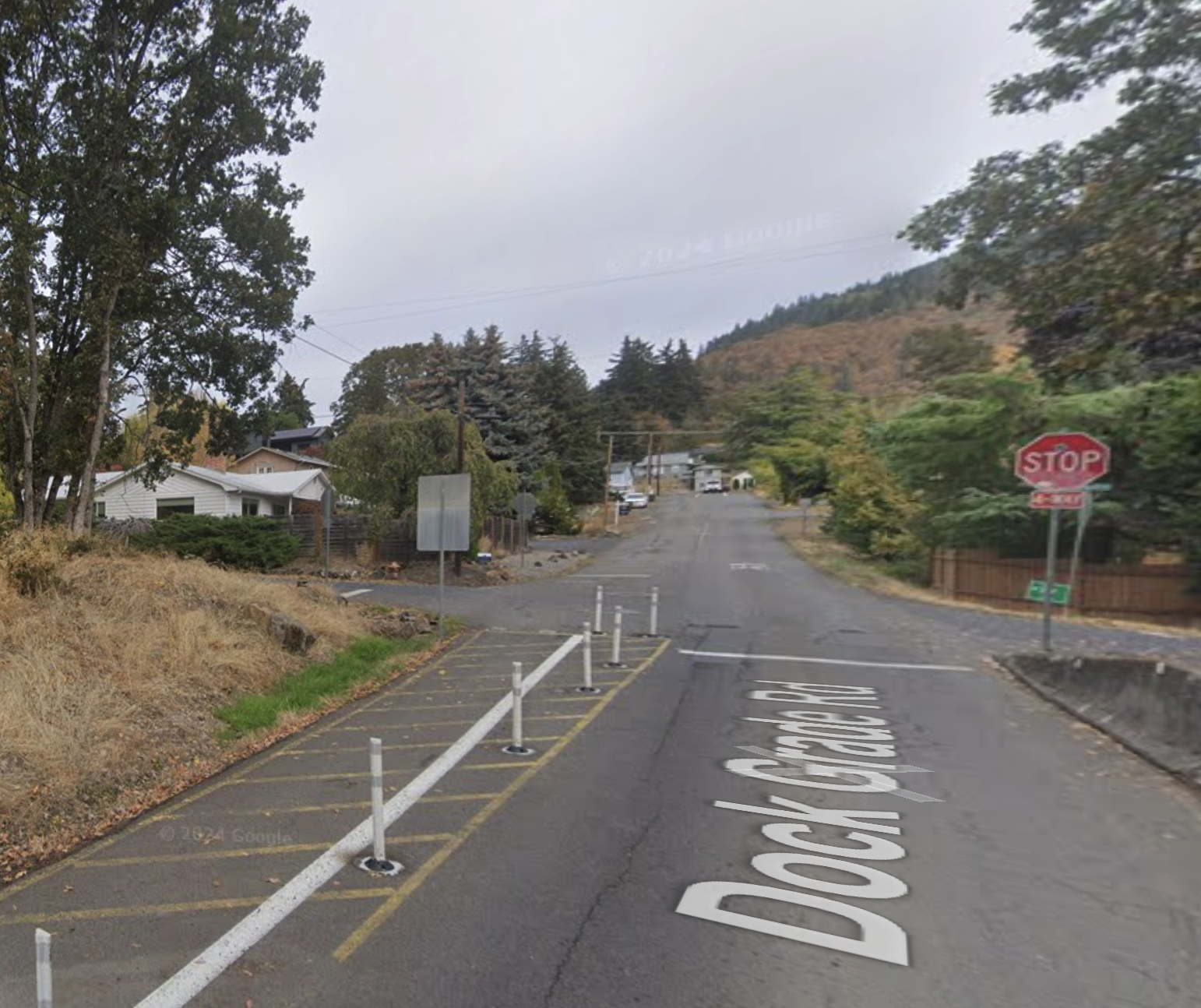
Intersection of Dock Grade Road and Oak Street is one intersection under consideration for improvement.
White Salmon, Wash., March 2, 2026 — White Salmon City Council will consider pursuing federally funded roadway safety upgrades targeting intersections and downtown corridors identified as the city’s highest crash risk locations.
At its March 4 meeting, the council is scheduled to authorize the Public Works Director to apply for Highway Safety Improvement Program funding for two related efforts: systemic improvements at stop-controlled intersections and downtown corridor lighting upgrades along East Jewett Boulevard.
The grant program offers up to 100% federal funding with no required local match if authorized within the eligibility window. The meeting packet does not include a total estimated project cost, but it does provide general planning-level cost examples for common safety treatments, including:
• Intersection lighting: estimated $75,000
• Signal hardware improvements (lenses, back plates, mounting, size, number of heads): estimated $40,000 per intersection
• Signal timing improvements (coordination, phasing, clearance intervals): estimated $1,000 per intersection
• Left-turn lane/turn phase-related signal improvement: estimated $12,000 per intersection
• Pavement marking and raised pavement markers through an intersection: estimated $2,000 per installation
City crash analysis for 2019–2023 documented 76 crashes, including two serious injury crashes. The city’s safety plan reported that 56.6% of crashes were intersection-related, and that dark, dusk and dawn lighting conditions were overrepresented in crash data. High-crash concentrations were identified along Tohomish Street, Washington Street, Main Avenue and intersections along Jewett Boulevard (SR 141).
The proposed application includes two primary components:
• Systemic stop-controlled intersection improvements, including oversized stop signs, doubled-up signage, stop-ahead warning signs, high-visibility sign sheeting and enhanced pavement markings.
• Downtown corridor lighting improvements along East Jewett Boulevard (SR 141) to reduce crash risks tied to low visibility.
Intersections identified for potential improvements include:
• SR 14 and Dock Grade Road
• Tohomish Street and Estes Avenue
• Oak Street and Dock Grade Road
• SR 141 and Dock Grade Road
• SR 141 and Wauna Avenue
If authorized, staff must submit the application by March 6. The projected schedule shows preliminary engineering beginning in 2027 and construction potentially completing in 2028 if funding is awarded.
The White Salmon City Council meeting is scheduled for 6 p.m. Wednesday, March 4, at City Hall, 119 NE Church Ave., with remote participation available via Zoom.

White Salmon Opens 2026 Lodging Tax Grant Applications for Tourism Projects
The City of White Salmon has opened applications for its 2026 Lodging Tax Grant Program, offering funding for events, facilities, and promotions that attract visitors and boost tourism. Applications are due Nov. 14 by 5 p.m.
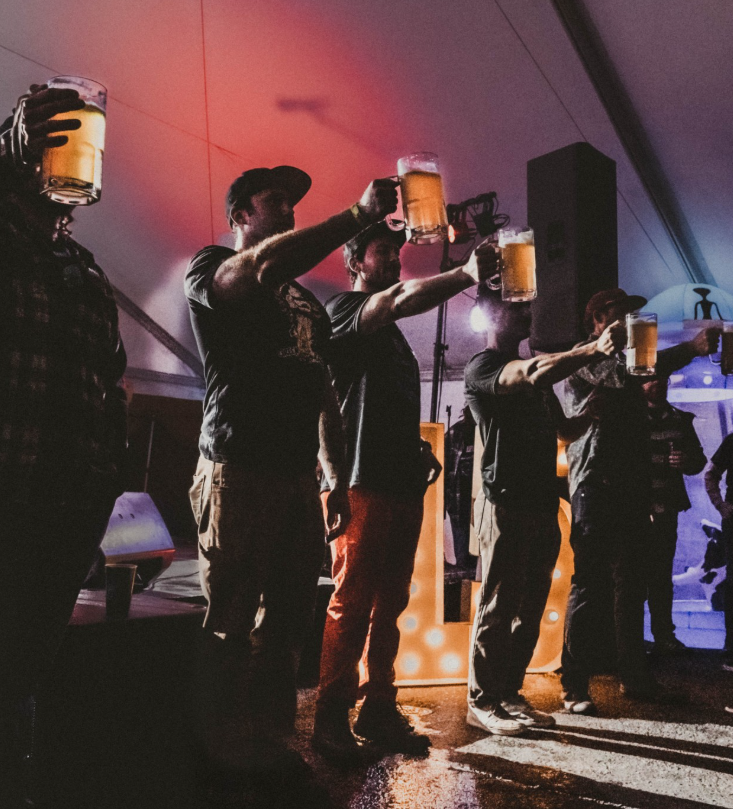
White Salmon, Wash., Oct. 15, 2025 — The City of White Salmon has officially opened the application period for its 2026 Lodging Tax Grant Program, offering funding opportunities to local organizations that help attract visitors and boost the city’s tourism economy.
Applications and program guidelines are available now on the city’s website at www.whitesalmonwa.gov. The deadline to submit completed applications is Friday, Nov. 14, 2025, by 5 p.m. at City Hall.
Grants Support Local Tourism Growth
The program invests in events, festivals, and facilities that encourage overnight stays and day visitors, strengthening White Salmon’s role as a tourism destination. Grants are funded through a portion of the city’s lodging tax, a 2% assessment on hotels, motels, and short-term rentals authorized under state law.
Eligible applicants include nonprofit organizations, destination marketing groups, chambers of commerce, and municipal departments. While matching funds are not required, the city encourages applicants to show community support through additional contributions or partnerships.
Requirements and Reporting
Each project requires a separate application and a 2026 Budget Worksheet, along with any additional supporting materials the applicant wishes to include.
Projects must demonstrate a measurable impact on local tourism — such as increased overnight stays, out-of-town attendance, or enhanced visitor amenities — and provide post-event reporting on results.
All recipients will be reimbursed for approved expenses only after documentation is submitted, and advertising materials must credit the City of White Salmon for tourism support.
Program Oversight and Timeline
Applications will be reviewed by the Lodging Tax Advisory Committee in October, with funding recommendations forwarded to the City Council for final approval. Funds become available in February 2026, and all expenditures must be completed by the end of the calendar year.
Questions about the application process may be directed to Erika Castro Guzman at City Hall, (509) 493-1133 ext. 209.
