
Brand Illusions in a well stocked grocery store: Canneries Close; Food Security Erodes
Thoughts from the Tractor Seat By Ken Polehn
The Dalles, Ore., Feb. 14, 2026 — Most Americans assume food shortages happen somewhere else.
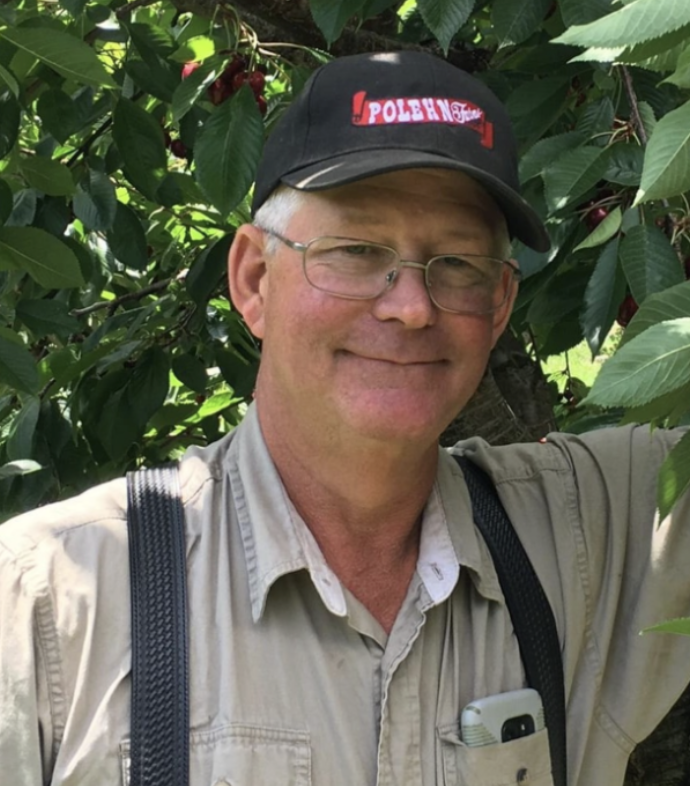
Ken Polehn
They happen in places with drought, war, or political instability not here. Not in a country where grocery stores restock overnight and strawberries show up in January.
That assumption feels reasonable.
It’s also incomplete.
Because in modern America, food insecurity doesn’t begin with empty fields. It begins quietly often with something like a food processing plant closing.
When Del Monte Foods announced it would close its last remaining California cannery, the story barely registered outside agricultural circles. To most shoppers, nothing changed. Cans still sit on shelves. The labels look familiar.
But something important disappeared: domestic processing capacity for fruits and vegetables grown in the United States.
That may sound technical.
It isn’t.
Between orchards and grocery aisles sit canneries, packing houses, cold storage facilities, and transportation networks. These are the invisible systems that keep shelves full. When one of them disappears, the system becomes thinner.
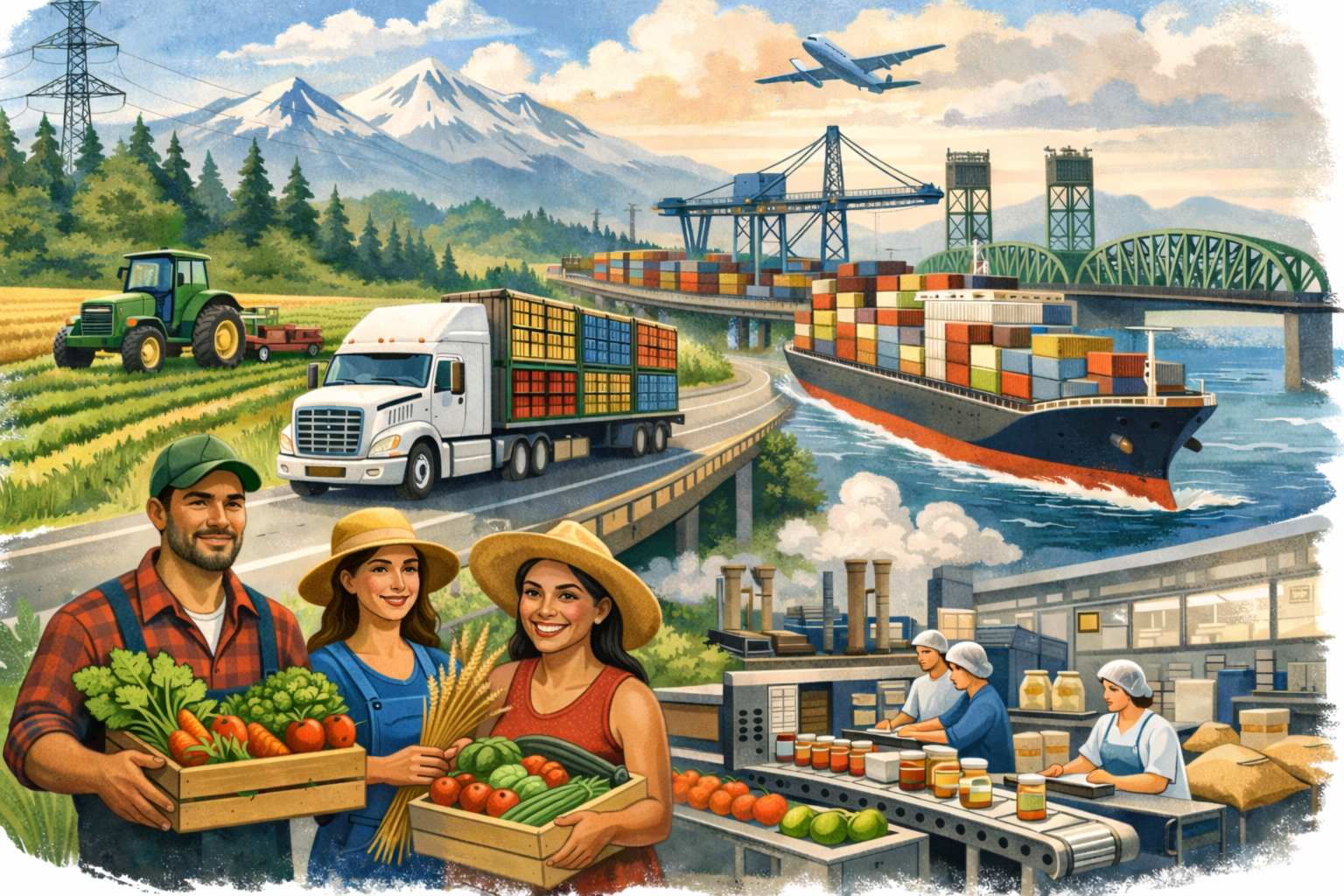
Some fruits grown for canning — like cling peaches — don’t have a fresh market. They are planted specifically because a processor has committed to buying them. These orchards are long-term investments. Trees can produce for 20 years, and it can take nearly a decade for a grower to recover the initial planting costs.
If a cannery closes, the trees don’t pivot to something else. Growers either scramble for short-term buyers or pull the orchard out entirely.
That’s not just a farm problem. That’s domestic capacity quietly leaving the system.
And we’ve already seen what fragility looks like.
During the baby formula shortage, shelves went empty nationwide because production was concentrated in too few facilities. When one major plant shut down, there wasn’t enough backup capacity to absorb the loss.
During avian influenza outbreaks, egg prices spiked sharply. Production had consolidated into fewer, larger operations, leaving little redundancy when disease hit.
In both cases, food didn’t disappear because America forgot how to produce it. It disappeared because there wasn’t enough margin in the system to handle disruption.
That’s what fragility looks like.
Food companies across sectors meat, vegetables, beverages, packaged goods have been consolidating operations into fewer, larger plants. Some production has shifted overseas.
Some has simply been centralized domestically. Companies call it efficiency. In many cases, it is.
But efficiency and resilience are not the same thing.
Efficiency reduces redundancy. Resilience depends on it.
One reason consumers don’t notice these shifts is that brands survive. A familiar label on a can doesn’t necessarily mean the food was processed domestically or that the infrastructure supporting U.S. growers remains intact. Production today is global and flexible. Brands can shift sourcing more easily than physical facilities can be rebuilt.
When domestic plants close, shelves can still look full — but the country becomes more dependent on long supply chains, international shipping, and global stability.
That works well — until something goes wrong.
The likely outcome of continued consolidation and capacity loss is not famine. It’s something subtler:
Fewer domestic processing options;
Greater reliance on imports;
Longer supply chains;
Faster price spikes during disruptions;
And slower recovery when facilities fail.
In other words, food that appears abundant — but is structurally thinner.
Most of the time, that difference is invisible.
Until it isn’t.
Resilience in food systems doesn’t mean rejecting trade or turning inward. It means balance.
It means maintaining regional processing facilities close to production. It means avoiding dependence on single plants for entire product categories. It means recognizing that domestic capacity is infrastructure, not excess.
We don’t treat power plants, water systems, or bridges as optional. Food processing infrastructure deserves similar attention.
Because once capacity disappears, rebuilding it is slow, expensive, and uncertain.
A full grocery shelf proves that today’s supply chain is functioning. It does not prove that tomorrow’s will.
Food security in modern America doesn’t vanish overnight. It erodes gradually through plant closures, consolidation, and the quiet loss of capacity most people never see.
When a cannery closes, it may look like just another business story.
It isn’t.
It’s a signal.
Food security in modern America doesn’t vanish overnight. It erodes gradually — through plant closures, consolidation, and the quiet loss of capacity most people never see.
As Oregon and Washington debate environmental, labor, water, and trade policies, the conversation should include a simple question: do our decisions strengthen the region’s ability to grow and process its own food, or make us more dependent on someone else’s system? That answer will matter most when the next disruption arrives.
From the seat of a tractor, you learn that what looks solid from a distance can be thinning underneath and it’s always wiser to notice the cracks before the ground gives way.