
Column: Tax Breaks, Water Use, School Cuts: The Real Cost of Hosting Google in The Dalles - $2,764 Per Student, Per Year
The Millennial Perspective, a column By Robin Denning
The Dalles, Ore., Dec. 16, 2025 — For nearly two decades, The Dalles has lived with a paradox.
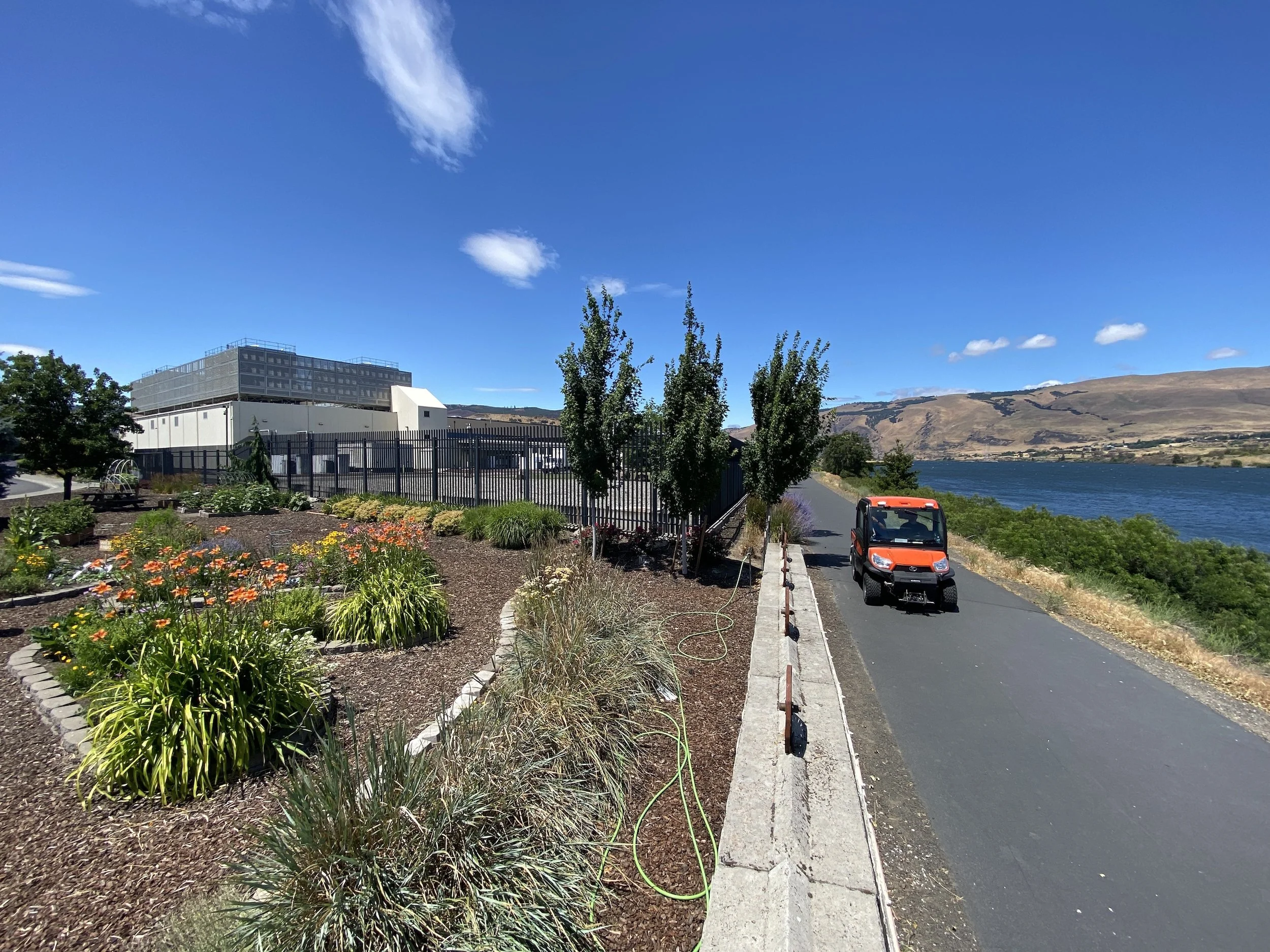
On one hand, Google’s data centers are now part of our landscape, massive, quiet buildings that signal “investment,” bring a wave of construction jobs, and generate headlines about big-dollar projects. On the other hand, many locals look at the same buildings and ask a harder question: How can a community host a global tech giant and still struggle to fully fund the basics that make a town work?

This story isn’t about being “anti-jobs” or “anti-growth.” It’s about something more Oregon than that: fairness, transparency, and local control. Because the truth is, the deals that lure major industrial projects to rural counties aren’t just business decisions. They’re long-term community choices.
And in Oregon, those choices come with a price tag that is finally visible in black and white.
What the Data Center tax breaks actually are
The incentives most often used for large data centers in Oregon are property tax abatements, especially on expensive equipment. Two programs are at the center of the debate:
Strategic Investment Program (SIP): A state program that offers a 15-year property tax exemption on a portion of a large capital investment. Businesses still pay taxes on an initial “taxable portion,” but the value above that is exempt for the term of the deal.
Enterprise Zones: Local zones sponsored by cities/counties/ports/tribes that can abate local property taxes on qualifying new investments (like buildings and equipment) for a set number of years—commonly three to five years in standard zones, with longer options in some rural agreements.
These tools are often presented as a “trade”: the community offers tax relief to win investment, and the company brings jobs, growth, and (sometimes) negotiated fees or infrastructure improvements.
But here’s where the conversation gets real: Oregon now requires school districts to disclose how much revenue is foregone due to these kinds of tax abatements meaning we can compare impacts across the state using the same accounting lens.
The number that lands in the gut: “loss per pupil”
One metric cuts through the fog: how much property tax revenue schools lose per student because of abatements.
According to a Good Jobs First analysis of Oregon school district reports, North Wasco County School District 21 recorded a total 2024 tax abatement loss of $7,869,994—about $2,764 per student.
That figure doesn’t mean the district literally writes a check for $2,764 per child to Google. It means that, under existing rules, that much school funding did not arrive because taxes that normally support public services were reduced through incentive programs.
And it’s not just The Dalles. Statewide, the same analysis estimates Oregon public schools lost almost $275 million in 2024, more than doubling from $125 million in 2019.
When people in The Dalles ask, “Why does it always feel like schools are scraping by?” this is part of the answer. Not the only answer—but a measurable one.
| County | Host School District | Data Center/Campus Name | Owner/Operator | Estimated Build/Launch Year(s) | Primary Tax Incentive/Estimated Value | 2017 Loss Per Pupil Per Year | 2019 Loss Per Pupil Per Year | 2024 Loss Per Pupil Per Year | Total +% Change (2017-2024) |
|---|---|---|---|---|---|---|---|---|---|
| Wasco | North Wasco County SD 21 | Google The Dalles Data Center Campus | Google LLC | 2006 (Original) - Ongoing | EZ / SIP. Deals valued up to $260 million on older centers. | $1,140 | $1,483 | $2,764 | 142% |
| Morrow | Morrow School District 1 | Amazon AWS - Boardman | Amazon Web Services (AWS) | 2010 - Ongoing | SIP & EZ. Latest deal (2023) valued at $1 billion in tax breaks over 15 years. | $1,688 | $2,987 | $10,380 | 515% |
| Crook | Crook County SD | Meta Platforms (Facebook) Data Center | Meta Platforms, Inc. | 2011 (Original) | EZ / SIP. Estimated $20M+ per year in property tax exemptions. | $2,236 | $4,082 | $8,576 | 283% |
| Crook | Crook County SD | Apple Data Center | Apple Inc. | ~2012 (Initial) | EZ / SIP. Millions of dollars in annual property tax abatement. | (Combined with Meta) | (Combined with Meta) | ||
| Washington | Hillsboro School District 1J | Digital Realty PDX10 | Digital Realty | 2014 | Hillsboro EZ Program. Up to 100% property tax abatement for 3-5 years. | $3,283 | $3,681 | $7,648 | 133% |
| Washington | Hillsboro School District 1J | Flexential Brookwood (PDX-02) | Flexential | N/A | Hillsboro EZ Program. Up to 100% property tax abatement for 3-5 years. | (Combined with Intel & others) | (Combined with Intel & others) | ||
| Washington | Hillsboro School District 1J | QTS Hillsboro Data Center | QTS Data Centers | N/A | Hillsboro EZ Program. Estimated $6.8 million in annual savings (2024). | (Combined with Intel & others) | (Combined with Intel & others) | ||
| Umatilla | Hermiston School District 8 | Amazon AWS US West (Oregon) Region (Hermiston Sites) | Amazon Web Services (AWS) | 2015 - Ongoing | SIP & EZ. Part of Amazon's massive regional abatement agreements. | $895 | $1,733 | $3,076 | 244% |
| Multnomah | Portland School District 1J | Digital Fortress Downtown Portland | Digital Fortress | N/A | Likely utilizes local Enterprise Zone incentives. | $162 | $170 | $319 | 97% |
| Multnomah | Portland School District 1J | H5 Data Centers Portland Data Center | H5 Data Centers | N/A | Likely uses SIP or local EZ incentives for capital improvements. | (Combined with others) | (Combined with others) |
Water and trust: the other cost people feel personally
For many residents, the debate isn’t only about budgets it’s about resources you can’t replace easily.
In 2021, Google reported that its facilities in The Dalles used 274.5 million gallons of water for cooling.
That number became public only after a legal fight over whether the data should remain confidential, fueling a deeper frustration that many locals have voiced for years: a feeling that the community is asked to accommodate growth without always being given clear, timely information.
Google, for its part, points to investments meant to strengthen the city’s water resilience. In October 2025, Google announced it had transferred ownership of an Aquifer Storage and Recovery (ASR) system and associated groundwater rights to the City of The Dalles, saying it would provide over 100 million additional gallons of water annually.
Locally, the City has also described Google-funded water system contributions, and CCC’s own reporting has covered the $28.5 million upgrade agreement and related details.
But even with those improvements, many residents are asking a fair question: If a private company’s expansion requires major new public-facing infrastructure, who carries the long-term operations, maintenance, and risk; especially in a future shaped by drought and higher demand?
That question isn’t anti-business. It’s pro-planning.
Power bills: Oregon’s new fight over who pays
A third pressure point is electricity.
Data centers are an energy-intensive industry, and Oregon has become one of the places where that concentration is significant. A Pew Research summary citing Electric Power Research Institute estimates says that in 2023, data centers consumed about 11% of Oregon’s total electricity supply.
In response to rising demand and grid upgrade costs, Oregon lawmakers passed the POWER Act, intended to ensure large data centers are in a separate utility rate class so that residential customers and others aren’t subsidizing data center growth.
And yet, even after the law, watchdog groups are still disputing how utilities implement the rules, meaning this fight is active, not settled.
So what’s the unifying point?
If we try to write something that brings people together parents, business owners, city staff, teachers, trades workers, and even people who like that Google is here, this is the shared ground:
We can appreciate investment and still insist on a fair deal.
We can welcome jobs and still protect schools, water, and ratepayers.
We can be proud of The Dalles and still demand transparency from powerful partners.
This isn’t “The Dalles vs. Google.” It’s The Dalles standing up for The Dalles, politely, persistently, and with receipts.
Questions that deserve public answers
Here are simple questions local leaders and state lawmakers should be able to answer clearly:
What is the all-in public cost of current and future abatements tied to data centers in Wasco County, especially the school impact, over the full life of the agreements?
What protections ensure that water infrastructure handed to the city doesn’t become a long-term burden for ratepayers?
How will Oregon enforce the intent of the POWER Act so households don’t quietly absorb data center-related grid costs?
If Oregon’s incentives were designed decades ago for factories, what should “fair share” look like for modern server farms, especially those that are scaling rapidly with AI?
While Google is a now taxpayer, the growth of the tax breaks is outpacing the growth of school funding.
The Funding Gap: In 2024, North Wasco County SD 21 lost approximately $7,869,994 in total revenue to abatements. This translates to $2,764 lost per pupil.
The Future Projection: As construction finishes on the two newest data centers, this per-pupil loss is expected to rise. While the district is projected to receive $1.5 million annually in community service fees once both new centers are operational, this is only a fraction of the $2,764 per student they are currently losing to the "abatement pot."
The "Bond Problem": This financial dynamic contributed to the failure of the $140 million school bond in 2023. Voters often perceive that "Google's money" should cover these costs, not realizing that the Strategic Investment Program (SIP) prevents those millions from reaching the school's general construction fund.
A community next step that isn’t partisan
If readers want to engage without turning this into a social media brawl, the path is straightforward:
Show up when budgets are discussed city, county, and school board and ask one important question: “How does this deal affect classrooms, water security, and household bills over the next 10–15 years?”
Because in a town like ours, democracy still works best the old way: neighbors in a room, looking at the numbers together, deciding what kind of future we’re willing to fund.
Here’s another table to look at the 10-15 year outlook.
| Category | Estimated Value (Full 15-Year Life) | Description |
|---|---|---|
| Total Abated Taxes | $147 Million+ (for the two new centers) | The estimated property tax revenue Google would have paid without the 2021 SIP agreement. |
| Revenue to Community | $125 Million to $140 Million | Total direct payments (GAP + Service Fees) Google will make over 15–20 years for the new centers. |
| Historical Abatements | $140 Million (Approximate) | The total value of tax breaks Google received between 2006 and 2018. |
| Current School Loss | $7.8 Million (Reported for 2024) | The net revenue foregone by North Wasco County SD 21 in a single year. |
