
Fed Energy Commission Issues 40-Year License to Goldendale Energy Storage Project near John Day Dam
From Weinstein PR:
The Dalles, Ore., Jan. 22, 2026 — Rye Development, a leading U.S. developer of pumped storage hydropower, and Copenhagen Infrastructure Partners (CIP), on behalf of its Flagship Fund CI V, today announced that the Federal Energy Regulatory Commission (FERC) has issued a 40-year license for the Goldendale Energy Storage Project, according to the press release.
Once operational, the project, located on private lands at the site of a former aluminum smelter near Goldendale, Wash., will store electricity for up to 12 hours and generate 1,200 megawatts of on-demand electricity—enough to power about 500,000 homes.
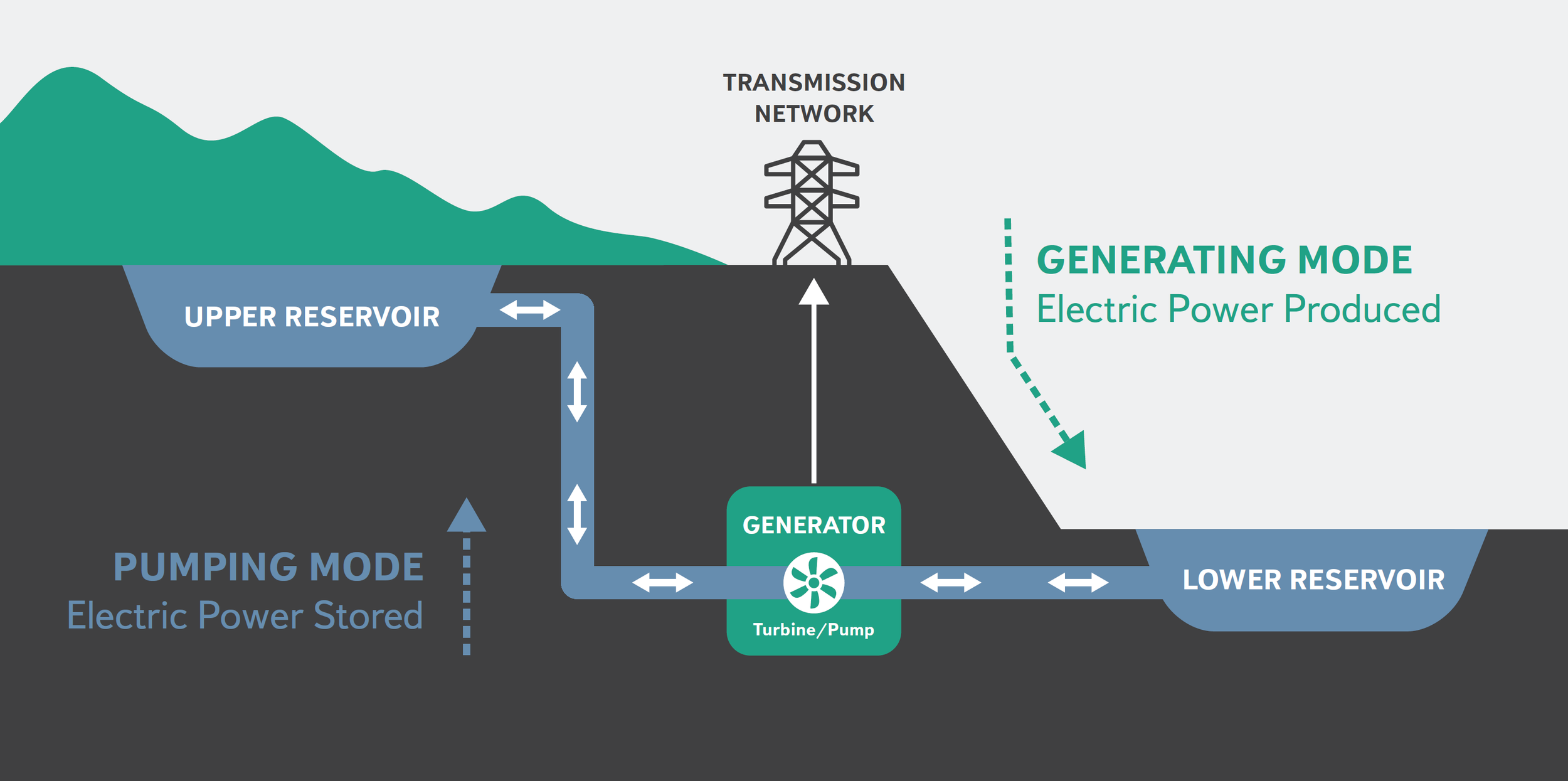
Pumped storage acts as a giant water battery, moving water between a lower reservoir and an upper reservoir. When renewable energy from wind and solar is plentiful, the system uses it to pump water uphill. When power demand is high, water is released through hydroelectric turbines to generate on-demand renewable energy. In a closed-loop facility like the Goldendale Energy Storage Project, the system is filled with water once. The same water is reused, continually storing and dispatching renewable energy
Erik Steimle, director of development, Rye Development
“This is a landmark moment for the Pacific Northwest,” said Erik Steimle, Rye Development’s chief development officer. “With electricity demand and energy costs on the rise, this license represents a huge step toward a more reliable grid and affordable energy prices for the region.”
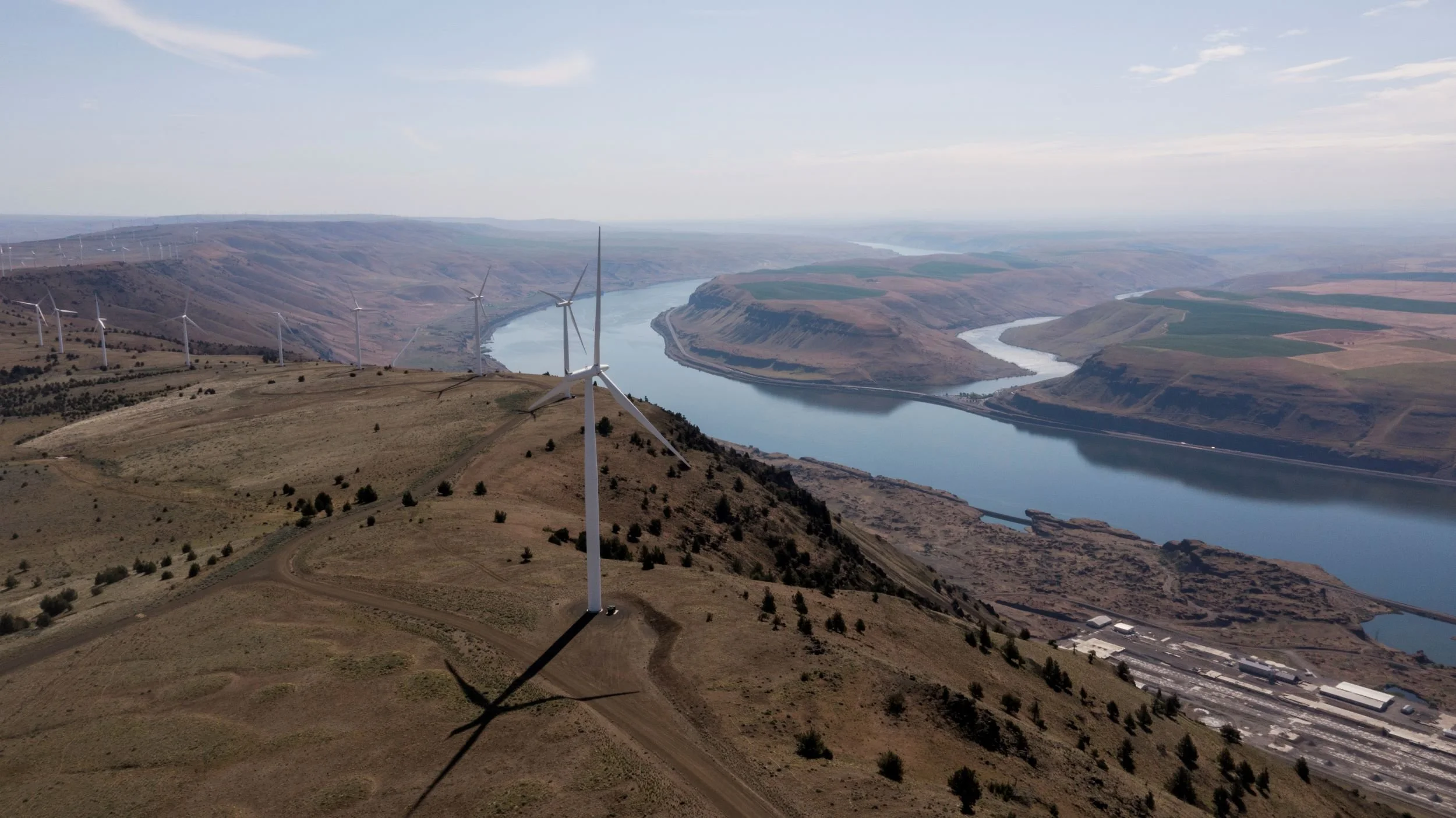
Located on privately owned land zoned for energy, the Goldendale Energy Storage Project can store electricity for 12 hours and generate 1,200 megawatts of carbon-free electricity—enough to power about 500,000 homes in the Pacific Northwest.
Electricity demand in the Northwest is expected to grow more than 30% in the next decade, along with increasing electricity prices for residential and commercial customers. Pumped storage hydropower helps keep electricity costs more affordable by providing large-scale, dependable energy storage—even during extreme weather events.
The Goldendale Energy Storage Project is a significant investment, and is expected to create more than 3,000 family-wage jobs during its four- to five-year construction period, as well as dozens of permanent jobs. Once completed, the project is expected to generate more than $10 million annually for Klickitat County, supporting schools, public health, roads, emergency services and other essential needs.
“The Goldendale Energy Storage Project is a win for middle-class, family-wage jobs and rural communities,” said Heather Kurtenbach, executive secretary of the Washington State Building & Construction Trades Council. “We’re excited to collaborate with Rye Development on what will be one of the largest construction projects southeastern Washington has seen in decades.”

Heather Kurtenbach, executive secretary, Washington State Building & Construction Trades Council.
With a memorandum of understanding (MOU) to build the project under a labor agreement with the Washington State Building & Construction Trades Council and the Columbia Pacific Building & Construction Trades Council, all Goldendale contractors will be required to hire union workers. Per the MOU, they will prioritize hiring local workers. Given the four- to five-year construction timeline, apprentices would have the opportunity to learn a trade while earning a competitive wage.
New Life for a Former Aluminum Smelter Site
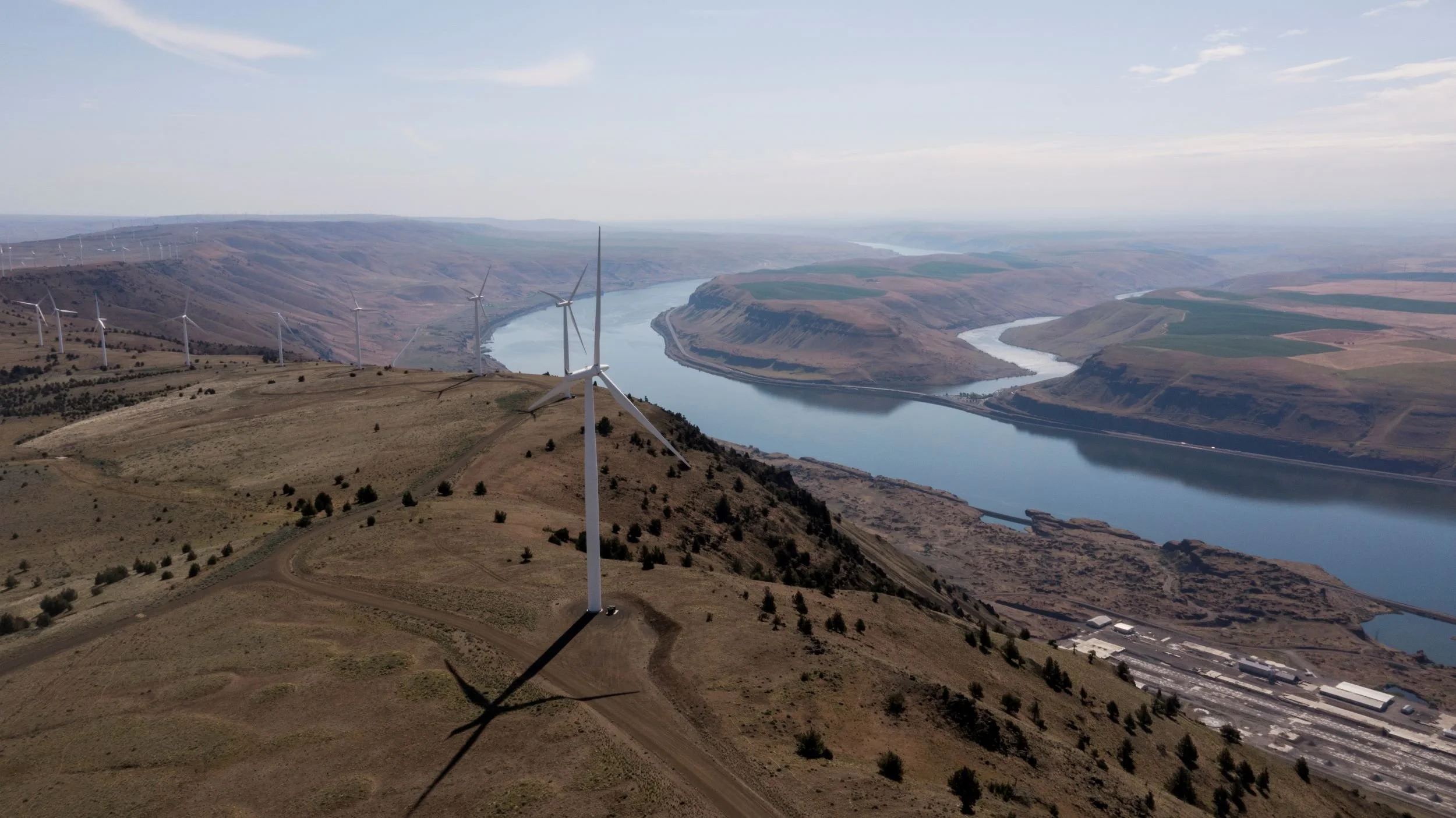
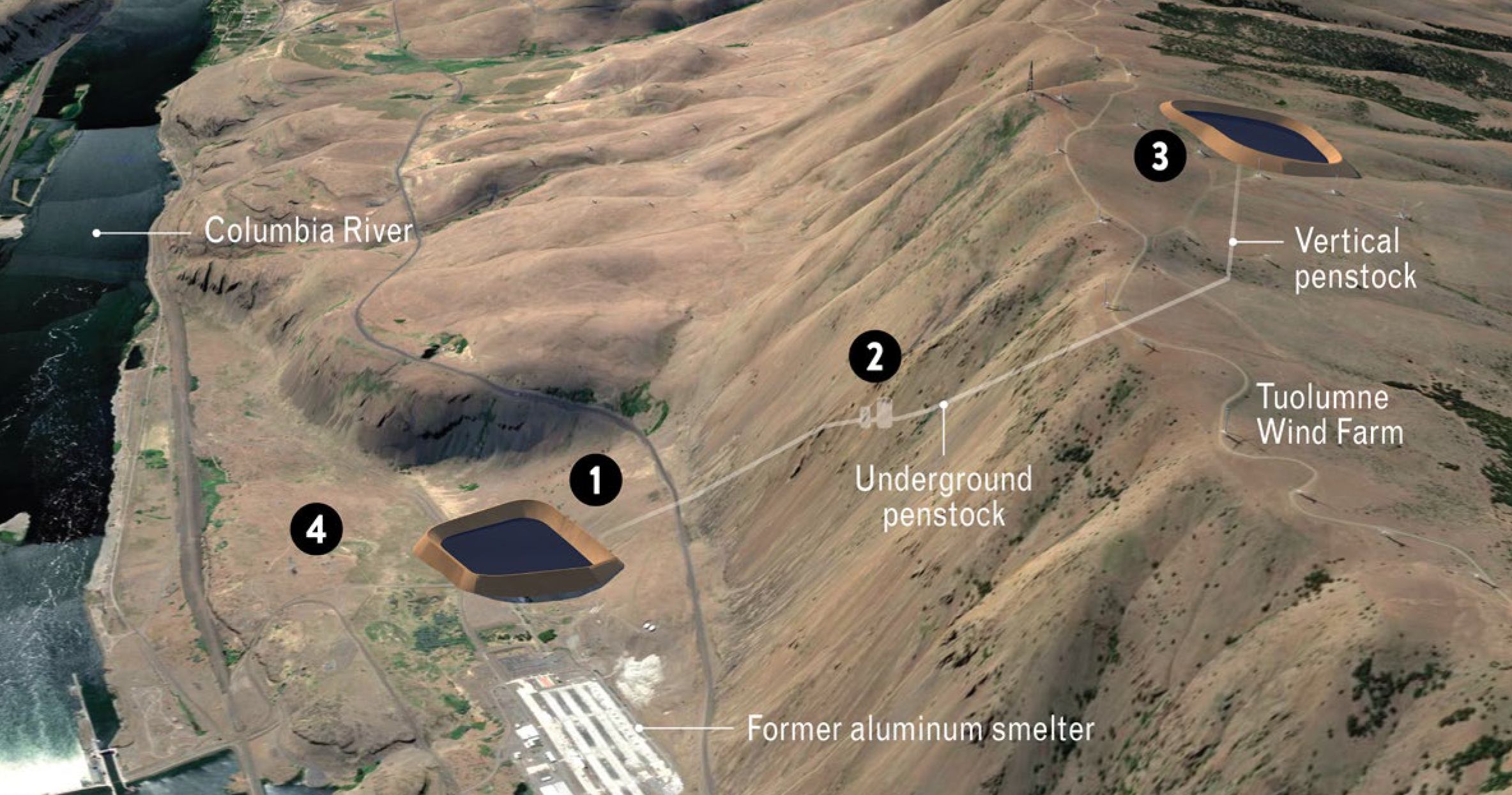
The Goldendale Energy Storage Project is sited on private land at the former Columbia Gorge Aluminum smelter, transforming the former brownfield site into an energy project providing family-wage jobs. The project, which is also located within the Tuolumne Wind Farm, could use existing roads and transmission lines. The entire project area is located within Klickitat County’s Energy Overlay Zone—a designation aimed at streamlining energy development.
“Redeveloping the Columbia Gorge Aluminum smelter into a clean energy resource has been a longtime vision of this community,” said Richard Foster, economic development director for Klickitat County. “The project revitalizes our community with good-paying jobs, stimulates local economic growth, and enhances our leadership in renewable energy.”
From CCCNews reporting:
What Comes Next
Before ground can be broken, the project must still complete several additional permitting, compliance, and development steps at the state, federal, and local levels. These include securing remaining environmental permits related to wetlands, stormwater, and land disturbance, as well as approvals from the U.S. Army Corps of Engineers for any work affecting waters of the United States.
The developer must also complete site-specific requirements tied to the former aluminum smelter property, including environmental cleanup coordination and remediation planning required by state regulators, before large-scale construction activities can begin.
In addition, detailed engineering and final design work must be completed and approved. This process typically includes submission of construction plans, safety and dam-engineering documents, cultural and historic resource protections, and environmental mitigation measures required under the FERC license and state law.
Beyond permitting, the project must finalize key commercial and infrastructure agreements, including financing arrangements, power purchase or market participation agreements, and grid interconnection approvals needed to connect the facility to the regional transmission system.
Only after those steps are completed — and any remaining permit conditions are satisfied — can full construction move forward. Developers have previously indicated that the project remains several years away from major construction, with timelines dependent on regulatory approvals, market conditions, and financing.
Several Columbia Plateau tribes have formally opposed the Goldendale Energy Storage Project thus far, arguing it would cause irreparable harm to culturally significant lands, treaty resources and traditional use areas. The Confederated Tribes of the Umatilla Indian Reservation, the Nez Perce Tribe, the Yakama Nation and the Confederated Tribes of Warm Springs have each raised concerns during the federal review process, citing impacts to archaeological sites, first foods, sacred landscapes and treaty-reserved fishing, hunting and gathering rights. Tribal leaders have stated that the project site sits within a broader cultural landscape that cannot be mitigated through standard environmental measures, and they have criticized the licensing process for what they describe as insufficient protection of tribal sovereignty and treaty obligations, even as federal regulators moved forward with approval.
CCCNews has reached out to the Yakama Nation tribes in regard to the announcement for comment, but has not heard back at the time of this publication.
Support Local News!
Available for Everyone; Funded by Readers.