
First Street closure in TD starts Jan. 13 west of cruise ship dock
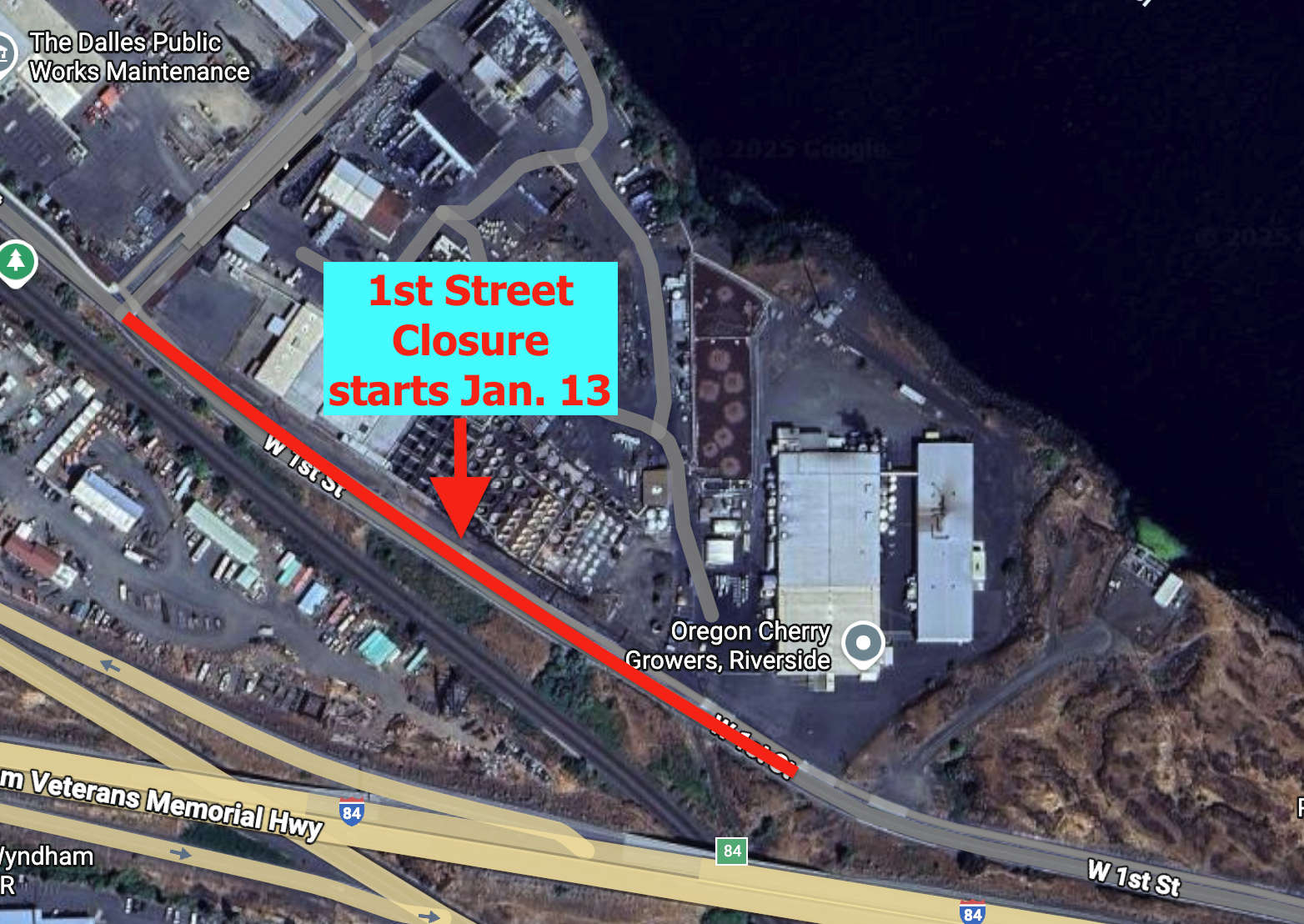
THE DALLES, Ore., Jan. 5, 2026 — West First Street will be closed beginning Tuesday, Jan. 13, for sewer construction as part of the Westside Interceptor Phase 2 project in The Dalles, according to Jeff Pettenger, project manager for Crestline Construction.
The closure will affect W. First Street between Oregon Cherry Growers and Terminal Way and will be in place 24 hours a day for an estimated seven weeks. The work involves upsizing the existing concrete sanitary sewer main.
During this phase of construction, through traffic between Union Street and Webber Street will be impeded. Motorists are advised to plan ahead and use alternate routes. A traffic control plan outlining the closure and detours has been prepared for the project.
The work is part of city infrastructure improvements for the City of The Dalles and is being completed by Crestline Construction.
Residents and businesses with questions about the project may contact Crestline Construction at 541-506-4000 and ask for Pettenger or operations manager Bill Ketchum.
The Westside Interceptor – Phase 2 will tackle underground infrastructure critical to future growth. According to bid documents, the work includes installing 3,191 feet of 30-inch sanitary-sewer pipe and 375 feet of 48-inch storm-drain pipe, along with new manholes, catch basins, and appurtenances.
The $2.2 million project will take place primarily along West First Street from the intersection with Webber Street near NORCOR jail just west of the Union Street underpass near the Cherry Growers, areas where existing sewer and drainage systems are nearing capacity. Crews will perform trenching, rock and boulder removal, and full street restoration, including new curbs, gutters, ADA-compliant ramps, sidewalks, and asphalt paving.
City officials describe the work as essential to improving service reliability, preventing overflow risks, and accommodating residential and commercial expansion on the city’s west side. Once complete, the system will provide greater storm-water capacity and ensure long-term operational resilience.