
Food vendors, charities barred from sidewalk work; councilor promises to deliver location to feed homeless
By Tom Peterson
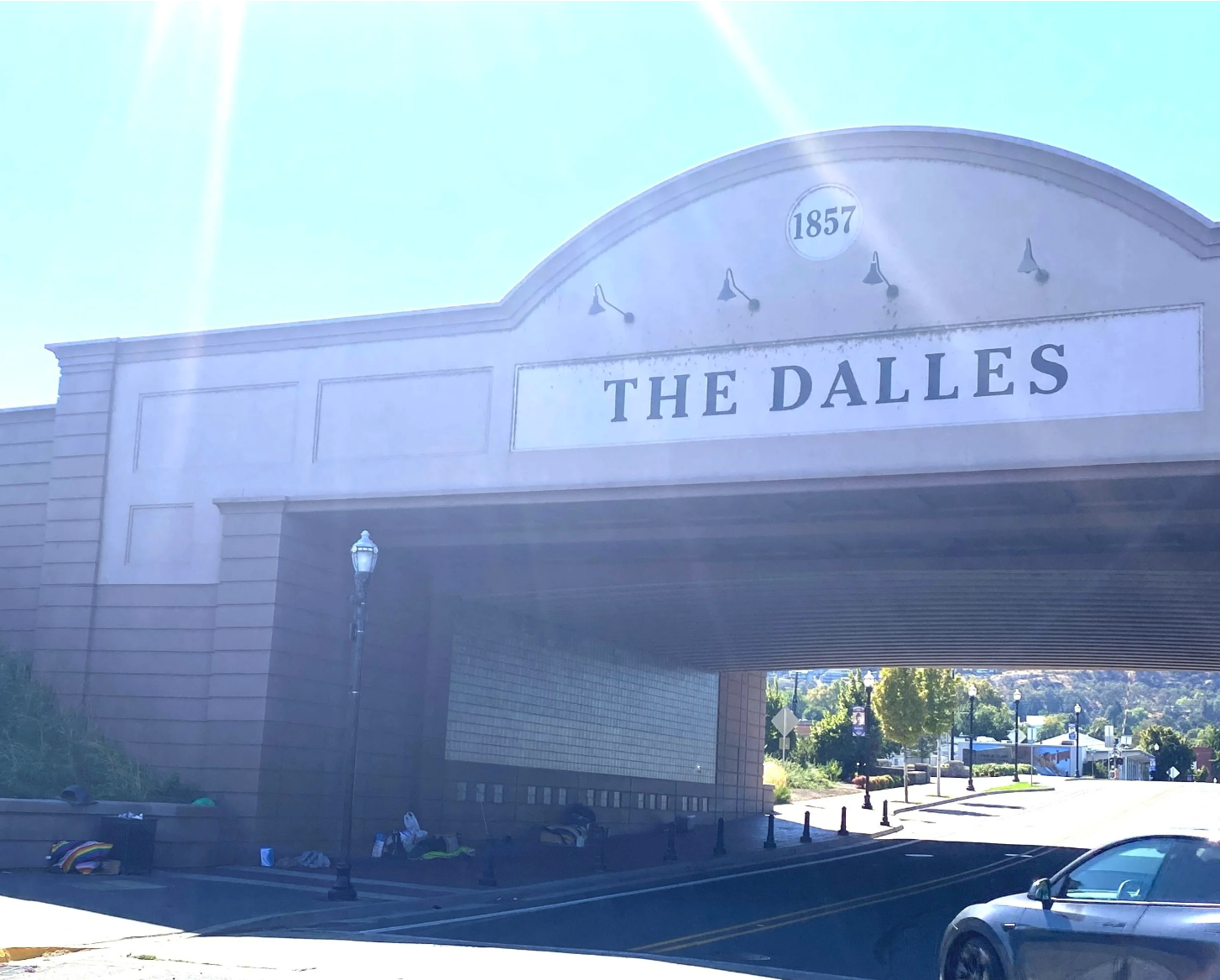
The Dalles, Ore., Sept. 26, 2025 — After an hour of discussion, City Council voted unanimously to clarify its prohibition on vending or distributing food in the public right of way, a change that directly impacts both downtown food carts that feed customers and charity groups that feed the houseless.
The struggle over how and where to feed people in The Dalles has been at the center of debate for years: nonprofits are determined to serve people in easy-to-access locations, and city officials and neighbors intent on moving those services off public sidewalks and streets.
The new ordinance puts charitable food programs such as Bread and Blessings in the same category as for-profit food vendors and they must abide by the same rules which do not allow for food distribution on public sidewalks.
The ordinance also set up a temporary renewal system to keep mobile food vendors in business until the city creates a land-use process for carts that stay in one location.
For food cart vendors, the ordinance preserves their ability to renew licenses annually until 12 months after the city adopts a new land-use code. City leaders said the goal is to strike a balance between keeping sidewalks accessible and safe while giving businesses and nonprofits time to adapt.
The law replaces two chapters of the city’s code. It takes effect Oct. 21, 2025. Staff stressed that no new fees are introduced in the ordinance, though the city’s separate annual fee schedule can adjust licensing costs. Councilor Ben Wring, who owns a food cart but is not directly impacted by the new law, declared a potential conflict at the outset of the meeting under state ethics rules. He maintained he could remain impartial and participate in the discussion and went on further to offer planning staff several suggestions for clarifying the process for establishing permanent food carts.

Councilor Timothy McGlothlin
Digging Deeper
Feeding the homeless
Bread and Blessings organizer Teresa Yragui-Zeman told councilors the new ordinance risks cutting off people who depend on daily meals downtown.
She warned that if services are pushed too far away, people without cars will be unable to access them.
“That place really isn’t very suitable. The people that live downtown here would not be able to walk that far and they don’t have cars.”
“People have to eat. And if we don’t feed them, you’re going to have pilfering… I will continue to feed them,” she said. “I don’t know how that will happen but it will happen.”
Councilors expressed both admiration for her decades of service and concern about impacts on nearby businesses and neighborhoods.

Councilor Dan Richardson
Councilor Timothy McGlothlin emphasized that the ordinance is about public safety.
“We need to keep our rights of way open for all citizens including anyone that may be wheelchair bound, anyone that’s disabled.” He pledged to help find an “appropriate spot that you can go ahead and feed and not be hassled.”
Councilor Dan Richardson added that the city must “find a better spot that’s safe and effective… not in a neighborhood and not downtown.”
Food cart planning procedures
Councilor Ben Wring spoke at length about how the city should handle long-term food cart operations. He praised food carts as a “really good way for new entrepreneurs” to enter the food service industry. But he criticized the ordinance’s lack of clarity: “I’m conflicted with the lack of clear and objective requirements… it’s difficult… to wrap my head around a governing body approving an ordinance without clear and objective requirements.”
Wring pushed for a clear distinction between carts that remain self-contained and those that permanently connect to city utilities or evolve into food pods. He argued that as long as a Type 2 cart is not tied permanently to water or sewer, it should be allowed to renew licenses annually until the city finalizes its land-use amendment.
“If there’s no permanent connection to city services, then why can’t they continue to license themselves and operate legally until we have that land-use process defined?” he asked.
Essentially, Wring asked to keep carts operating until new rules with clear, objective goals are written for the planning proceess. And he suggested the following:
Annual renewals until rules exist: He pressed for Type 2 carts (no permanent utility hookups) to renew annually at the same site until the city adopts a clear, objective land-use track, rather than forcing an immediate site-plan review.
Trigger = permanent utilities/pods: He distinguished temporary/self-contained carts from those that permanently connect to city utilities, add substantial seating, or form pods—the latter should go through land-use review once the pathway exists.
Administrative efficiency: He acknowledged one-time land-use approvals can be more efficient than repetitive annual licensing, once the new path is written.
Timeline pressure: After being assured the ordinance allows renewals until 12 months after adoption of the new track, he said he was satisfied, but urged staff to prioritize drafting the land-use amendment.
Planning staff noted that a one-time land-use approval is more efficient long term than repetitive annual licensing. Councilors agreed the next step is for the Planning Commission and city staff to draft clear, objective standards for when food carts transition into land-use review—language that will eventually come back before the council for adoption.