

By Tom Peterson
The Dalles, Ore., Nov. 7, 2025 — The One Big Beautiful Bill Act’ is set to deliver just that — big bills in the form of health premium for low to middle income residents of the Columbia Gorge.
Beauty, it appears, is in the eye of the beholder.
In 2026, premium tax credits used to pay down the high cost of insurance for low- to middle-income families are being scaled back. The changes will be especially significant for middle-income families and rural residents who rely on Healthcare.gov for coverage, according to Shanon Saldivar with Saldivar Insurance at 515A E. Second St. in The Dalles, who provided a detailed briefing on what to expect.
Click here for Healthcare.gov renewal information.
For example, she recently ran the numbers for a couple living in The Dalles, ages 62 and 64, who have an annual gross income of $100,000. They are seeing their projected premium jump from $80 a month to $2,226. Annually, their rate is projected to go from $960 to $26,712. Other similar examples show a steep climb.
At the same time, there appears to be no movement to reopen the federal government after being shut down for 39 days. The closure has ensued over the issue of — you guessed it — health care tax credits for recipients of subsidized health care benefits.

One Community Health’s Patient Care Advocates, Saldivar Insurance and Senior Health Insurance Benefits Assistance provided free, one-on-one help to more than 30 families as they applied for or renewed Medicaid plans, the Oregon Health Plan or Apple Health on Thursday, Nov. 6.
In The Dalles, residents met at One Community Health on Thursday evening and got the news about health insurance coverage for 2026. Saldivar and One Community Health’s Patient Care Advocates and Senior Health Insurance Benefits Assistance provided free, one-on-one help to more than 30 families as they applied for or renewed Medicaid plans, the Oregon Health Plan or Apple Health.
The point was to find the best plan for the people showing up.
“The smallest monthly increase I have seen is $200 per month and the largest is $2,400,” said Saldivar. She has been working with clients for a few weeks to help predict their rising costs starting in January 2026.
“People are having to make really hard decisions,” said One Community Health’s Josie Luna. “They are having to choose between their mortgage, maintenance of their car or paying for their health insurance.”
Some simply can no longer afford it.
The rising cost of insurance is a compounding factor in the financial insecurity creeping in on the younger generation, said Adriana Magana, 23, an agent at Saldivar Insurance.
“It’s so scary,” she said Thursday evening. “Not to have insurance for basic human needs. Everything is really expensive — houses, rent, food. Friends are living with their parents.”
Saldivar said some clients are choosing to let their insurance go.
“I have 20 percent of folks who cancel because they cannot afford it,” she said.
What Happens When Someone Without Insurance Needs Care?
Emergency care is guaranteed — but expensive
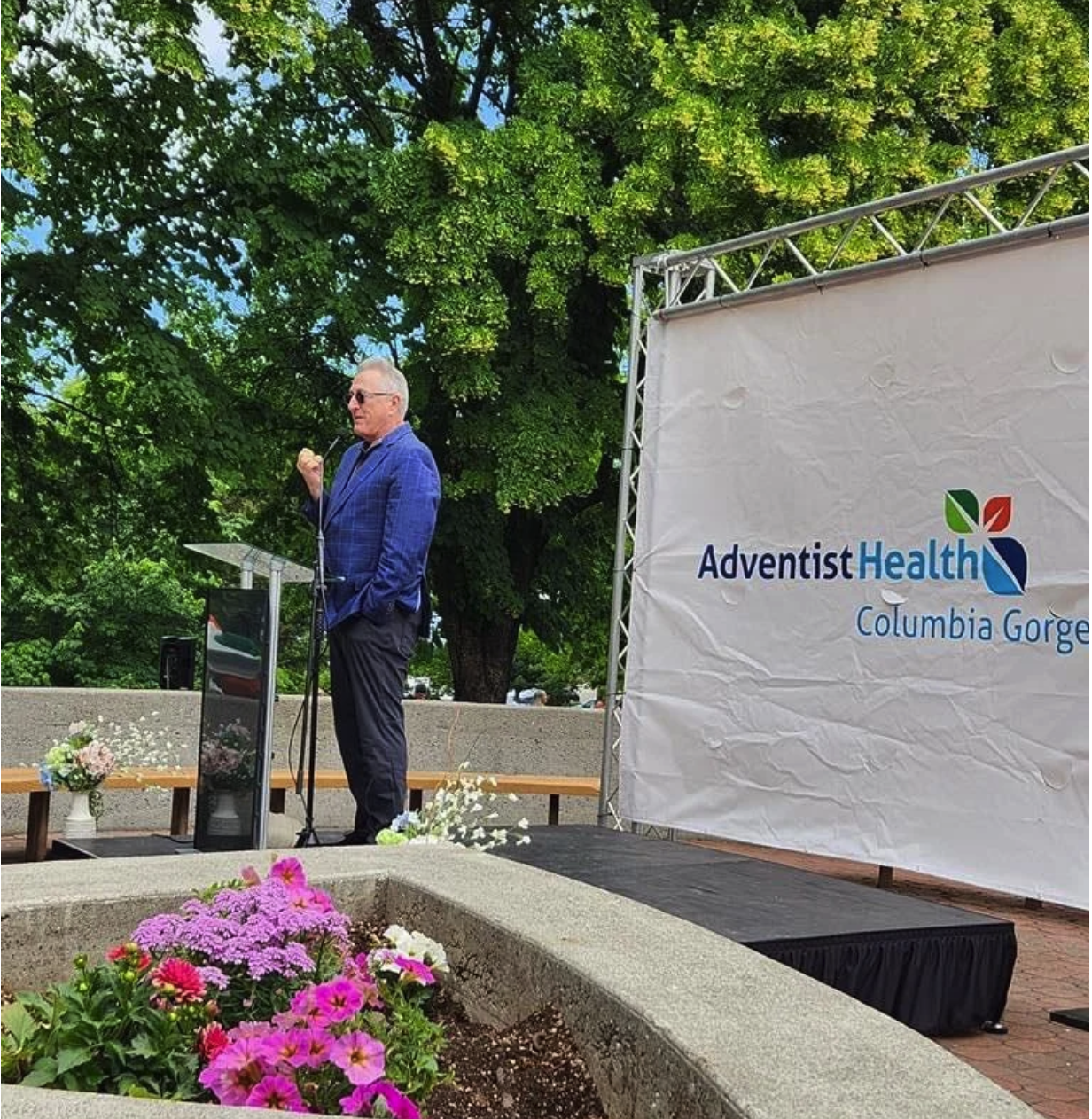
Under federal law, hospitals must treat anyone who needs emergency medical attention, insured or not. The Emergency Medical Treatment and Labor Act (EMTALA) requires hospitals that operate emergency departments — including Adventist Health Columbia Gorge in The Dalles, Providence Hood River Memorial Hospital and Skyline Hospital in Goldendale — to screen, stabilize and treat emergency patients regardless of their ability to pay.
That protection means people who lose Affordable Care Act coverage can still receive life-saving care, but the cost of that treatment does not disappear. Unpaid bills are frequently absorbed by hospitals, written off as charity care, shifted into higher prices for insured patients or reimbursed through state uncompensated-care programs.
Subsidized Insurance vs. Uncompensated Care
Policy analysts have long debated whether it is more cost-effective for taxpayers to help people maintain insurance or to fund emergency care after coverage lapses. Research from the Kaiser Family Foundation and the Congressional Budget Office has found that:
Emergency care for uninsured patients is among the most expensive forms of medical treatment.
Hospitals typically recover only a fraction of the cost.
Uncompensated care costs ultimately shift to state budgets, hospital systems or higher commercial insurance premiums.
Subsidized coverage, by contrast, generally shifts spending into primary and preventive care, which can reduce the number of late-stage emergencies that EMTALA requires hospitals to treat at full cost.
Cost of the Affordable Care Act to Taxpayers

Federal spending on Affordable Care Act premium tax credits in 2024 — the most recent year with fully audited federal expenditure data — ranged from about $103 billion to $113.6 billion, depending on how the subsidies are measured. According to the Center on Budget and Policy Priorities, total federal expenditures in 2024 reached about $6.9 trillion, meaning ACA subsidies accounted for roughly 1.5 percent of all federal spending that year.
For perspective, the national debt now stands between $37 trillion and $38 trillion. The comparison shows that while ACA subsidies are a meaningful annual cost, they represent a relatively small share of the federal budget and an even smaller portion of the overall national debt.
Premium tax credits cost the federal government in two ways: through direct monthly payments to insurers and through reduced tax revenue when the credit lowers what taxpayers owe.
Is It Cheaper to Subsidize Insurance or Treat the Uninsured?
How Many Are Uninsured?
According to the U.S. Census Bureau and other federal surveys, roughly 27 million Americans were uninsured in early 2024, and more than one in four uninsured adults said they delayed or skipped needed medical care because of cost. That pales in comparison to the roughly 48 million U.S. citizens who had no insurance prior to the adoption of the ACA, according to the Centers for Disease Control and Prevention.
While there is no precise national tally for what uninsured people pay out of pocket each year, simulation studies estimate billions of dollars in uncompensated care borne by hospitals and taxpayers when uninsured patients receive treatment.
Oregon
According to the Oregon Health Authority, about 145,500 Oregonians enrolled in Affordable Care Act marketplace plans for the 2024 coverage year. The agency also reports, using data from the American Community Survey, that Oregon’s uninsured rate was roughly 8 percent in 2024, leaving an estimated 350,000 residents without health coverage.
Washington
Washington Healthplanfinder reported that about 272,000 residents selected ACA marketplace plans during the 2024 open-enrollment period. The Washington Health Care Authority, citing American Community Survey insurance data, estimates the state’s uninsured rate at about 6.3 percent, or roughly 480,000 people without coverage.
Diving Deeper Into Health Care Costs
State-level modeling by the Urban Institute shows that the policy changes taking effect in 2026 could result in more than $20 billion in reduced health-care spending across Oregon and Washington over the next decade — a shift researchers describe as a stand-in indicator for a rising uninsured population and the resulting increase in unpaid medical care.
The same research projects a nearly $283 billion increase nationwide for care delivered without payment if enhanced ACA tax credits expire.
While the Institute does not publish specific uncompensated-care projections for Mid-Columbia counties, it identifies Oregon and Washington among the states most exposed to these spending declines, with rural regions typically feeling the effects first.
Health-policy analysts note that when uninsured patients generate unpaid care, the costs do not disappear. They are absorbed by hospitals through charity-care write-offs, passed on to employers and families in the form of higher commercial insurance premiums, or covered by state taxpayers through Medicaid and hospital-stabilization funding.
What’s Driving the Premium Increases?
Signed on July 4, 2025, President Donald Trump’s One Big Beautiful Bill altered temporary ACA expansions created under former President Joe Biden’s American Rescue Plan Act during the COVID-19 pandemic, which broadened eligibility for premium tax credits through 2025.
In 2026, those enhancements expire and the ACA returns to its earlier income limits — meaning premium discounts will once again be available only to households earning below a certain threshold, roughly $62,600 for one person or $128,600 for a family of four.
Meanwhile, the national debate continues around what level the federal government should be funding health care in the U.S.
New 2026 Rules Prompt Help for Families Reviewing Their Coverage
Several more events are planned in the Mid-Columbia to assist locals. Click here to check for dates and locations.
The 2026 changes alter how income is calculated and verified. Modified Adjusted Gross Income will continue to determine eligibility, but additional verification steps will be required.
Consumers who do not file a 2024 tax return will be ineligible for ACA tax credits for 2026. The changes also affect eligibility for Medicaid and the Oregon Bridge Program. Starting in 2026, families who should be on Medicaid or the Bridge Program but stay on marketplace plans may be required to repay tax credits.
Medicaid enrollees may face more frequent renewals, and Healthcare.gov clients may see additional documentation requirements. Open enrollment runs Nov. 1 through Jan. 15.
As 2026 approaches, Saldivar said this year’s open enrollment will be the busiest and likely the most important since the ACA took effect in 2014.