Houseless Issues resurface in new city rules about food delivery in public places
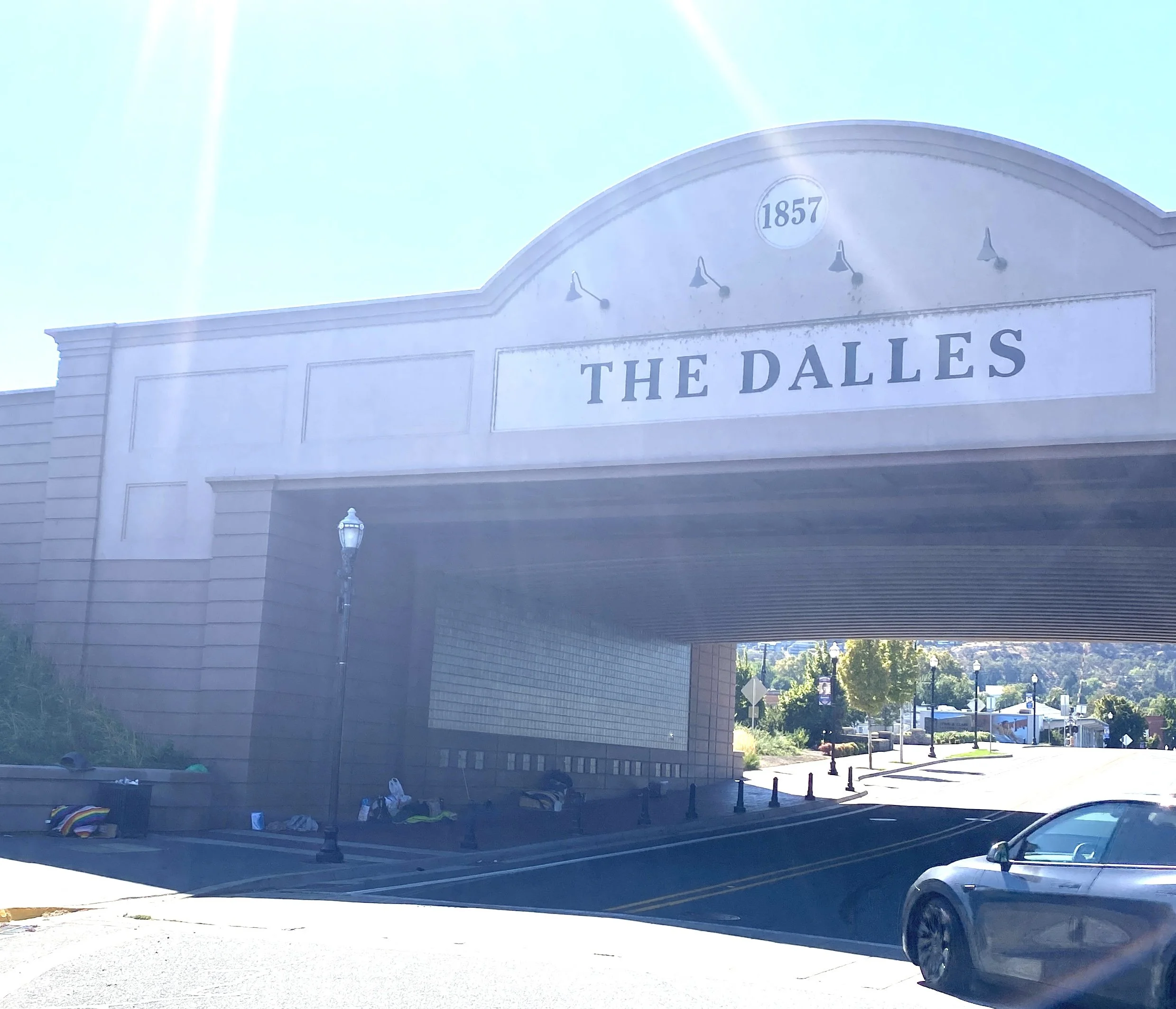
There is no doubt that the presence of houseless people and their belongings stacked along major corridors on public sidewalks is difficult to see. If the presence of unhoused people, along with the safety risks and visible mess that accompany their situation, feels offensive or disruptive, is the solution to remove them from sight — or to address the deeper human need that created those conditions? Instead of “solving” homelessness, U.S. communities often manage its visibility. People are swept from parks to sidewalks, from one city to the next, while the root causes remain, because complex social problems like homelessness are produced by laws, markets, zoning, healthcare systems and decades of policy choices.
THE DALLES, Ore., Sept. 16, 2025 — The struggle over how and where to feed the homeless in The Dalles is once again at the center of debate, highlighting a clash between on how to treat houseless people: nonprofits determined to serve people in easy-to-access locations, and city officials and neighbors intent on moving those services off public sidewalks and streets.
For years, the city has wrestled with how to balance compassion with public order. Ministries like Bread and Blessings or St. Vincent de Paul have offered free meals and outreach directly in visible spaces, ensuring the homeless community could easily access food and services. But city leaders argue those same gatherings bring blocked sidewalks, safety concerns, and neighborhood impacts that amount to a public nuisance.
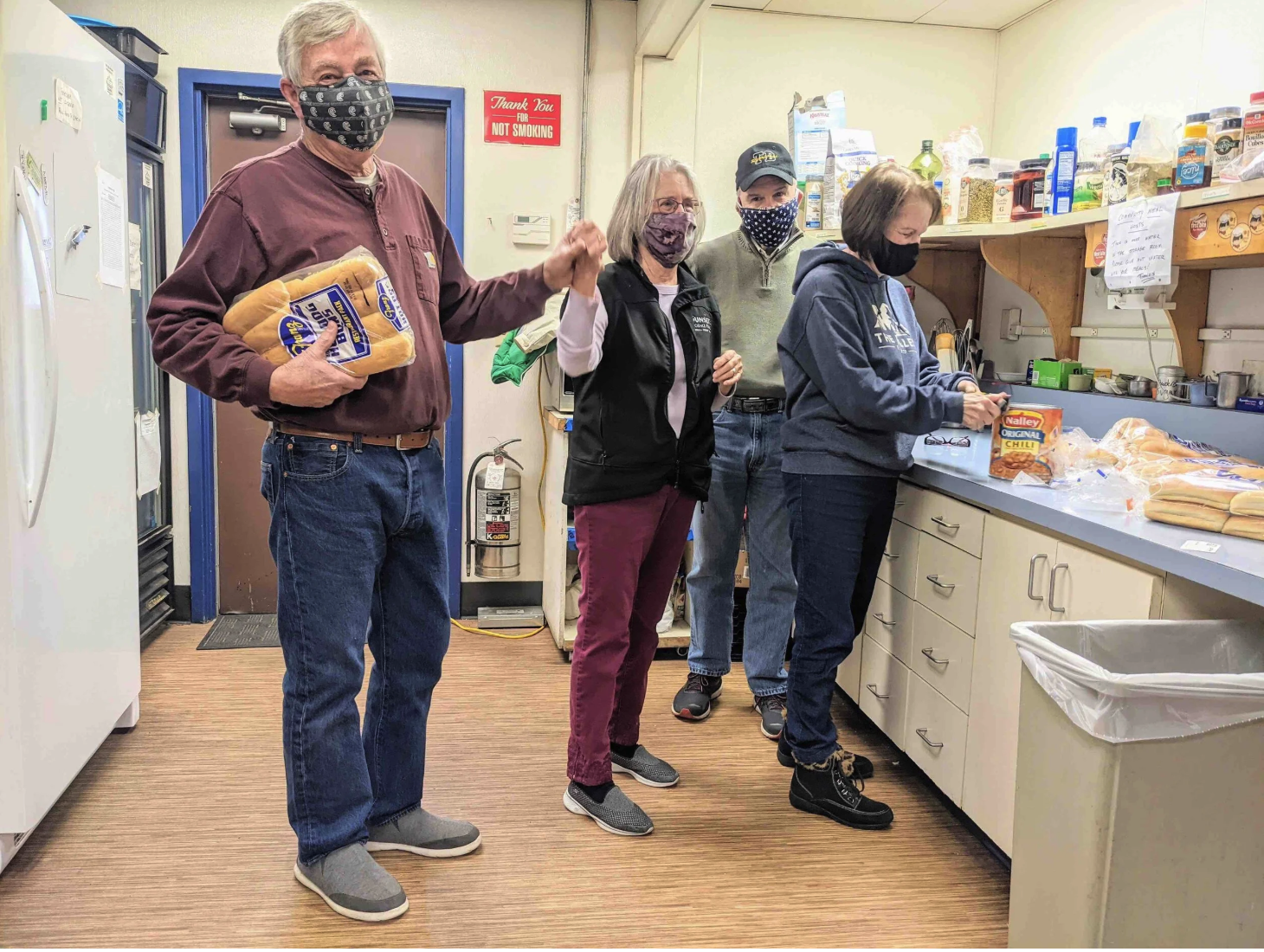
File Photo : Mike and Judy Makela and Rich and Rose Mays from Gateway Church volunteering in the kitchen at Community Meals back in 2021.
That tension came to a head in 2023 when the city filed suit against St. Vincent de Paul, alleging repeated problems around its Third Street/ Community Meals location. The case was dismissed earlier this year, but only after the nonprofit closed its ministry and police calls in the area dropped. The dismissal, issued without prejudice, left the door open for the city to sue again if problems reemerge.
Now, with the council’s proposed ordinance on food carts and transient merchants, the same lines are being drawn. The rules would prohibit food distribution in the public right-of-way, effectively pushing volunteer programs like Bread and Blessings off sidewalks and into less visible locations. City staff frame the move as a matter of traffic safety and liability. Service providers see it as another barrier that disconnects them from the people they are trying to help.
Public Voices: Safety vs. Access
At the Sept. 8 Council meeting, testimony revealed the sharp divide.
Michael Leash, a resident, told the council that free meal distribution in the public right-of-way blocks sidewalks, creates safety risks for pedestrians and visitors, and would be better suited on private property with facilities like bathrooms and power.
Letters and phone calls received by council members raised similar concerns, citing problems like those on Pentland Street, where neighbors complained that soup kitchens attracted groups who lingered in the neighborhood.
On the other side, Shelley Hansen of Bridges to Change defended Bread and Blessings, saying the program is clean and orderly, and more importantly, it provides connection. “She [Teresa] leaves it cleaner than when she got there,” Hansen said. “These people are not going away, and they need some connection to human beings.”
Other nonprofit representatives added that feeding is about more than calories; it is about trust, outreach, and human dignity. They warned that forcing groups off sidewalks and into distant locations would sever vital contact with unhoused people who often cannot travel far.
Struggle Intensified
The push and pull is not new. For years, churches, nonprofits, and volunteers have fought to maintain street-level food ministries, while the city has sought to relocate or regulate them. To this date, the city has been unwilling to take onWhat is different today is the increasing visibility of homelessness in The Dalles and the mounting legal tools cities are willing to use — from nuisance lawsuits to ordinance changes — to manage where services happen.
What’s at Stake
For the unhoused, the debate is about more than policy — it’s about daily access to food and human contact. For the city, it is about reclaiming public spaces and addressing community complaints. Both sides claim to act in the interest of the broader community, but their visions of dignity, safety, and order sharply diverge.
The result is a cycle: lawsuit, closures, ordinance rewrites, and renewed efforts by nonprofits to keep serving. And with homelessness in The Dalles not subsiding, the clash between those who feed and those who regulate shows no sign of fading.
City Council is expected to pick up discussion and vote on the proposed ordinance on food carts and transient merchants, that could prohibit food distribution in the public right-of-way at its Sept. 22nd meeting.