
Inside MCCAC: Agency unites dozens of partners to close gaps in houseless services
“One of the most meaningful parts of this work is watching agencies that used to operate in silos start to move together with real intention.”
— Elizabeth Fernandez, MCCAC Care Coordination Manager
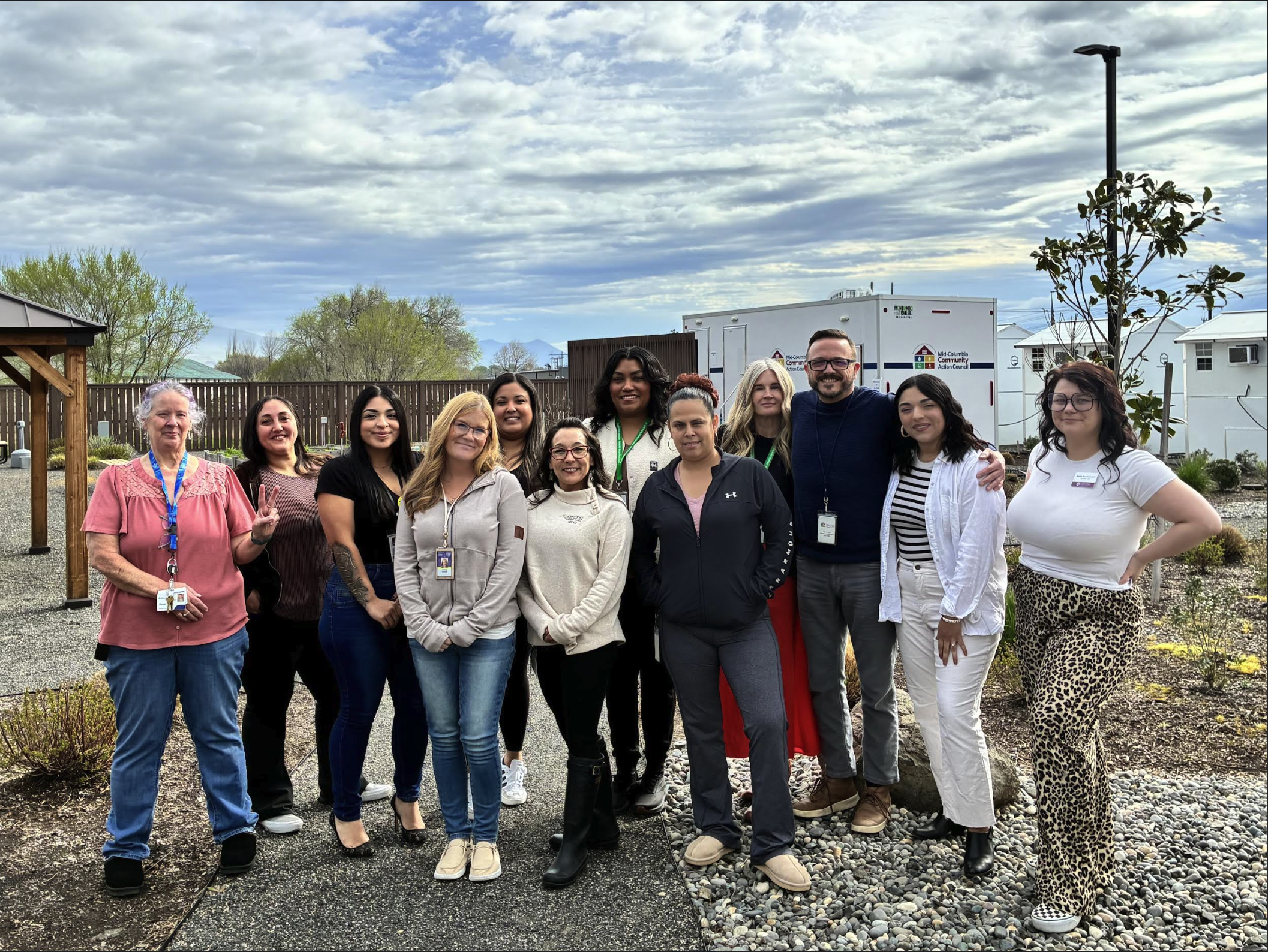
From the Editor— Mid-Columbia Community Action Council has released the fourth in a series of informational overviews intended to address misconceptions and provide clearer understanding of the agency’s housing, shelter and support services in the Columbia Gorge. CCCNews has taken the liberty to organize and edit the content for reader clarity and organization.
The Dalles, Ore., March 31, 2026 — Mid-Columbia Community Action Council is leading a regional effort to address houselessness through a multi-agency initiative aimed at improving coordination and expanding services across five counties.
The effort, known as the Roots and Reach Alliance, is part of the Mid-Columbia Houseless Collaborative, a coalition founded in 2022 by Mid-Columbia Community Action Council and Washington Gorge Action Programs. The collaborative includes nearly 40 organizations, local governments and community members across Hood River, Wasco, Sherman, Skamania and Klickitat counties.
For the Mid-Columbia region, the issue is about improving how existing agencies work together. Without coordination, people can get stuck navigating multiple agencies with little progress. The Roots and Reach initiative aims to streamline that process and get people into stable housing faster.
The group is working under a five-year strategic plan focused on reducing and eventually ending houselessness in the Mid-Columbia region. The plan centers on four priority areas: shelter, services, housing and advocacy.
Mid-Columbia Community Action Council serves as the lead convener, coordinating partners and helping translate shared goals into action. The collaborative emphasizes incorporating the voices of people with lived experience and delivering services in culturally affirming ways that uphold dignity.
The Roots and Reach Alliance brings together frontline staff and leadership from partner agencies, including medical and social service providers, to improve coordination of care. Participants meet weekly to develop shared tools, reduce service gaps and improve communication across agencies.
The initiative is designed to strengthen both individual support systems and regional collaboration, with a focus on ensuring clients can access the full range of available services regardless of where they first seek help.
“One of the most meaningful parts of this work is watching agencies that used to operate in silos start to move together with real intention,” said Elizabeth Fernandez, care coordination manager at Mid-Columbia Community Action Council.
“Roots and Reach is about making sure the whole system is working for the person standing in front of us — not just the program they walked into,” Fernandez said. “When our partners are connected and coordinated, our clients feel that. It changes the experience of being helped.”
The collaborative also aims to address disparities in housing access. Officials said people of color, LGBTQ+ individuals, survivors of domestic violence and those with prior involvement in the justice system often face disproportionate barriers to stable housing.
The initiative builds on previous regional efforts, including annual Housing Stabilization Summits, the publication of regional houselessness data and the development of shared tools such as coordinated entry systems and client feedback resources.
Mid-Columbia Community Action Council officials said the effort depends on sustained collaboration among partner agencies and input from community members with lived experience.
More information about the Mid-Columbia Houseless Collaborative and the Roots and Reach Alliance is available at www.mccac.com/houseless-collaborative or on Facebook at www.facebook.com/mccactd.
Read more about MCCAC’s work in these previous CCCNews st:
Click here to read about MCCAC’s central role in creating housing stability.