
Nichols & Cents: The $100,000 bill
A cat with money is referred to as Mr. Cat — old Spanish Proverb
By Rodger Nichols
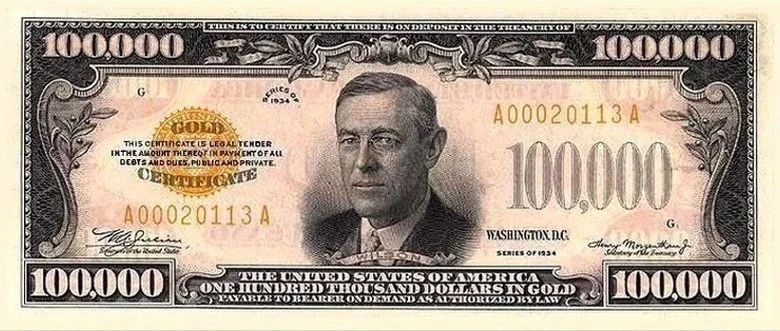
The Dalles, Ore., July 3, 2026 — A bill like the one pictured here won't be showing up in your change at Fred Myer's anytime soon.
The $100,000 bill is the largest ever issued by the United States, but it was never released to the general public.
Instead, it was in-tended for transfers be-tween banks in the days before computers and wire transactions. A packet of ten of them would represent a million dollars and could be carried quite easily by trusted messenger. A million dollars in $1 bills, by comparison, would weigh 9/10 of a ton and take up 42 cubic feet.
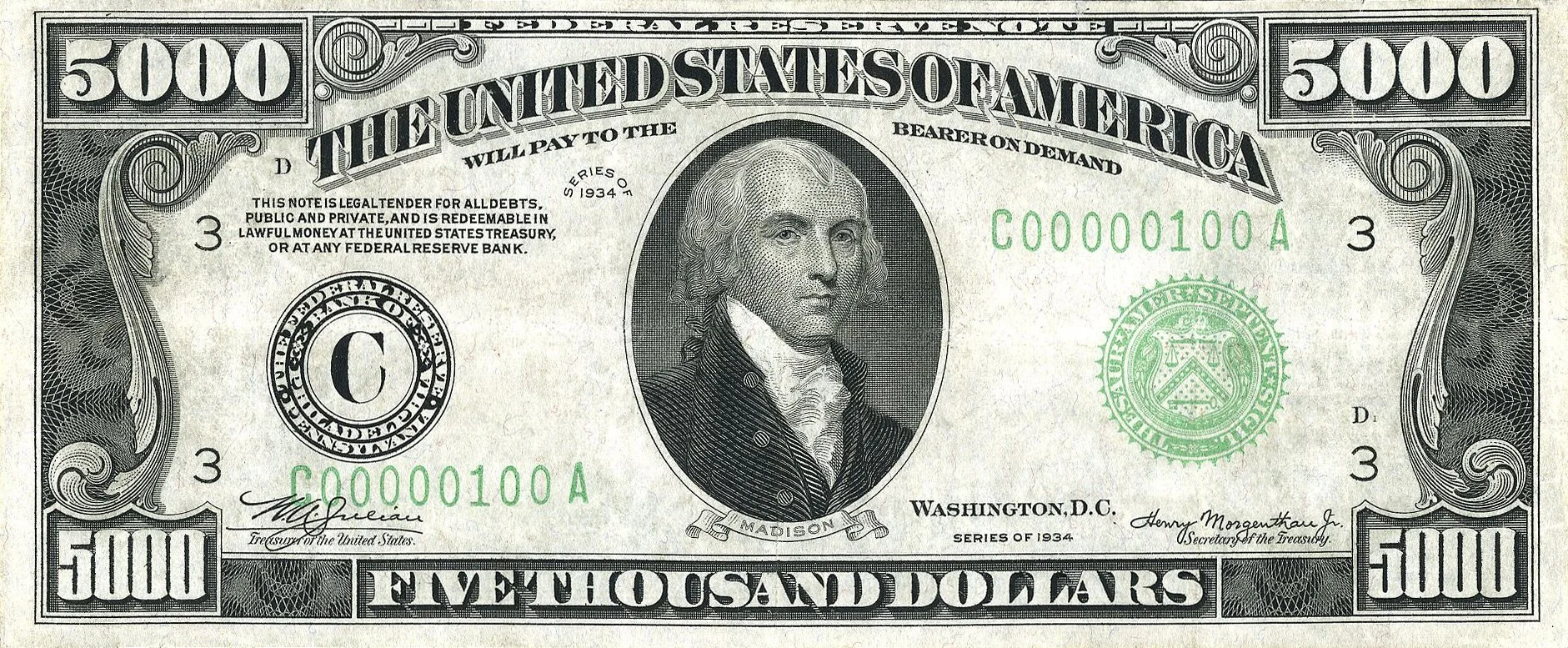
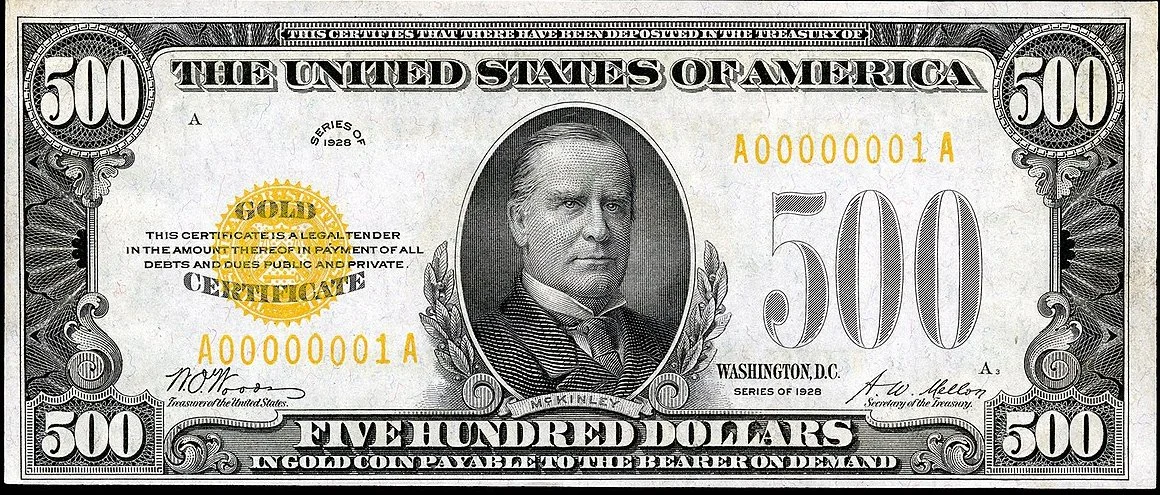
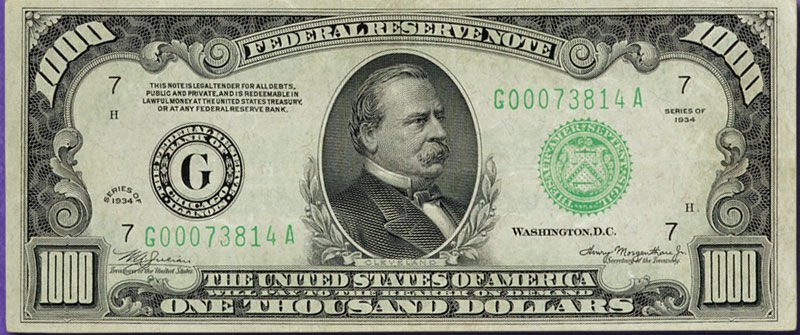
While you won't have a chance at the Woodrow Wilson $100,000 bill, there is a slim chance you might stumble across one of the other large denomination bills still in circulation.
They are:
$500 - portrait of William McKinley
$1,000 - portrait of Grover Cleveland
$5,000 - portrait of James Madison
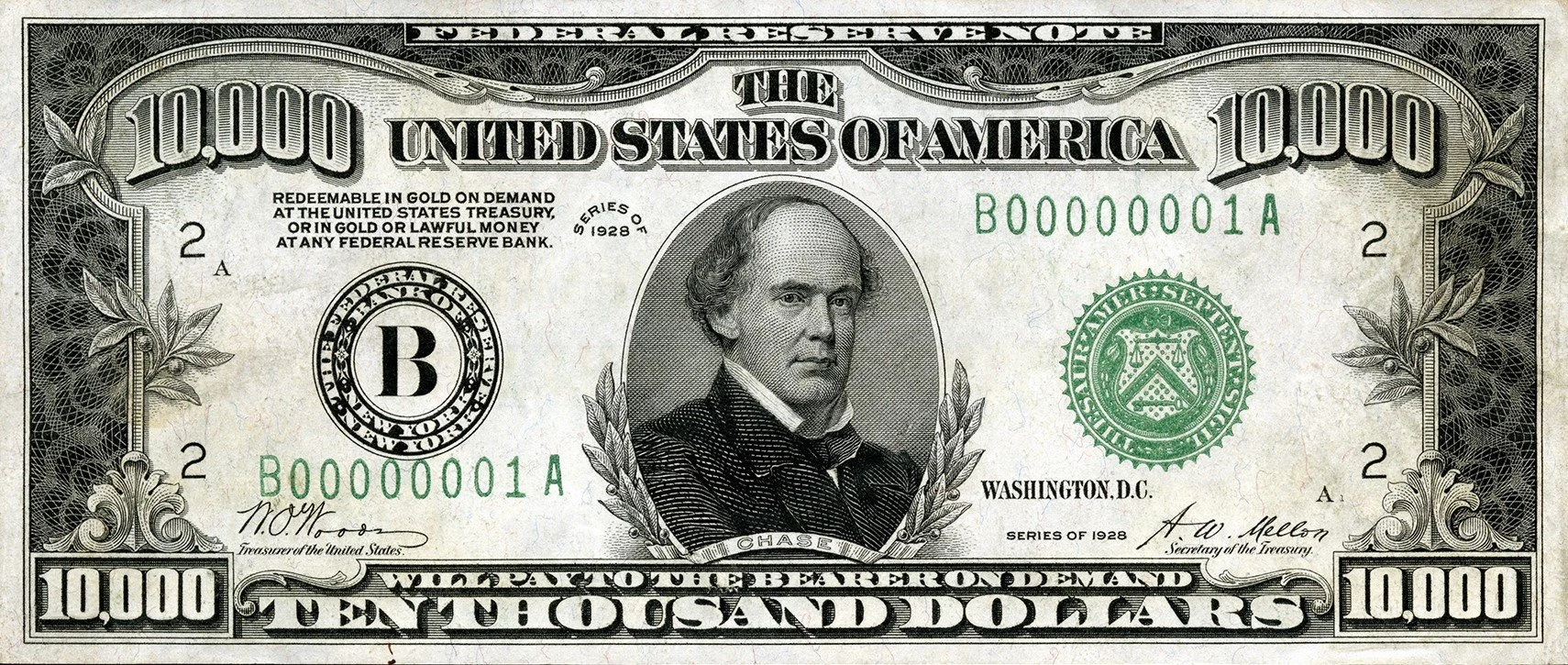
$10,000 - portrait of Salmon P. Chase
The latter gentleman, Salmon Portland Chase, was Lincoln's Secretary of the Treasury from 1861-64 and Chief Justice of the Supreme Court from 1865-1873. He is best known to coin collectors for a letter he wrote to the Philadelphia mint in 1861 requesting that a "device be prepared without delay with a motto expressing in a few words the recognition of the trust of our people in God."
After rejecting proposals of "God our Trust" and "God and our Country" the familiar "In God We Trust" was approved and first appeared on the U.S. two-cent piece of 1864. While the motto has not appreared on all our coinage, public outcry every time it has been omitted since has forced its return. (It was not added to paper currency until 1957.)
Today the largest bill still being printed is the $100 bill picturing Benjamin Franklin, The Treasury stopped printing the larger bills in 1969 and began withdrawing them from circulation.
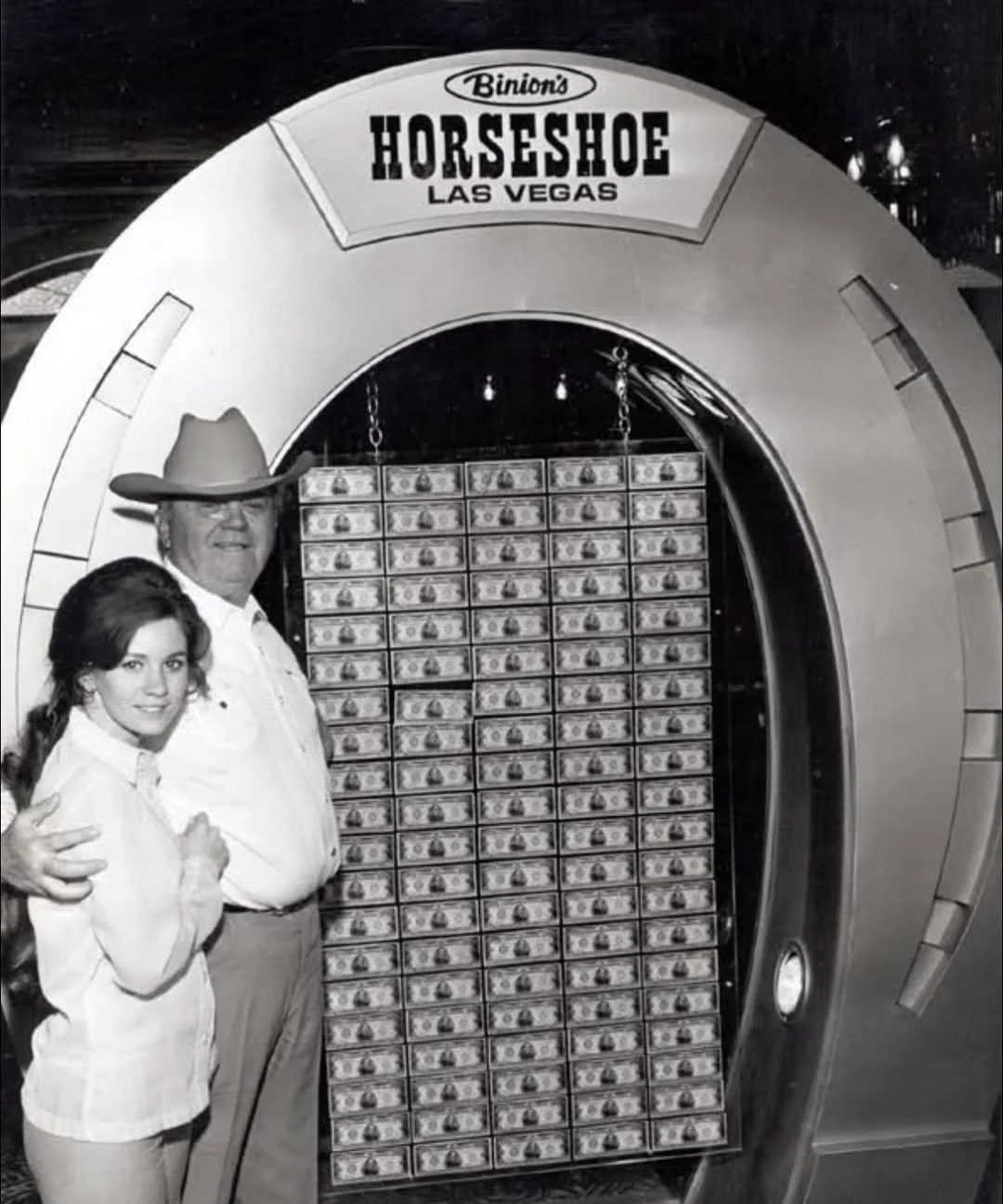
Benny Binion, owner of the Horseshoe Casino on Freemont Street in Las Vegas didn’t believe in subtlety. In 1969, he put $1 million in $10,000 bills behind glass to lure tourists, and it worked. Photo by Las Vegas News Bureau, LVCVA Archive
The official explanation was a "lack of demand," though it has been suggested that the larger bills were too much in demand by the criminal element. According to the theory, it was much easier for criminals to make a large payoff in a small envelope than in a conspicuous suitcase full of hundred dollar bills.
Though it's been twenty years since any were issued, and the Treasury still destroys every one that comes back into the banking system, the large bills remain legal tender. If you run across one, you can still spend it legally. A dealer or collector, however, would pay a premium over face value, the size of the premium depending on age, condition and scarcity.
So keep checking the nooks and crannies in old houses, the linings of old trunks and secret drawers in old furniture. At last report the Treasury says that 345 of the $10,000 bills alone are out there hiding somewhere.
Good hunting!

Rodger Nichols
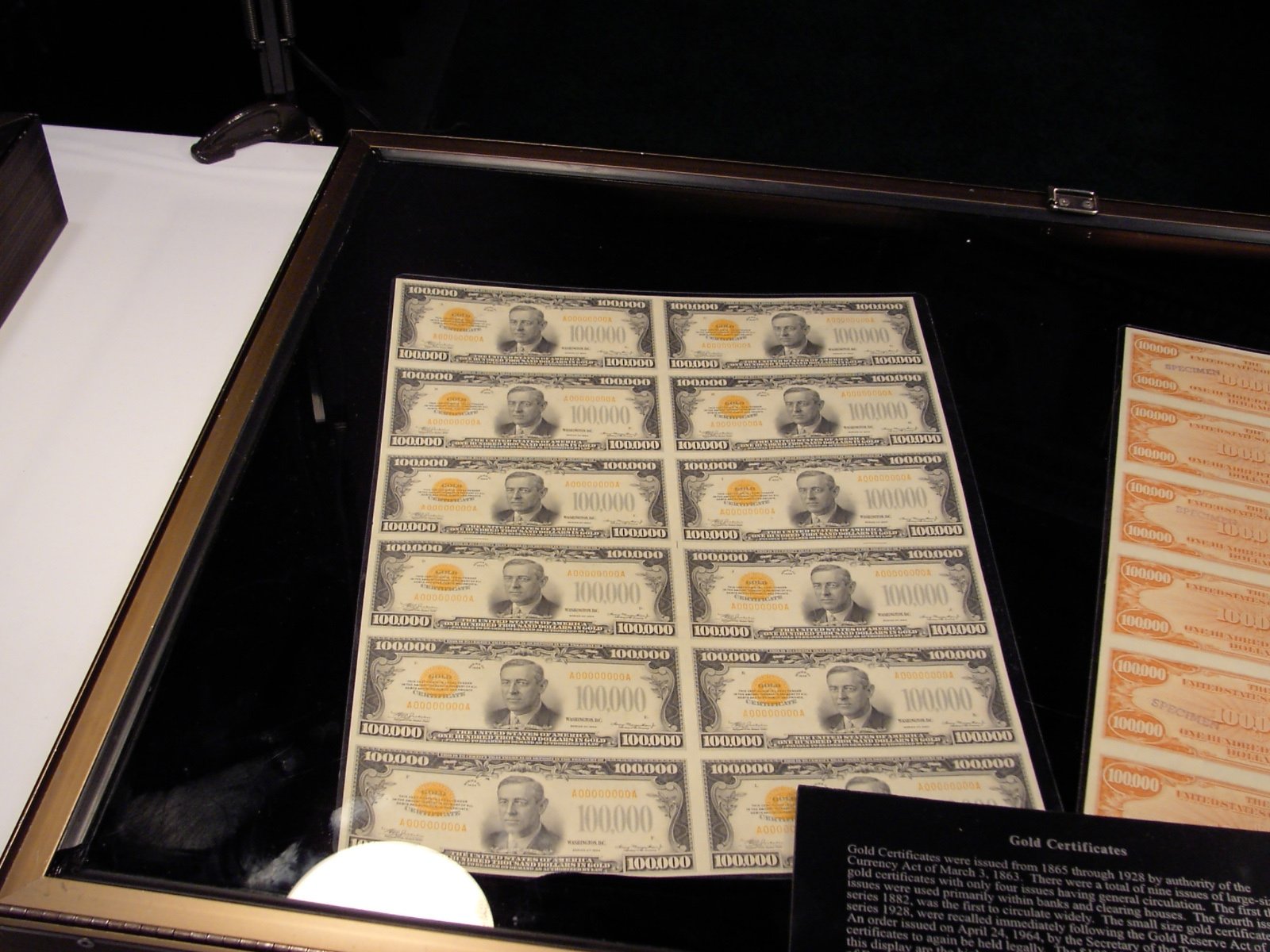
And here's a bonus photo. In 2005, The World's Fair of Money came to Portland and I visited and took this picture. The Bureau of Engraving and Printing provided two uncut sheets of 12.
$100,000 bills - you can see the second sheet showing the reverse at the right.That’s $2.4 million in two small sheets of paper.
About Rodger Nichols
Rodger Nichols has been evaluating coin and currency estates, both U.S. and foreign, for local lawyers since 2010. If you have gathered or inherited coins and currency, and want to find out their value, call or text Rodger at 541-980-1728.