
Northwest leaders push for new BPA chief as region faces rising demand, costs
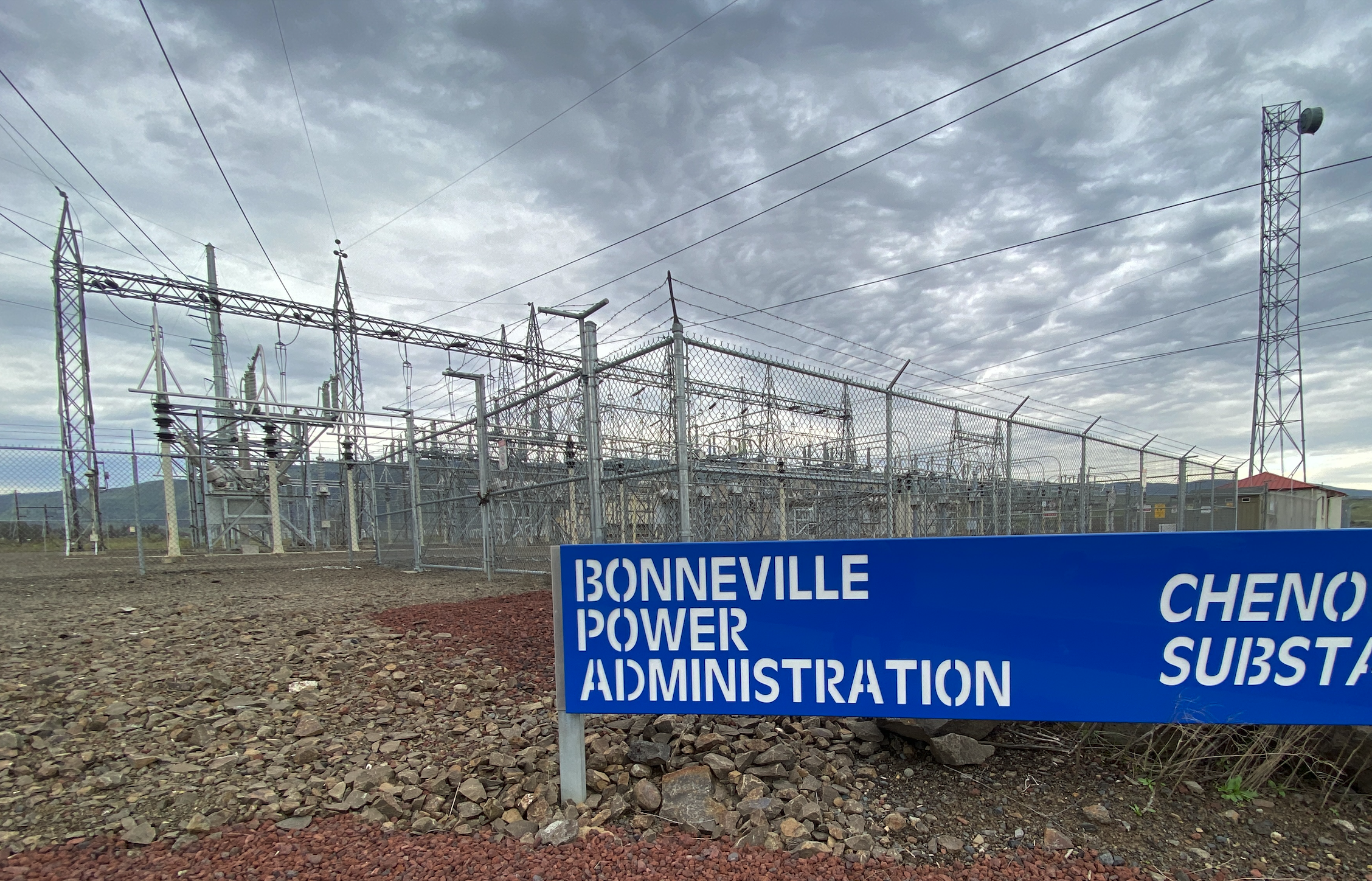
BPA’s Chenowith Substation powering Google Data Center near Taylor Lake.
The Dalles, Ore., March 19, 2026 — As federal officials begin the search for a new leader of the Bonneville Power Administration, Northwest lawmakers and local utility leaders are making clear what’s at stake: the future cost and reliability of power across the region.
Administrator and CEO John Hairston announced his retirement from federal service in February 2026 after a 35-year career, with his tenure as head of the agency beginning in January 2021. He led the regional power marketing agency through significant transmission improvements and contract renewals.
Members of Congress from Oregon, Washington, Idaho, Montana and Nevada this week urged the U.S. Department of Energy to prioritize experience, urgency and regional knowledge when selecting BPA’s next administrator, warning that delays and inefficiencies are already holding back critical energy projects.
The BPA plays a central role in the Northwest’s power system, operating roughly 75% of the region’s high-voltage transmission network and delivering electricity to nearly 5 million people.

Roger Kline
For communities like The Dalles, that role is not abstract.
“BPA is the foundation of our utility and a driver of economic vitality across the region,” said Northern Wasco County People’s Utility District CEO Roger Kline. “Nearly all of our residential power comes from BPA, so when BPA costs go up, that hits the wallets of the 25,000 customer-owners who count on us.”
Kline said BPA’s transmission system also underpins major employers in the region, including Google, which has invested more than $2 billion in Wasco County.
“We need an Administrator who brings deep Northwest familiarity, a real understanding of public power, and the pragmatic leadership to tackle transmission backlogs and surging demand head-on — someone unafraid to challenge the status quo to get results,” Kline said.

Cliff Bentz
In a letter sent to Energy Secretary Chris Wright, Congressman Cliff Bentz and a coalition of Republican lawmakers — known as the BPA Caucus — outlined a series of challenges facing the agency and the qualifications they believe are essential for its next leader.
Among the concerns raised:
Delays in expanding transmission capacity, slowing infrastructure development
Backlogs in the interconnection queue, limiting new energy projects
Recurring outages at hydropower facilities affecting reliability
The need to modernize environmental and fish management policies
Coordination challenges with federal partners such as the Bureau of Reclamation and U.S. Army Corps of Engineers
Lawmakers also emphasized the need for stronger leadership and a shift in agency culture, calling for an administrator willing to move projects forward more quickly and break through what they described as bureaucratic gridlock.
The letter highlights concerns that BPA has become too slow and risk-averse, particularly when it comes to building out transmission infrastructure — a growing concern as energy demand rises across the region.
At the same time, members welcomed the Department of Energy’s decision to post the administrator position publicly, calling it a step toward a more transparent, merit-based selection process.
The stakes are high.
BPA’s transmission lines carry roughly one-third of the Northwest’s electricity, making the agency a cornerstone of both daily life and long-term economic development in the region.
For local utilities and communities, the outcome of this leadership search could shape everything from monthly power bills to the pace of future growth.