
Nuisance Code passes TD Council with mods
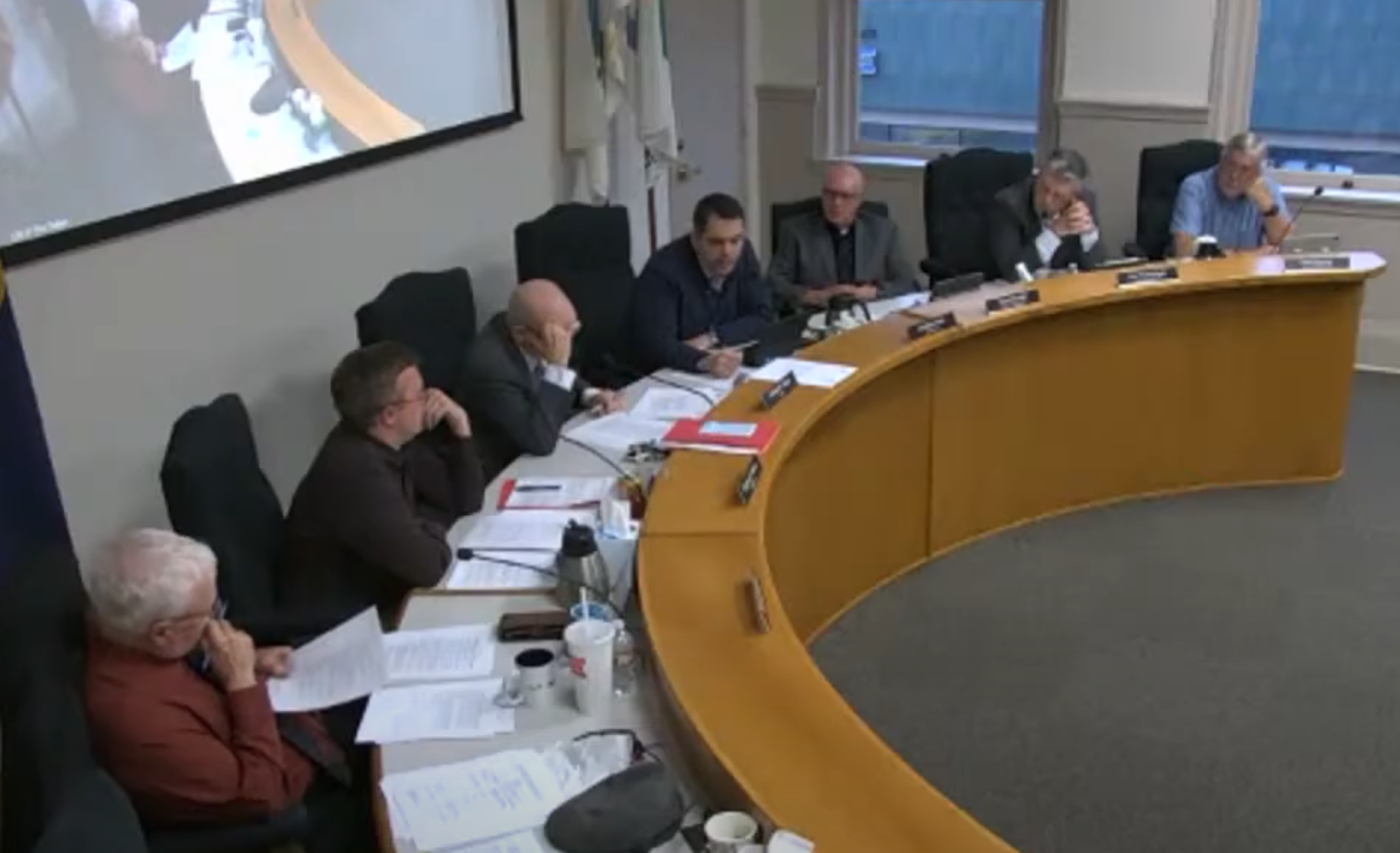
The Dalles City Council met Monday, Oct. 13, and took public comment on a revised public nuisance law before voting unanimously to approve it with ammendments.
By Tom Peterson
The Dalles, Ore., Oct. 13, 2025 — The Dalles City Council unanimously approved a long-awaited update to the city’s public-nuisance law Monday night, marking the first major rewrite in nearly three decades. The revised code modernizes how the city handles problem properties, adds protections for victims of domestic violence, and increases oversight before legal action can be taken.
Expanded Offense List, Shorter Time Window
Beyond procedural safeguards, the new code doubles the number of offenses that can trigger a nuisance designation—such as assault, disorderly conduct, or public drinking—but shortens the qualifying window from 12 months to 6.
City Attorney Jonathan Kara said the rewrite “broadens the scope but narrows the focus,” helping the city respond more effectively to ongoing problems while avoiding one-off incidents. The ordinance also allows reliable evidence — such as video footage or inspection reports — instead of relying solely on arrests or citations.
The updated nuisance law keeps the long-standing 300-foot rule, allowing the city to address recurring criminal activity occurring on or within 300 feet of a property - the same rule that led to the city’s suit against and the temporary closure of the St. Vincent de Paul meal site on Third Street. Officials said the distance ensures accountability when illegal behavior stems from, or is closely tied to, a specific location—such as a business, rental, or service site—without unfairly targeting unrelated nearby properties.
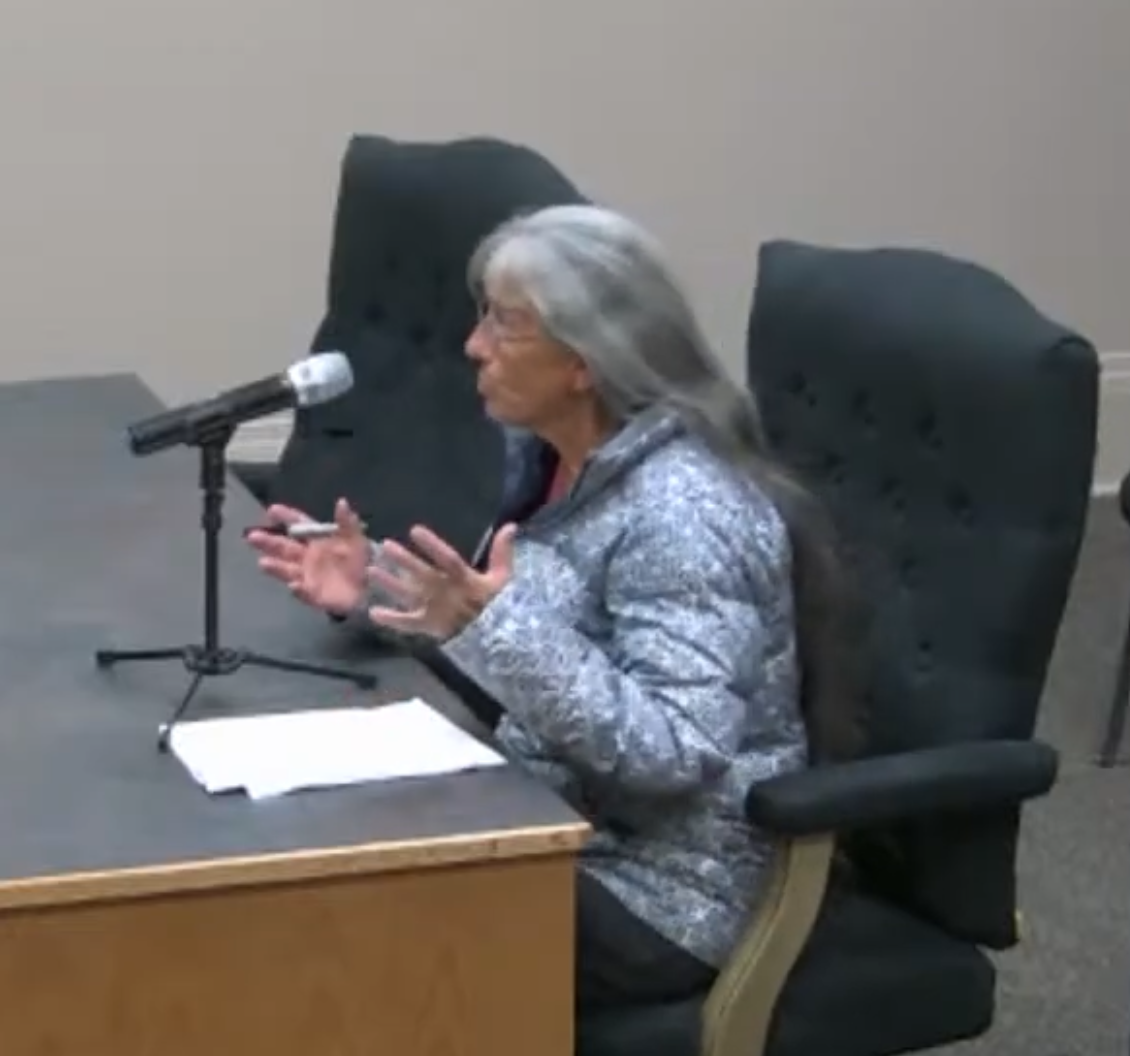
Teresa Yragui-Zeman speaks to The Dalles City Council about feeding the houseless and how a new public nuisance law might effect people who don’t have food.
Nonprofits Push Back: ‘Don’t Blame the Helpers’
The meeting’s most passionate exchange came from Teresa Yragui-Zeman, organizer of Bread and Blessings, and other nonprofit representatives who said the ordinance risks punishing those trying hardest to solve the community’s toughest problems.
Yragui-Zeman said nonprofits that serve unhoused or food-insecure residents are “constantly walking a tightrope between compassion and compliance.”
She told the council that volunteers feeding people downtown shouldn’t be blamed for the behavior of adults they cannot control.
“We’re not the authority,” she said. “We can’t arrest anyone or make them move. We’re just trying to feed people who are hungry and help them survive another day.”
She explained that Bread and Blessings’ mobile food distribution depends on volunteer vehicles packed with tables and supplies, making relocation impractical when the city suggests alternative sites far from where people actually live.
“You can’t expect folks without cars to walk miles to a meal,” she said. “We serve one hour. They’d never make it.”
Yragui-Zeman acknowledged concerns about safety and neighborhood impacts but argued that enforcement should target violent or criminal behavior directly, not the organizations providing aid.
“If someone is breaking the law, deal with that person,” she told the council. “Don’t punish the groups who show up when nobody else will.”
She also referenced the 2023 closure of St. Vincent de Paul’s Pentland Street facility — which the city shut down under the old ordinance after complaints from nearby residents — saying that experience left lasting distrust.
“Lawsuits against nonprofits don’t solve homelessness,” she said. “They just make it harder for the next group to step up and help.”
Yragui-Zeman urged the council to delay adoption for two weeks to give service providers more time to review the new language.
While the council proceeded with its unanimous vote, several members emphasized that the law was not directed at any nonprofit and praised volunteers for their continued community work.
“This ordinance isn’t aimed at nonprofits, Teresa,” Mayor RichMays said. “It’s 27 years overdue and applies citywide.”
He acknowledged Bread and Blessings’ contributions but added,
“Even the best-intentioned efforts can have unintended impacts on neighborhoods. The city has an obligation to step in when public safety or livability is at risk.”
During her remarks, Teresa Yragui-Zeman also thanked Councilor Timothy McGlothlin for his ongoing support, noting that he had personally helped her search for potential buildings to relocate or expand Bread and Blessings’ meal programs.
“Tim has been out there with us, looking for spaces that could actually work,” she said. “He understands the challenges we face trying to serve people safely and still meet the city’s expectations.”
Safe Harbor Protects Victims and Property Owners
A key addition, made in consultation with the Wasco County District Attorney, creates a safe-harbor clause ensuring that victims of domestic violence or other crimes are not penalized for calling 911.
Incidents first reported by a property owner or their representative will not count toward a nuisance finding unless the city shows the owner failed to follow an approved plan to correct the problem.
Kara said the update “maximizes victim protection” and encourages cooperation between property owners and police without discouraging crime reporting.
Council Adds Extra Safeguards Before Legal Action
The unanimous vote to approve the law came after Kara recommended last-minute language changes that strengthened council and staff oversight.
Under the new provisions, the police chief must now send copies of nuisance notices not only to the city attorney but also to the city manager’s office, ensuring both departments are informed when enforcement begins.
A second change requires that any legal action — such as closing or restricting use of a property — receive specific authorization from the City Council before it proceeds.
Councilor Dan Richardson, who proposed the additional step, said the goal was to “memorialize our instruction on this matter” and ensure that any move to interfere with private property “is taken seriously and only with council approval.”
The measure passed unanimously following a motion by Richardson and a second from Councilor Timothy McGlothlin, with Mayor Rich Mays calling the changes “a thoughtful balance of fairness, accountability, and transparency.”
Accountability and Review
Kara committed to reporting back within 12 months to evaluate how the new law performs and whether further adjustments are needed.
City Manager Matthew Klebes said the revisions provide “a fair and balanced tool for addressing chronic problem areas while protecting property rights and victims.”
Naramore Pushes Back on Criticism of MCCAC’s Efforts

Leslie Naramore
The meeting also gave Leslie Naramore, executive director of the Mid-Columbia Community Action Council, an opportunity to publicly respond to comments made at the previous council session questioning the effectiveness of her staff.
Naramore said she felt the organization was unfairly represented after the discussion continued following her earlier presentation and departure. “Our staff work tirelessly to support our most vulnerable community members throughout Hood River, Wasco and Sherman counties,” she said. “These problems are a community problem to solve, not just an MCCAC problem.”
She outlined recent accomplishments, including rehousing 23 families displaced by the Rowena Fire and helping 243 residents avoid or escape homelessness during the past fiscal year.
“The council asked what my 30 staff are doing,” Naramore said. “They are stretched thin, but every day they come to work and get things done in spite of a lack of resources, funding, and sometimes community support.”
She invited council members to spend a day on-site with her team and attend MCCAC’s upcoming Housing Stabilization Summit on Nov. 6 at The Dalles Civic Auditorium, emphasizing that lasting progress requires collaboration between local government and service providers.