
Processing to Fresh Precision: A Mid-Columbia Story of Fruit Innovation
Thoughts from the Tractor Seat by Ken Polehn
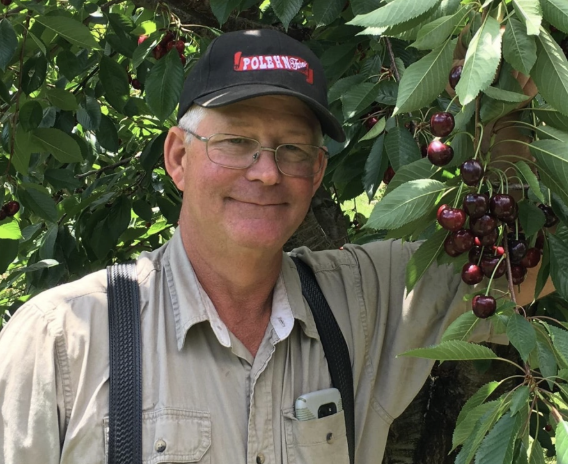
Ken Polehn
The Dalles, Ore., Feb. 28, 2026 — If you grew up in The Dalles, summer wasn’t theoretical.
Teachers managed crews. High school students drove tractors. College kids came home to earn tuition in the orchards and on processing lines. The river moved quietly below, but the hills hummed with work.
And for a long stretch of our history, processing was the backbone.
Cherries went into the brine and cans. Pears moved through syrup lines. Fruit that didn’t meet fresh cosmetic standards still had value. Processing contracts created predictability. Banks understood them. Growers relied on them. A portion of every orchard had a destination that wasn’t dependent on perfect size or flawless skin.
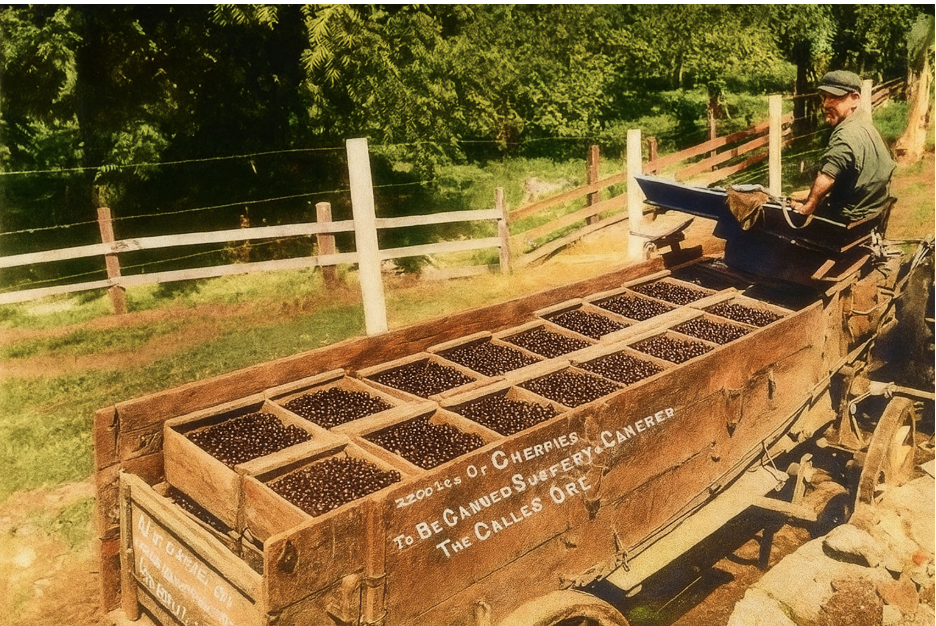
That structure shaped the Mid-Columbia economy.
Fresh fruit was always present. Refrigerated rail cars carried cherries east. Later, trucks widened the market. But processing provided ballast. It absorbed variability. It extended employment beyond harvest. It distributed risk across more than one outlet.
Then consumers changed.
American diets shifted toward fresh produce. Shelf-stable fruit lost ground. Retail expectations tightened. Appearance mattered more. Sweetness mattered more. Packaging mattered more.
And so we evolved.
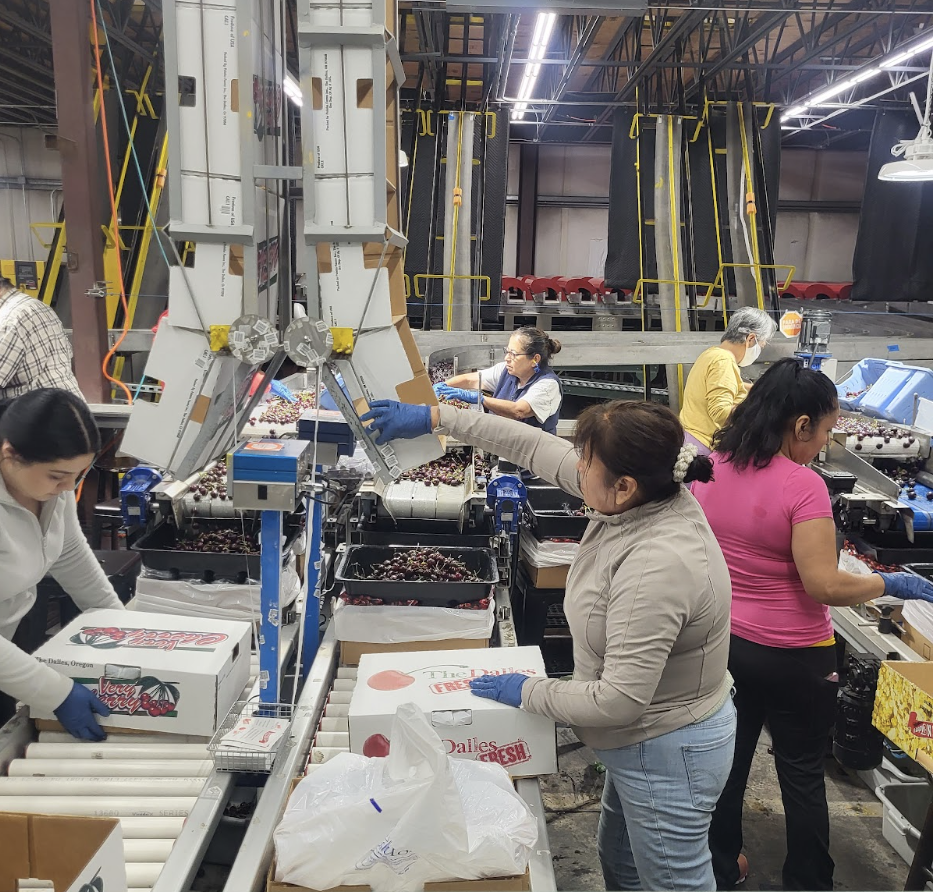
The transition wasn’t sudden. It happened field by field, block by block, decade by decade. Packing houses modernized. Cold storage expanded. Variety selection sharpened. Forklifts replaced hand trucks on receiving docks. Lug boxes gave way to buckets and macro bins.
Processing didn’t vanish overnight. It simply ceased being the primary anchor.
Fresh precision took its place.
By the early 2000s, Mid-Columbia had largely aligned itself with premium fresh markets. Our cherries grew larger. Our pears are cleaner. Our harvest windows are tighter. Export relationships strengthened. The fruit that once might have been buffered by processing now depended more directly on quality, labor timing, and logistics.
It was not decline.
It was adaptation.
But adaptation carries trade-offs.
Processing spreads risk differently than a fresh-dominant system. In heavy crop years, it absorbs surplus. In off-grade situations, it provides an outlet. In volatile markets, it cushions impact.
Fresh markets reward excellence — but they expose weakness more quickly.
Urban readers often see only the visible result: beautiful fruit stacked in June. What they don’t see is the generational recalibration that made that fruit possible.
The Mid-Columbia didn’t abandon its backbone. It outgrew it.
Processing built the foundation. It stabilized the community. It trained labor. It financed orchards. It carried the region through decades when fresh markets were smaller and less global.
Then we evolved alongside consumer expectations.
From brine barrels to clamshells.
From syrup tins to export cartons.
From volume-driven contracts to precision-driven markets.
The river still flows past the orchards. Blossoms still bloom every April. But beneath that familiar landscape lies a food system that has reinvented itself without losing its roots.
Processing was our backbone.
Fresh precision is our present.
And the Mid-Columbia story is not about losing one or the other — it is about how a community along the Columbia River adjusted, generation by generation, to meet the expectations of the tables it feeds.