
TD Council to consider long-term employment strategy amid limited industrial land supply
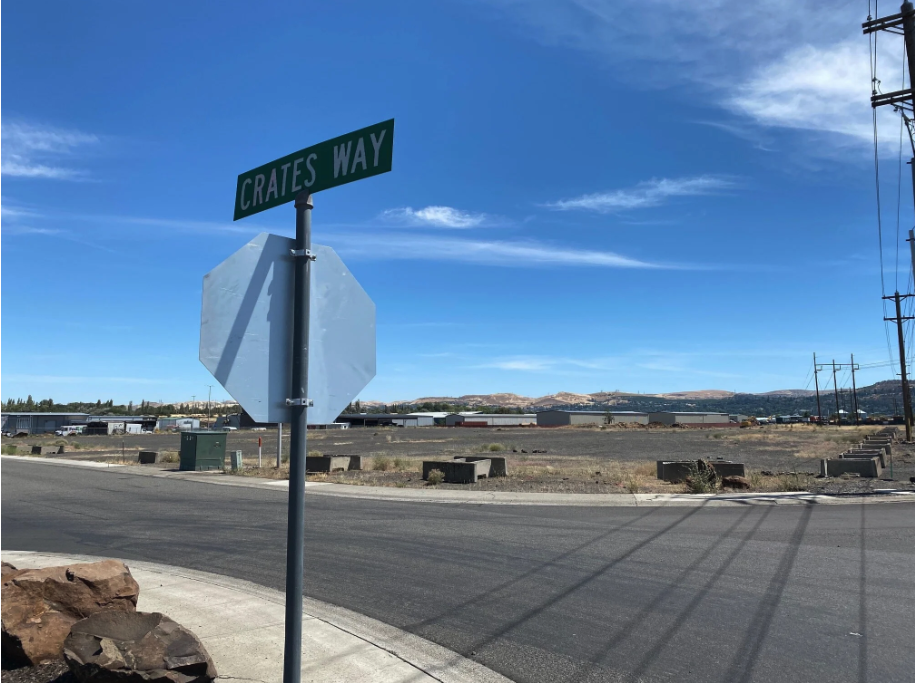
This 4.46 acre lot in the Port of The Dalles is industrial, but not big enough to capture a larger industrial employer. City planners report that while smaller industrial parcels remain available, no sites currently exist in the 30- to 60-acre or 60- to 100-acre range typically required for large industrial developments.
By Tom Peterson
The Dalles, Ore., Feb. 22, 2026 — The Dalles City Council on Monday will consider adopting a long-range employment land strategy as city planners report a shortage of large industrial sites needed to support future employers.
The City’s updated analysis projects The Dalles could add approximately 2,800 jobs over the next 20 years and estimates between about 46 and 147 acres of employment land will be needed to accommodate that growth. While the City has about 205 acres of buildable employment land remaining within its Urban Growth Boundary, officials say most of the larger parcels needed for major industrial or technology employers have already been developed.
Much of that development has occurred over the past two decades at the Port of The Dalles. According to Wasco County property records, Google and its affiliated entity Design LLC own approximately 175 acres of industrial land at the Port, where the company has constructed multiple data center facilities. Those projects were approved by local governments beginning in the early 2000s, when officials sought to attract new economic investment following the closure of the region’s aluminum smelter.
As a result, city planners report that while smaller industrial parcels remain available, no sites currently exist in the 30- to 60-acre or 60- to 100-acre range typically required for large industrial developments.
The aluminum smelter that previously operated at the Port of The Dalles employed approximately 500 workers at its peak, according to local historical records. Today, Google’s data center operations employ roughly 200 people locally. City planners note that modern data centers require significantly fewer employees than traditional manufacturing, even as they occupy large industrial sites.
From that story:
Economist David Swensen differs in opinion when it comes to the overall benefit to a community for offering huge property tax breaks for companies building data centers.
He watched it and studied it in West Des Moines, Iowa.
He said of the proposed $1.2 billion Google is willing to spend, a small fraction would go to benefit the community.
He said they should not be given tax breaks unless they produce a lot of high-paying jobs.
Swensen is an award-winning community economics research specialist at Iowa State University and has a Masters’ Degree in Urban and Regional planning. He’s studied data plants in The Dalles.
“These companies come in with a huge number for investment, but it is a red herring,” he said. “The amount of increase it produces in the economy is not in relation to the geographic footprint they create. The leverage they exert over the community is disproportionate to the contribution they commit.”
The City’s industrial land supply is further limited by geographic and regulatory constraints. The Dalles’ Urban Growth Boundary, established under Oregon land-use law and influenced by protections under the Columbia River Gorge National Scenic Area Act, restricts outward expansion and makes industrial land a finite resource.
City officials say adopting the updated employment land analysis will incorporate current land supply, employment projections and development patterns into the City’s Comprehensive Plan. The analysis, required by the state, does not approve new development or change zoning but provides the planning framework used to guide future economic development and land-use decisions.
Strategic plan
Councilors will also consider adopting the City’s first formal three-year Strategic Plan, covering 2026 through 2028.
The plan identifies five primary focus areas: economic development, housing, historic preservation, tourism and downtown vitality, and transportation improvements. City officials say the shift from annual goal setting to a multi-year strategic plan is intended to provide greater continuity in decision-making and align long-term priorities across city departments.
The plan was developed through strategic workshops involving City Council and staff, along with employee surveys and consultant facilitation. While adoption does not authorize immediate spending, it will guide future budget decisions, infrastructure investments and policy priorities.
Next Door Inc. grant
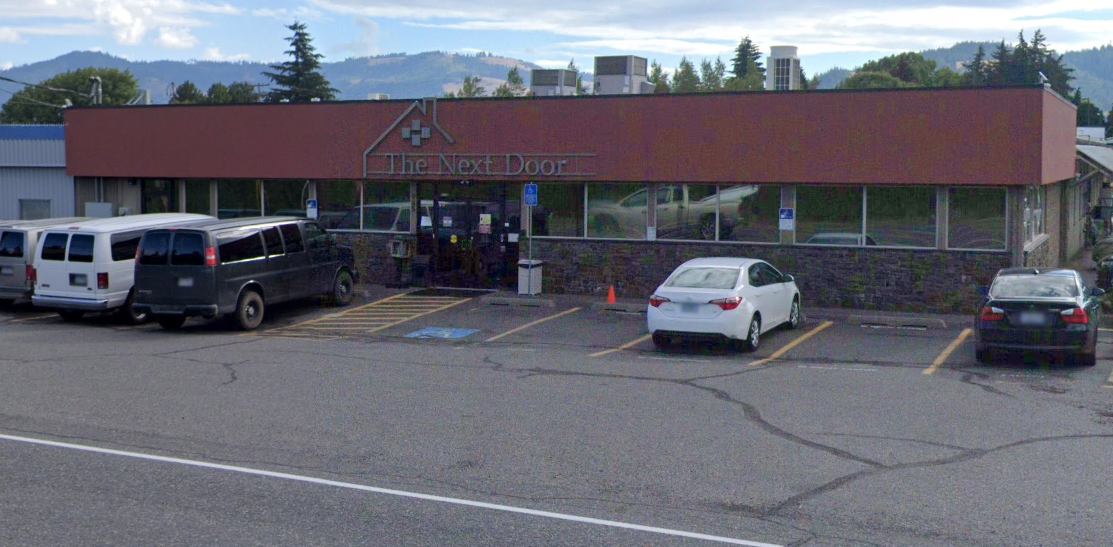
In a separate agenda item, councilors will review a proposal to provide up to $19,000 in grant funding to The Next Door Inc. to support counseling services for children and families experiencing impacts related to federal immigration enforcement activity.
The funding would come from existing City Manager budget authority and is intended to provide services for families who do not qualify for Oregon Health Plan coverage.
City staff have also taken additional steps following the council’s January resolution addressing community concerns, including publishing informational materials, translating city forms into Spanish and coordinating with local service providers.
Sewer repairs, airport contract
Council members are also expected to approve a $412,995 contract with Vortex Services LLC to rehabilitate sections of the city’s sanitary sewer system using trenchless cured-in-place pipe lining technology. The project was budgeted at $600,000, with the selected bid coming in $187,005 under budget.
Councilors will also consider extending the City’s airport management agreement for up to one year at a cost of $153,900, allowing continued airport operations while officials evaluate longer-term management options.
Mayor Richard Mays has also recommended reappointing Donna Lawrence and Forust Ercole to the Urban Renewal Budget Committee.
Executive session
Following the public meeting, councilors will enter executive session to conduct labor negotiations discussions as permitted under Oregon law.
The Dalles City Council will meet Monday, Feb. 23, at 5:30 p.m. at City Hall, 313 Court St.
Click here to read the agenda and background information.
Agenda references: Employment Opportunities Analysis (Ord. 26-1425); Strategic Plan adoption; Resolution 26-002 grant update; Contract No. 2025-016 sewer lining project.