
The Bloom Returns
Thoughts from the Tractor Seat By Ken Polehn
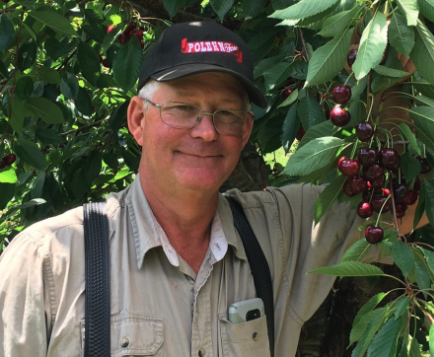
Ken Polehn
March 28, 2026 — Last April, I wrote that when the desert blooms, it’s a promise.
This year, standing beneath the same white canopy of cherry blossoms, I’m reminded of something else.
Promises require tending.
The hills above the Columbia look much the same as they always do this time of year. Basalt cliffs. Dry grass greening at the edges. And scattered across those slopes, orchards briefly transformed into something almost too delicate for the landscape they grow from.
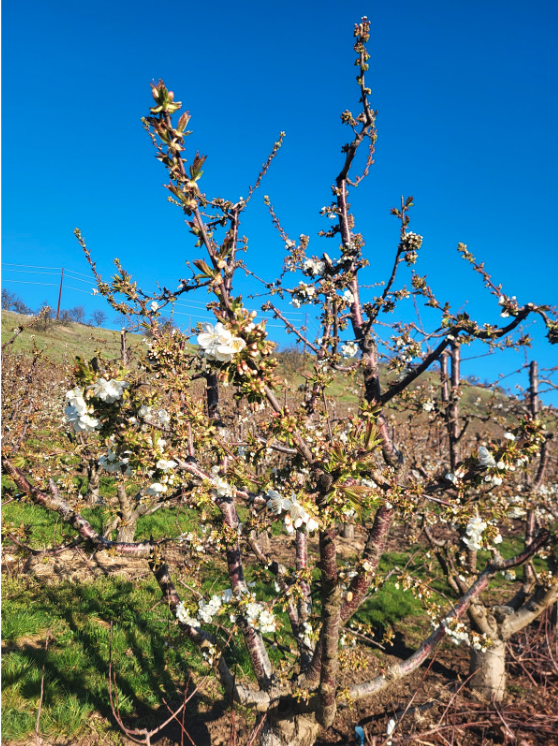
Blossom time is still quiet. It doesn’t shout. It whispers.
But anyone who farms knows that bloom is not the harvest. It is the beginning of responsibility.
Within days of petals opening, we are watching the forecast. Frost can come without apology. In this valley, cold air doesn’t sit still — it rolls downhill toward the river. One cold night can change the math of an entire year.
We listen for frost fans turning in the early morning hours. We check thermometers before sunrise. We study wind patterns moving down the Gorge. We know how quickly hope can turn into calculation.
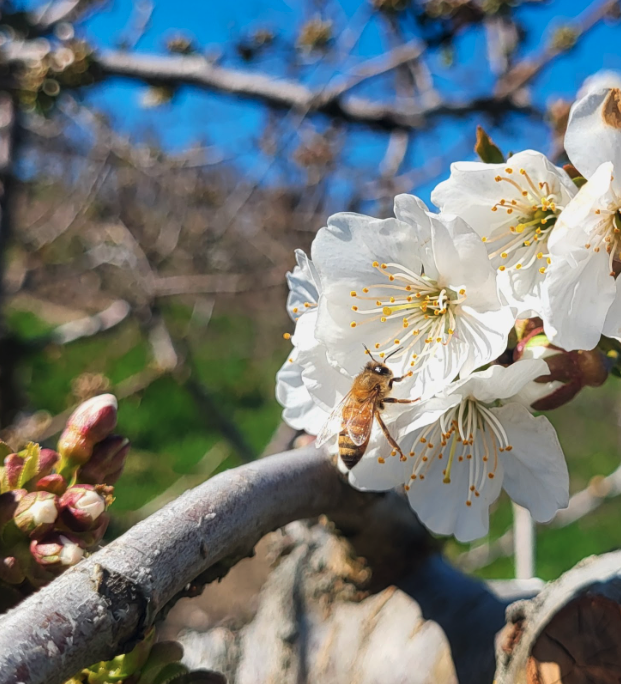
Bees move deliberately between blossoms, doing work no machine can replace. If the weather holds, pollination sets in quietly. If it doesn’t, we know it quickly.
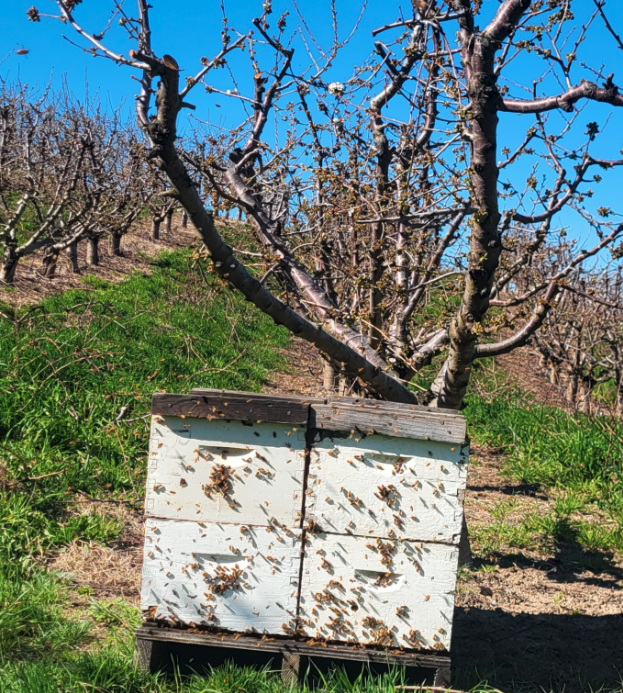
The orchard doesn’t respond to optimism alone. It responds to attention — to timing, to preparation, to experience.
Crews will arrive soon, just as they have for generations. Families who return each year will step back into the rhythm of the season — checking irrigation lines, servicing tractors, walking blocks to gauge bud set and bloom progression. We may not speak the same first language, but we share the same understanding of what it takes to make a crop work.
The orchard doesn’t care about headlines. It responds to hands that know how to read a tree.
When the bloom returns, it brings both hope and humility.
Hope, because we believe again.
Humility, because we know how fragile that season can be.
The Northwest Cherry Festival celebrates blossoms, royalty, and tradition. It should. There’s joy in recognizing what built this town.
But beneath the parade and the crowns, something quieter is happening on the hillsides.
Farmers are calculating risk.
Workers are preparing for long days.
Families are deciding, once again, to trust a season that offers no guarantees.
That trust is the real promise of bloom.
Not that everything will go right.
But that we will show up anyway.
Every April, the desert blooms.
And every April, we answer it — with frost fans turning before dawn, with ladders waiting in the rows, with faith earned from years of watching cycles come and go.
The petals will fall soon enough.
But for now, the hills are white again.
And the promise returns — not as a dream, but as work waiting to be done.
The fruit still grows here.