
Thoughts from the Tractor Seat: When the Fair Had to Move, Two Counties Came Together
By Ken Polehn
The Dalles, Aug. 14, 2026 — The Grasshopper Fire got me thinking about county fairs.
Not necessarily about the rides, ribbons, or livestock shows, but about why county fairs matter in the first place.
With the Grasshopper Fire threatening the Tygh Valley area, the Wasco County Fair Board was forced to make the difficult decision to cancel the fair there.
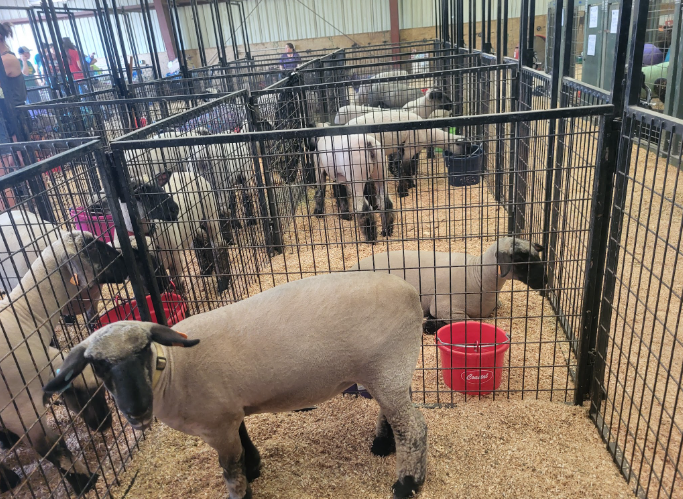
Less than 48 hours later, I found myself standing at the Hood River County Fairgrounds watching Wasco County 4-H and FFA members weighing their animals in.
Looking around at the livestock barns, trailers, parents, grandparents, volunteers, and young people, I realized I was witnessing something pretty remarkable.
Two counties had come together almost overnight to make sure these kids still had their fair.
That's when another thought occurred to me.
County fairs are generational events.
You don't have to have shown a steer, hog, lamb, or goat to understand that.
Maybe your family went every summer when you were a kid. Maybe you remember the smell of the livestock barns, eating something you probably shouldn't have eaten, watching the rodeo, walking through the exhibits, or running into people you hadn't seen since the previous year's fair.
For many rural families, those memories stretch across five or six generations.
A great-grandparent may have brought livestock to a county fair. Their children followed them. Then their grandchildren did. Eventually, another generation walks into that same livestock barn carrying a feed bucket or leading an animal.
The buildings change.
The animals change.
The kids change.
But something gets passed along.
It isn't just tradition.
It's responsibility.
Anyone who has watched a 4-H or FFA member raise an animal knows the ribbon at the end is only a small part of the experience.
Animals have to be fed when you're tired.
They have to be cared for when it's hot.
Sometimes the animal doesn't cooperate.
Sometimes you work all year and don't win.
Sometimes somebody else simply does a better job.
Those are pretty good lessons for life.
You learn responsibility. You learn competition. You learn sportsmanship. You learn disappointment. And eventually you learn that finishing what you started can matter more than the color of the ribbon hanging on the stall.
That is why what happened after the Grasshopper Fire disrupted the Wasco County Fair is worth remembering.
People didn't have months to plan.
They had hours.
Fair officials, Extension staff, 4-H and FFA leaders, parents, volunteers, and families started figuring out what needed to happen.
Animals had to be moved.
Pens had to be found and arranged.
Trailers and campers started arriving.
Schedules had to change.
Space had to be made.
Hood River County opened its gates, and people from both counties went to work.
And the kids still got their fair.
There will undoubtedly be discussions about the Grasshopper Fire, the decision to cancel the fair in Tygh Valley, and everything surrounding those difficult hours.
Those conversations can happen.
But standing at the Hood River County Fairgrounds, I saw something else worth talking about.
I saw what rural communities can accomplish when there isn't time to argue about who gets the credit.
Nobody seemed particularly concerned about which side of the county line someone lived on.
The question was much simpler:
What do you need?
There is something in that worth remembering beyond the fairgrounds.
We spend an awful lot of time these days talking about what divides us. Politics. Geography. Rural versus urban. One county versus another.
Yet when a wildfire threatens a community and young people are about to lose something they've worked toward all year, those divisions can disappear remarkably quickly.
People help people.
That's how rural communities have survived fires, floods, crop failures, hard winters and difficult economies for generations.
H
Maybe that's another lesson our young people learned at the fair this year—one nobody planned on teaching them.
Someday the children showing animals today may bring their own children to a county fair. They might tell them about the year the Grasshopper Fire forced their fair out of Tygh Valley.
But I hope that's not the only part of the story they remember.
I hope they remember what happened next.
Hood River opened the gates.
Neighbors showed up.
Two counties went to work.
And a tradition that has been handed down from one generation to another kept going.
A county fair may last only a few days.
The memories and life lessons can last a lifetime.
And sometimes, if we're fortunate, they last for generations.
Support Local News!
Available for Everyone; Funded by Readers.