
Urban Renewal works to focus downtown identity as sunset looms
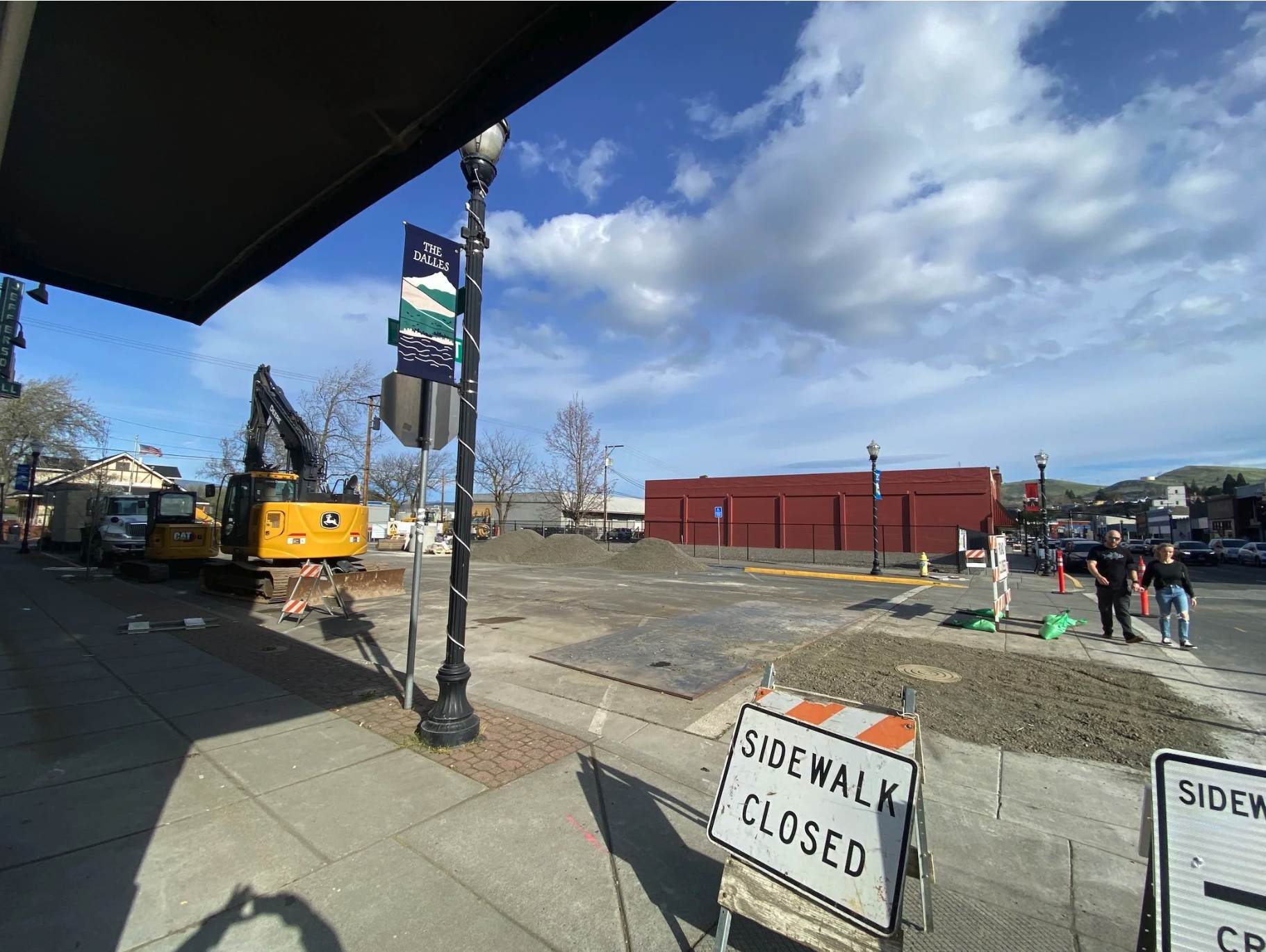
Federal Street Plaza is at the heart of multiple plans to reinvigorate the downtown core in The Dalles. But other major projects also seek to shape the district including the Jantzen Beach Carousel at the National Neon Sign Museum, or Basalt Commons, a proposed five-story, mixed-use apartment development planned for East Third Street. But what is the unifying theme some are asking.
The Dalles, Ore., May 19, 2026 — With roughly $4 million to $7 million in future spending capacity remaining before The Dalles’ Urban Renewal District sunsets in 2029, city leaders are increasingly debating what kind of downtown they want to build — and how aggressively they should spend remaining redevelopment dollars.
Tuesday’s meeting begins tonight at 5:30 p.m. at The Dalles City Hall and will be livestreamed on ZOOM.
That discussion is expected as the Columbia Gateway Urban Renewal Agency Board meets to review its budget and redevelopment priorities. Urban Renewal money remains one of the few flexible local funding tools available for major downtown redevelopment projects, and the decisions made during the district’s final years could shape the appearance, business mix and long-term identity of downtown The Dalles well after the district itself expires.
The debate intensified during a March Urban Renewal meeting where Economic Development Officer Jacob Anderson presented a list of approximately 51 redevelopment ideas gathered from board members. The ideas ranged from public improvements and private redevelopment incentives to larger destination-style projects intended to draw more activity downtown.
Anderson told board members the purpose of the discussion was not to immediately select projects, but to help determine broader priorities — including whether to focus on increasing occupancy, improving public spaces or investing in catalytic redevelopment projects.
That conversation also unfolded as uncertainty continues around Basalt Commons, the proposed five-story, mixed-use apartment development planned for East Third Street. The project, which includes 116 housing units and ground-floor commercial space, has already received a $1.73 million Urban Renewal funding commitment and would become one of the largest residential developments in downtown The Dalles if completed.
In the agency’s proposed budget message, Anderson described Basalt Commons as a “transformative” redevelopment project and said the Urban Renewal Agency remains prepared to support construction if the project proceeds. He also acknowledged that officials are preparing alternative recommendations in case the project does not move forward, signaling how central the development has become in conversations about the district’s remaining investment capacity.
The conversation exposed deeper questions about downtown’s long-term identity.
Board member Jill Amery said the city still lacks a clearly defined sense of identity, making it difficult to prioritize investments. Kristen Lillvik emphasized the need for local groups and agencies to better coordinate around a shared direction for downtown.
Others focused on practical concerns.
Bets Stelzer urged the board to rely more heavily on data when deciding which types of businesses and projects to support downtown. Walter Denstedt questioned whether traditional retail models remain sustainable given rising costs and changing business conditions.
Meanwhile, board member Ben Wring pushed for faster movement on redevelopment of Tony’s Lot, saying visible progress on the property should become a near-term priority.
The debate comes as new downtown data paints a mixed picture of the city’s core business district.
A recent downtown inventory completed by Lewis and Clark College intern Evan Stover identified 241 businesses within the downtown commercial zone, with service-oriented businesses making up roughly 56% of the total. Retail accounted for 23% while restaurants and food businesses represented about 15%.
The analysis also found 21 vacant buildings downtown, resulting in an estimated 9.29% vacancy rate. Vacancies were concentrated largely along Second and Third streets.
Stover told the board the inventory is intended to serve as a baseline for future economic analysis and identifying gaps in the downtown business mix.
The Urban Renewal District itself is nearing the end of its lifecycle. The district, first created in 1990, is expected to terminate in 2029 once its debt obligations are retired.