
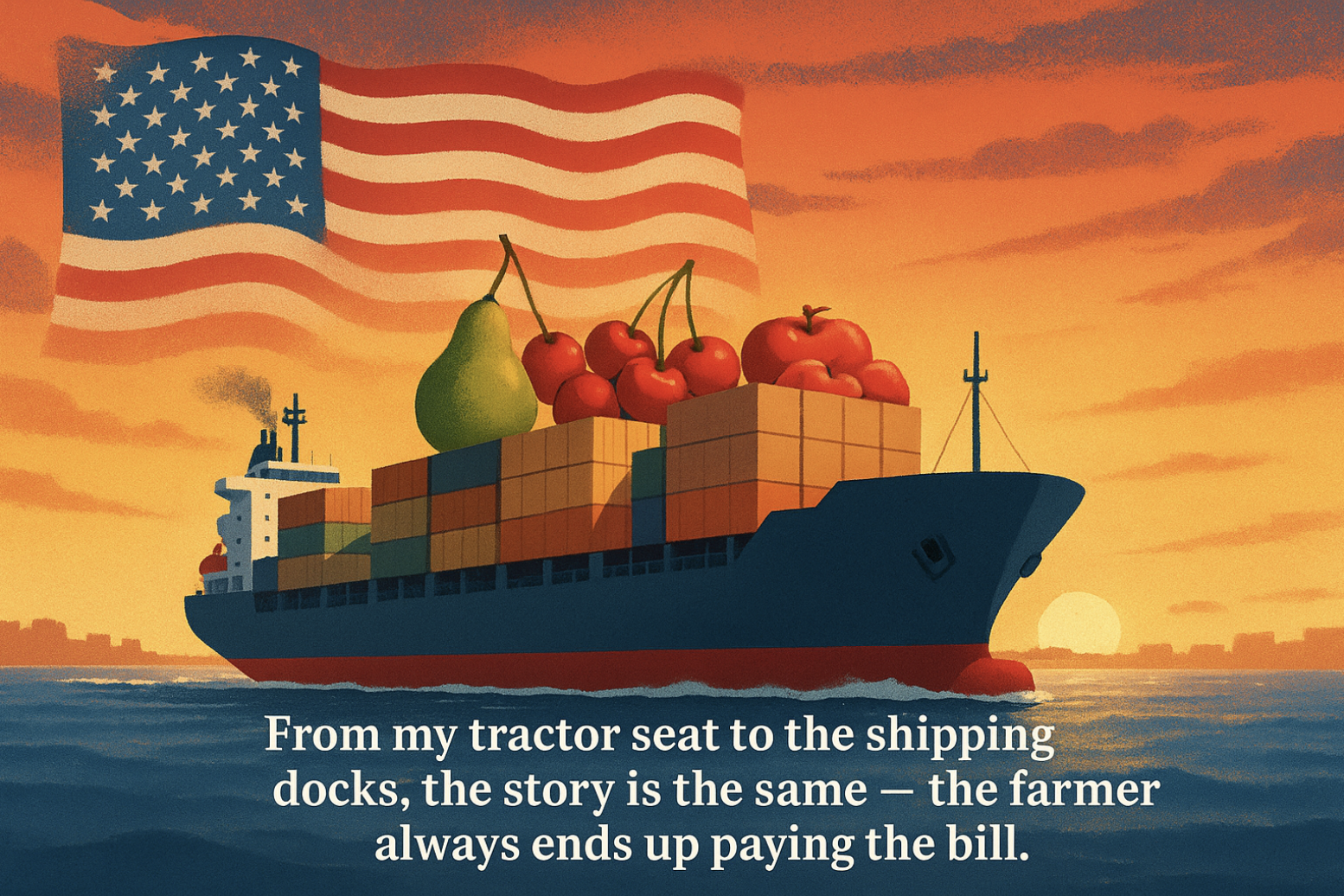
Thoughts from the Tractor Seat by Ken Polehn
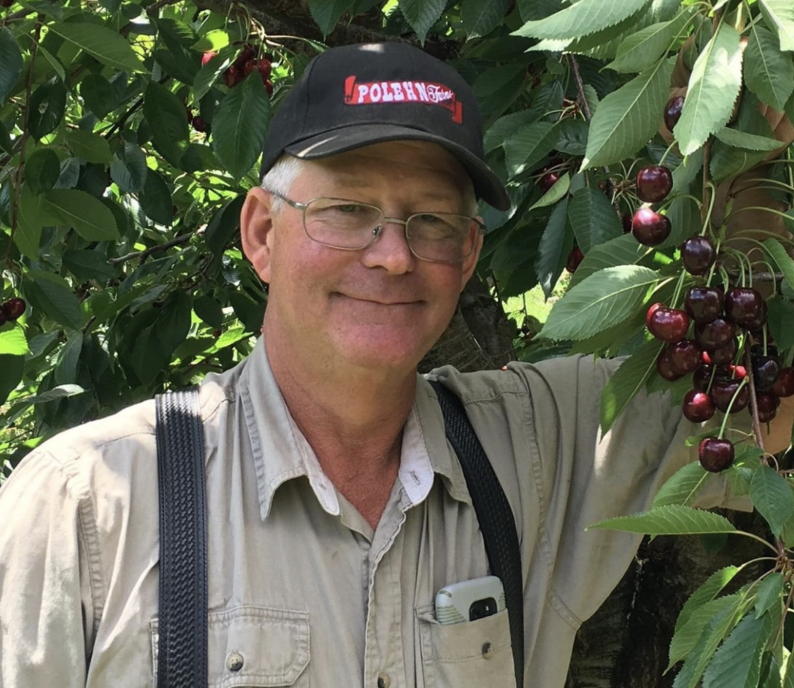
Ken Polehn
“Tariffs aimed at foreign powers are breaking the backs of America’s farmers — and most consumers don’t even see it happening.”
When politicians promise to “make China pay,” it sounds tough. It sounds patriotic. But here’s the truth no one likes to admit: China doesn’t pay these tariffs. America does. And for those of us who farm for a living, that bill lands squarely in our mailbox.
The latest example is a set of new port and ship fees on foreign-built vessels. They’re being sold as a way to “level the playing field” — to make foreign shippers shoulder more of the cost of using American ports. In reality, those fees don’t stop at the dock. They roll downhill until they hit the farmer at the bottom.
Here’s how it plays out: shipping companies raise freight rates to cover the new fees. Exporters, in turn, lower the price they pay for cherries, pears, wheat, and other crops to make up the difference. Farmers can’t simply raise prices — the global market sets that. If we try, buyers just turn to Brazil, Argentina, or Europe.
That’s how a tariff becomes a boomerang. The target is overseas, but the blow lands on American soil.
We’ve seen this before. During the 2018–2020 trade war, China retaliated against U.S. farm exports. Overnight, American soybeans, cherries, and pork lost their biggest markets. Prices collapsed, farms struggled, and Washington sent out $28 billion in emergency “relief payments.” But let’s be honest — that wasn’t compensation. It was triage. Farmers paid once through lost income, and again as taxpayers funding the bailout.
These new port fees are just a quieter version of the same mistake. Every time we politicize trade, family farms become collateral damage.
Most consumers never see it. Grocery prices might rise, and people assume the farmer is getting rich. The truth is, most of us are selling below our cost of production. We’re getting squeezed from both ends — global buyers on one side, government policy on the other.
Agriculture doesn’t need handouts. It needs respect — real respect that comes from fair trade, stable markets, and smart policy.
If leaders want to strengthen America’s food system, they should start by protecting the producers who make it possible, not by waging trade wars that drive them out of business.
Because in the end, every tariff that backfires, every fee that raises costs, every lost export contract doesn’t just hurt farmers — it weakens the food security of the entire nation.
We don’t need another bailout.
We need a government that knows who’s really paying the bill.
About the author.
I was born in 1961 into a second-generation farm family in The Dalles. I grew up on a tractor seat, moving irrigation pipe with my sisters before school, and spent my summers picking cherries alongside the children of migrant families who returned year after year. My wife, children, and parents have all worked the same land. I’ve served as county Farm Bureau president, sat on the county fair board, and continue to support 4-H and FFA. I’ve seen firsthand what happens when farmers are squeezed out—not just of business, but of the conversation.