
Clearing Snow Without Gas: What Battery-Powered Tools Can and Cannot Do
Cordless shovels and blowers are earning a place in the garage, but they work best when matched to the right job.
The Dalles, Ore., Oct. 8, 2026 — As the first snowfalls approach, a growing number of homeowners are asking whether a battery can really replace a gas engine for clearing the driveway. The short answer: for many properties, yes. For others, not quite.
Small jobs: the cordless snow shovel
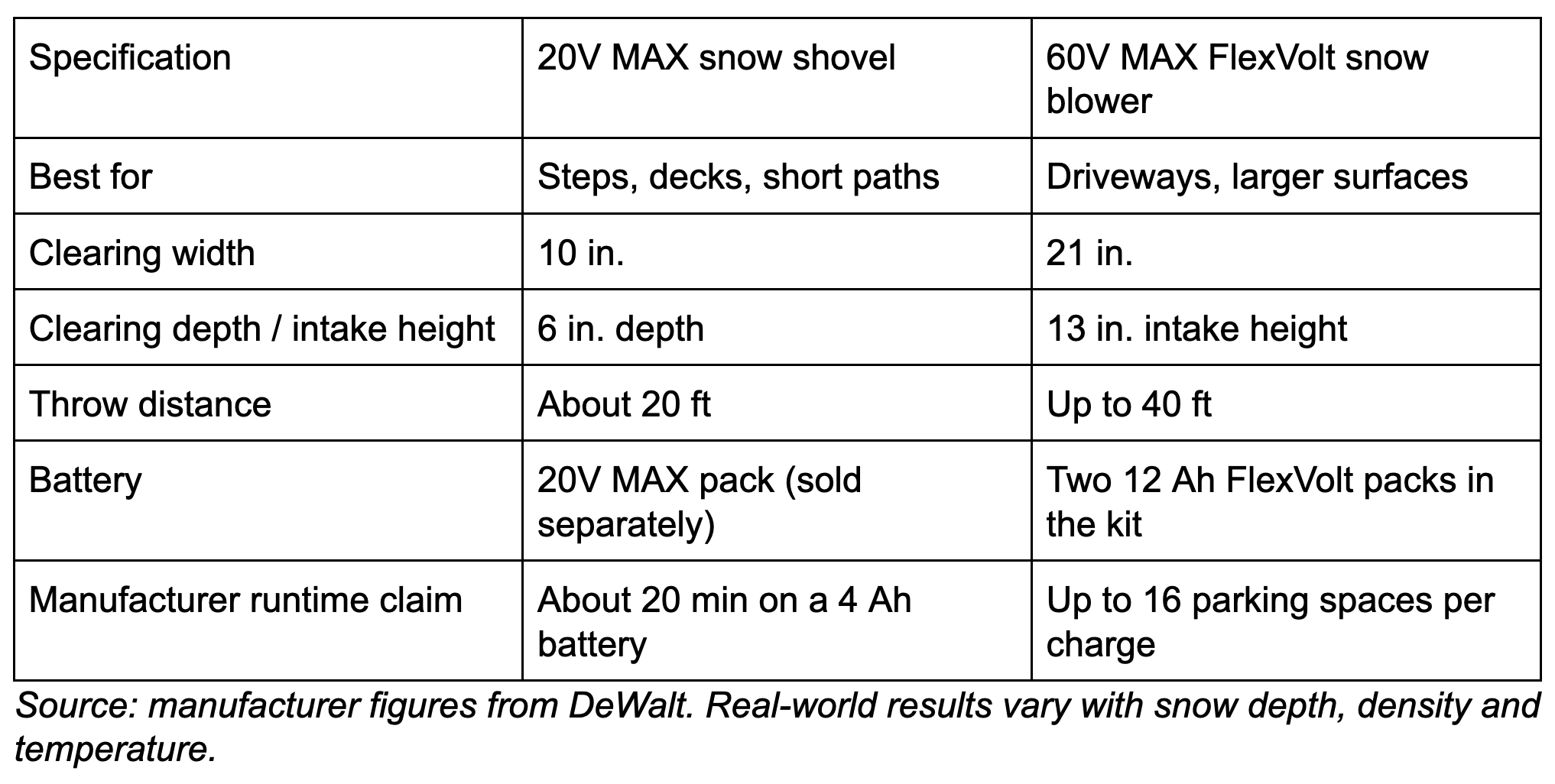
For steps, decks, walkways and the area behind a parked car, a cordless electric shovel is the lightest option. DeWalt's 20V MAX brushless model clears a path about 10 inches wide and up to 6 inches deep, and its adjustable guide can throw snow roughly 20 feet, according to the manufacturer. It is sold without a battery, so it uses the same packs as the rest of the DeWalt cordless tools built on the 20V platform. DeWalt lists about 20 minutes of runtime on a 4 Ah battery, which is plenty for a typical set of steps and a short path.
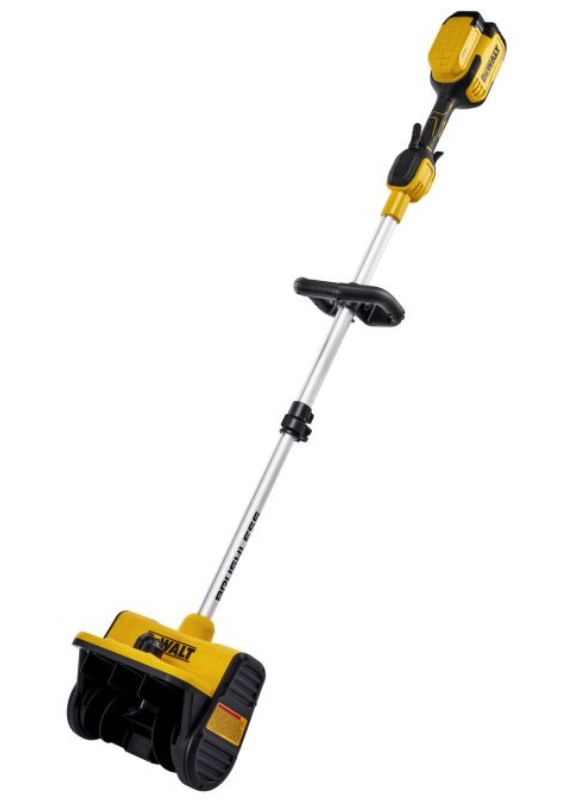
Above - It is not a miniature snow blower. Light, powdery snow is its sweet spot. Deep or heavy accumulation will slow it down and drain the battery faster.
Driveways: stepping up to a cordless blower
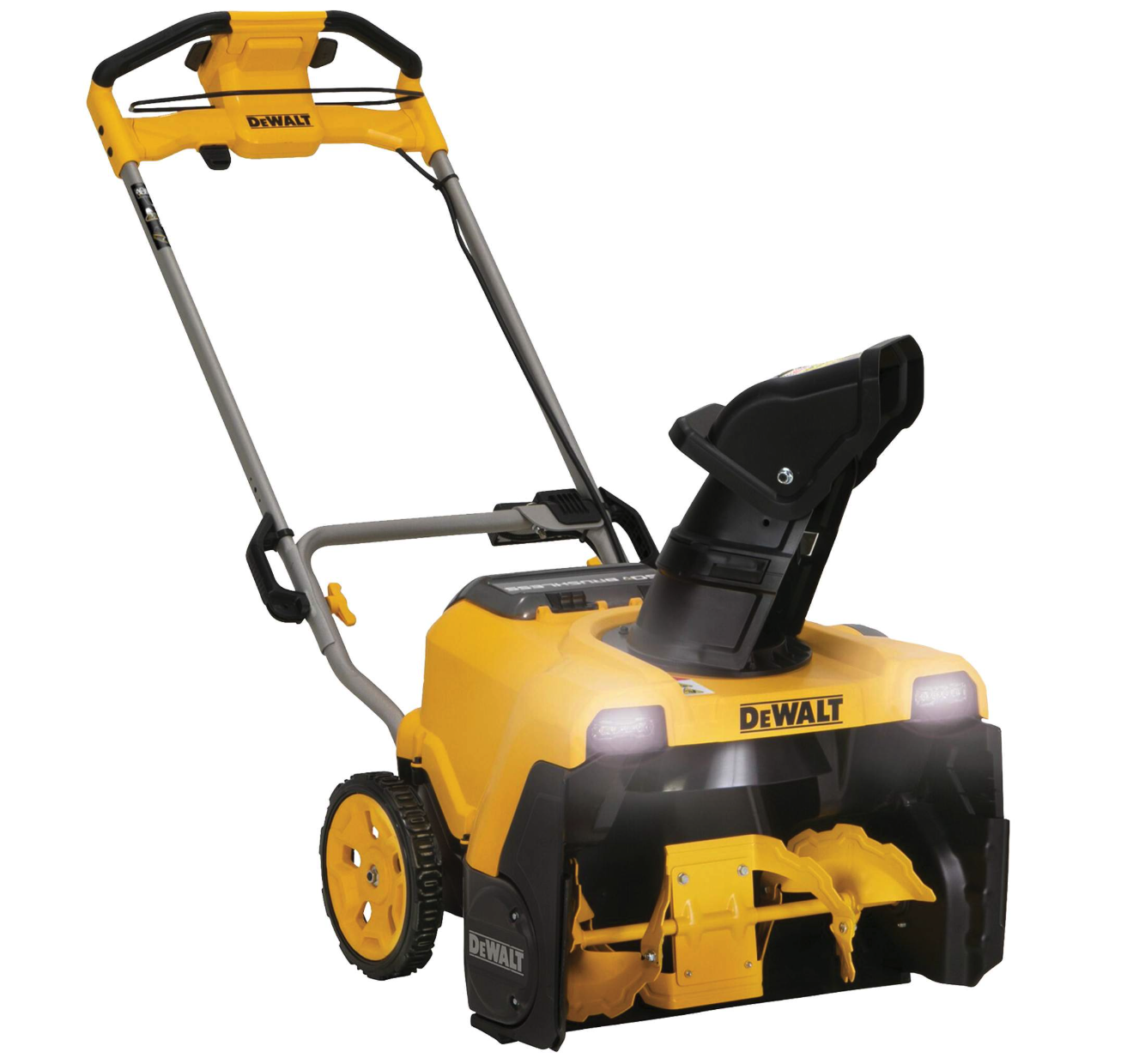
Larger surfaces call for a blower. DeWalt's 60V MAX FlexVolt single-stage model has a 21-inch clearing width, a 13-inch intake height and a 7-inch steel auger, with a throw distance of up to 40 feet and an electric chute that rotates 190 degrees, according to DeWalt's product page. The company says a kit with two 12 Ah batteries can clear up to 16 parking spaces on a charge, measured in 3 to 5 inches of snow.
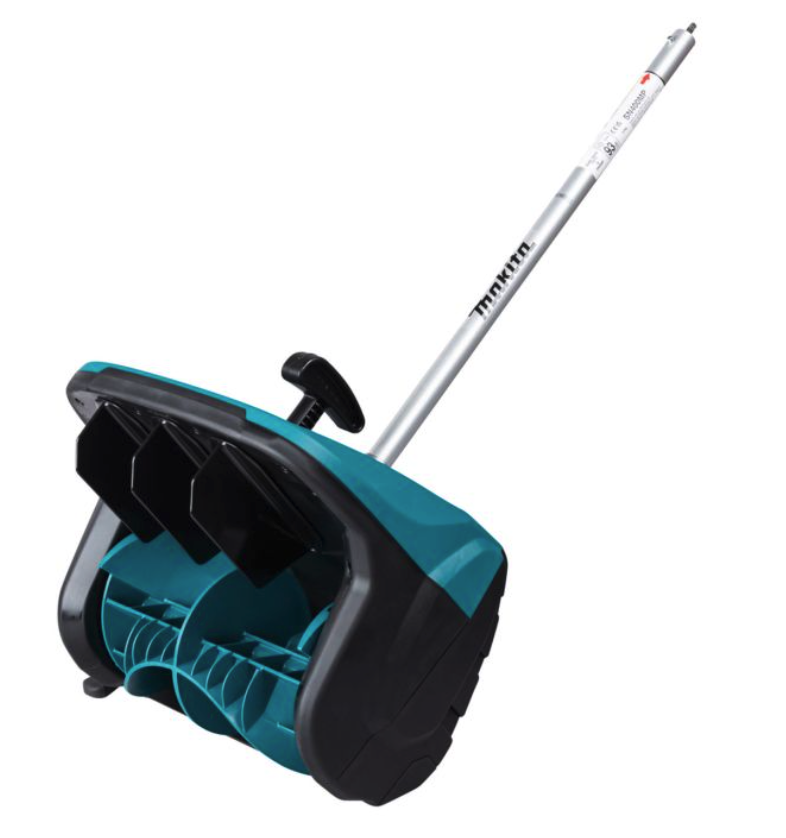
Makita offers a comparable approach with its 40V max XGT platform, including a dedicated snow blower and a snow thrower attachment for its couple-shaft power head, which turns an existing power unit into a compact snow clearing tool.
The appeal is easy to understand: no fuel to store, no pull cord, no oil changes, and far less noise at 6 a.m. The trade-off is that runtime figures are measured under specific conditions, and real results depend on snow depth, density and temperature.
The two DeWalt tools at a glance
Where cordless still falls short
Wet, heavy snow and the plow-pile left at the end of a driveway by municipal crews are the toughest tests for any single-stage machine, battery or gas. Very large properties or long driveways may still call for a gas-powered two-stage blower, or at least a second set of batteries.
Cold weather also affects lithium-ion packs. Low temperatures reduce capacity and shorten runtime, and charging a battery that is below freezing can damage it. Bringing packs indoors and letting them warm up before charging helps preserve both performance and lifespan, and storing them at around half charge between uses is the usual advice, as explained in Bob Vila's guide to storing power tool batteries in cold weather.
Practical tips before the season starts
Match the tool to the surface. A shovel for steps and short paths, a blower for driveways.
Choose a battery platform you already own. Sharing packs with existing drills and saws lowers the cost of entry and keeps charging simple.
Buy or charge spare batteries before the first storm, not during it.
Test the machine early. A quick run in October avoids discovering a missing battery or charger in the middle of a blizzard.
Clear snow in stages during a long storm. Lighter layers are easier on both the machine and your back.
Where to find them
Canadian retailer Équipement Polar carries a range of cordless snow shovels and blowers from DeWalt and Makita, so homeowners can compare options before the first storm.
Whatever the choice, the takeaway is the same: a battery-powered setup can handle most residential snow clearing, as long as the tool fits the job and the batteries are ready before the snow arrives.