
Trust guides Transition: Janet Rockwell to entrust clients with Kim Cowan at Davison Insurance
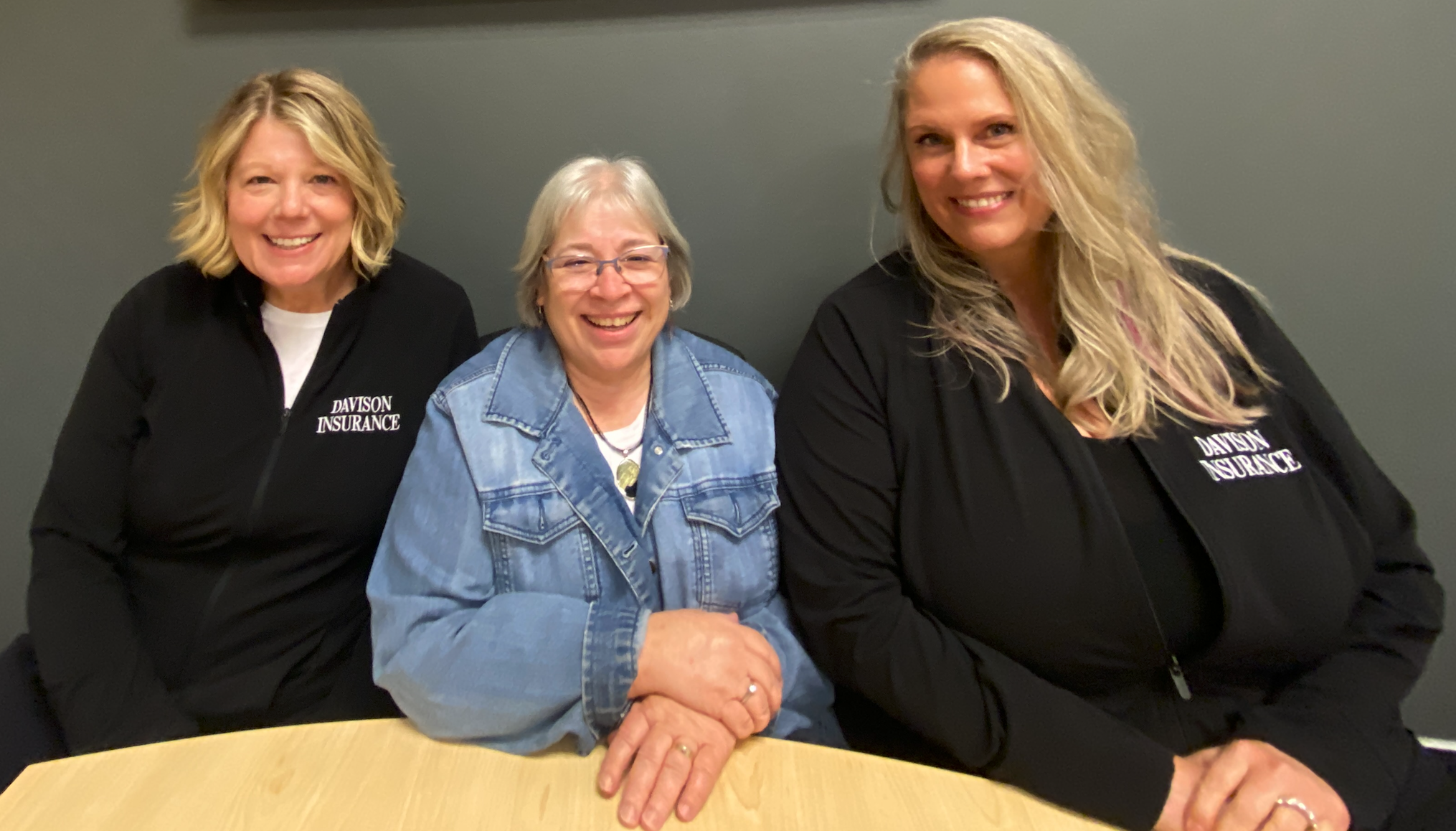
Janet Rockwell is passing her book of business to Kim Cowan at Davison Insurance after her retirement at the end of December. The two have leaned on each other for finding solutions to people’s health care questions for decades, despite running independent insurance businesses. Rockwell said knowing Cowan will be looking after her clients gave her a sense of security that allowed for her to move on. Right to left, Kim Cowan, Janet Rockwell and Bobbi Azure-Felt
By Tom Peterson
The Dalles, Ore., Oct. 9, 2026 — In the Gorge, relationships matter.
Finding a good person to do business with is gold and once you’ve found them you're not likely to let go. You trust them to take care of you, your family.
This is not lost upon Janet Rockwell who has decided to retire at the end of December.
"I was actually planning on working a couple more years,” she said earlier this week. “But last August, just a year ago, it just kind of hit me that, ‘Now, I think I’m ready.’”
After 25 years helping families navigate the often-confusing world of health insurance, She faced a question that went beyond retirement: Who could she trust to look after her friends, her clients, who had trusted her for so long?
That’s Janet’s policy of leaving things better than the way you found them.
Her answer was Kim Cowan, owner of Davison Insurance in The Dalles. The two women have operated independent businesses and could be considered competitors, but for a quarter-century they have also been colleagues, sounding boards and trusted confidantes, sharing knowledge and helping one another make sense of an ever-changing insurance landscape.
If Janet could not help someone, Kim always could. Word of mouth between the two went both ways.
Rockwell knew Cowan’s work. More importantly, she knew her character. When it came time to entrust hundreds of clients — people whose families, health concerns and life changes she had come to know over the years — to someone else, Cowan was a natural choice.
The transition is a reminder that in a business built around complex policies, changing rules and decisions that can have significant consequences for people’s health and finances, the relationship with a knowledgeable, trusted professional can matter as much as the insurance card itself.
A quarter-century of working together
Rockwell and Cowan have been working alongside each other since around 2001, when both entered the health insurance business. They built separate practices, but over the years they developed a professional relationship that became an important resource for both of them and the people they served.
When a case gets complicated, they can call each other. When one is too busy to take on another client, the other may be able to help. And when a question arises about a rule, a plan or a client’s particular circumstances, they have someone with years of experience to consult.
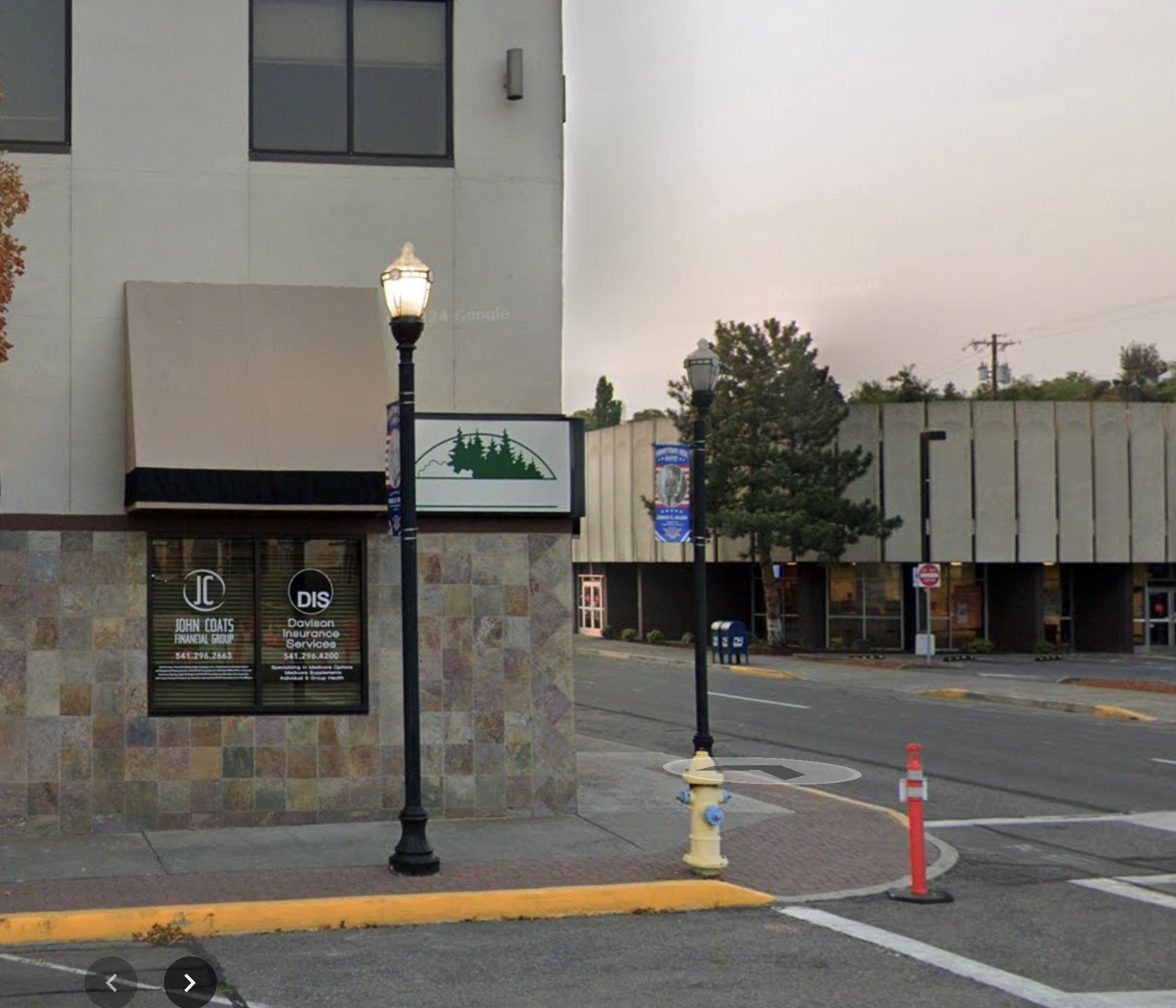
Davison Insurance operates at 312 Federal St., across from Wells Fargo in The Dalles.
“We’re really good at what we do, Cowan said, “ ... and we’re ethical.”
That kind of trust matters in a business where the details make all the difference.
Health insurance is not one-size-fits-all. The right choice can depend on a client’s doctors, prescriptions, finances, anticipated medical needs and the plans available in their county. Options can differ between Wasco and Hood River counties, for example, even when the names of the insurance companies are familiar.
For someone trying to make sense of all those variables, an experienced agent can help sort through the details and explain the trade-offs.
“In a normal agents’ world, it’s a competition, but to us it’s always been one and the same,” Cowan said. “We’ve always worked well together because we have the same concerns.”
Rockwell and Cowan have seen the business change dramatically during their careers. Both have worked through major changes in Medicare, prescription drug coverage and the health insurance marketplace. They have also watched the rules, products and choices continue to evolve.
Their years in the business give them historical perspective, but their relationship gives them something else: a trusted second opinion.
The two do not have to agree on everything to respect each other’s judgment. They have different personalities and independent businesses, but both say their priority is helping clients find coverage that fits their needs — even when that means recommending that someone stay with a plan rather than make a change.
Clients become more than customers
For Rockwell, the relationships have always been central to the work.
Over the years, she has learned about clients’ families, followed their milestones and shared in their concerns. When clients return during enrollment season, appointments can feel like mini-reunions, with conversations extending beyond insurance to catch up on what has happened in their lives.
“I know I’m gonna miss everybody,” Rockwell said. “I know they’re gonna be well taken care of, and so that is what I have to lean on.”
Some relationships have lasted for decades. And in a community where people frequently turn to friends and relatives for recommendations, those connections have helped both agents build their businesses largely through word of mouth.
One satisfied client may refer a family member, a friend or someone encountered in the community. Over time, a single introduction can lead to a network of people who turn to the same agent year after year.
That trust is particularly important when the subject is health coverage. Clients are often trying to make decisions about something they may not fully understand but cannot afford to get wrong.
Rockwell has tried for several years to find someone who could eventually take over her business, but finding the right person was not easy. When she decided last August that she was ready to retire, she knew she needed a plan for the clients who had relied on her.
Cowan was the person she wanted to approach.
The decision was not simply a matter of transferring a list of names. It was about finding someone who understood the work, knew the challenges and shared her commitment to clients.
Rockwell estimates she has between 400 and 500 clients, including some who live beyond the Columbia Gorge. She sent a letter in early September explaining her retirement and the transition, though she knows not everyone has seen it.
She plans to work through the fall enrollment season before closing her office by the end of December.
A complicated business — and a changing model
The transition comes at a busy time for health insurance agents.
Medicare’s annual enrollment period runs from Oct. 15 through Dec. 7. During that window, beneficiaries can review and change Medicare Advantage and prescription drug coverage for the following year. Changes in plan costs, benefits and provider networks make it important for people to review their coverage rather than assume it will remain the same.
For agents, the season overlaps with other work, including individual and employer health insurance renewals. Rockwell and Cowan describe the fall as an especially demanding stretch, with clients needing help understanding new options and deciding whether their current coverage still makes sense.
But the work is also becoming more challenging for another reason: how agents are paid.
Independent agents typically receive commissions from insurance companies for enrolling clients in certain plans. The Centers for Medicare & Medicaid Services publishes annual compensation information for Medicare Advantage and prescription drug plans, and the arrangements can vary by plan.
Rockwell and Cowan say some insurers have stopped paying commissions on certain products, leaving agents to choose between helping a client enroll in a plan without being paid for the work or directing that person elsewhere for assistance.
They say they sometimes help clients with plans that do not pay a commission, particularly when someone needs assistance navigating the enrollment process. But they worry that if more plans become noncommissionable, it could become harder for independent agents to sustain the time and expertise needed to serve clients.
That concern is not merely theoretical. A June 2026 report from the Medicare Payment Advisory Commission described agents who said they were not paid when enrolling beneficiaries in zero-commission Medicare Advantage plans. Some said they continued to enroll clients in those plans, particularly when they had an established relationship with them; others reported referring beneficiaries elsewhere.
For Rockwell and Cowan, the issue is what happens to consumers if experienced local agents become less available. People can compare plans through Medicare.gov and get assistance from other resources, including the State Health Insurance Assistance Program. But the agents say many clients need the personal guidance of someone who knows their circumstances and can help them work through the choices.
Their business depends on commissions, yet their relationships with clients can require work that does not generate one.
That tension adds another dimension to Rockwell’s retirement. Cowan is taking on a substantial number of new relationships at a time when the insurance landscape is changing and the fall workload is intense.
Cowan said the non-commissioned model was likely to continue until people are left with little help in understanding medical insurance.
She did not believe there would be a correction in the practice of non-commissioned policies until “after the damage is done.”
Passing the trust along
Cowan is preparing to welcome Rockwell’s clients at Davison Insurance, at 312 Federal St. in The Dalles, across the street from The Farm Stand. She also works with Bobbi Azure-Felt, who joined her office earlier this year and is working toward becoming licensed.
Rockwell has begun giving clients Cowan’s contact information as they come in for enrollment appointments. She wants them to know they have a place to turn when she closes her office.
For Cowan, taking on the clients means more than adding to her book of business. It means accepting the confidence Rockwell has placed in her and earning that same confidence from people who may have worked with the same agent for decades.
That is the personal side of a transition that might otherwise look like a routine business retirement.
Rockwell is leaving a profession she has spent decades learning, but she is not simply walking away from the people she has served. She is directing them to someone she knows, respects and has relied on herself.
In a community built on recommendations, long-standing relationships and reputations earned one person at a time, that may be the most important part of the handoff.
“I think trust and credibility are everything in this business,” Rockwell said. “People are trusting you to help them make the right decisions about their health care, and you have to know they’re going to be taken care of.”