
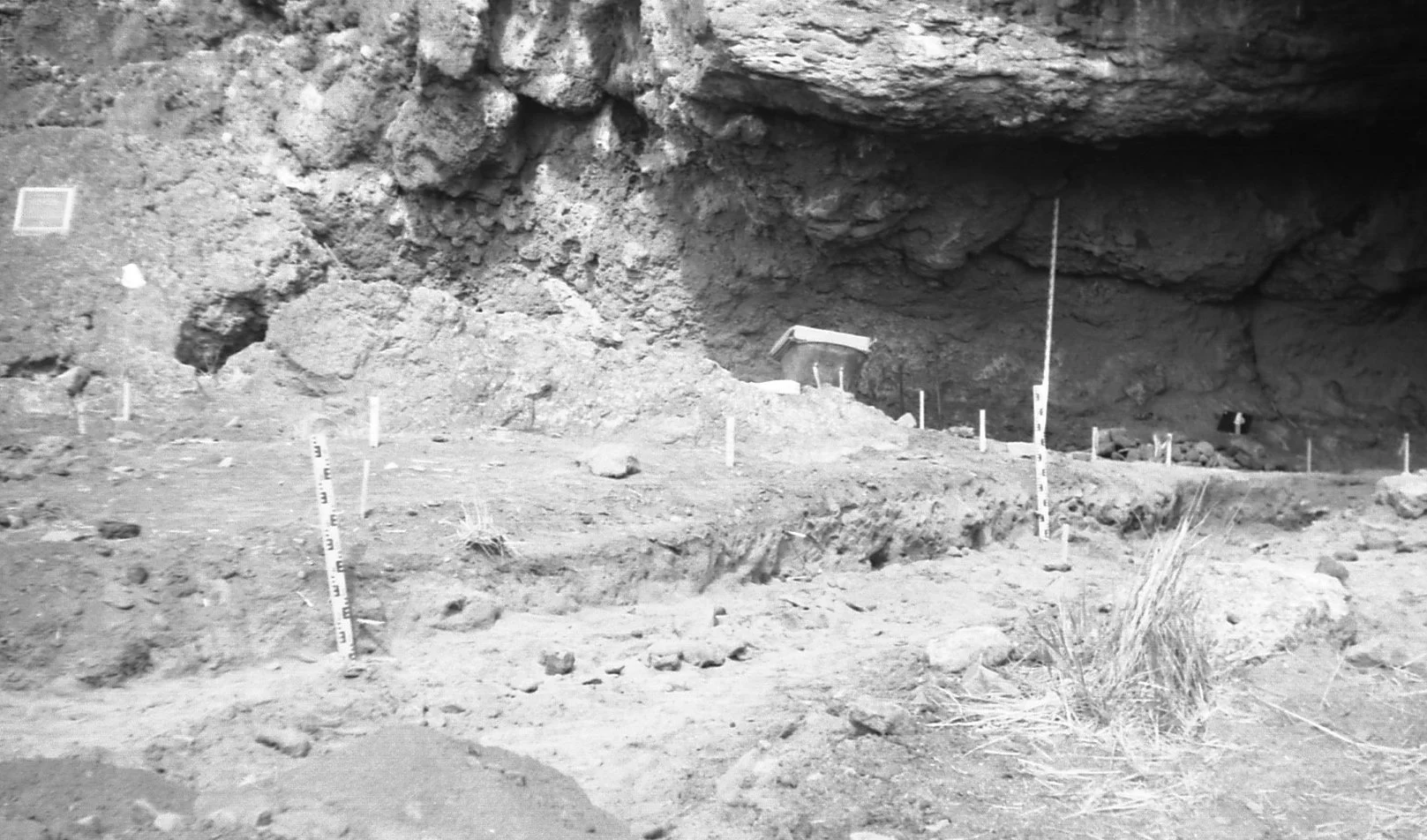
Archeological dig at the Fort Rock cave in 1966. Wikipedia Commons.
The Dalles, Ore., Sept. 16, 2025 — Anthropologist and archaeologist Dr. Tom Connolly returns to Historic St. Paul’s Chapel on Saturday, Sept. 27, for two public talks on the Fort Rock Cave sandals and other rare fiber artifacts from southeast Oregon, some older than 14,000 years.
Connolly will explain how woven fibers—used for baskets, footwear, nets and more—document early life in the region. “North America’s arid West is home to one of the world’s most ancient and diverse records of fiber artifacts,” he notes in event materials.
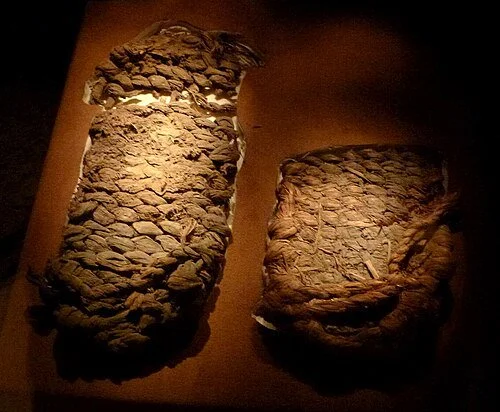
Sandals, some dating back to more than 14,000 years old were located at the Fort Rock site in Northern Lake County.
The free programs begin at 10 a.m. and 2 p.m. at 601 Union St. in The Dalles; donations benefit Historic St. Paul’s Chapel. “What a treasure Dr. Tom Connolly is,” supporter Gretchen Kimsey said, praising the chapel as a place to “absorb his knowledge.”
“Fort Rock Cave is located in a small volcanic butte approximately half a mile west of the Fort Rock volcanic crater in northern Lake County. Near the end of the Pleistocene, a massive lake filled the Fort Rock Basin, and erosion from wind-driven waves carved the cave about seventy-five feet deep into soft rock,” Connolly wrote in the Oregon Encyclopedia. “The large lake was gone by the time people arrived, but remnant small lakes, ponds, and marshes remained on the basin floor in front of the south-facing cave which provided favorable habitat for game, waterfowl, and edible plants.”

Dr. Tom Connolly
Archaeological digs at Fort Rock Cave in Lake County began in 1938, when University of Oregon anthropologist Luther Cressman uncovered dozens of sagebrush-bark sandals buried beneath layers of volcanic ash from the Mount Mazama volcanic explosion 7,600 year ago - now the site of Crater Lake. Those early excavations revealed not only the presence of human life in southeast Oregon thousands of years ago but also provided the first physical evidence of footwear in North America. L
Among the items found were woven sandals, basket fragments, stone tools, shell beads and hunting net fibers. These discoveries, preserved in the arid climate of the Great Basin, show how early inhabitants crafted essential items for survival. The sandals in particular, some of which date back more than 10,000 years, are considered the oldest directly dated footwear in the world, offering rare insight into the resourcefulness of the region’s earliest peoples.
About Dr. Connolly
Dr. Tom Connolly is the director of archaeological research at the University of Oregon’s Museum of Natural and Cultural History. For more than three decades, he has studied the ancient peoples of the Pacific Northwest, specializing in prehistoric technology, fiber artifacts and early human settlement of the region. Connolly has led numerous excavations across Oregon, including work on the Fort Rock Cave sandals, some of the world’s oldest known footwear. His research has been published widely and continues to shed light on how Native peoples adapted to the challenging environments of the Great Basin and Columbia Plateau.