
Climb a ladder to get the bigger picture on cherries
Thoughts from the Tractor Seat By Ken Polehn
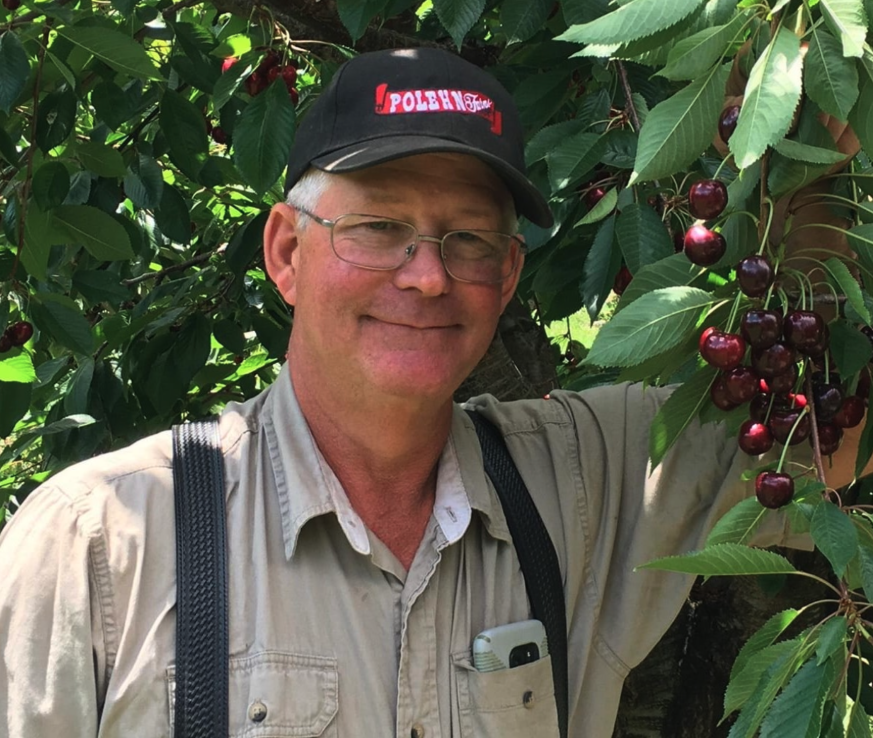
Ken Polehn
The Dalles, Ore., April 11, 2026 — If you want to understand cherries in The Dalles, don’t start at the parade.
Start on a ladder. From that height you can see the Columbia sliding past the basalt cliffs, and you understand why these orchards were planted here in the first place.
Stand halfway up a twelve-foot aluminum orchard ladder on a hillside above the Columbia River. Feel the slope beneath your boots. Look out over the water. Watch the wind move through the rows.
This is where cherry season really begins.
The hills here are steep. Always have been. Platforms never took over these orchards. Gravity decides what works in the Gorge.
Ladders evolved instead.
Wood gave way to aluminum. Twenty-foot ladders slowly shortened to twelve. Lighter. Safer. Easier to move from tree to tree.
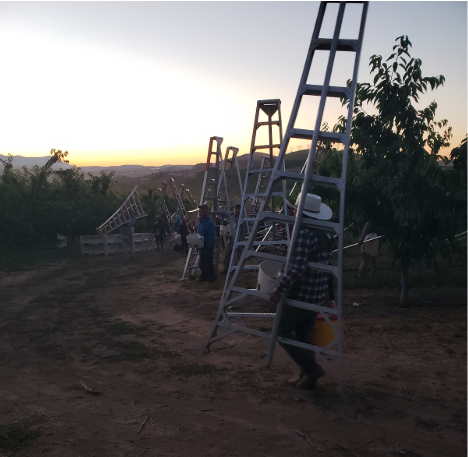
But they never disappeared.
Harvest in The Dalles is still vertical work.
Each cherry is picked by hand. Bucket by bucket. Tree by tree. The rhythm hasn’t changed much in a hundred years. Crews move carefully along the slopes. Ladders settle into the soil. A picker climbs, fills a bucket, and climbs down again.
From below, the orchard looks like a painting in July.
From halfway up a ladder, it feels like work.
Good work.
When the Northwest Cherry Festival crowns King Bing and Queen Ann each April, we celebrate blossoms and tradition. And we should. Cherries built this town.
But the celebration begins long before the parade.
It begins on hillsides where the ground tilts toward the river and the wind reminds you that farming here requires balance — literally.
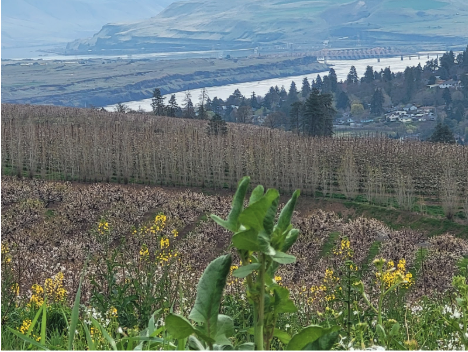
You plant knowing you will climb.
You prune knowing you will climb again.
You harvest knowing the hillside will not flatten itself for convenience.
The Gorge gives us wind, slope, and sunlight.
It also demands steadiness.
Technology changes.
Varieties change.
Markets expand.
Someone still climbs.
Somewhere above the Columbia, a ladder is leaning into a tree.
That’s where the celebration truly begins.
The fruit still grows here.
About the author
I was born in 1961 into a second-generation farm family in The Dalles. I grew up on a tractor seat, moving irrigation pipe with my sisters before school, and spent my summers picking cherries alongside the children of migrant families who returned year after year.
My wife, children, and parents have all worked the same land. I’ve served as county Farm Bureau president, sat on the county fair board, and continue to support 4-H and FFA. I’ve seen firsthand what happens when farmers are squeezed out—not just of business, but of the conversation.