
Decades-Old Salmon Enhancement Program Faces Uncertain Future After BPA Exit
By: Michael Williams
The Dalles, Ore., July 7, 2026 — In a decision that has left wildlife officials and anglers reeling, the Bonneville Power Administration (BPA) is ending its share of funding for the Select Area Fisheries Enhancement (SAFE) Program in the Lower Columbia River, effective at the end of September.
The SAFE program produces fish for commercial and recreational anglers at off-channel locations in Youngs Bay, Tongue Point, Blind Slough, and Deep River along the lower Columbia River. The purpose of the program is to produce fish in off-channel sites to reduce the pressure on fish populations in the Columbia’s mainstem. Commercial fishermen and recreational anglers harvest fish in the SAFE area, which limits their impact on threatened species elsewhere.
The Oregon Department of Fish and Wildlife says BPA’s removal of funds puts more than 7 million hatchery salmon at risk and leaves a $2.4 million funding gap.
The SAFE partners affected by the change are the Oregon Department of Fish and Wildlife (ODFW), Washington Department of Fish and Wildlife (WDFW), and Clatsop County.
"This decision by BPA caught us by surprise. It puts decades of fishery reform work at risk and goes against the recommendation of the regional fish and wildlife managers and the Northwest Power and Conservation Council to fund this work," said ODFW director Debbie Colbert.
The change has left many wondering how the program will manage to fill in such a substantial funding gap. ODFW officials believe the elimination of funds from BPA will cause major disruptions for commercial and recreational fisheries.
The SAFE program began in 1993 as the Columbia River Terminal Fisheries Research Project. It was originally launched as a decade-long BPA-funded feasibility study that focused on investigating the feasibility of growing stock fisheries in off-channel areas, but later transitioned into establishing full-scale production sites for Chinook and coho salmon.
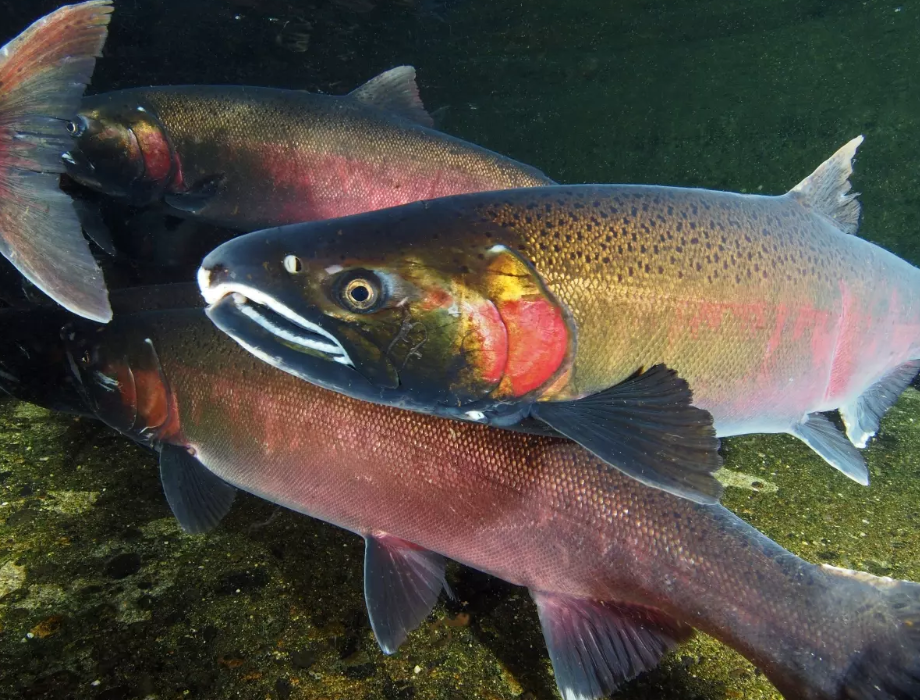
SAFE now has three hatcheries, and each one releases juvenile Chinook and Coho salmon from net pens in side channels and backwater areas. These are known as the “select area sites,” and the managed fisheries are known as “select area fisheries.”
According to BPA’s 2024 SAFE Program Draft Assessment: “the SAFE program's overall objectives include protection of endangered species and minimizing negative impact of SAFE fisheries and production on the environment."
The stocks reared by the SAFE program are not meant to directly contribute to natural populations or recovery of species; they are purely for harvest. The goal of the program is to provide stocks of salmon for commercial and recreational fishermen that are outside of the mainstream of the Columbia River. Instead of capturing natural populations, anglers have the opportunity through the program to catch Coho and Chinook salmon reared at the sites when they return after spending years living in the ocean.
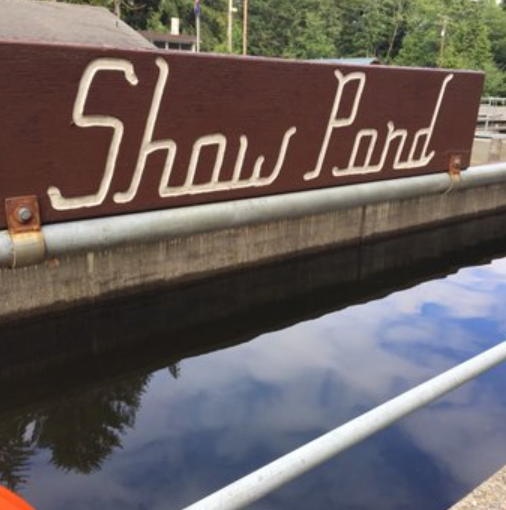
Gnat Creek Hatchery ponds. Courtesy ODFW.
The locations potentially affected:
Hatcheries
Gnat Creek Hatchery — spring Chinook
Klaskanine River Hatchery — coho and spring Chinook
CCF South Fork Klaskanine Hatchery — coho
Grays River Hatchery — coho
Fisheries
Gnat Creek
Klaskanine River
CCF South Fork Klaskanine River
Beaver Creek
Grays River
Oregon SAFE Sites
Youngs Bay
Blind Slough
Tongue Point
ODFW and Clatsop County Fisheries are co-managers of the Oregon SAFE Coho and Spring Chinook programs at the Oregon net pen sites in Youngs Bay, Blind Slough, and Tongue Point.
The approximate total annual cost of operating and maintaining SAFE is $2.4 million and includes the costs of operating net pens, contributing hatchery smolt production and hauling, and general administrative management. However, documents show that BPA’s most recent annual funding contribution was approximately $1.6 million of that total—a still significant proportion of the overall funding amount.
Officials at BPA claim that their involvement in the program has outlived its purpose.
"The program's value as a hydropower mitigation tool has been in question for some time. Although the off-channel fisheries supported by the SAFE program have clearly increased commercial and recreational harvest opportunities in those areas, there is no direct evidence that such increased off-channel harvest has resulted in reduced harvest impacts on weak and ESA-listed stocks in the mixed-stock fisheries on the mainstem," said Jason Sweet, Executive Manager of the Fish and Wildlife Program at Bonneville Power Administration.
According to Sweet, the SAFE program became even more reliant on BPA funding when Washington state started to phase out funding in 2024. He says they have consistently advocated for a transition away from SAFE's cost-share funding since 2011, and there was an expectation that SAFE would eventually become entirely funded through sources other than BPA in the future.
Conservationists and state officials expressed apprehension and uncertainty about the future of the program and their ability to meet funding requirements.
When asked in an email whether ODFW would be pursuing court action against BPA, public information officer Meghan Dugan would only say, “At this time, we are actively assessing potential impacts with WDFW and Clatsop County, and have begun briefing state leadership, affected communities, and fishery stakeholders."
Michael is a Portland-based journalist covering environmental and cultural stories, exploring the intersection of people, place and sustainability. His reporting frequently covers investigative work that goes beyond simple coverage to provide in-depth reporting on the people of Oregon and the health of their environment.
Support Local News!
Available for Everyone; Funded by Readers.