
Grasshopper Fire Update Aug. 5, 3:30 p.m.: Fire close to The Dalles Municipal Watershed
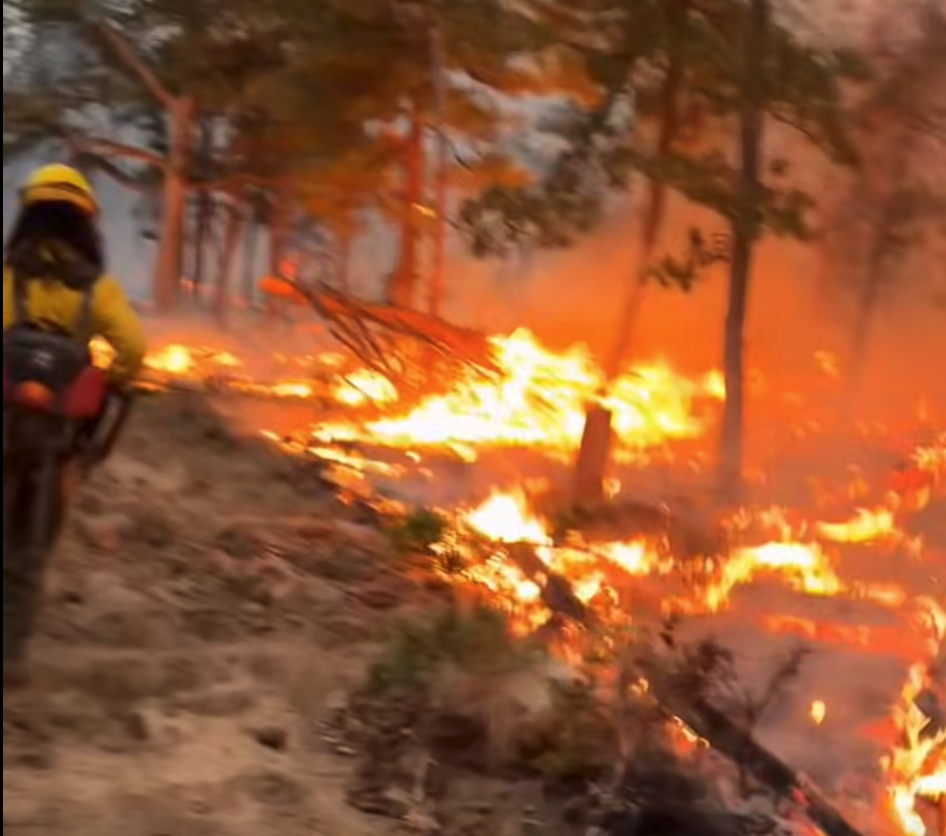
Still shot of back burning video taken two days ago on the Grasshopper Fire.
The Dalles, Ore., Aug. 5, 2026 — The Grasshopper Fire has grown to 39,439 acres and is now 20% contained as firefighters continue working to slow its westward spread toward the Highway 35 corridor while strengthening containment lines across the fire.
The fire is now threatening The Dalles Municipal Watershed.
"The fire is not in the watershed, but it's right at the boundary,” said Public Works Director Dale McCabe. “Firefighters have a lot of resources up there, and they're doing everything they can to keep it from getting into the watershed."
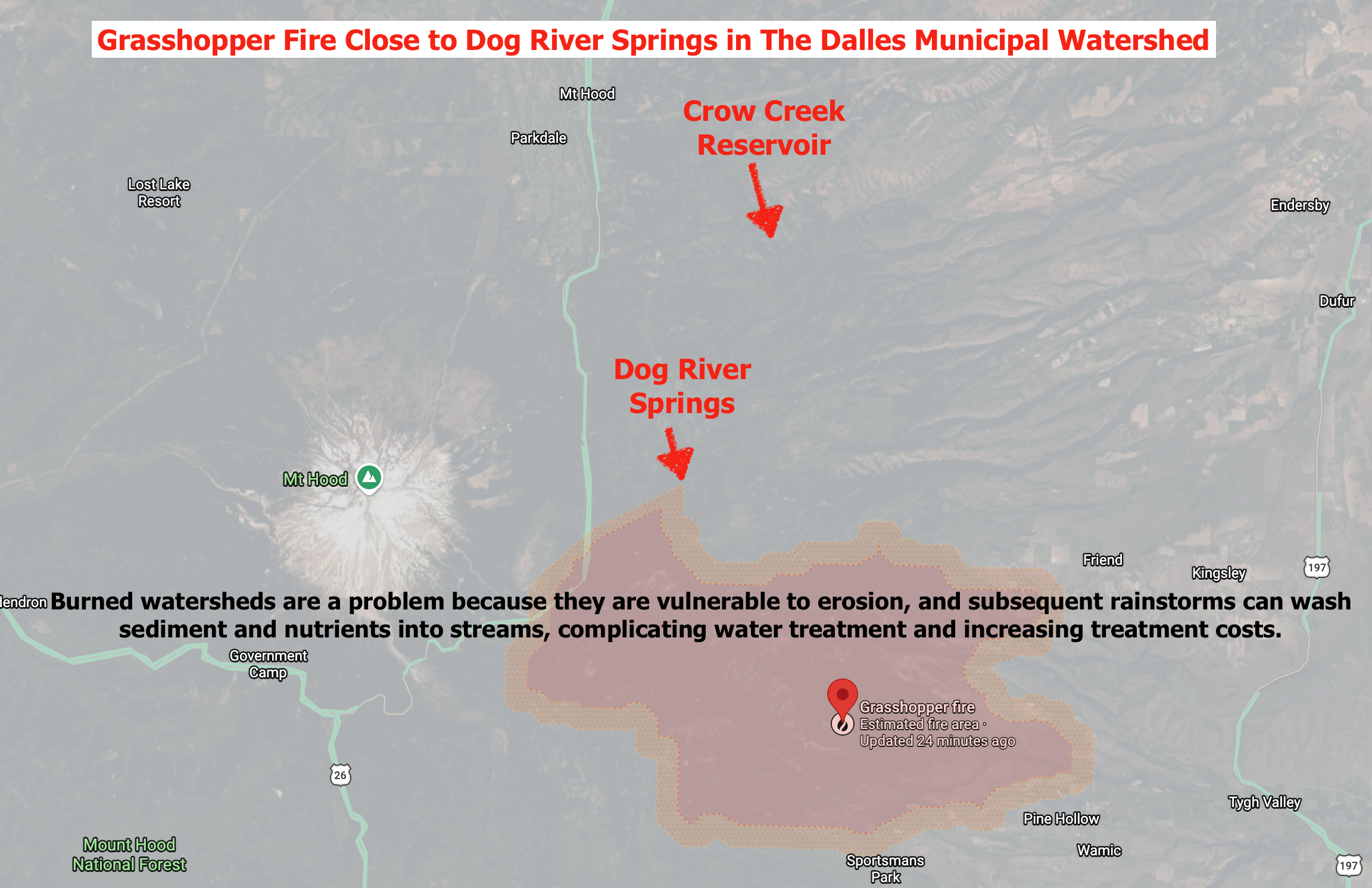
While it remains protected as of this afternoon, officials are watching closely as the fire had not reached city's municipal watershed but had reached the nearby boundary of Forest Road 4410.
Burned watersheds are a problem because they are vulnerable to erosion, and subsequent rainstorms can wash sediment and nutrients into streams, complicating water treatment and increasing treatment costs.
McCabe is hopeful it does not come to that.
He said firefighters have committed significant resources to holding the fire at that line and preventing it from moving into the watershed. McCabe said he attended the fire meeting update this morning in Tygh Valley and plans on coordinating with fire managers and planned to attend another wildfire briefing Thursday..
The fire is being fought by 1,323 personnel.
Fire managers reported Wednesday that firefighters made significant progress Tuesday on the northeastern edge of the fire, securing a slopover, mopping up hot spots and reinforcing newly established control lines. Along the northwest perimeter, the fire reached Bennett Pass and continued around Lookout Mountain, where crews strengthened contingency lines north of Flag Point.
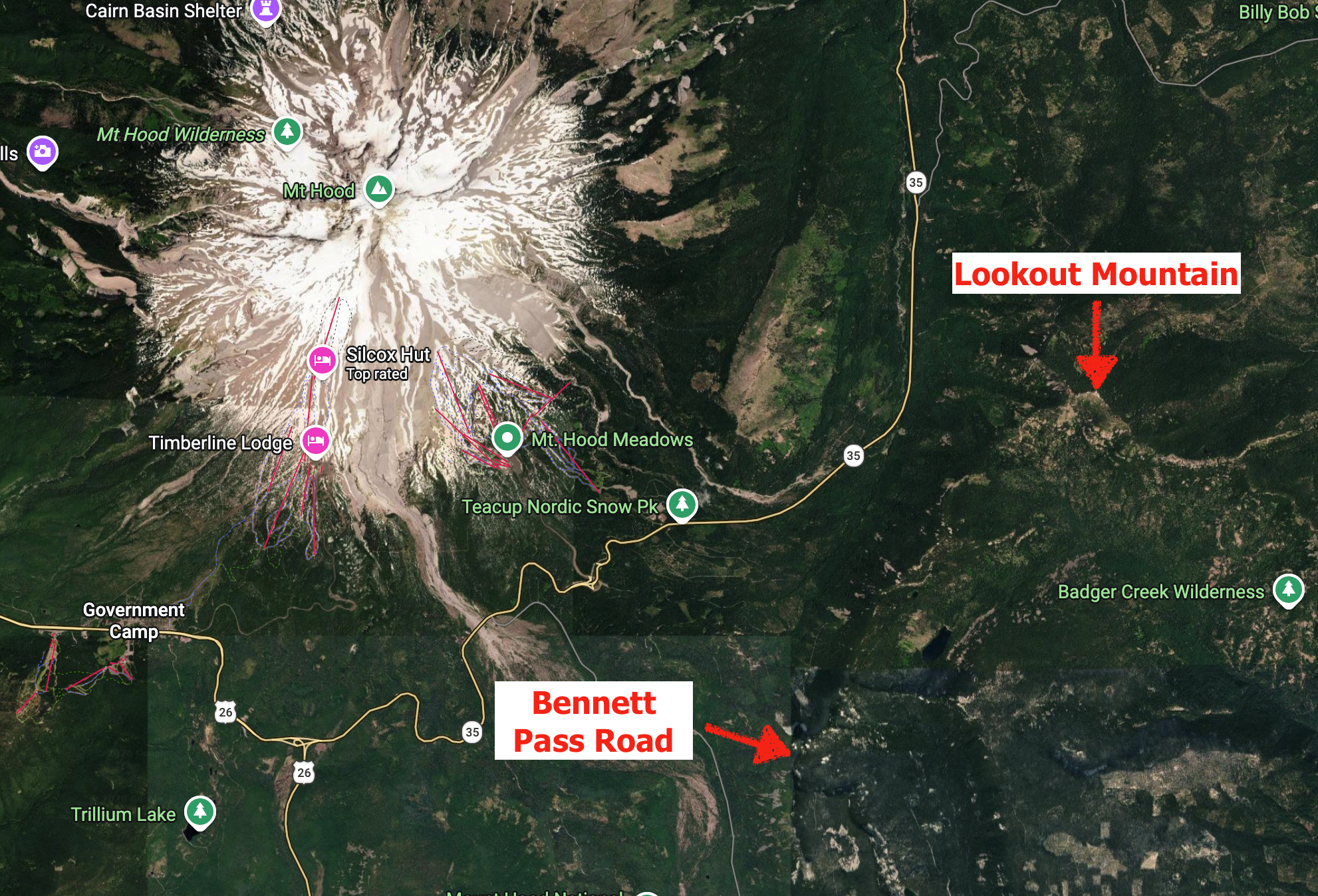
Containment lines along the southern edge of the fire continue to hold, allowing suppression efforts to expand farther east. Although the fire remains several miles from Mt. Hood Meadows Resort, Oregon State Fire Marshal structural task forces have completed structure triage around the resort as a precaution.
On Wednesday, firefighters planned to focus on the fire's northwestern edge as it moves toward Bennett Pass and the Badger Bowl area. Incident managers said fire intensity is expected to decrease as the blaze approaches Highway 35, and there are currently no highway closures.
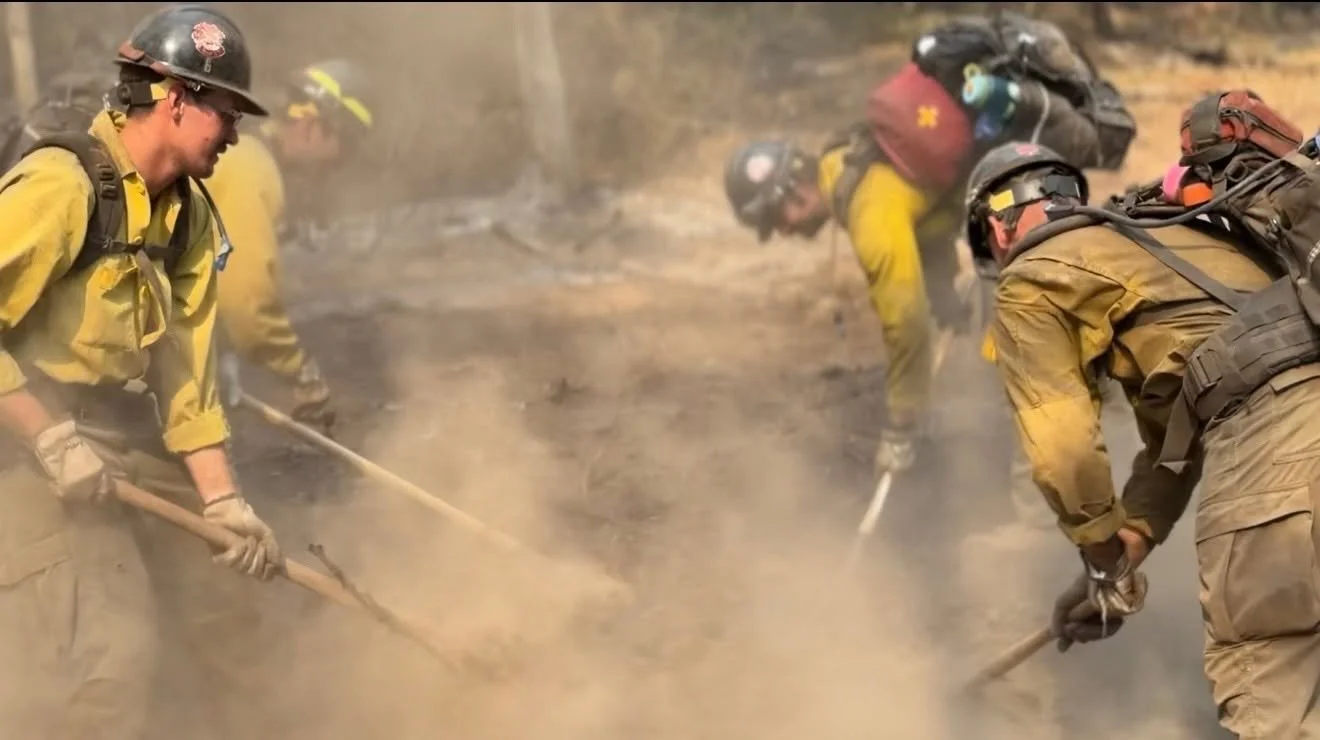
Crews digging fire lines on the Grasshopper Fire. Photo courtesy the Grasshopper Fire facebook page
Hand crews and bulldozers will continue suppression efforts east of Highway 35, while structural protection teams continue assessing homes and infrastructure on the west side of the fire. As winds shift later in the day, firefighters also expect to assist with burn operations along the northern edge of the incident.
Weather conditions remain a concern, with hotter, drier weather forecast despite lighter easterly winds. Fire managers expect winds to shift to the west from mid-afternoon into the evening, reducing the potential for additional fire spread toward Highway 35.
A closure order remains in effect for portions of the Mt. Hood National Forest, and Forest Road 44 south of Forest Road 17 remains temporarily closed. A detour is available via Brooks Meadow to Highway 35.
Level 3 "Go Now" evacuation notices remain in effect in portions of Wasco and Hood River counties, while Clackamas County continues to maintain Level 1 "Be Ready" notices in areas nearest the fire.
A shelter remains open at South Wasco County High School in Maupin, and the Sherman County Fairgrounds continues serving as a large-animal shelter for displaced livestock.
Fire officials also reminded the public that a Temporary Flight Restriction remains in place over the fire area. Unauthorized drone flights can force firefighting aircraft to suspend operations.
Private Contracting Role in Fighting Fire
In Oregon and Washington, private contractors are supporting wildfire suppression by providing firefighters, heavy equipment, water-handling resources and camp infrastructure, supplementing federal, state and local agencies as fire activity strains available resources.
As firefighting resources remain stretched across the West, private contractors continue playing a major role in supporting suppression efforts. The National Wildfire Suppression Association said its 367 member companies have nearly 14,000 firefighters and support personnel deployed on active incidents nationwide under federal and state agreements. The organization said its crews provide hand crews, heavy equipment, fallers, water handling resources and camp support, including catering, medical services, showers and laundry. The association said contractors integrate into the same incident command system as federal and state agencies and are mobilized as needed to supplement public firefighting resources.

Support Local News!
Available for Everyone; Funded by Readers.