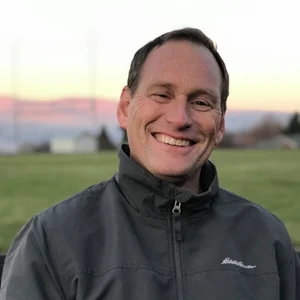
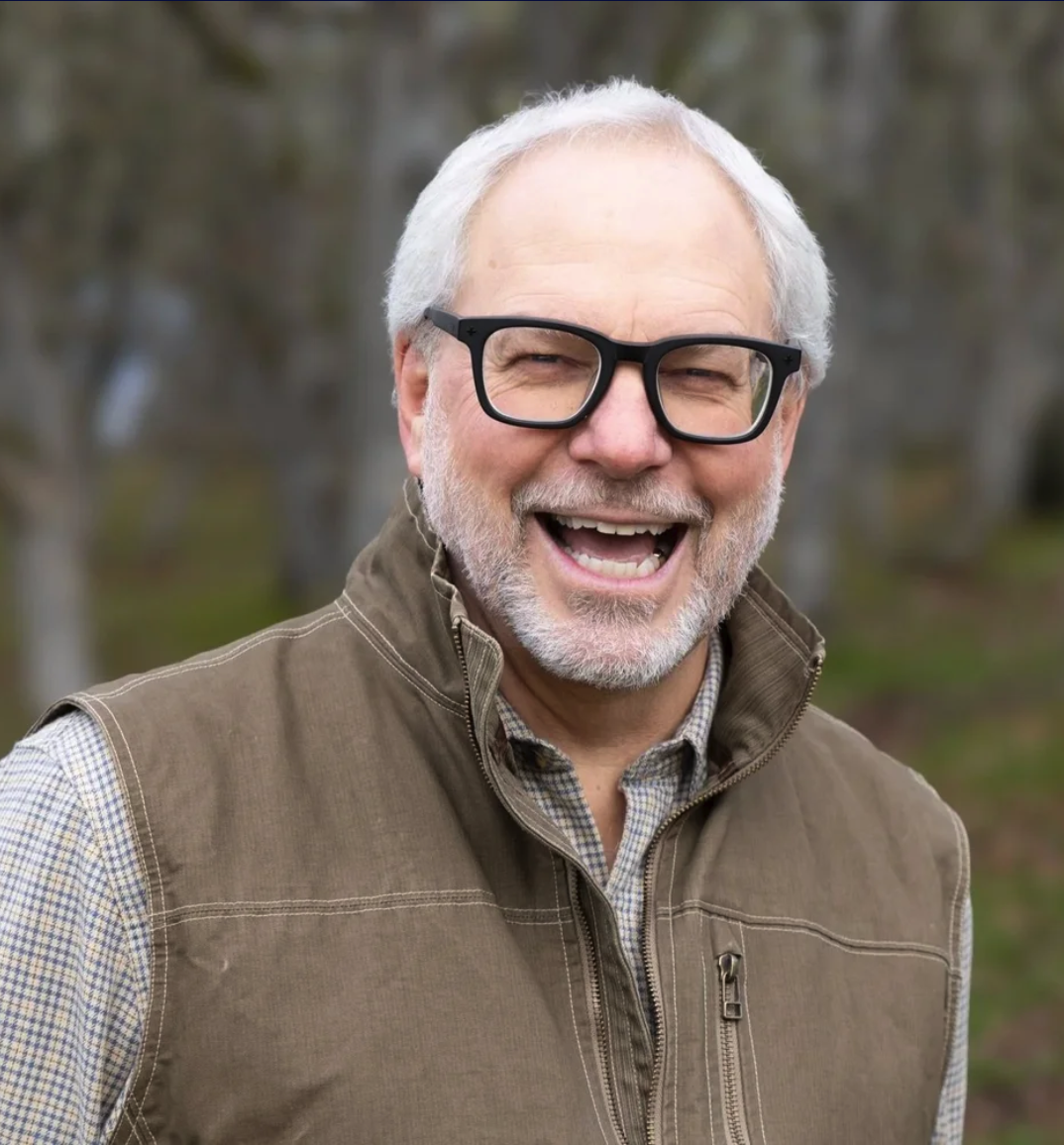
Scott Hege, Republican candidate for Oregon House District 52, is a longtime Wasco County commissioner and former executive director of the Port of The Dalles. He faces Democrat Hank Sanders in the November election.
By Tom Peterson
The Dalles, Ore., Sept. 16, 2026 — At 64, Scott Hege isn't asking voters in Oregon House District 52 to take a chance on what he might become.
The Republican candidate is asking them to look at what he has already done.
Hege has spent 35 years in Wasco County, first as executive director of the Port of The Dalles and, since 2011, as a Wasco County commissioner. An engineer by training, he points to decades of economic development, construction and government experience as the central argument for sending him to Salem.
That creates a contrast with his Democratic opponent, 25-year-old Hank Sanders, who has made generational change part of his case to voters.
"I've been working longer than he's been alive," Hege said during an interview Monday.
Hege acknowledged that youth has advantages, but said experience matters when lawmakers confront difficult decisions.
"I've had multiple houses and mortgages and all sorts of issues dealing with all of the stuff that most — the bulk of our population — has to deal with," Hege said, also pointing to raising children and caring for aging parents.
The two candidates are competing for one of Oregon's relatively few competitive legislative districts. Roughly 38% of District 52 voters are nonaffiliated, 30% are Democrats and 25% are Republicans, according to the Oregon Capital Chronicle. Republican Rep. Jeff Helfrich is leaving the House to run for state Senate.
District 52 stretches from The Dalles and Hood River west through Mount Hood communities and Corbett and into portions of East Multnomah County.
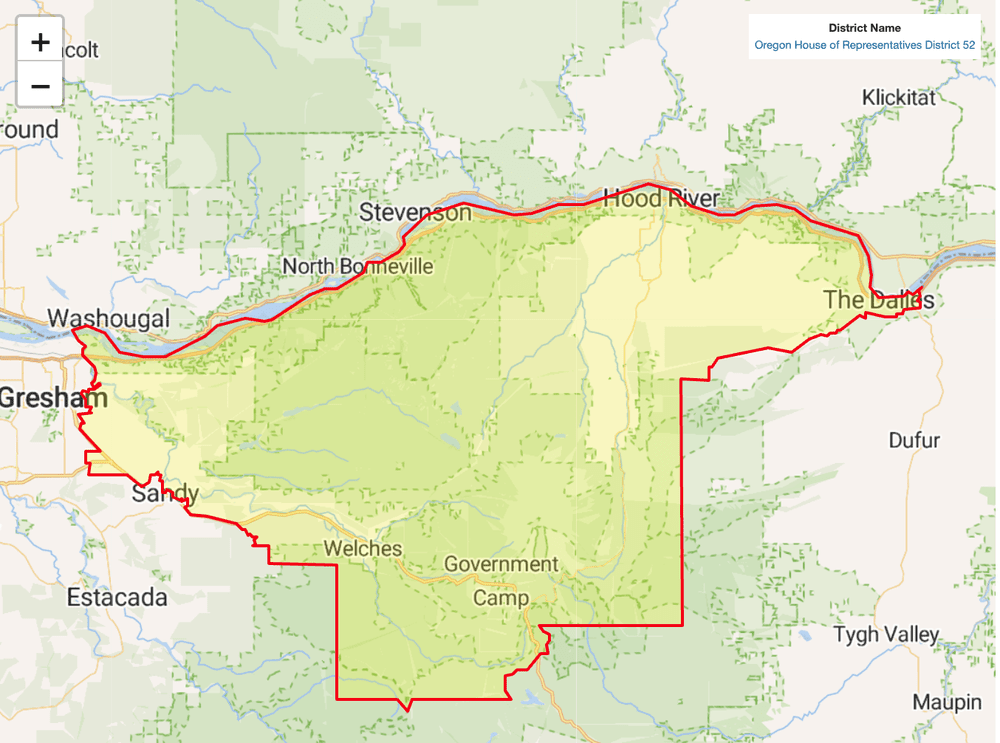
Oregon House District 52. Map courtesy Ballotpedia.org
From engineer to public office
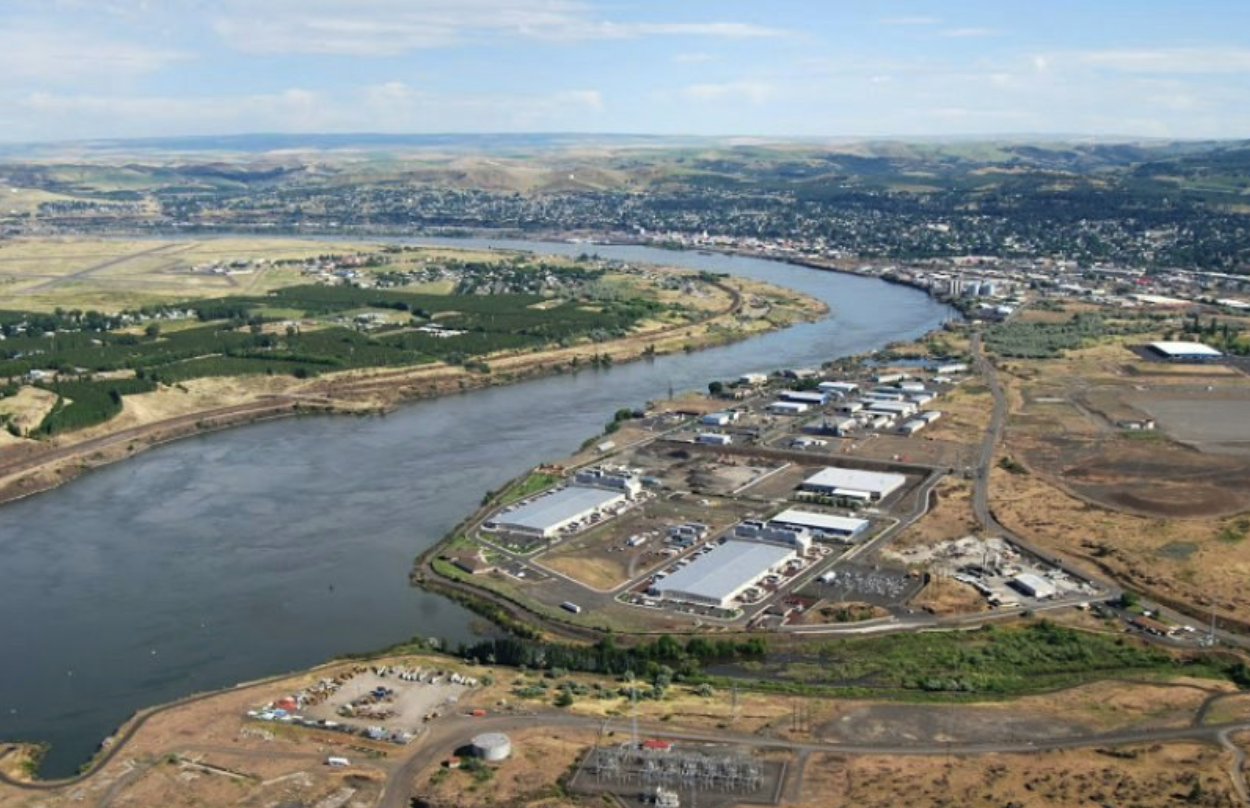
Port of The Dalles
Hege came to The Dalles in 1991 to become executive director of the Port of The Dalles.
Originally from Spokane, Washington, he has an MBA from Washington State University. Before moving to Oregon, he worked on large construction projects on the East Coast.
He was elected to the Wasco County Commission in 2010 and took office in 2011. He is now commission chair and lives with his wife, Betsy, on rural property on Seven Mile Hill outside The Dalles.
He describes himself as a moderate Republican and points to the county commission as a largely nonpartisan working environment.
"I have to represent everyone," Hege said.
An economy that creates opportunity
Hege agrees with Sanders on one fundamental point: Younger Oregonians face enormous difficulty buying homes and building financial security.
They differ more sharply on the causes and remedies.
Hege begins with economic growth.
"We need to basically have an economy that provides jobs, provides opportunities for people, also provides training," he said.
He argues Oregon too often responds to problems by creating additional regulations without adequately considering their cumulative consequences.
Data centers and a changing economy
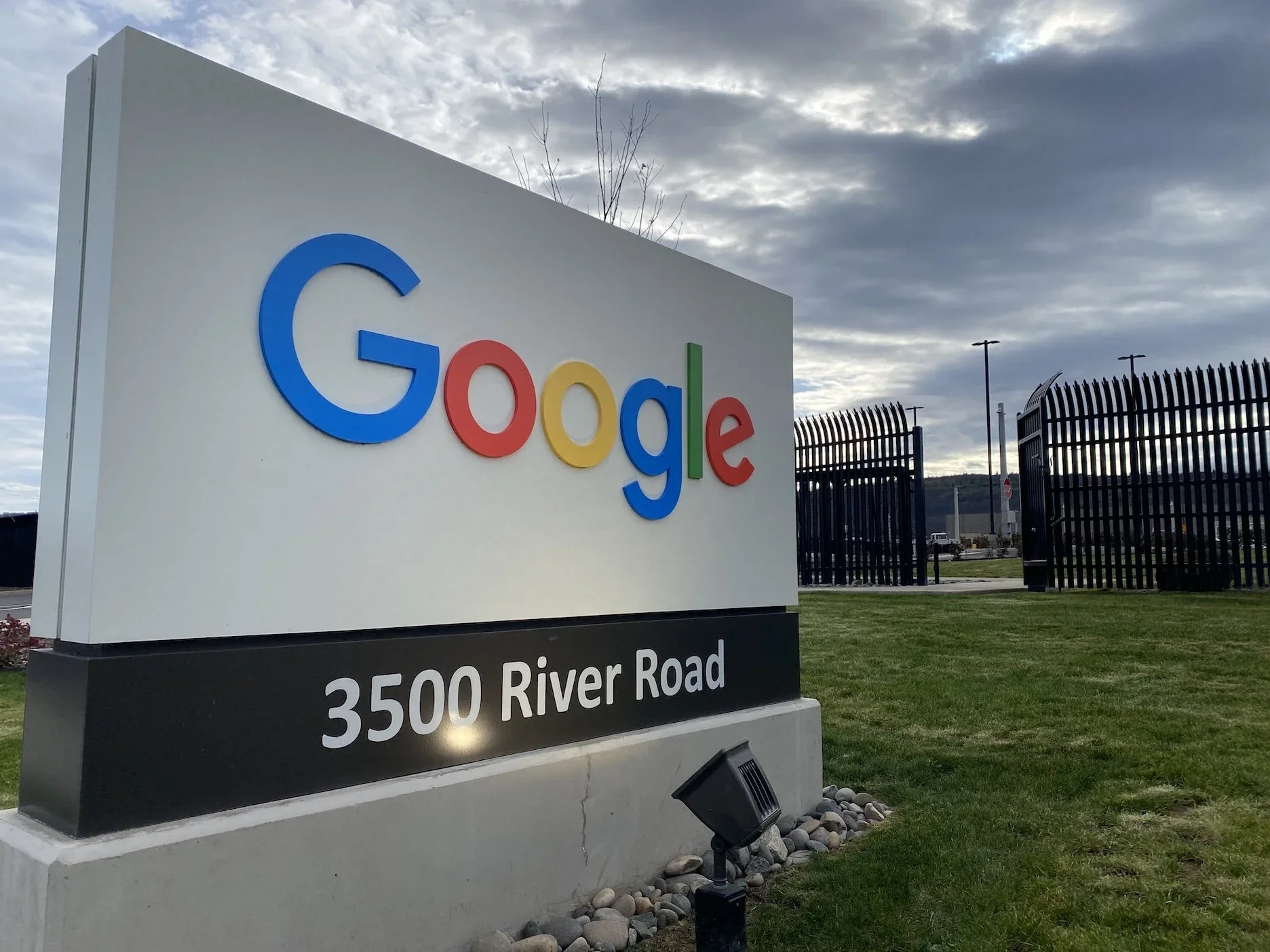
Nowhere is Hege's record more directly connected to the campaign than data centers.
Hege was leading the Port of The Dalles when the community began pursuing Google, which opened its first company-owned data center in The Dalles in 2006.
Nearly two decades later, Google has become the area's dominant industrial players, bringing substantial investment and tax revenue while generating controversy over tax incentives, electricity, water consumption and government transparency.
Looking back, Hege said he believes The Dalles and Wasco County largely made the right decision.
"I think we did data centers right for the most part," he said.
But he identified transparency as a weakness. Hege said Google's effort to keep its water consumption confidential damaged public trust and that information about resource use should be available to residents.
"People should know, like, one, what do we gain for it and what's the cost for us," Hege said.
He also said The Dalles may have reached the point where it should look elsewhere for future economic growth.
"I don't necessarily want more data centers in this community here," Hege said. "I want more diversification."
Hege argues data centers helped stabilize a local economy that had previously depended heavily on aluminum and timber, industries that declined dramatically. He also credits data center revenue with helping put Wasco County in a stronger financial position.
The county is now considering placing millions of dollars in future data center-related revenues into a long-term endowment rather than using the money for ongoing operations.
Sanders has proposed a statewide moratorium on new data centers while Oregon establishes stronger rules governing water, power, taxation and transparency. Hege opposes that approach.
He believes decisions about whether to accept a data center should primarily remain with local communities.
"I really think local control is important," Hege said. "If you elected smart people and you don't want to have one ( a data center) ... all you have to say is, 'Adios, we don't want you,'" Hege said.
Housing has no single answer
Housing produces more agreement between the candidates.
Hege calls housing one of Oregon's most important affordability problems and agrees increasing supply must be part of the solution.
But he is skeptical that government subsidies alone can solve it.
Land, materials and labor all cost money, Hege said, and public housing projects can become extraordinarily expensive.
He pointed to differences he has seen between per-unit costs on privately developed and publicly subsidized multifamily projects in The Dalles and said Oregon needs to determine why publicly supported construction can cost substantially more.
"There is a problem there that needs to be resolved," Hege said.
He said prevailing-wage requirements account for some of the difference but questioned whether regulations, procurement practices and other requirements also drive costs.
Hege supports examining urban growth boundaries, zoning, construction regulations, community land trusts and denser housing configurations. But he resisted offering a single solution.
"I don't personally know what the solution is," Hege said. "But I know supply and demand is part of that."
Wildfire begins with managing the land
Wildfire brings the debate directly to Hege's own home.
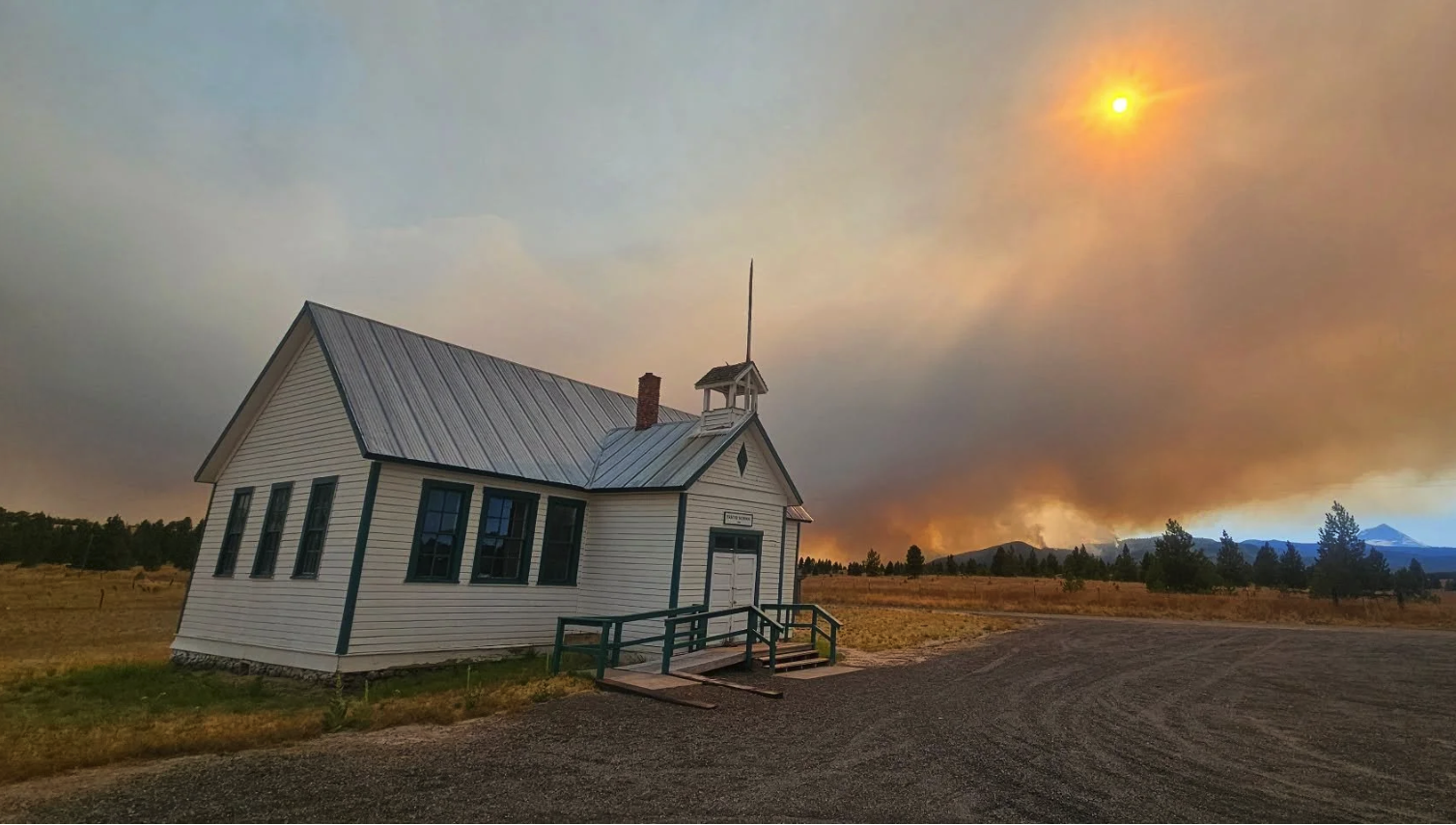
Friend School House was threatened by the Grasshopper Fire near Dufur this summer as six homes burned in the area .
Hege lives on 10 acres in the wildland-urban interface on Seven Mile Hill and said his insurer recently issued a notice of nonrenewal unless he made extensive changes to reduce wildfire risk.
He spent about eight months completing the work himself. His house has a metal roof and gutters and noncombustible materials near the structure.
The insurer ultimately renewed his policy.
Hege believes that experience illustrates both sides of the wildfire problem.
Government has a responsibility to manage public forests, reduce dangerous fuel loads and provide sufficient firefighting resources, he said. He pointed to the Grasshopper Fire and argued that investing far more in initial attack and forest treatment can potentially avoid enormously expensive fires later.
He also supports prescribed burning and other fuel-reduction work.
But homeowners also have responsibility.
"We as private landowners need to be responsible for our own homes," Hege said.
Health care and hard choices

Health care may present one of the most difficult decisions awaiting Oregon lawmakers.
As federal support declines, Hege said Oregon cannot realistically replace every lost federal dollar.
He also doesn't believe the answer is abandoning people who lose coverage.
"We need to take care of people," Hege said. "It's critically important."
He said Oregon needs to protect access to care and rural hospitals while examining whether every benefit currently provided can remain financially sustainable.
Hege serves on the finance committee of the region's coordinated care organization (CCO) and previously served on its board. He said health care costs have continued climbing despite the CCO model originally being intended in part to reduce expensive emergency care and control costs.
At some point, he said, lawmakers will face choices about what government can afford.
"We can't provide everything to everybody," Hege said.
He also said Oregon needs to work with the federal government even when state leaders strongly disagree with federal policy, arguing that confrontation alone doesn't restore lost funding or solve problems.
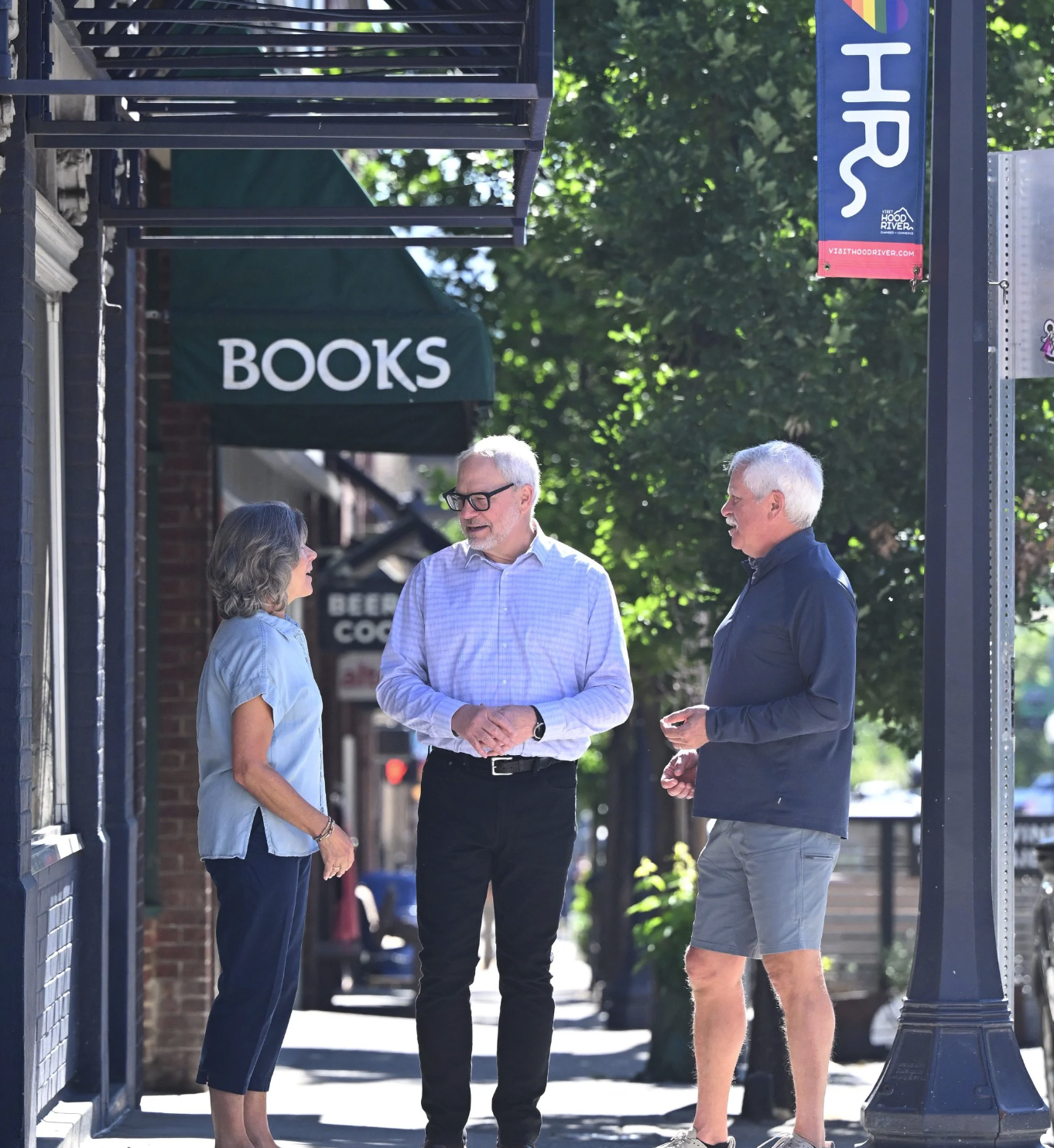
Photo image courtesy of the Hege website.
Experience versus change
Hege knows the election will inevitably invite comparison between two candidates separated by more than four decades.
Sanders argues his generation will live with the consequences of today's housing, climate and economic policies longer than the people currently making them.
Hege makes almost the opposite argument.
He has watched as aluminum and timber jobs, helped recruit new industries and spent years making economic development and county policy decisions. He said those experiences have also taught him that solving problems often requires working with people who don't share his politics.
One of the most “frustrating moments” on the campaign trail comes when a productive conversation at someone's doorstep changes as soon as the voter asks whether he is a Republican or Democrat.
"I have a letter by my name. He has a letter by his name," Hege said, referring to Sanders. "A lot of times that's what people use to sort it out."
"We have a democracy," Hege said. "People get to run, and then people get to choose, and so you have an opportunity to make a case for why they should support you, and that's what we're doing now, which is great."