
By Tracey Tomashpol
Hood River, Ore., Nov. 17, 2026 — Nothing is free ... and that includes our roads.
Hood River City Council heard about a “Transportation Utility Fee” or TUF at its Monday, Nov. 9, meeting. Depending on what councilors decide, it’s a fee that could be headed for Hood River utility bills.
Hood River has 36 miles of paved streets that regularly need potholes filled, surfaces repaved and lines painted. The Road Fund pays for those repairs, with 97% of its revenue coming from state gas taxes and 3% from the local gas tax, currently set at 3 cents per gallon.
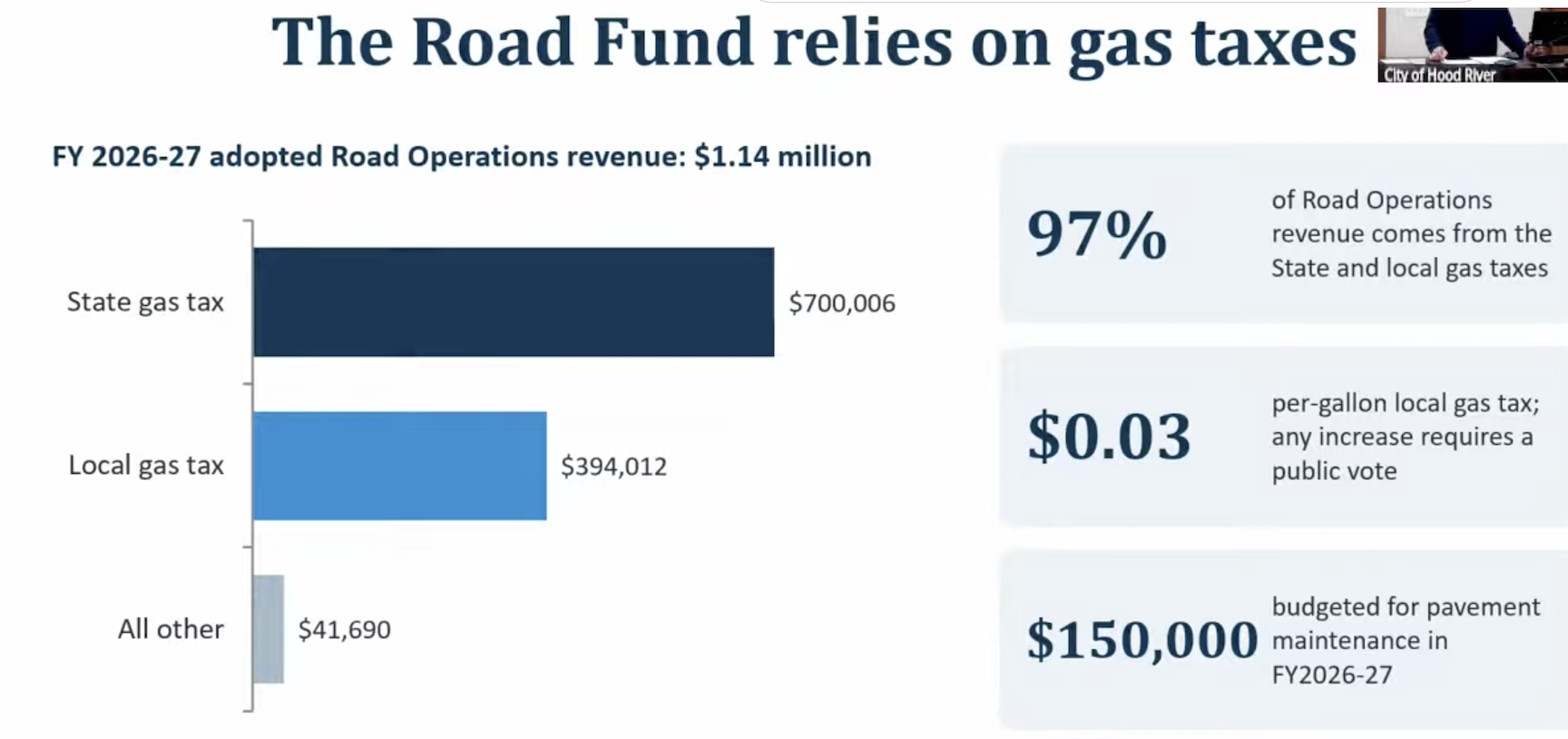
Gas tax revenues are declining due to the adoption of electric vehicles, and the flat tax rate hasn’t kept pace with inflation. Meanwhile, construction costs, materials and labor keep rising.
At the current pace, Finance Director Chris Longinetti reports that “the Road Fund will lack sufficient funds for even minimum service and maintenance levels next fiscal year.”
That leads to a TUF plan — a utility fee that would charge utility payers in the city for road maintenance.
The TUF is a monthly charge to utility customers for their use of the city’s street system. It’s directed at utility payers and NOT property owners (though often they’re the same) because it’s a USER fee, not a property tax. The person occupying the property pays the fee, and if fees go unpaid, they do not become liens on the property.
The fees paid for road maintenance will go toward street maintenance and related purposes. Because it’s a user fee, not a property tax, it can be implemented with a simple vote by the City Council.
How exactly will it work?
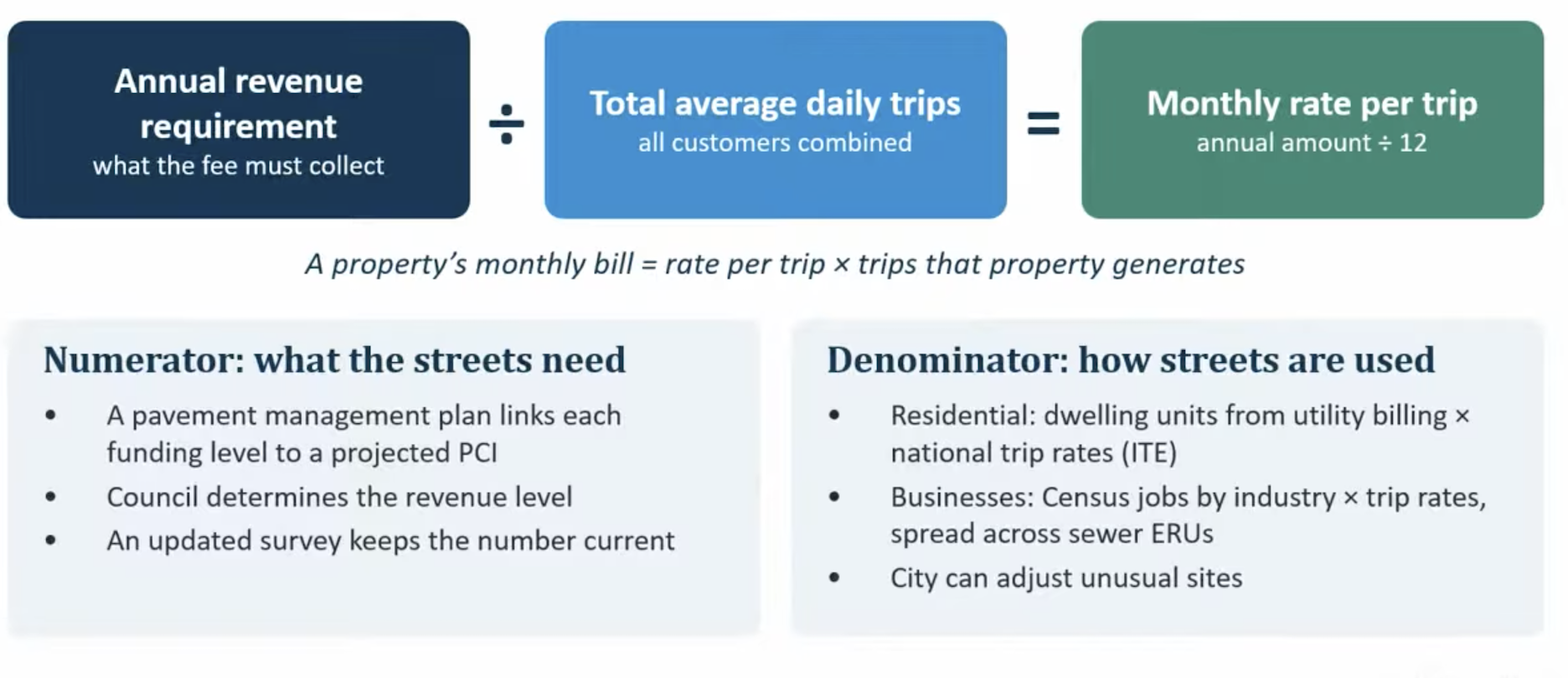
The fee for single- and multifamily residences is calculated using an estimate of the “average daily trips for that housing type.” Fees for nonresidential utility users — breweries, restaurants, food processors, grocery stores and hotels — use U.S. Census and other data, such as water usage or sewer output, to establish a proxy for the number of users. That figure is then converted into a daily trip rate. An insurance office generates fewer driving trips than a hotel or grocery store, so its fee would be lower.
Beaverton adopted a TUF (transportation utility fee) this year. Residential user fees range from $3.61 to $5 per month, with the fee doubling in the second year and tripling to $15 per month in 2029. Commercial rates are higher.
Mosier has also adopted a TUF, with fees tied to the size of the water service line. Rates begin at $6.74 per month for a three-quarter-inch line and $16.65 for a 1-inch line. A utility customer using a 6-inch line pays $334.08. Water line size may be legally defensible as a proxy for the number of users occupying a property, though it has shortcomings.
The amount of the fee also depends on how much money is needed to maintain or improve local roads. A pavement condition study will evaluate local streets. The study will present an analysis and a range of budget and repair options, leaving it up to council members to decide how much funding to dedicate to achieving a particular road condition level.
That decision will affect the final fee.
Isn’t this a tax?
Like it or not, semantics matter — and the TUF is judged to be a fee, not a tax. Taxes generate revenue for public services without providing a direct, proportional benefit to the payer. For example, property owners pay for schools whether or not they have children attending them. Property taxes also fund public safety, even if a property owner has never called the police.
A fee has to be intended to pay for a particular service and be proportional to its cost.
Monday’s discussion pointed out that the road maintenance fee is tied to utility bills — whoever resides in the home or business that pays the utility bill. A renter living in a home will pay the TUF along with the water and sewer bills.
The City Council can impose this fee without a public vote because it’s a fee and not a TAX — that is, it’s not based on property ownership, with the funds going toward a general public good. Instead, it’s a fee based on “the quantity of goods or services used,” with the money going directly toward road services.
Council members raised questions about discounts for low-income households and how an appeals process would work. I sent further questions asking how housing projects such as the 130-unit Mariposa Village, or tax-exempt facilities such as churches and government entities, would be charged. Those issues will get ironed out as the proposal moves forward.
Meanwhile, council members voted unanimously to spend $12,250 on a pavement study as the first step in evaluating the projected budget shortfall over the next five years.