
Maryhill Museum of Art Marks Centennial Year, Opens 2026 Season March 15
By Emily Petterson
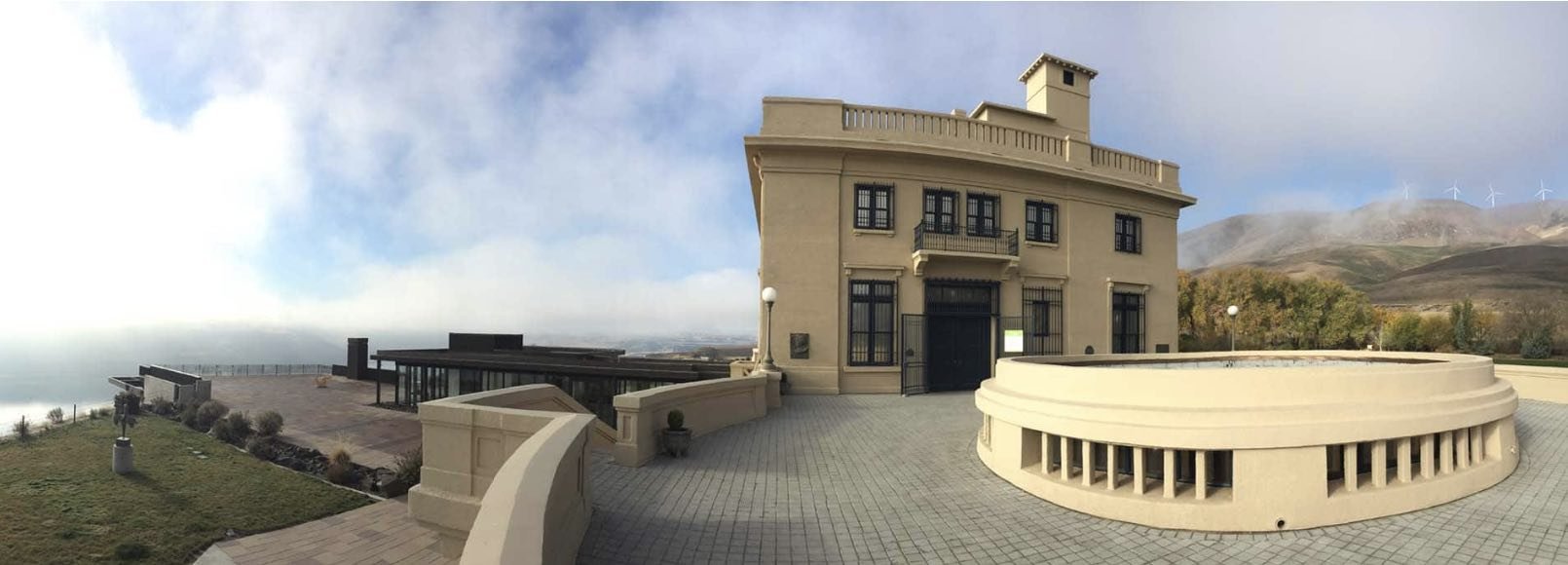
Goldendale, Wash., March 12, 2026 — High above the Columbia River Gorge, on a remote bluff in southern Washington, stands one of the most improbable museums in the world. The story behind it is even more surprising.
Maryhill Museum of Art‘s origin story involves an entrepreneur with an ambitious vision, a revolutionary modern dancer connected to the Paris art world, a formidable San Francisco arts patron known as “Big Alma,” and a Romanian queen.
Now, 100 years after its dedication in 1926, the Maryhill Museum of Art opens its Centennial year on March 15, 2026, celebrating a century of bold ideas, international relationships, and an enduring belief that great art can thrive in unexpected places.
“At 100 years old, Maryhill is still full of surprises,” said Amy Behrens, executive director of the Maryhill Museum of Art. “People come expecting a museum, but they discover something much bigger. It is a destination where art, landscape, and history intersect. Every season brings new exhibitions and new perspectives, so even longtime visitors find something they have never seen before.”
Centennial Year Highlights
As Maryhill celebrates its 100th anniversary since its royal dedication, the season underscores how the museum continues to evolve through new exhibitions and contemporary perspectives.
1. Debuting this season, American Classical Realism presents approximately 40 paintings drawn from one of the largest institutional collections of this genre. The exhibition traces four generations of artists connected to the teachings of R.H. Ives Gammell (1893–1981), one of the last American painters trained in the French academic atelier tradition. Artists represented include Richard F. Lack (1928–2009), Robert Douglas Hunter (1928–2014), Samuel Rose (1941–2008), and Stephen Gjertson (b. 1949), with contemporary works on loan to further illustrate this influential artistic lineage.
2. Also opening in 2026, a new exhibition of Contemporary Indigenous Art brings together works by artists from the Pacific Northwest and the American Southwest, highlighting living traditions and contemporary voices. The exhibition features ten works by leading Indigenous artists, including the late Rick Bartow (Wiyot, 1946–2016) alongside living artists Joe Feddersen (Okanagan/Sinixt, b. 1953), Marwin Begaye (Diné/Navajo, b. 1970), and Craig George (Diné/Navajo, b. 1970), reflecting Maryhill’s ongoing commitment to Indigenous art and cultural dialogue.
3. Also debuting in 2026, Romanian Embroidery honors the centennial of Queen Marie of Romania’s dedication of Maryhill Museum of Art in 1926. The exhibition will feature traditional embroidered Romanian blouses, chemises, and related garments, celebrating the rich textile traditions of Romania while reflecting the museum’s long-standing interest in textiles and decorative arts.
An Unlikely Origin Story
Maryhill began as the vision of Samuel Hill, an entrepreneur, transportation advocate, and international thinker who believed the Pacific Northwest deserved cultural institutions equal to those of Europe. Hill purchased thousands of acres above the Columbia River Gorge and began constructing a grand Beaux-Arts mansion overlooking the river.
But the house was never fully inhabited as planned. Instead, through the encouragement of Hill’s close friend Loïe Fuller, the celebrated modern dance pioneer and theatrical innovator, the project took a different direction. Fuller’s deep connections within European artistic circles helped introduce Hill to leading cultural figures and artists of the era.
Another key supporter was Alma de Bretteville Spreckels, the six-foot-tall San Francisco philanthropist, artist’s model, and influential arts patron widely known as “Big Alma.” Rising from poverty to become one of the West Coast’s most powerful cultural advocates, Spreckels championed ambitious art projects and helped strengthen Maryhill’s artistic vision.
The museum’s improbable founding story reached its most dramatic moment in 1926, when Queen Marie of Romania, a friend of Hill and Fuller, traversed two continents, traveling by royal train across the United States to dedicate the museum before a crowd of more than 2,000 guests.
An entrepreneur.
A modern dance pioneer.
A cultural patron.
A Romanian queen.
Together, they helped shape a museum unlike any other in the American West.
Why Maryhill Is Unlike Any Other Museum
As Maryhill marks the centennial of its 1926 dedication, the anniversary offers a chance to highlight the unusual elements that have defined the museum from the beginning. From its architecture and international connections to its collections and dramatic setting, Maryhill reflects a vision that has always been anything but ordinary.
● Designed by architects who shaped Washington, D.C. The original Beaux Arts mansion was designed by Hornblower & Marshall, the Washington, D.C. firm responsible for major civic buildings, including the National Museum of Natural History on the National Mall.
● One of the most significant Rodin collections in the United States, Maryhill holds more than 80 works by Auguste Rodin, an extraordinary concentration rarely found outside major metropolitan museums.
● A life-size Stonehenge replica overlooking the Columbia River Gorge. Just four miles from the museum stands Stonehenge Memorial, Sam Hill’s full-scale replica of the ancient monument built as a memorial to Klickitat County soldiers who died in World War I.
● Unexpected royal connections Queen Marie of Romania, the granddaughter of Britain’s Queen Victoria, traveled to Maryhill in 1926 to dedicate the museum in a ceremony attended by more than 2,000 guests and covered nationwide. During her visit, she delivered more than 100 works of art and personal objects to the museum, including paintings, Russian icons, manuscripts, and the gown she wore to the 1896 coronation of her cousins Tsar Nicholas II and Tsarina Alexandra of Russia.
● Contemporary Indigenous voices Alongside its historic holdings, Maryhill continues to expand its presentation of contemporary Indigenous art from the Pacific Northwest and the American Southwest, highlighting living artists and evolving cultural expression.
● A museum defined by place. Set high above the Columbia River Gorge, Maryhill offers sweeping views and expansive grounds where architecture, art, and landscape intersect. The museum’s remote setting also offers remarkably dark skies, making the landscape ideal for stargazing.
A Place to Discover Again and Again
Perched above the Columbia River Gorge, Maryhill invites visitors to experience art within a dramatic landscape where architecture, sky, and river are inseparable from the cultural experience.
Situated on lands shaped for countless generations by the peoples of the Columbia River Plateau, Maryhill recognizes that its 100-year institutional history exists within a much longer cultural continuum. Visitors often arrive expecting a brief stop and instead find themselves exploring for hours, discovering unexpected collections, sweeping views, and exhibitions that change each season.
“Maryhill was never meant to be ordinary,” said Behrens. “A hundred years later, it still isn’t.”
Maryhill Museum of Art is open annually from March 15 through November 15, with Centennial exhibitions and special programming taking place throughout the 2026 season.
For more information, visit: www.maryhillmuseum.org
About Maryhill Museum of Art
Perched high above the Columbia River Gorge, Maryhill Museum of Art occupies a Beaux Arts mansion envisioned by Northwest entrepreneur Sam Hill. The museum was dedicated in 1926 with the support of Hill’s friends and collaborators, including modern dance pioneer Loïe Fuller, San Francisco arts patron Alma de Bretteville Spreckels, and Queen Marie of Romania. Today, Maryhill Museum of Art presents new exhibitions each season alongside its renowned permanent collections, which include more than 80 works by Auguste Rodin, European and American paintings, Indigenous art, and the Théâtre de la Mode. The museum’s grounds also include the William and Catherine Dickson Sculpture Park and the museum-owned Stonehenge Memorial, a full-scale replica built by Hill as a World War I monument. For more information, visit: www.maryhillmuseum.org
Facebook: facebook.com/maryhillmuseum
Instagram: instagram.com/maryhillmuseum
Select media images are available here. Please include the photo credit listed in the file name. For additional artwork or image requests, please contact Emilyp@weinsteinpr.com
Support Local News!
Available for Everyone; Funded by Readers.