
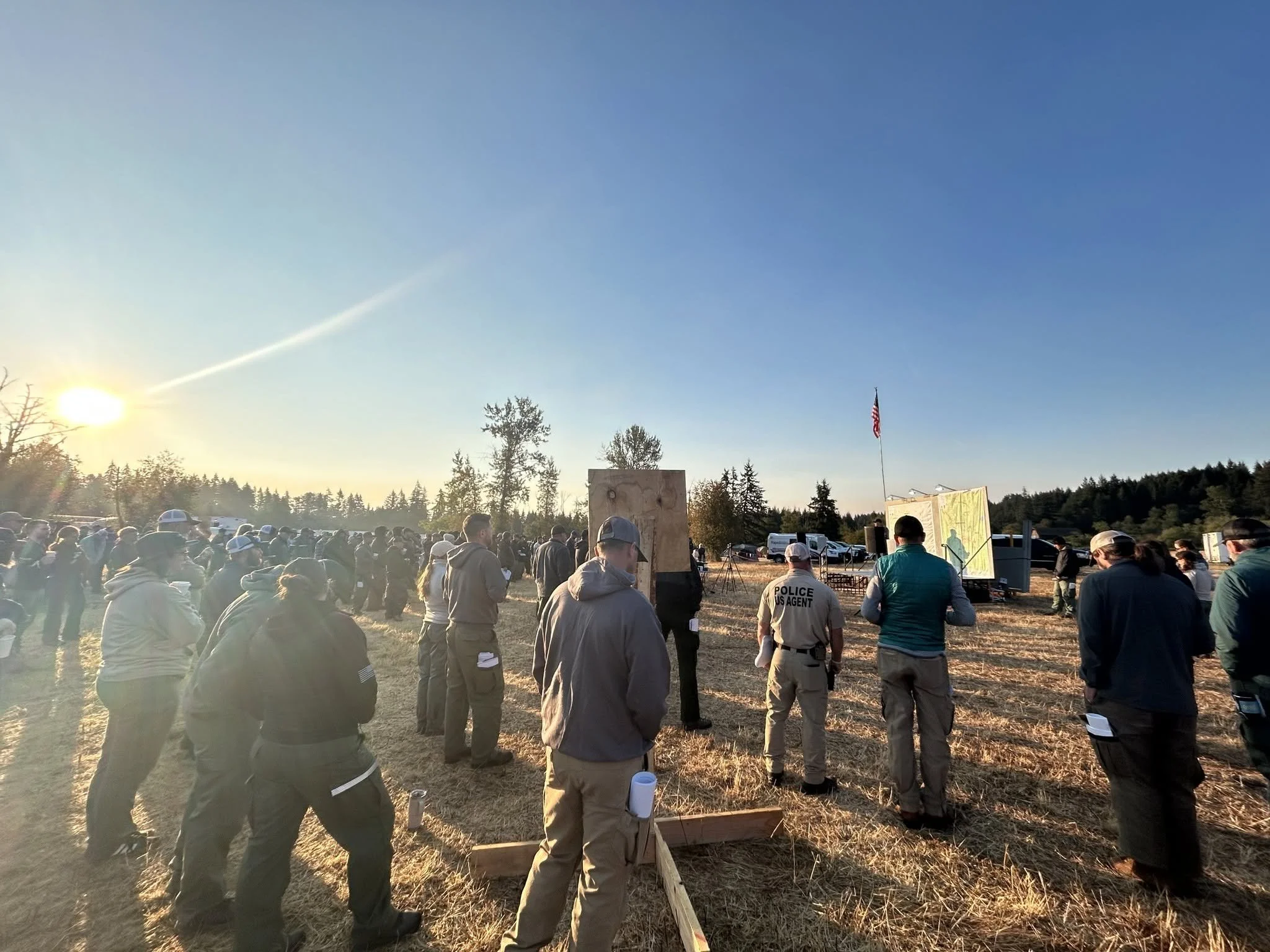
A new incident management team took command of the Grasshopper Fire and gave the morning briefing this morning in Tygh Valley.
The Dalles, Ore., Aug. 24, 2026 — A new incident management team took command of the Grasshopper Fire Monday as firefighters continued to hold the 93,744-acre blaze at 76% containment, while hot, dry conditions and low humidity continued to challenge suppression efforts.
Great Basin Complex Incident Management Team 4 assumed command of the Grasshopper Fire Monday morning, along with the nearby Austin and The Narrows fires. A total of 1,116 personnel are assigned to the fires.
The transition comes as firefighters continue working to secure containment lines and mop up portions of the Grasshopper Fire, which has been burning since July 23 southwest of Dufur.
Fire activity in the southwestern corner, which had been more active Saturday, moderated Sunday. The fire backed and crept downhill toward containment lines, giving crews an opportunity to establish additional fire line, strengthen existing lines and make progress on mop-up operations.
Aircraft continued to cool hot spots to support firefighters working on the ground. More than 1.3 million gallons of water have been dropped on the Grasshopper Fire since Aug. 5 to help protect homes, structures and communities, according to fire officials.
The National Interagency Coordination Center continued to report active fire behavior Monday, including uphill runs, flanking and group torching. Numerous residences and critical infrastructure remain threatened, and evacuation notices and closures remain in effect.
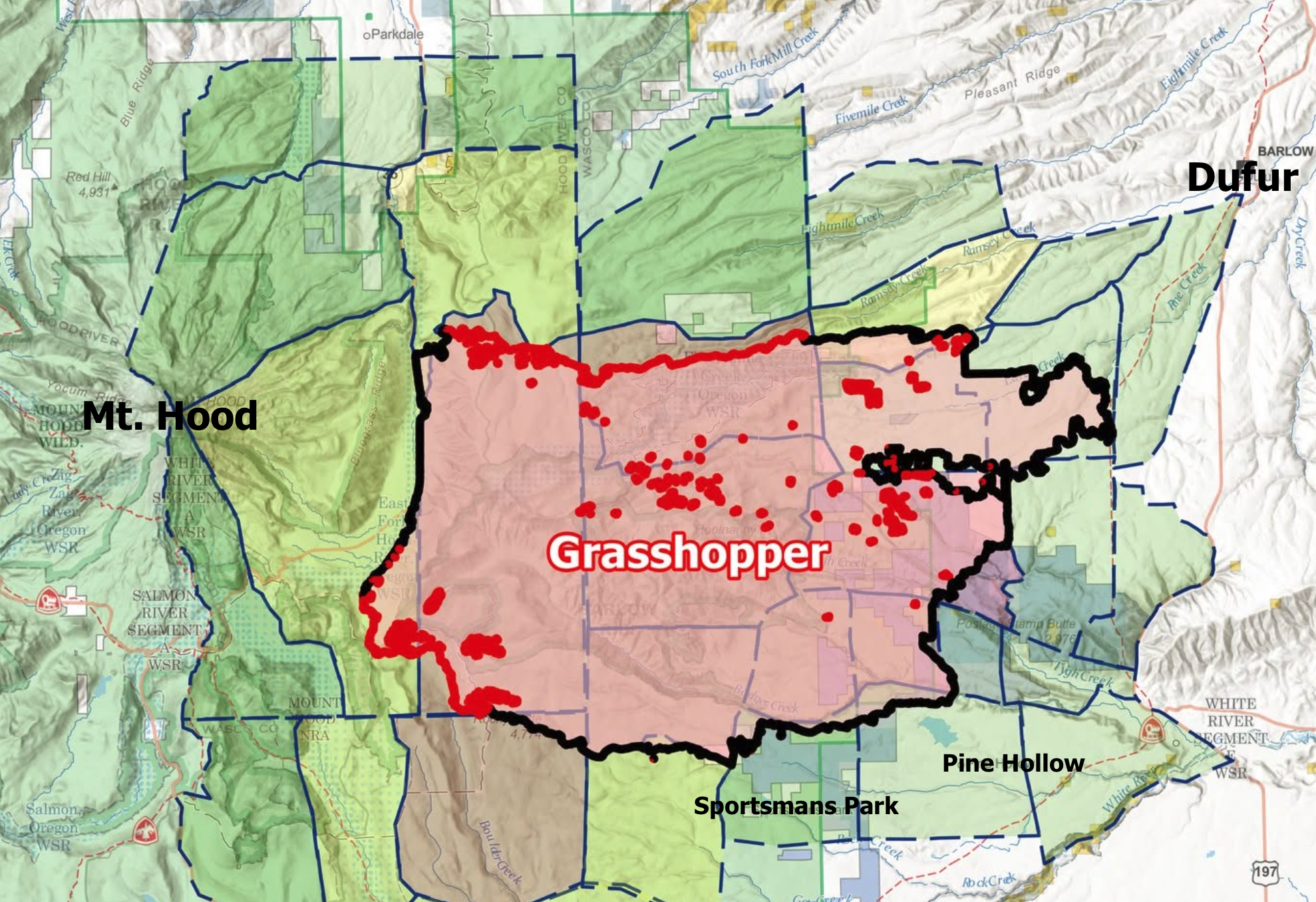
Map of the Grasshopper fire shows black containment lines and where the firefighters and aerial attacks are being used to bring the fire under control in the redline portions.
Hot, dry weather remains a concern
Warm and dry conditions are expected Monday and Tuesday as high pressure builds over the region. Light winds during the morning are forecast to shift easterly in the afternoon before weakening in the evening.
Of particular concern to firefighters is low overnight humidity, which limits how much moisture vegetation can regain during the cooler nighttime hours and can leave fuels more receptive to burning the following day.
The dry conditions follow several days of challenging fire weather in the region. Strong winds, high temperatures and low relative humidity have repeatedly created conditions favorable for rapid fire spread, particularly on the eastern side of the fire.
Smoke, evacuations and closures
Air quality improved over the weekend and is expected to range from good to moderate early this week, according to fire officials.
Evacuation notices ranging from Level 1 "Be Ready" to Level 3 "Go" remain in portions of Wasco and Hood River counties. Residents should continue to check current evacuation maps because conditions and evacuation levels can change.
A forest closure remains in place on the Mt. Hood National Forest. Fire restrictions also remain in effect on the forest and across other portions of the region as hot and dry late-summer conditions continue.