
Off the path in Panama City: TD youth turns spring break into summer service
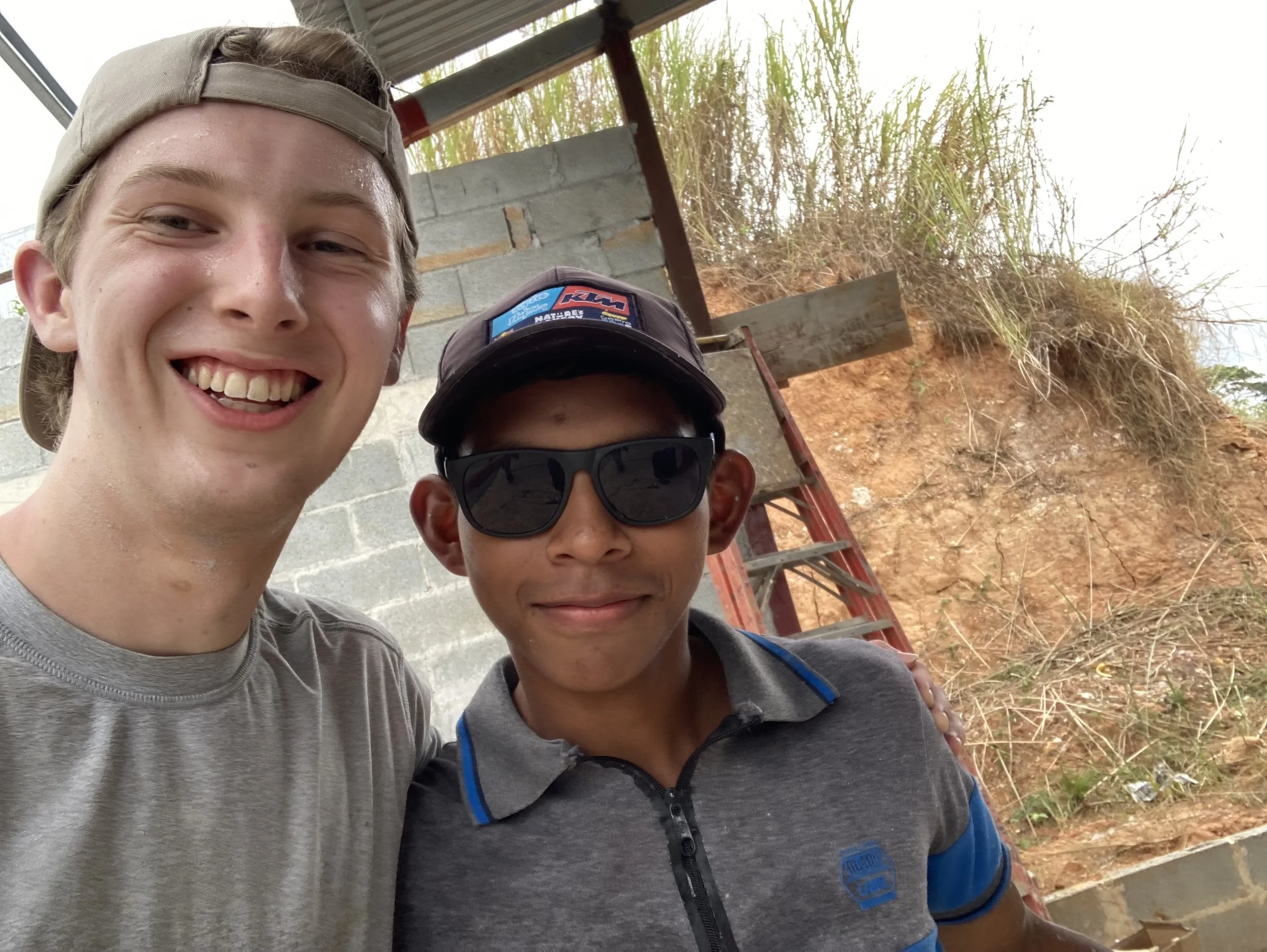
My trip to build a church in Panama brought many unexpected lessons. This friend helped me learn Spanish during breaks from the concrete work.
Travel log and photos by Aaron Girdham
It seemed our entire group’s knowledge of Panama amounted to one fact: it had an important canal.
We didn’t know much.
Still, we decided to mark the week of spring break on our calendars and travel to the tip of Central America. We were not going to hike through the deep jungles of one of the country’s many national parks, or to snorkel with whale sharks and manta rays off the coast, or tan and sip fresh fruit juice on one of its sun-loved beaches or Islands like what most tourists come to do.
Our Church group of ten high school boys and three adult leaders from Northern Oregon went to build a church in one of the many sprawling middle class residential areas of Panama City.
I had no idea what to expect of the city. When I pressed myself to imagine Central American urban life, movie scenes came to my head: ghetto life of gangs and cops, or the simple cobblestone street city that receives three scenes in a tropical adventure film.
Panama was still just the solid green or orange country on a world map from my geography book and a political cartoon in my history book, body and soul. Regardless of my lack of knowledge, I was just happy to experience honest life in a foreign country—life that wasn’t Hawaiian leis and a Pina Colada for thirty dollars. That is why I chose to travel through a Church mission.
Missions tend to bypass the over-traveled tourist destinations and immerse into the heart of a country or a city. In its essence, a mission is a voluntary travel experience centered around serving God and other people. They are purpose-driven experiences that entail an amount of self sacrifice and exact hard work. A mission could include participants offering manual labor, evangelism, and offering professional assistance free of charge.
I knew that a full week of productive challenge for the body and the soul came in the package. I could come back and know I had left behind something that was significant for another person. It was not going to be about what I was bringing back or the amazing and colorful stories I now have. It was about blessing someone else with the time I sacrificed and the effort I put in.
It wasn’t about me.
It was about someone else’ experience.
The trip would be a practice of faith, a living of what I believed. It was the shaping of a lifestyle of selflessness and sacrifice.
Day one of spring break, the tarmac was the same dull gray as the early morning at the Bogota airport. This was the first foreign “soil” I had stood on. I walked through the airport hearing Spanish, Portuguese, and French echo through the terminal as busy people bumped into me. Being outside of the homey comfort of the English language and the pencil drawn borders in my mind’s map, gave me vaguely an “unplugged” sensation. A self generated energy began to surge through me every time I fumbled through a jagged Spanglish conversation that too often ended with me saying,“no Espanol”.
Finally, becoming the foreigner sent volts of excitement through me. Passport stamped and an hour later, we were back in the air, with the morning sun, a foreign sun, rising and it felt nice.
I liked it.
Out my airplane window it was all Pacific Ocean beneath us. I was dying to see just a patch of green grass from a different country. That thought kept my eyes open—barely. Just as my head began to metronome, I heard giggling in front of me and saw a small face looking between two airplane seats. He was probably eight years old. I waved at him, and he waved back. I started racking my brain for any Spanish that I knew, but he beat me to it.
“Hello!” he said.
“Hi.”
“You are American?”
“Yeah that’s right, I’m from Oregon.”
He sounded that one out.
“Are you from Colombia? Or Panama? Here… here? Columbia? Below us?” After a couple hand gestures I finally got the point across to him.
“Yes! From Colombia!”
We talked about school and soccer as best as we could in broken English. This seemed to be his first flight, and his excitement was contagious. I slowly forgot about sleep, pressing my nose up against the window and pointing out things that looked interesting. Boats, barges, and cargo vessels started to dot the water and formed a long queue to the port of the canal, then the beach began to crest the ocean.
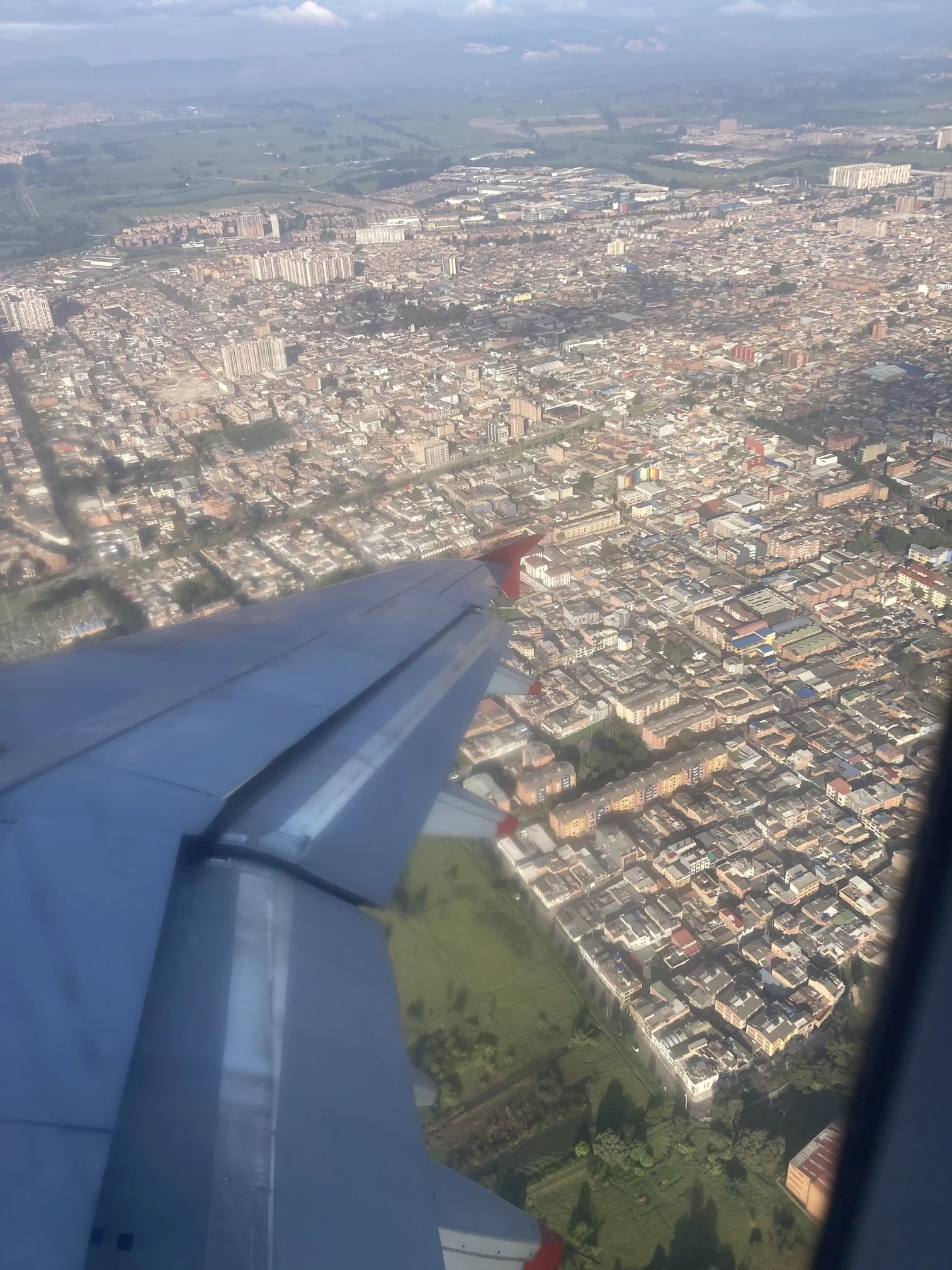
Buildings slowly jumped towards the sky, and red roofs crowded the hills of the landscape. Surrounding the city, sprawled out dense radiant green forests and brown roads that snaked through the trees towards houses that didn’t seem to belong there. It felt good to be welcomed into the country with friendly ease, and a reminder of what true excitement felt like.
As much as the large green mountains standing above the forests reminded me of home, the heat that met me when the airport doors opened immediately melted away all traces of that idea. Ninety degrees and humidity embraced me with open arms.
Welcome to summer.
Panama’s summer/dry season lasts from mid-December through April. This is when tourism is at its highest, and mosquitoes are at their lowest. The sun swelters, the heat peaks, the beaches are tempting, the nights are inviting for conversation, and everybody enjoys the outdoors.
Markets bloom on the streets like flowers, opening up with color for anybody who passes by to see, and tourists flock from around the world to enjoy the warmth that this Central American country has to offer.
From the airport, the already sweating church group piled into an overloaded van and took to the streets. We dove head first into the unforgiving mass of traffic, engaging in a mad and frenzied dance with transit buses, home-painted school buses, dodgy taxis, motor bikes, and an assortment of international vehicles.
The rules to this traffic dance are easy: the hesitant one loses. After fifteen minutes of trying not to tango with motorcycles and rounding a hair-pin turn, we were at the hotel.
The industrial and residential streets we traveled throughout the week were lined with adobe shops painted in ten dulled colors. These businesses were side by side with newer, generic American fast-food restaurants. A shop with a name like La Ciudad Carniceria would share a parking lot with KFC. American culture has been present in Panama since the beginning. Panama gained it’s independence from Columbia in 1903, with large support and a few warships from the United States during Theodore Roosevelt’s administration. In November of that same year the US recognized Panama as an independent Country. The US Army Corps of Engineers started constructing the canal within the next few months, sending masses of American workers to the country over the next ten years. In 1977, U.S. President Jimmy Carter signed the Canal over to full Panamanian ownership. In 1989 President George H.W. Bush sent in military forces to abduct the military ruler Manuel Noriega, who had been infringing upon the democratic rights of Panama’s residents. America has been Panama’s biggest ally and has also remained the number one user of the canal each year. American people are in and out of Panama constantly, and are accepted warmly. They’ve left their fingerprints all across the country. The US dollar is the accepted form of currency in Panama—making it a very easy place for US citizens to travel.
On the first day we drove to the church construction site. Outside of the industrial area were houses of various kind and color, sprawling for miles, and seeming to lounge on the rolling hills. It was tapestry of red roofs, tin roofs, brick, adobe, and paint hues.
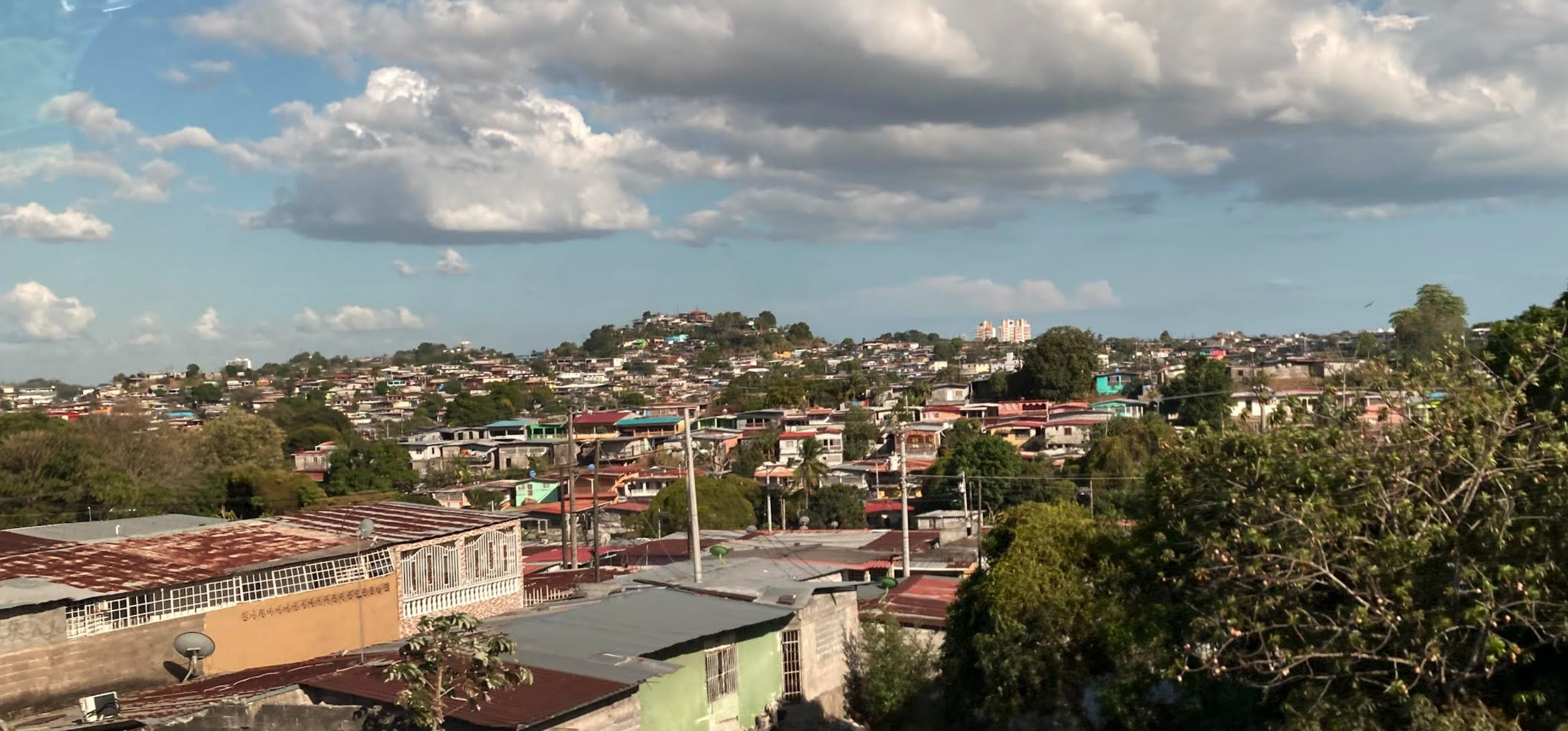
The slums were an inconsistent patch work—shacks of tin and wood that sat in spontaneous tight neighborhoods on dirt floors. On the side of the road, smoke rose from small, makeshift vending stands where people sold smoked meat and plantains to whomever was tempted in the stop-and-go traffic. Ripe pineapples, mangoes, and watermelons were displayed across the shop tables. People darted across the road to load a bag from a stand.
The road ran to the monotonous, average concrete houses of the city as well. They mostly looked to be four- to five-room, single-story constructions with shingled roofs and fenced in patios — no yards.
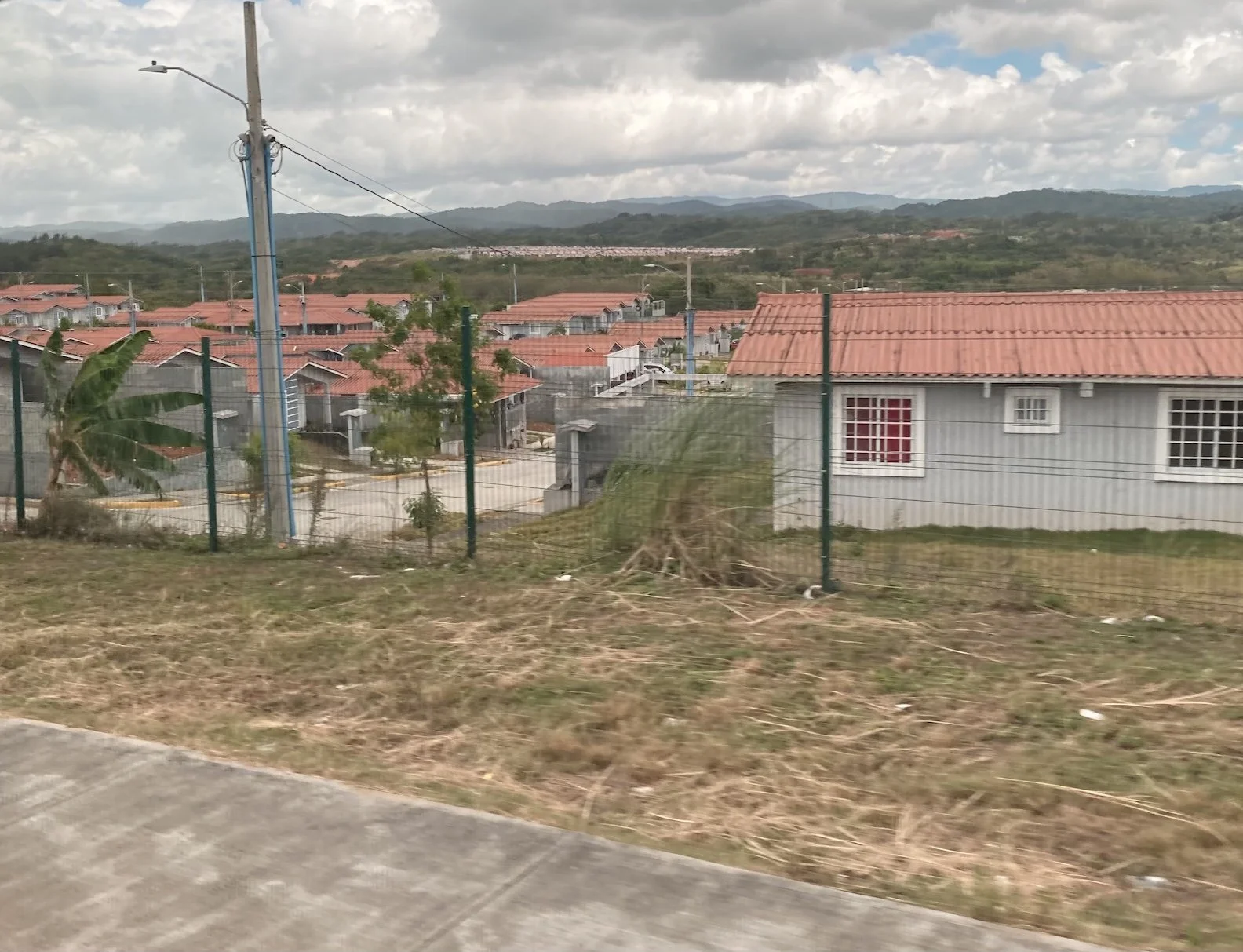
On the edge of one of these neighborhoods stood the church. It had three walls, half of a tin roof, and a small stretch of the floor that was still dirt. The other portion of floor was concrete, and the three walls were made of cinder block. Even in its partially finished condition, around ninety parishoners met on Sundays. As we walked around I picked up some rich, soft red clay; I fingered it and rubbed it on my skin. Colors everywhere were vibrant, it didn’t matter if they were natural in the landscape or on people's clothes. The reds were living, the greens were surreal, the blues were joyous.
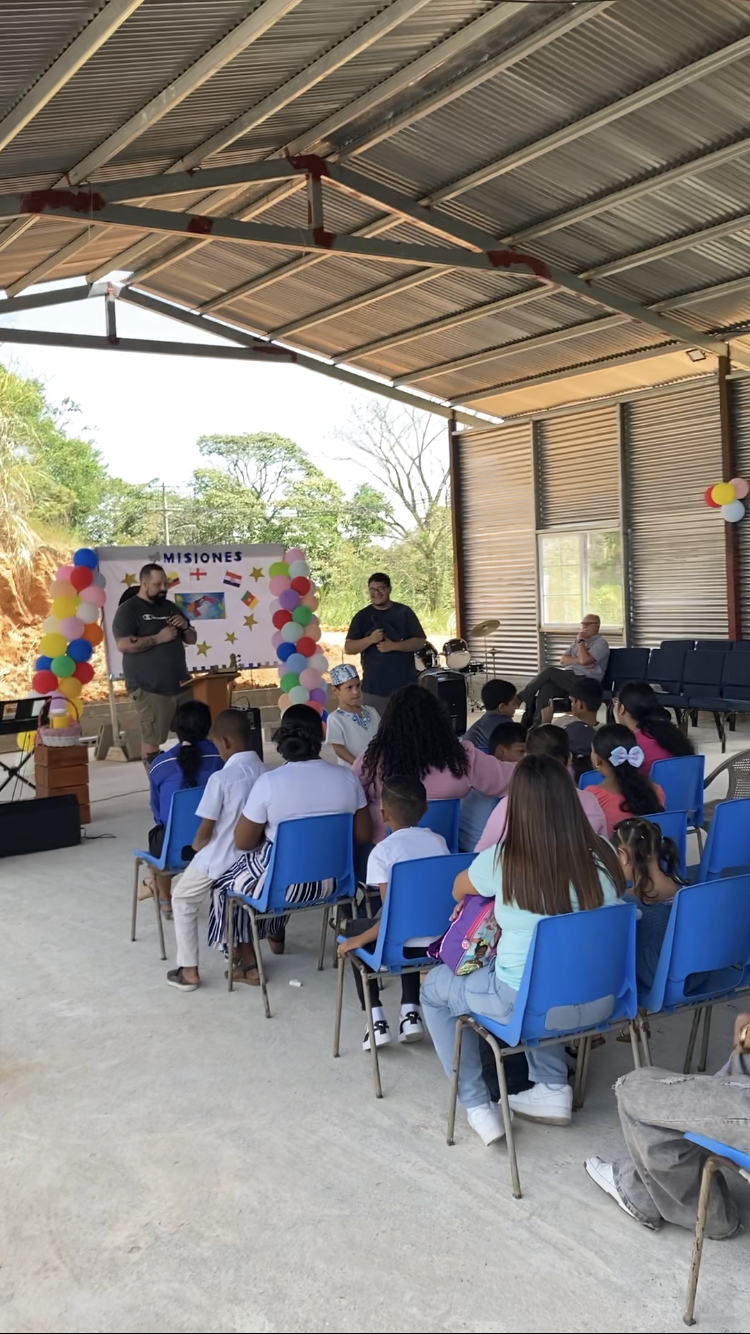
The colors were like the people, they welcomed you as a part of it.
The music was like the language—it had a life to it. After the Pastor and his family arrived, he explained some of the dynamics of the neighborhood. In the house across the street lived a woman who seemingly enjoyed calling the police on Sundays to arrive at the Church during services. If the police couldn’t make it, she would personally come outside to yell at the congregation instead. In contrast, the drug dealers who lived next door to her were a bit more chill, and admitted to appreciating having a church in the neighborhood. Even with it’s flaws, the Church still had a welcoming quality to it. The glass-less holes where windows were expected to be, served as frames to picturesque, emerald mountain landscapes on the right wall. The Pastor’s kids ran throughout the building screaming and playing. Warm air passed through under the shade of the roof.
Sunday, the next morning, we started construction. We leveled the dirt floor while the worship team played Cumbia beat versions of worship songs. The Pastor and men of the Church all came to work alongside us on their day of rest. They would stop us in the middle of shoveling and hand motion to us what way we needed to lay out the ground, or how we needed to shovel. They would practice their English, and we would practice our Spanish with good-humored confusion. After forgetting everyone's names for the third time, I learned how to make some good eye contact.
One of our leaders delivered the morning sermon, which was interpreted to Spanish by one of the students. Children fidgeted in their plastic chairs and would look over their shoulders at us. The sun leaned on us the same way I leaned on my shovel, with full weight. I wished one of the many trees was a few hundred meters closer. The service was soon over and the children went to the front of the stage to sing songs, while the women brought them packaged gifts sent from the US.
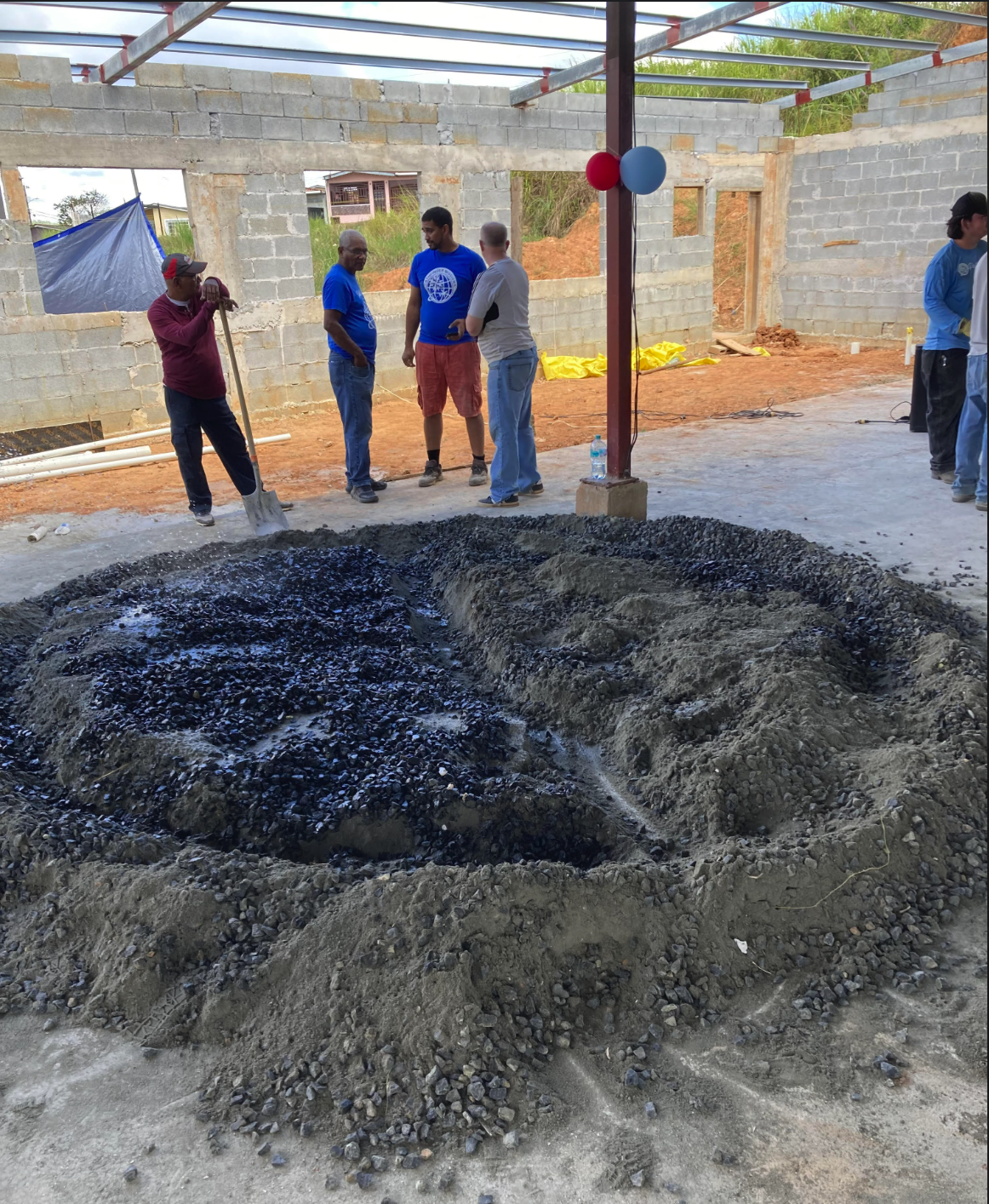
Rough concrete mixing was the order of the day as we piled sand, gravel and concrete as we gathered in a circle and mixed it until thoroughly saturated with water.
There was a family atmosphere present between us all. We started carrying bags of concrete and sand, and poured them into a big pile. We then shoveled that into two separate piles then back into one. We brought out rocks and dumped those on the circle of concrete mix. Then with the shovels, we made a small mote around the concrete island and hosed water onto it. Together we all stuck our shovels in the middle, and mixed for nearly an hour. After the pile had been depleted, we repeated the process. This was the predominant work for the next three days, and nobody was without a task or a sore back.
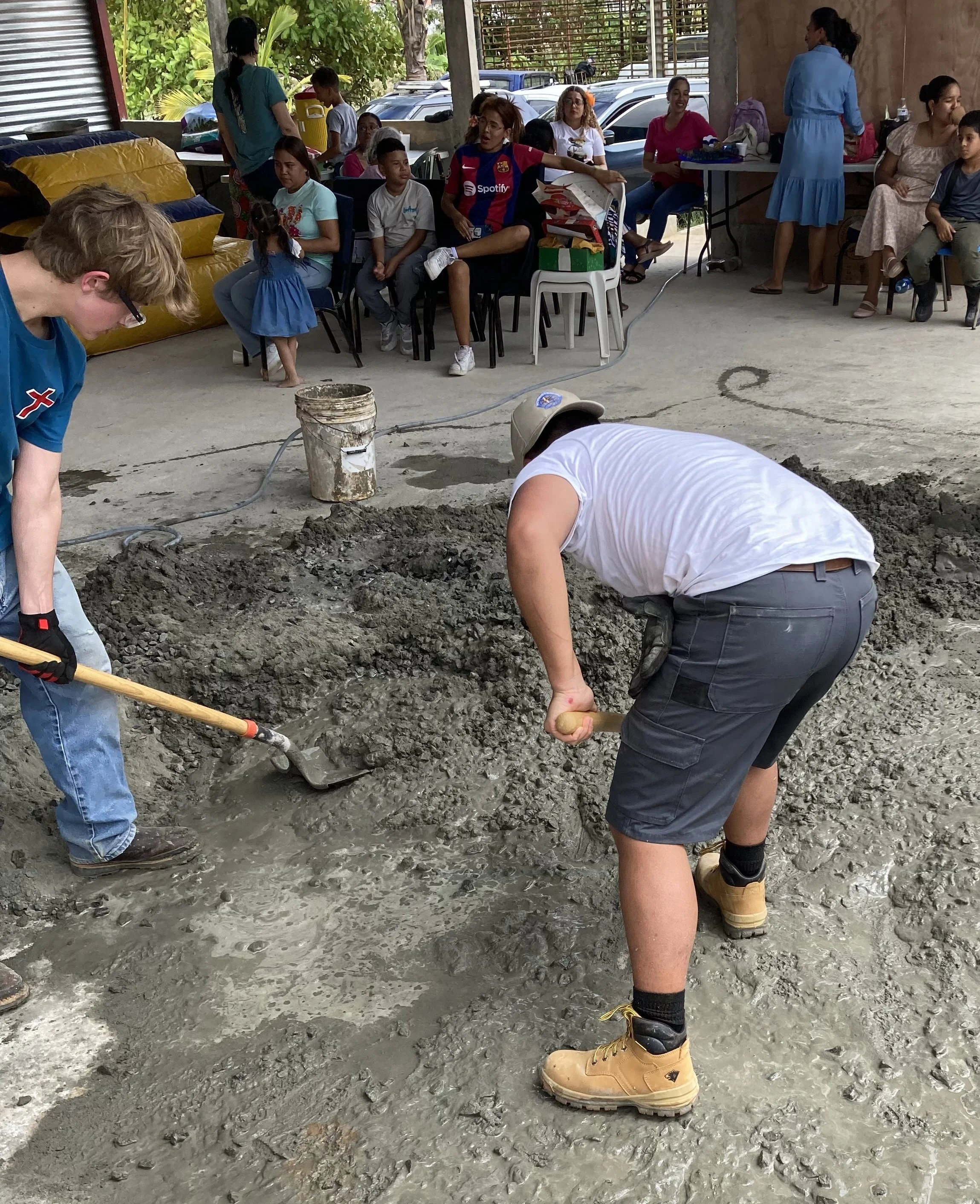
As we sifted, it provided a good chance for interaction with the local workers on the site. I talked to one of the workers in start-and-stop English. He was seventeen as well, though I could never pronounce his first name. He said he didn’t go to school, but just traveled to different construction sites with his dad. After they worked a ten-hour day, they would drive back to their house in the mountains where the family of thirteen lived in a small, remote house.
It had dirt floors. In a short way was a river where he would fish and swim. Nearby was a makeshift zip-line over the treetops.
“Do you ever want to travel to America?”, I asked.
He looked at me quizzically.
“Nah.”
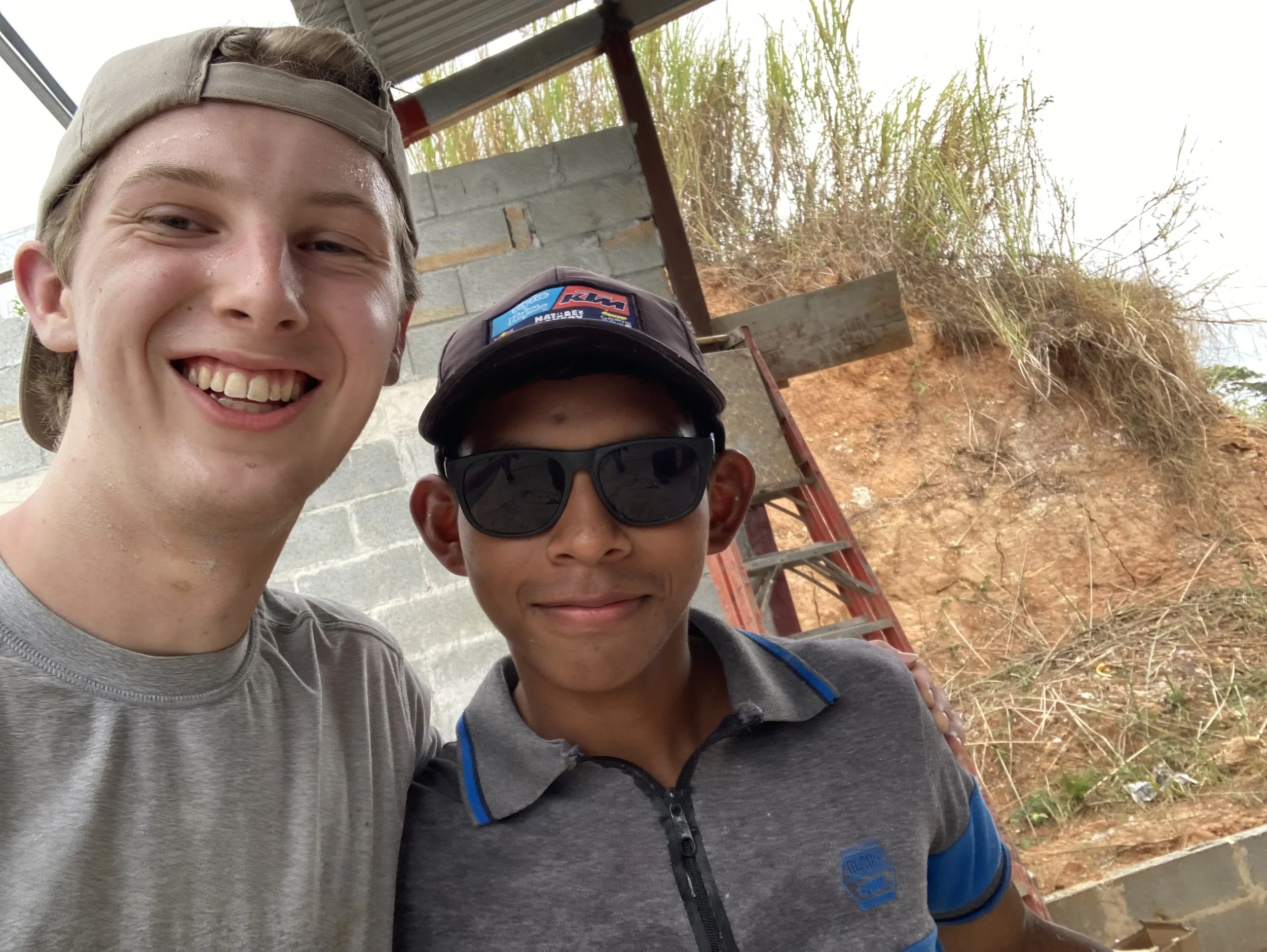
He taught me the most about the construction, showing me simple things I probably should have known like how to mix the concrete the best way or even how to hold my shovel.
During lunch, I couldn’t find the patience to sit with my group in the corner of the Church and listen to them complain. I walked over to sit with the laborers from the city and listened to their Spanish. I sat next to the guy my age and he would teach me twenty minutes worth of phrases.
The women of the Church would prepare lunch for the workers. They made a delicious Panamanian meal of heavily spiced chicken and rice, with sweet cinnamon fried plantains. The hotel we stayed at had the same dish on the menu with shrimp. Both were crafted with generous amounts of butter.
Due to permit issues, our group was unable to build the fourth wall.
By Wednesday, we had finished the concrete flooring within the Church, added concrete to the small parking lot, inserted some piping, attached the other half of the tin roof, dug a waterway ditch, picked up trash surrounding the Church, and caked ourselves in concrete and sweat. This pronounced our work to be finished. Pastor Jose and his wife then came to shake each of our hands and thank us personally.
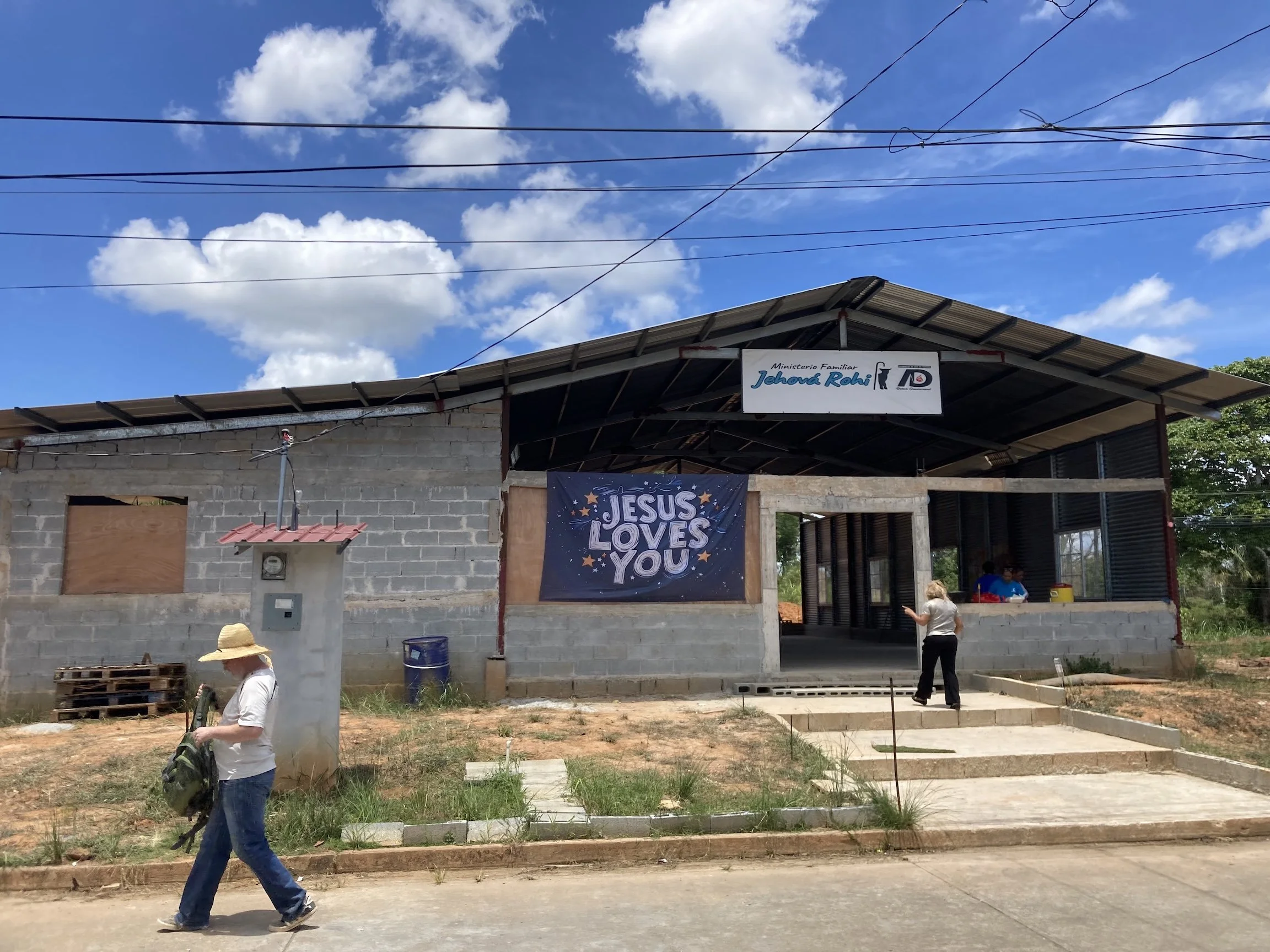
Our work on the church was done by Wednesday after four days of mixing concrete by hand and installing the roof.
The next day we drove into Panama City. It is a successful, swank, modern metropolis that stands up surrounded by uncontrolled jungles to the west and east, and national parks to the north. It is a very welcoming city, with a beautiful blend of old historic buildings, dating back several centuries, and iconic, modern glass framed skyscrapers.
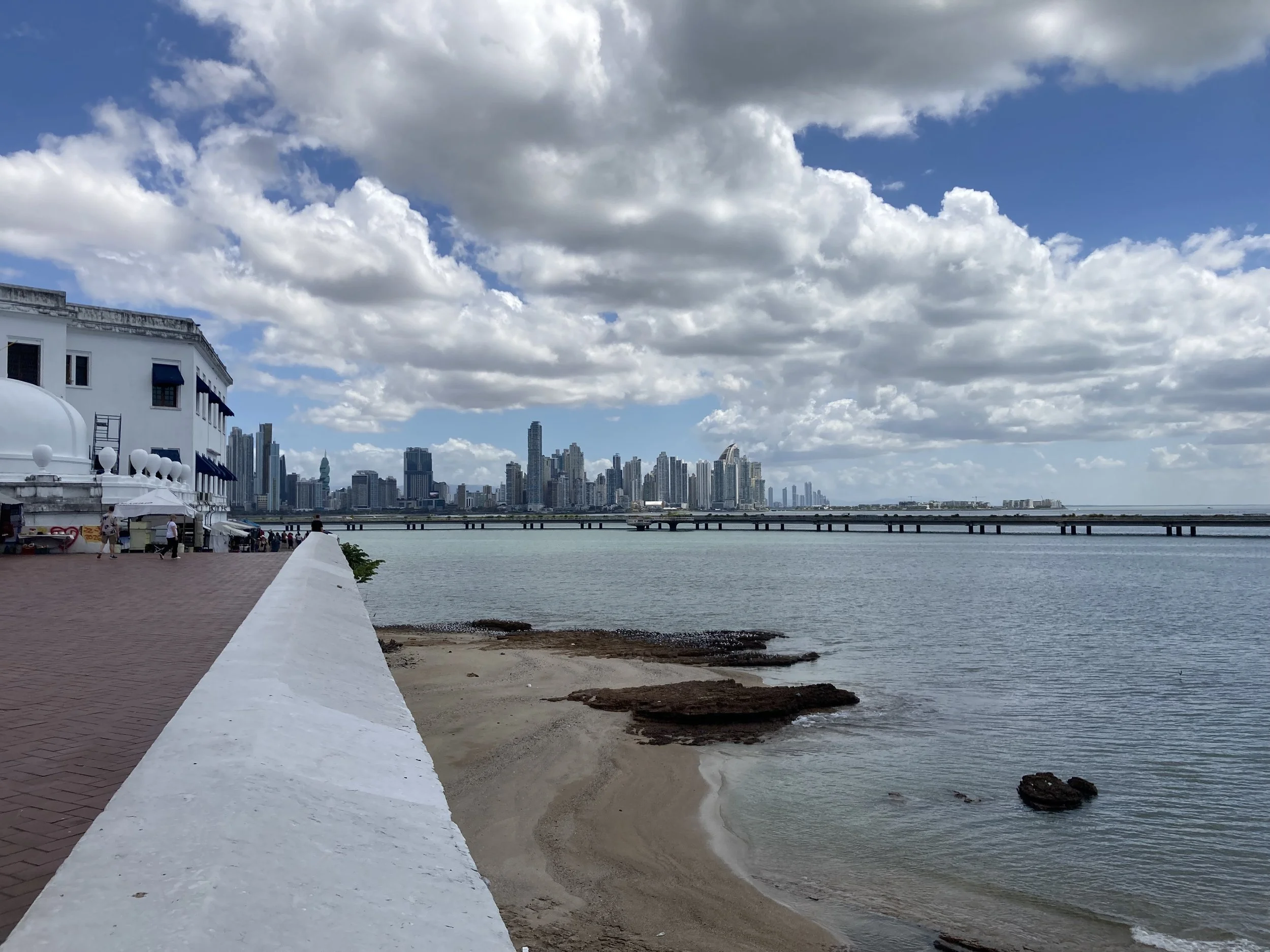
Overall, the city gave off a safe and welcoming feeling. People seemed relaxed and at ease, willing to interact with tourists. There were beautiful neighborhoods and beaches to walk through, with art studios and live music in different neighborhood nooks. I took the advice of an old man I met on the street who deemed himself a retired travel guide, and I stayed clear of the neighborhood blocks he pointed out and the dingy alley ways—same as if in Portland.
Panama City has many high-rated and more than comfortable private resorts. It welcomes in-comers with beaches, red brick roads, old town, new town, market places, malls, and incredible views of the intense blue hues of tropical sky and Pacific Ocean.
The shoreline highway gives it’s own city tour. It travels past large stretches of quaint, beach houses that belong to natives who own boats and fishing businesses. They sell large loads of fresh fish in markets downtown. The beach on which US Marines landed during Operation Just Cause is also visible from the highway, not too far from the 17th century ruins of the city after the invasion by the Pirate fleet led by Henry Morgan.
Several miles down the highway surrounded by trees and small ponds with caimans that bask in the sun, is the turn off for the Panama Canal Miraflores visitor center where people can watch different ships and boats pass through the canal. The visitor center also has an imax theater which presents a documentary on the canal’s structure and history. It is a pretty place, and serves as a good break (or nap) from a long day of traveling.
The next day our group traveled into the national park where we traveled up the wide Chagres River via canoe to a native community interpretive center to learn about some of the traditional culture. The community was nestled, barely visible, in the deep jungle. The people living there were dressed in their traditional robes and jewelry and told us about how they had to adapt to the modern culture — on the fringe of giving up their language and culture of harvesting natural products. They now mostly make a living off of tourism guides and traditional art. They served smoked fresh caught fish and fried plantains similar to french fries. They gave us a tour of the village where they had traditional huts for show but mostly lived in adobe houses. They had a primary school where they taught both essentials and traditional culture.
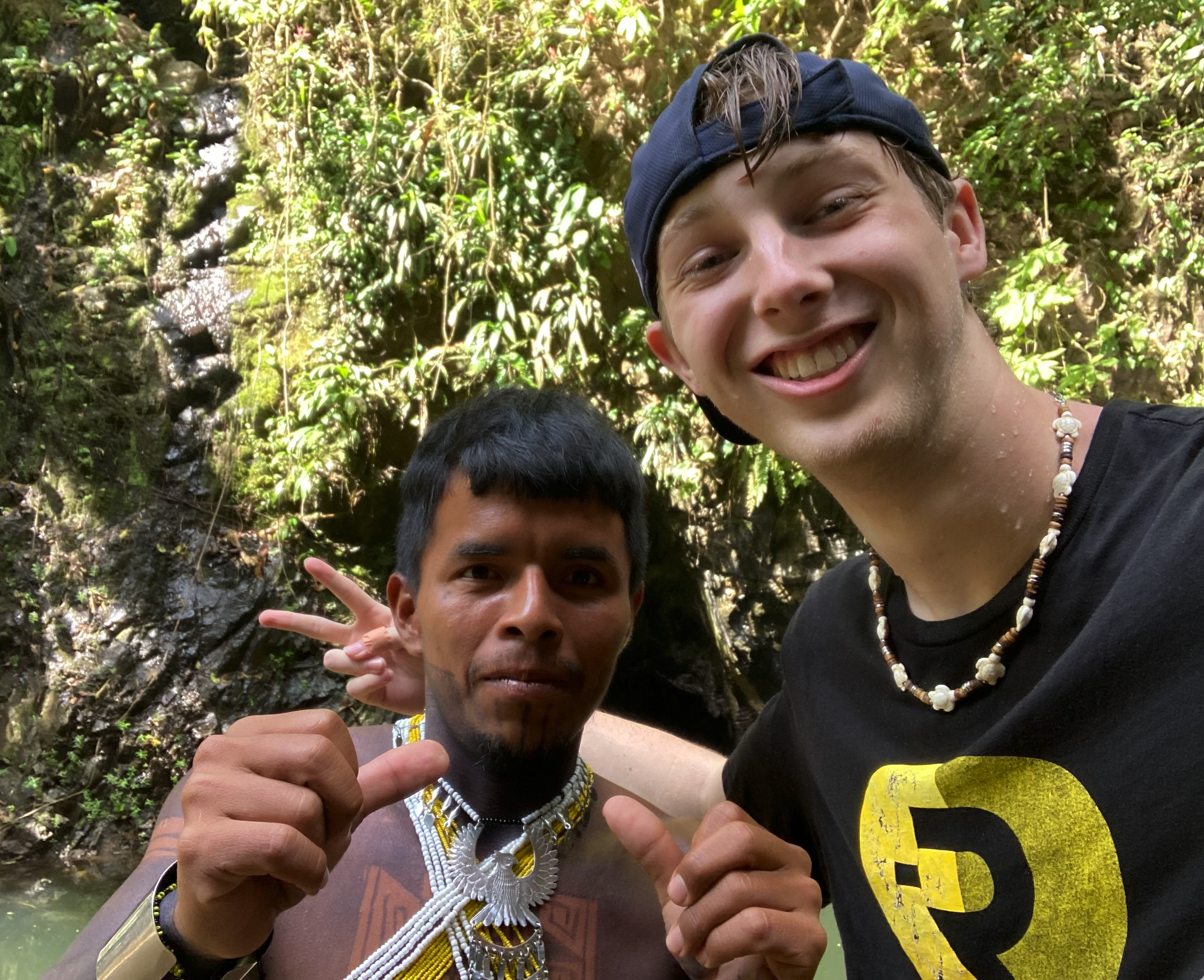
We traveled up the wide Chagres River via canoe to a native community interpretive center to learn about some of the traditional culture. After a dive into the Chagres River, our guide asked for a photo. Even though the humidity and heat were sweltering, the good favor of the locals and the cool water were refreshing.
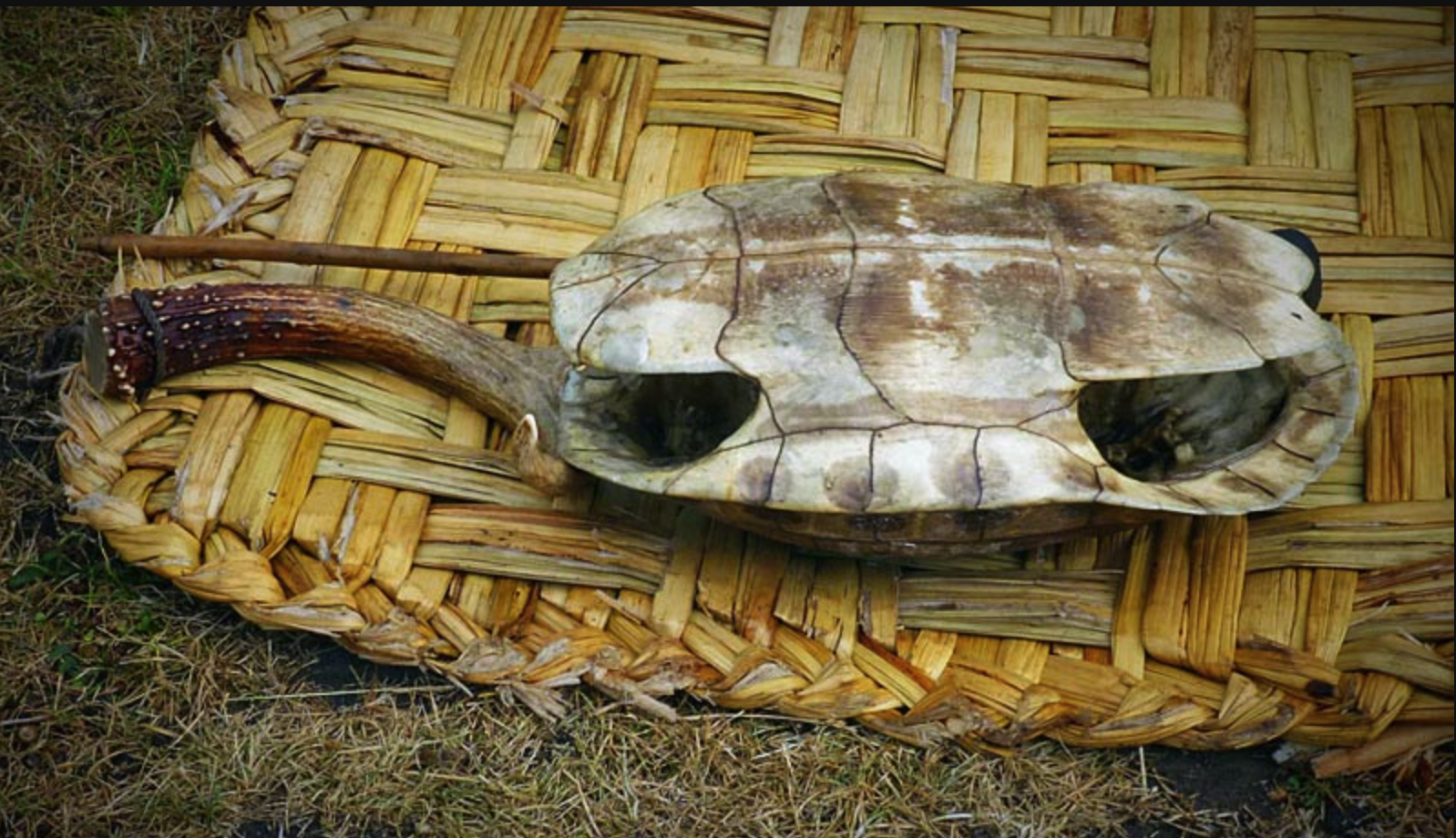
Photo courtesy Mexicolore.co.uk
At the end they asked us to participate in and watch some of their traditional dances. As a musician, I was impressed when they started bringing out their hand crafted drums. There were probably about six in total, creating a soul-crazy rhythmic beat that seemed to capture your thoughts for the dark mystery of the jungle. Not quite marching band—not quite Santana.
What captured my attention though, was the large, football size, turtle shell drum that created a unique hollow percussion. With a drumstick ricocheting inside, it had a high bone clatter that laid out a fast paced rhythm for the other drums to follow and bounce from.
I scoured the gift shop for another, but I suppose there exists only one.
On the ride back to the Hotel, I drifted in between the two reoccurring conversations happening in the van — over hyped American football and Panama Church drama. I tried to lose my attention by looking out the window. It was the last day of the trip and I realized Panama was no longer hidden behind the color orange or pink on my geography map, and wasn’t limited to a paragraph about the canal and American Presidents. It wasn’t the jungle of trees or the jungle of houses I saw from the highway. It wasn’t the tall buildings by the ocean that reminded me of San Diego. It wasn’t even the canal where I felt like I had left part of me by melting. It is now a Church on the edge of a sprawling colorful city, where I know that during a warm tropic day those ninety congregants can gather on new floor, under a roof.