
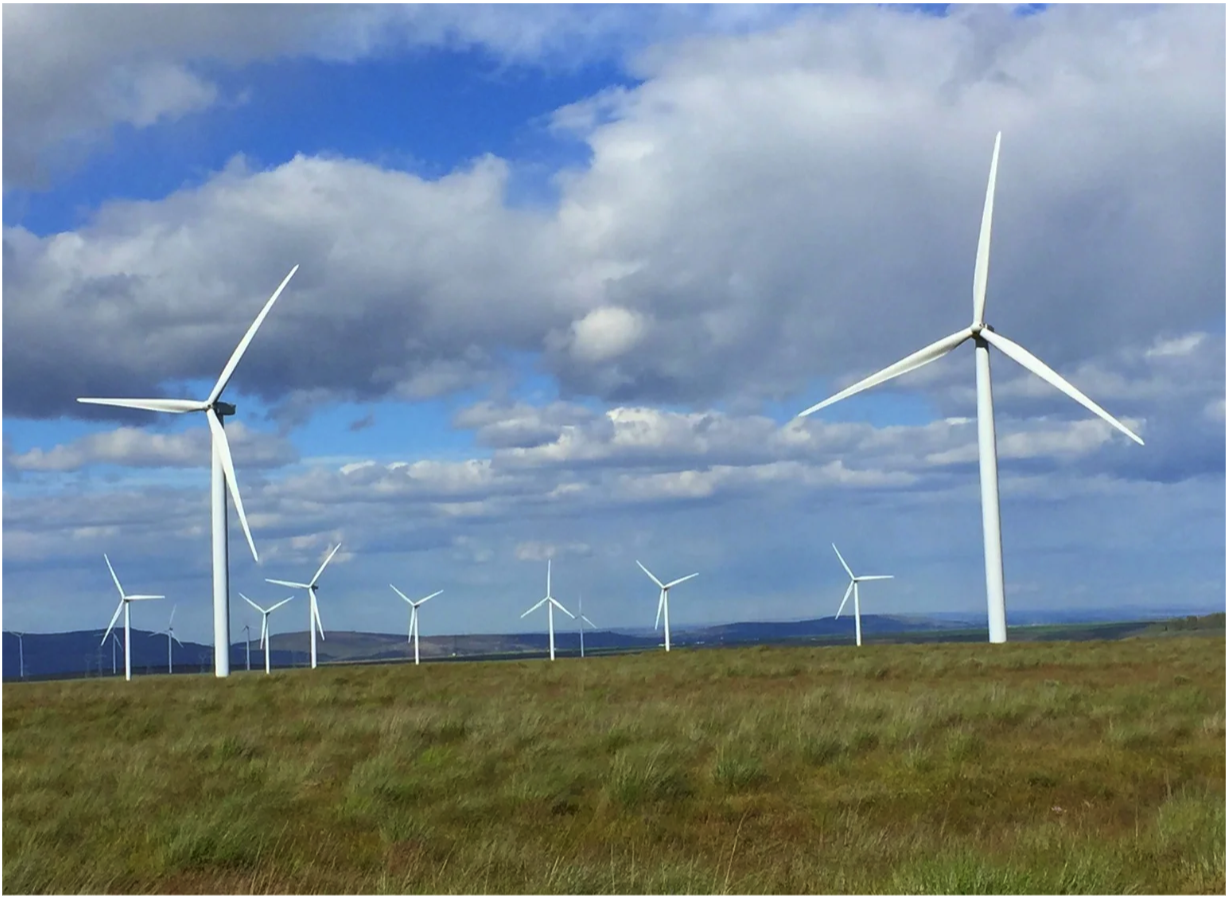
Wind turbines in Eastern Oregon. Photo courtesy of Oregon Department of Energy
By Michael Williams
The Dalles, Ore., Aug. 3. 2026 — Across the rolling wheat fields of eastern Oregon, wind turbines have become as much a part of the landscape as grain silos and irrigation pivots. But while local counties see the benefit of those big blades spinning tax revenue for local communities, the future of new wind development has largely been put on hold as the Trump administration faces mounting legal challenges over its efforts to halt the industry.
The Oregon Attorney General’s office announced that it had joined 18 other states in filing a motion against the Pentagon in U.S. District Court asking them to intervene over the Department of Defense’s blanket freeze of onshore wind energy projects.
Back in August 2025, the Pentagon had effectively stalled the development of many new wind projects across the country through administrative stopgaps. According to court papers, the Pentagon allegedly stopped processing required reviews of proposed land-based wind energy projects.
The Department of Defense disagreed.
"The siting clearinghouse is actively evaluating land-based wind energy projects to ensure they do not impair national security or military operations, in accordance with statutory and regulatory requirements — a process that involves complex, time-consuming interagency coordination,” the Department of Defense stated in a May press release.
Wind energy rules dictate that these projects be reviewed by the Federal Aviation Administration and the Pentagon to evaluate whether they pose a national security threat, such as interfering with radar systems, flight paths, or military operations before construction can start.
The review process has been a routine procedure for wind farm developers for over a decade.
But as a result of the freeze, wind projects across the country have been stalled at various stages of their development and some are only waiting upon final Department of Defense approval before they can break ground.
Economic Costs of the Freeze
The administrative tactics of the Pentagon have been labeled a de facto moratorium and viewed by many as an attempt by the administration to subvert congressional law where authority over wind energy regulations has traditionally resided.
“The Department of Defense is misusing a critical review process to block an enormous amount of clean, affordable power from connecting to the grid – just as Americans are struggling with rising electricity bills,” said Ted Kelly, Director and Lead Counsel for U.S. Clean Energy at Environmental Defense Fund.
“Freezing wind permits indefinitely as power demand is skyrocketing is a recipe for higher energy costs, a weaker grid, and greater reliance on polluting, expensive energy sources like coal.”
So far, the Pentagon has blocked more than 106 wind projects in 24 states representing $47 billion in investments.
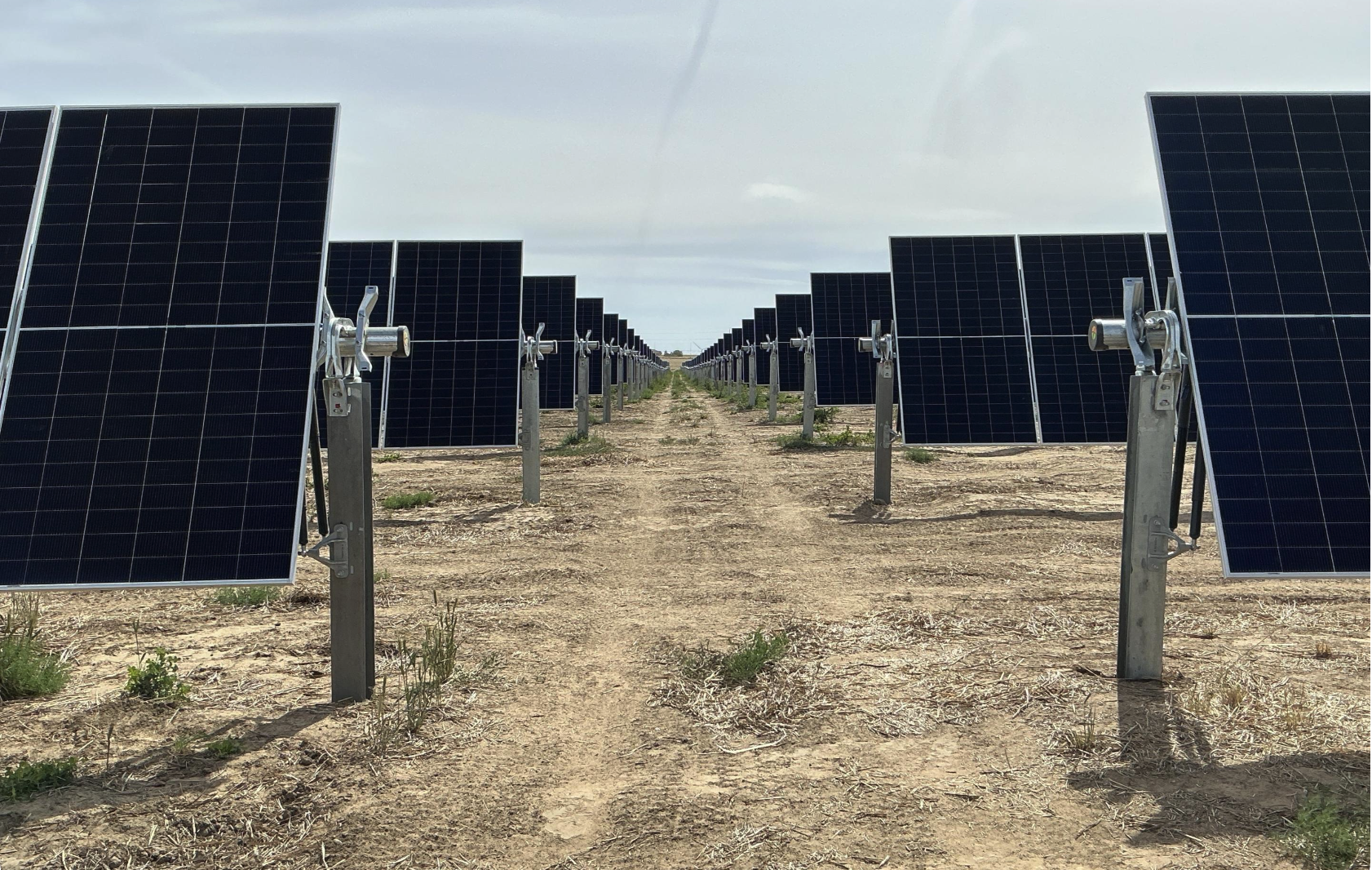
Image of Oregon Trail Solar project near Arlington. Photo courtesy Avangrid.
One such project stalled by the freeze is the Big River Renewable Energy Project in Gilliam County. The project, which combines wind and solar generation, has an estimated capacity of 500 Megawatts of energy generation; enough to power 193,000 Oregon homes annually.
Big River alone represents a $1 billion of investment in Gilliam County and is expected to create approximately 440 construction jobs and 15 to 25 permanent jobs, in addition to generating millions of dollars in revenue for public services, landowners and the local economy, according to EDP Renewables North America.
You don’t have to look far to see the economic impacts of renewable energy projects as they provide major sources of revenues in neighboring counties.
Gilliam County's adopted budget anticipates receiving about $4.3 million this fiscal year from wind energy Strategic Investment Program (SIP) agreements, including $3.9 million in discretionary SIP payments. County officials also warn that more than $3 million in annual SIP revenue will disappear after the Shepherds Flat agreement expires this year, according to the county’s budget statement.
According to Renewable Northwest, an energy advocacy organization based out of Portland, the renewable energy industry contributed over $348 million in taxes and other payments to Oregon counties over the past 20 years, as well as supported 2,600 direct and indirect jobs in 2020 alone.

Daniel Spatz
“With the decline in our region’s aluminum and timber industries, wind and solar energy have provided a vital new source of family-wage jobs for Mid-Columbia residents. These are local careers that allow people to stay in our rural communities, which in turn supports our schools, our public services, and our way of life in rural Oregon and Washington,” said Daniel Spatz, Columbia Gorge Community College’s Capital Projects and Community Relations Director.
Renewable energy companies argue that the moratorium will cause them to lose out on important tax credits, miss project deadlines, and could risk the completion of projects altogether. They estimate that more than $2 billion in renewable energy revenue is in jeopardy if the policy continues.
Diversifying Oregon’s Energy Portfolio
Oregon’s energy infrastructure relies heavily on wind energy to meet clean energy goals.
According to the Oregon Department of Energy, Oregon produces 77 trillion Btus of wind energy (17% of the total energy produced by the state), exporting 57% of that amount to California, Washington, and Idaho.
The Oregon state legislature has set several targets for renewable energy production in an effort to pivot away from the fossil fuel industry. The Clean Energy Targets Bill of 2021 passed by the State Legislature requires Portland General Electric, Electricity Service Suppliers, and PacifiCorp to reduce greenhouse gas emissions from their production systems and reduce emissions from electricity to 80% below baseline emission levels by 2030. This would require a mix of renewable energy sources that would likely include increased wind energy generation.
Large utilities are also required to reach a goal of 50% of their own energy production coming from renewables by 2040.
Those goals may prove difficult as the Trump administration continues to block policies that support cleaner energy through administrative maneuvers and exploitation of agency loopholes.
A Long-Standing Grudge and Concerns About National Security
The Pentagon’s moratorium on new wind energy projects appears to align with Trump’s unusual fixation on wind energy projects over the years.
He has often voiced his concerns without provocation.
During a 2023 press conference discussing a trade deal with the EU, Trump became distracted by wind turbines, saying, "It is the worst form of energy, the most expensive form of energy... When they start to rust and rot in eight years you can’t really turn them off, you can’t burn them. They won’t let you bury the propellers, the props, because there’s a certain type of fibre that doesn’t go well with the land."
His opposition to wind energy seems to be trickling throughout the various agencies he controls.
In a 2025 press release, the Interior Secretary Doug Burgum stated that a classified Department of Defense report confirms wind projects pose a serious threat to national security.

Secretary of the Interior Doug Burgum. Photo Courtesy of Bank of North Dakota.
Secretary of the Interior Doug Burgum. Photo Courtesy of Bank of North Dakota.
The Pentagon claims that wind turbines interfere with radar and make it easier for drones to fly undetected through wind farms.
Defense Secretary Pete Hegseth has also widely dismissed the push for increased renewable energy generation as “climate change crap.”
Wind energy advocates believe the administration is abusing the permitting process and is purposefully exaggerating the detrimental effects of wind energy.

Jason Grumet
“It is pretty remarkable to hear senior administration officials asserting their strong support for permitting reform while actively driving the debate into the ditch by abusing the current permitting system,” said Jason Grumet, CEO of the American Clean Power Association in an interview with NPR.
According to the Oregon Department of Energy, the Pentagon “has not provided a reasonable explanation for its sudden change in policy, accounted for the harm to states, developers, workers, and ratepayers, or considered the major investments made in reliance on its longstanding review process.”
In addition to the permitting freeze, the administration has attempted to block wind energy development in other ways.
Wind projects were banned from using the “Information for Planning and Consultation” website, an important online mapping tool for identifying endangered species impacts and other environmental reviews that may be needed for projects to move forward. However, a federal judge in April granted wind companies an injunction allowing them to use the website once again.
The Department of the Interior also increased their use of the “capacity density” rule, which effectively bans many new wind and solar projects on federal lands. Capacity density is a metric that has been used to calculate the efficiency of land being developed, especially compared to other uses. Using this metric, the DOI claimed that wind and solar were “highly inefficient” uses of federal lands and, as a result, blocked new projects from starting. This was also stopped by the federal judge in April.
More Court Battles and the Future of Wind Energy
Wind industry companies have won a number of other decisive victories in court over the past year.
In early June, a federal judge vacated a Trump administration policy that made it more difficult for wind projects to obtain federal subsidies and in February a judge ruled that Orsted, a wind energy developer in New York state, could resume construction of its offshore wind farm after the Trump administration had issued stop-work orders.
The court victories may indicate the tides are turning against the Trump administration’s persistent attempt to thwart new wind energy projects. They also show the limitations of the administration’s authority in shaping the rules related to renewable energy development.
Attorney General Dan Rayfield believes the Pentagon lacks the authority to intervene in state energy projects and the stalling of wind projects is hurting the state economy.
“Oregonians are counting on these wind projects for good-paying jobs and cleaner energy,” he said. “The federal administration’s actions are unfair and unlawful, and we’re fighting to keep Oregonians’ energy priorities moving forward.”
The ruling of the multi-state lawsuit may influence whether Oregon can meet its long-term renewable energy goals and whether the incurred costs of current frozen projects could forestall future wind energy locally and throughout the state.

Michael Williams
About the reporter
Michael is a Portland-based journalist covering environmental and cultural stories, exploring the intersection of people, place and sustainability. His reporting frequently covers investigative work that goes beyond simple coverage to provide in-depth reporting on the people of Oregon and the health of their environment.