
Strong Yields, Higher Prices Signal strong 2026 Wheat Harvest Across Mid-Columbia
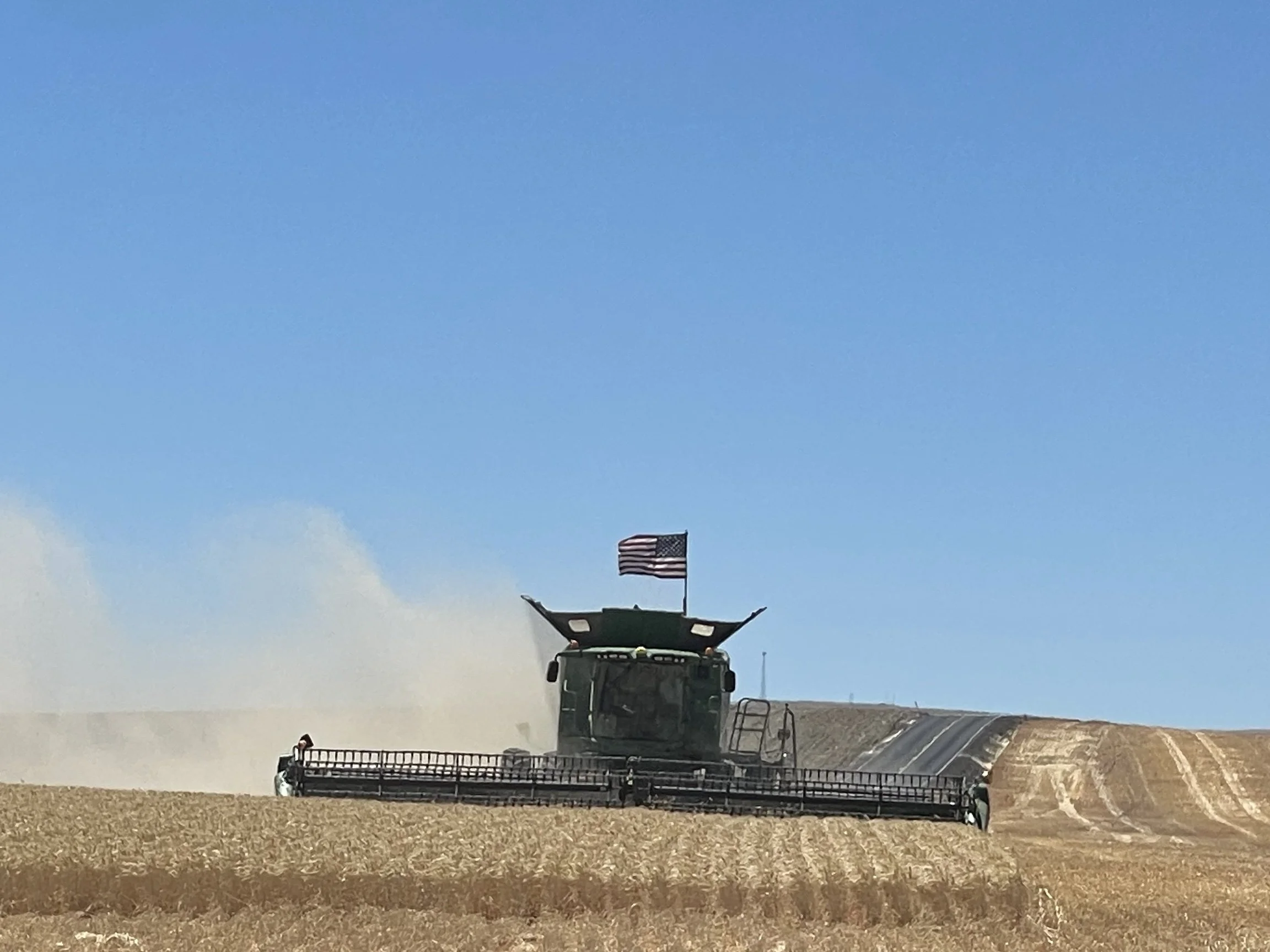
Tanner, Evan and Greg Rietmann were flying the red, white and blue earlier this month as they finished a soft white wheat field near Ella Lane near Ione in Morrow County.
By Tom Peterson
The Dalles, Ore., July 23, 2026 — Wheat trucks continue to roll into Northwest Grain Growers' export terminal on Bargeway Road as harvest winds its way across the Mid-Columbia, with growers reporting one of the strongest soft white wheat crops the region has seen in years.
Early harvest reports suggest a combination that farmers rarely enjoy at the same time: above-average yields and stronger grain prices. Fields in Wasco and Sherman counties are commonly producing 90 bushels per acre or better, while growers in neighboring Gilliam and Morrow counties are reporting solid yields topping 60 bushels per acre. Cash wheat prices have also climbed to $6.75 per bushel, roughly 50 cents higher than the peak price seen during last year's harvest.
Even so, growers say a strong harvest does not necessarily translate into strong profits. While cash wheat prices stood at $6.75 per bushel are an improvement over last year's harvest, they remain well below the $8 to $10 per bushel prices many producers saw several years ago. At the same time, inflation has pushed up the cost of diesel fuel, fertilizer, crop chemicals, equipment parts and machinery, leaving many farmers with tighter margins despite a productive crop. For many, a high-yield harvest is helping offset those costs rather than producing windfall returns.
Big Production
According to U.S. Department of Agriculture Farm Service Agency certified acreage reports, farmers planted approximately 357,000 acres of soft white winter wheat across Wasco, Sherman, Gilliam and Morrow counties in 2025 — nearly half of Oregon's roughly 740,000 harvested acres of winter wheat that year.
Farm Service Agency acreage data indicate planted acreage remained at a similar level for the 2026 crop, underscoring the Mid-Columbia's role as one of the state's premier wheat-producing regions.
While the USDA does not publish a statewide yield specifically for soft white winter wheat, Oregon's average winter wheat yield reached 71 bushels per acre in 2025. Because soft white winter wheat is the dominant variety grown in the Mid-Columbia, that statewide average is heavily influenced by production in the region. Together, the acreage and yield figures highlight wheat's continued importance as one of the Mid-Columbia's largest agricultural industries and a major economic driver for local communities.
Rolling throght at NW Grain Growers in TD

Amanda (Remington) Hooey smiles as she brings her load to a stop on the scales in the Port of The Dalles. The Chief Executive Officer of the Oregon Wheat Commission gets a little time behind the wheel during harvest time at her family’s farm. The new scale system at the site makes it a quick turnaround for farmers delivering wheat as they no longer tie up the terminal with the weighing process. Hooey also spends a fair amount of time hosting grain buyers and trade delegations from countries including Japan and South Korea, giving international customers an opportunity to tour the NW Grain Grower terminal to see firsthand how Pacific Northwest wheat moves from farm to export markets.
Those strong yields are translating into a steady stream of trucks arriving at Northwest Grain Growers, where terminal operator Michael Janson said the facility has remained busy throughout harvest.
"We're still hitting 120 to 130 trucks a day," Janson said. "At the peak last week we were at 170."
That matched last year's single-day record after the grain terminal installed a new truck scale system designed to keep trucks moving more efficiently through the facility. While deliveries have slowed from their peak, Janson said truck turnaround times have increased to about an hour and a half as harvesting has shifted.
The quality of this year's crop has also impressed workers at the terminal.
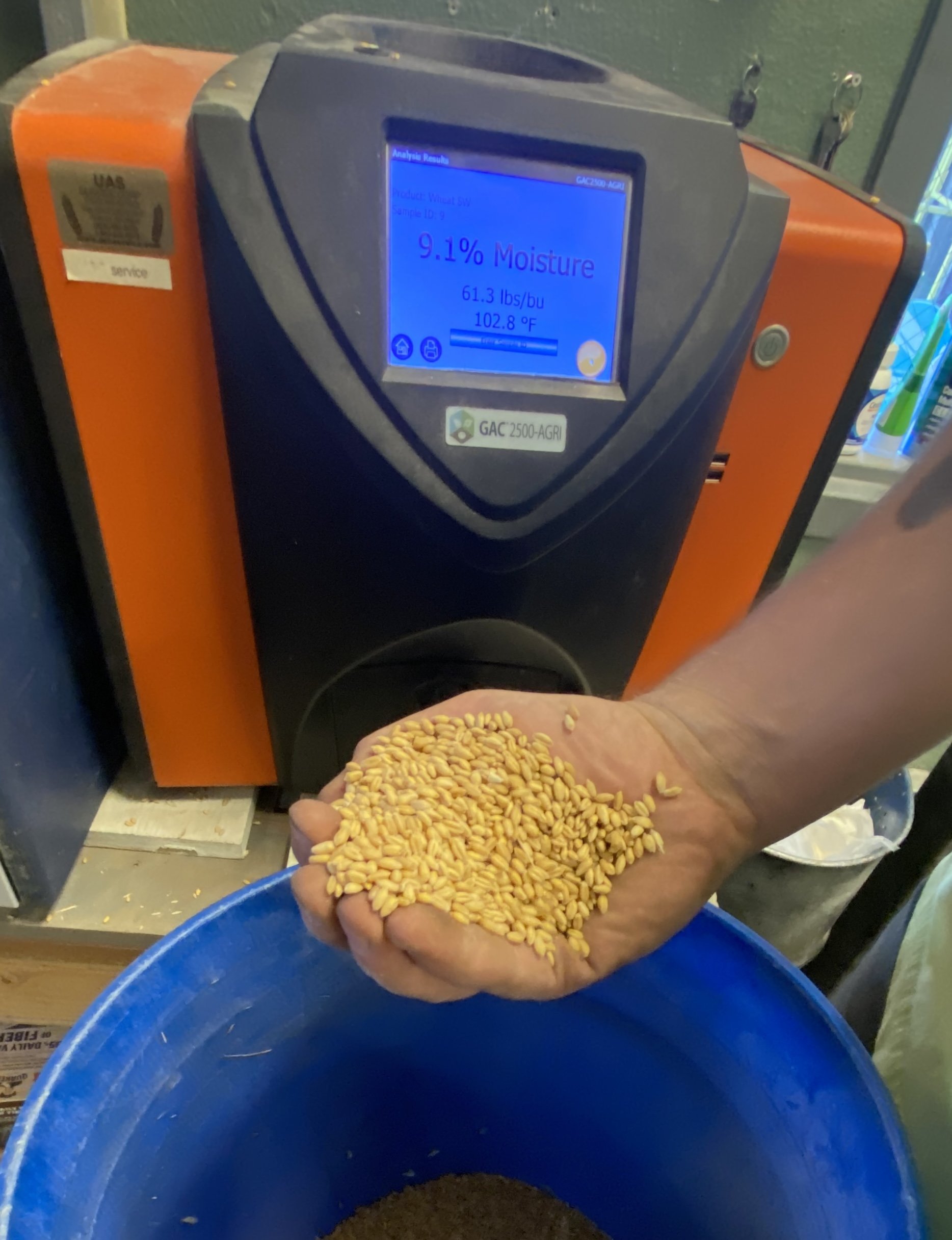
Positives of low moisture and low protein have typified the quality of the soft white wheat thus far into harvest. Low protein is important in soft white wheat because it limits gluten production, creating tender, delicate, and flaky textures required for pastries, cakes, and cookies. Low moisture prolongs the ability to store the wheat.
"I'm hearing everybody is in like that 90-yield," Janson said. "A lot better than last year when it was in the 70s."
Janson said grain arriving at the terminal has shown full, plump kernels with few shriveled seeds, indicating good test weights.
Protein levels, however, have generally been lower than average, with many loads testing between 10 and 11 percent. While that can sometimes affect pricing, Janson said low protein has been common across the region this season.
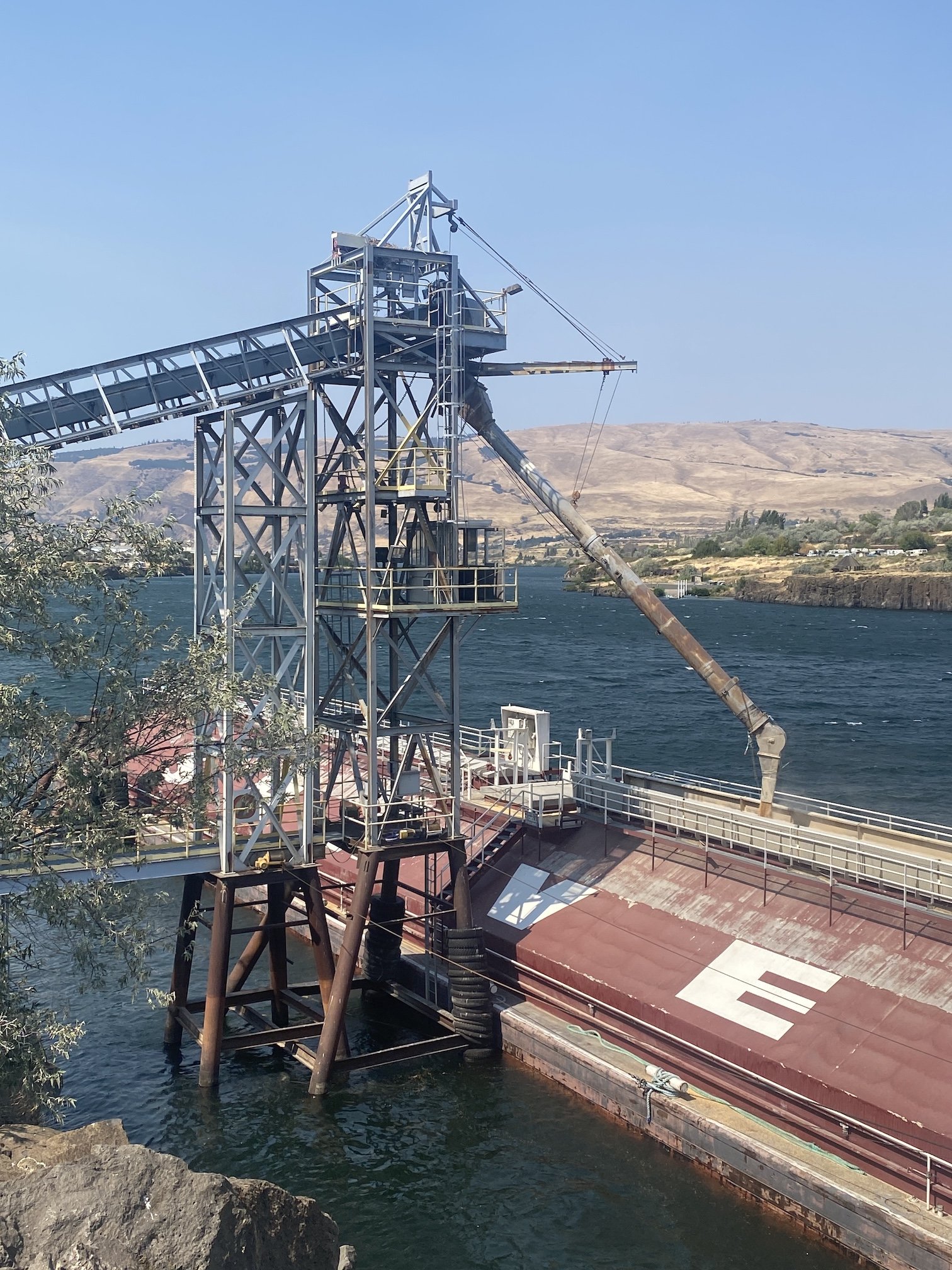
Loading out - this Shaver barge was almost loaded this afternoon before it will be pushed to the Portland Harbor and transferred into massive ocean-going vessels and likely marketed to countries in Asia.
The strong harvest has surprised some growers after an unusually dry winter raised concerns about crop development. Janson said one possible explanation is that producers rotated fields, allowing soil moisture accumulated from previous seasons to support this year's crop.
With combines continuing to move through fields across the region, growers remain optimistic that favorable yields and improved prices will make the 2026 harvest one of the better seasons in recent memory.