
The Tool Belt Generation: Gen Z Finds a Future in Work That Takes Hands and a Mind
By Aaron Girdham
The Dalles, Ore., Aug. 19, 2026 — The public is familiar with generational nicknames such as baby boomers, the Greatest Generation, Gen Me and iGen. As Generation Z - born roughly between 1997-2012 - comes of age and enters the workforce, another nickname has begun to emerge.
The “Tool Belt Generation.”
It appears this generation is more than willing to get their hands dirty, trading college degrees for stable work that pays.
Some 42% of Gen Z has joined the blue-collar workforce and trades, according to an article by Resume Builder, while an estimated 60% have expressed a desire to work in blue-collar trades, according to a survey conducted by Resume Templates.
Gen Z, generally ranging in age from the teens to late 20s, is increasingly looking beyond traditional entry-level jobs and four-year college plans in search of career paths that offer financial stability. Concerns about college debt and the cost of living have driven some young people toward jobs that offer solid pay without requiring a four-year degree.
Blue-collar businesses and skilled trades have provided one such path.
For some young workers we spoke with, skilled trades and hands-on careers offer something else: fulfillment, purpose and a clear path forward.
Josiah Carlson: A path toward becoming a lineman

Josiah Carlson
Josiah Carlson, 21, works as a fourth-step apprentice and bucket operator, trimming trees for The Dalles PUD.
Asked about working high above the ground in a bucket, Carlson said it took some adjustment.
“It’s definitely a little freaky at first, but you get used to it. I kind of like climbing trees better though.”
Carlson grew up in ___, but his journey has taken him throughout the Gorge.
“In high school I wasn’t really sure what I wanted to do. I liked playing sports, and that would have been my only reason for going to college but I didn’t want to pay a ton of money just to play sports. My buddy started researching opportunities of lineman then, and that sounded better than any other option I had considered for my future. This job is really just a path to become a lineman,” Carlson said.
After high school, Carlson spent about two weeks job shadowing his friend’s father, who was a foreman.
“He taught me so much about the trade and about cheaper ways to get the equipment and certifications I needed,” Carlson said.
He later joined the union and found work as a ground hand in Portland, cleaning up brush and feeding it into a chipper.
“That was pretty boring and the weather really sucked,” Carlson said. “I moved down and lived out of my car for about three months, pursuing that job. It was rainy all the time, and I would get sprayed by the chipper and sprayed by the weather all day.”
Carlson said competition for line-side contracting jobs can be intense, particularly for workers with fewer credentials.
“The lower your credentials, the less likely you will be called — or you’ll end up with the job nobody before you wanted,” he said. “Line Side contracting is a really competitive job, because there are always about two hundred other guys waiting for the same job as you.”
After three months, Carlson was called for an apprenticeship position in The Dalles.
“I got a pay raise, I was near my parents, I was out of Portland, I got to do fun stuff — it was like life on easy mode.”
Carlson said the work is demanding but offers skills that can carry into other careers.
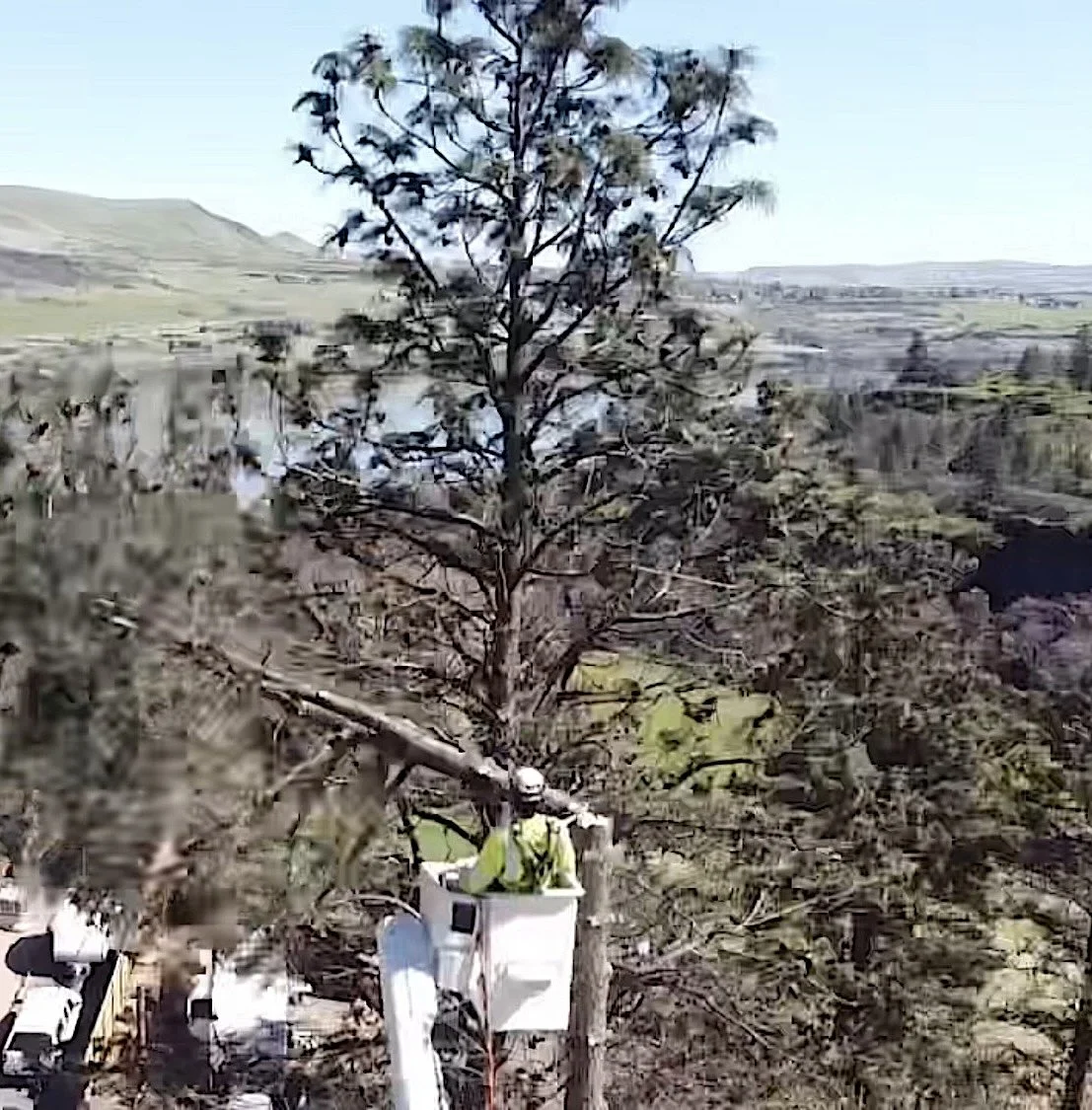
Josiah Carlson working near a snapped tree.
“This work is not for everyone. It’s very physical while being exposed to natural elements,” he said. “You are always having to use tricky maneuvering with precision cuts around power lines. But I really like this job, and learning a trade teaches you skills that can be translated for your next steps in life.”
His advice to others considering the trades is simple.
“Just start,” Carlson said. “Speaking from experience, don’t procrastinate it.”
Disrupted Workforce
The COVID-19 pandemic disrupted the workforce, business production and education beginning in 2020, when much of Gen Z was still in school and its oldest members were just entering the workforce. At the same time, businesses faced labor shortages as older workers retired, creating opportunities for a new generation of workers.
Trade employers emerged from the pandemic searching for workers. Plumbing, mechanical, electrical, construction, farming, HVAC and other employers raised entry-level wages and sought new ways to attract workers.
Emily Lira: Finding stability at UPS
Emily Lira, 27, grew up in The Dalles and works for UPS as a delivery air driver.
“I drive the UPS routes that deliver boxes and packages directly to the airport,” Lira said. “It’s a great job, I get to stay active and it’s pretty fun driving the trucks.”
Lira came to UPS in 2020 after deciding a job with a lengthy commute was not working for her.
“I found a job listing for a preloader at the local UPS station here in The Dalles where I live and decided to give it a try,” she said.
A preloader loads packages at the station into delivery trucks.
“The position proved to be very straightforward; they were like, ‘this is when you come to work, and this is what you do,’” Lira said. “It’s a really good job. I mean, sure all jobs can have workplace drama or large-scale corporate decisions that affect you, but UPS is very professional.”
Lira said union membership has also made a significant difference in her working life.
“I am so thankful for the union,” she said. “It makes sure I am paid appropriately for my work in the first place.”
If she lands a permanent position, Lira said she could see herself staying for the rest of her career.
“Depending on if I get a permanent position, I will be a lifer,” she said. “This job is so worth sticking to because I feel valued as an employee. It may not take a certain skill set, but it does require a certain type of person.”
Fear of AI
The emergence of artificial intelligence has added another factor. Some Gen Z workers have expressed concerns about AI eliminating or changing jobs, according to articles by the New York Post and Trans Lease. But vocational work momentarily gives a sense of security, possibly, for workers hitting the job market.
A plumber is a perfect example. It’s not just turning a wrench. You have to diagnose why something isn't working, understand the system, choose a solution, manipulate tools precisely and sometimes do all of that crawling under a house with six inches of clearance and a pipe somebody installed wrong 40 years ago.
Mason Morris: Discovering plumbing in high school
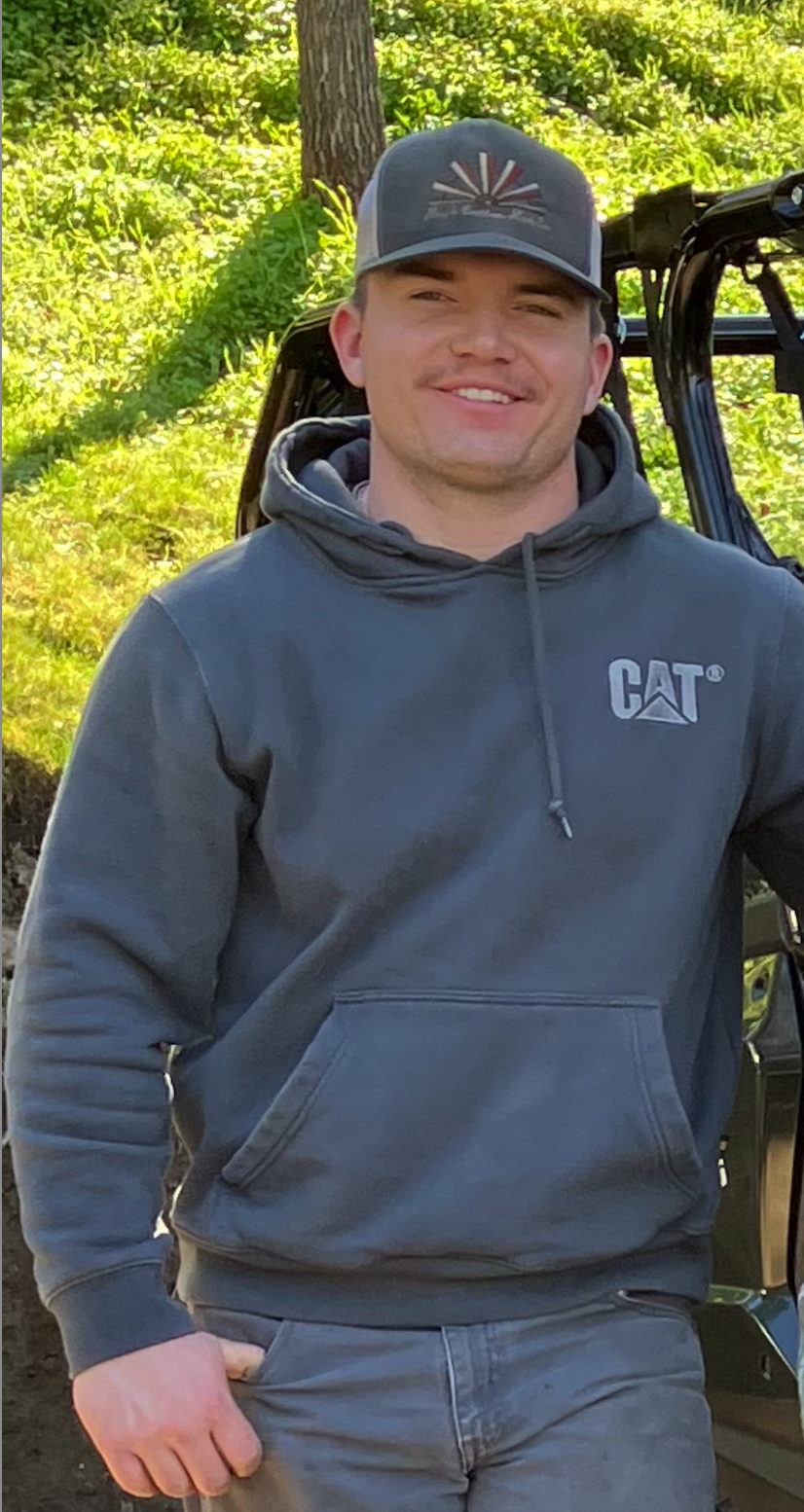
Mason Morris
Mason Morris, 20, works as a plumbing laborer for Devco Mechanical, a locally owned plumbing and HVAC contracting business in The Dalles.
Morris, a second-generation resident of The Dalles, originally thought he would become an electrician.
“In 7th grade I decided that I wanted to be an electrician,” Morris said. “When I entered my junior year of high school I took a construction class, and I was introduced to plumbing work. I thought about it and really liked it, so I started searching for opportunities.”
Morris began working for Devco the summer after his junior year.
“I really loved working with them so I stayed,” he said.
Morris said people sometimes underestimate the mental demands involved in skilled trades.
“If you work an eight-hour day you have to consider that what you put in isn’t all just physical,” he said. “There is very much focus and thought involved in the process of securely getting the job finished. You have to retain all the hands-on knowledge you learn in the classroom, and remember the blueprint you work by.”
The satisfaction, he said, comes with experience.
“It’s hard work, but the more time you spend with it, you become comfortable with the work you do and you realize how amazing your end result can be.”
Josef Lutz: Chasing the cowboy dream
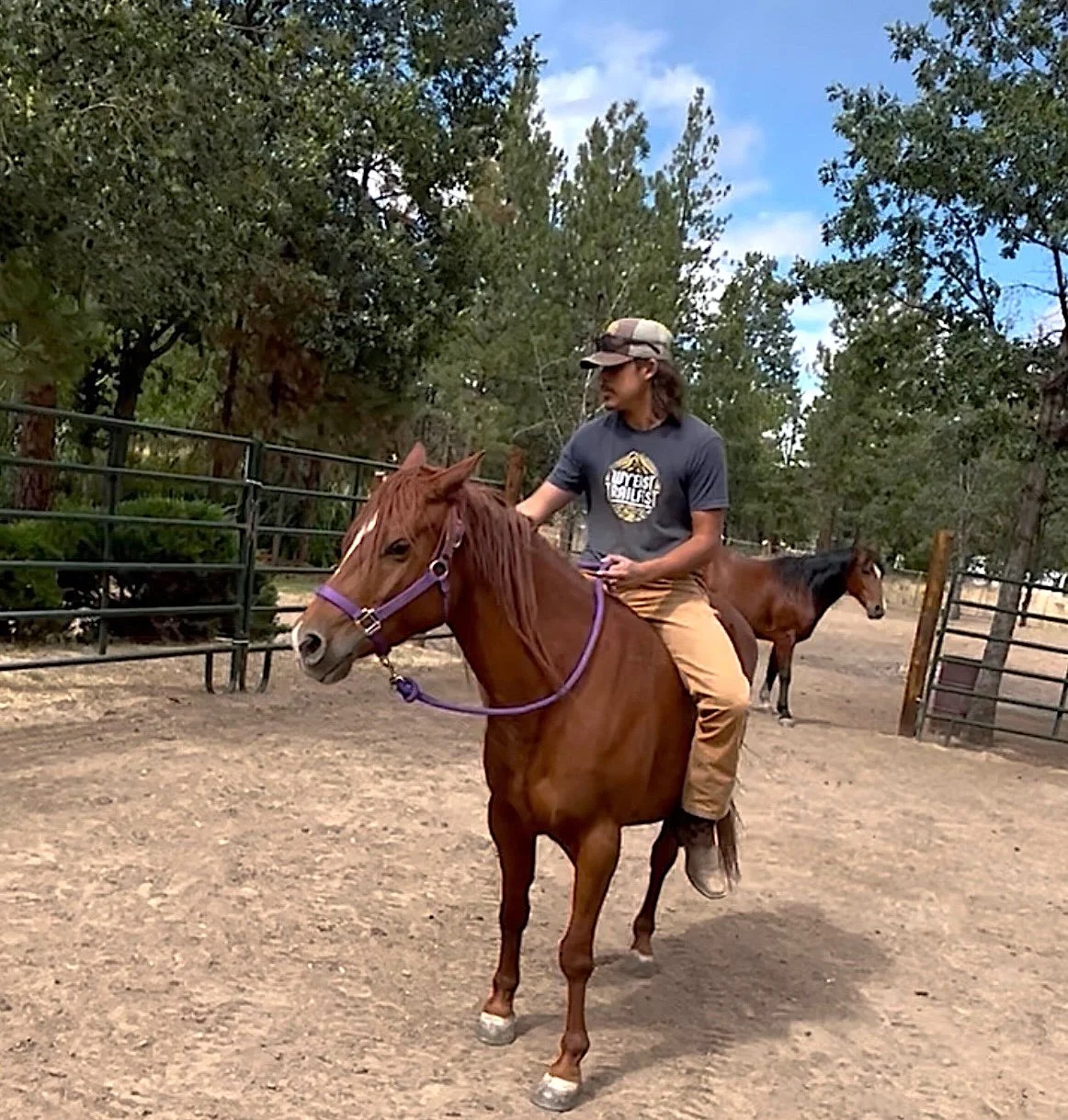
Josef Lutz
Josef Lutz, 18, is a ranch hand in the Dufur area. He grew up in The Dalles and had not ridden a horse until last summer.
Western films helped inspire him.
“We herd cattle mostly on four-wheelers from pasture to pasture,” Lutz said, describing the realities of modern ranching.
But horses remain part of the job. Lutz exercises, grooms and feeds them, cleans up after them and works to get them ready for riding.
“Something I always wanted to do, ever since I was little, was to be a cowboy,” Lutz said. “Living in the area I do, I finally decided to make that happen. I really want this to be my full-time career and don’t want it to stop ever.”
Ranching comes with long and unpredictable days.
“It’s hard work and is certainly something you must love doing,” Lutz said. “You wake up at six, and work until your boss says it’s done. The day entirely depends on how the cattle are behaving.”
For Lutz, however, the work represents something bigger.
“But let’s face it, this is an American dream.”
Nathan Pyles: Turning a mechanical mind toward aviation

Nathan Pyles
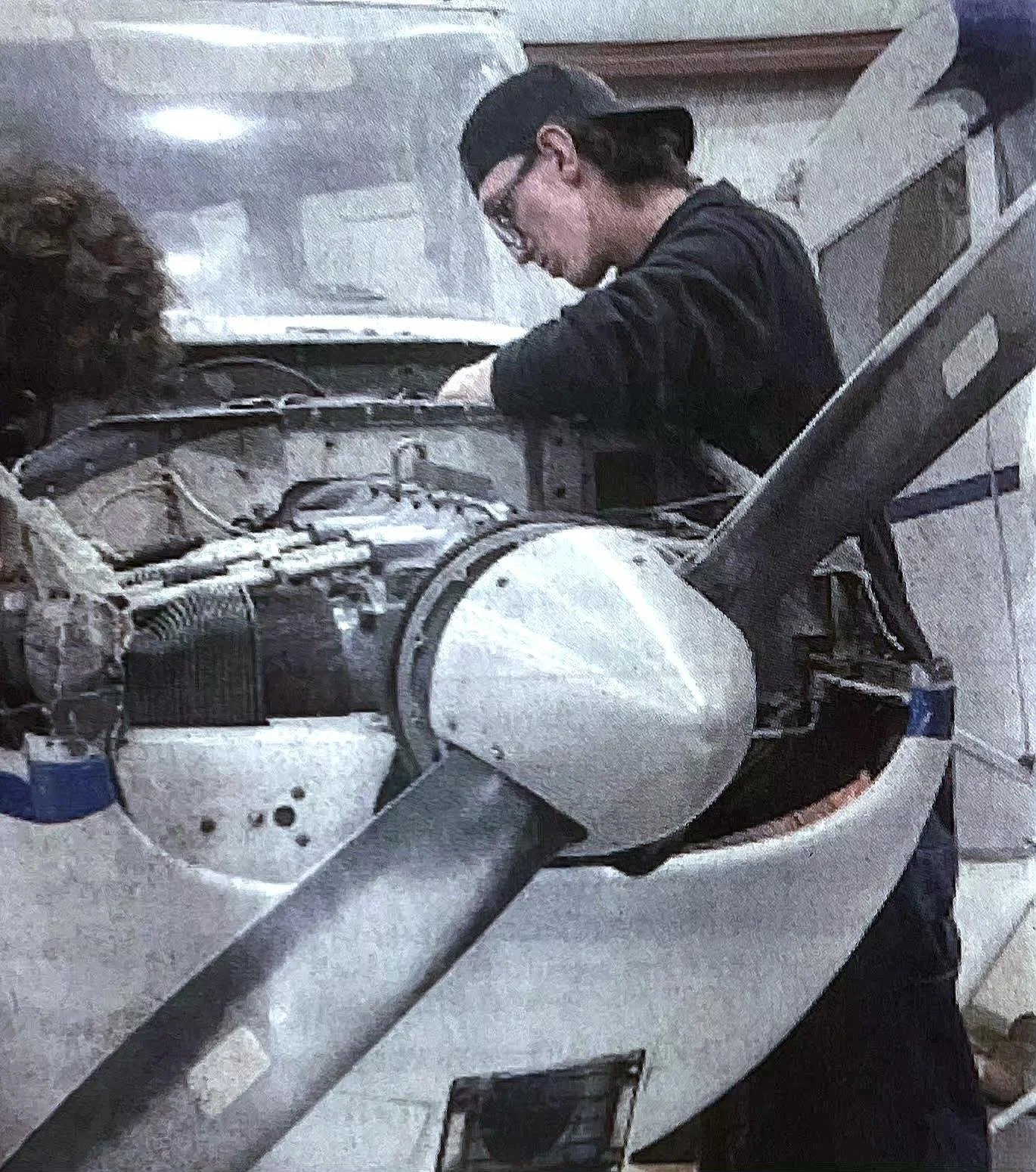
Nathan Pyles, 21, graduated from Columbia Gorge Community College’s aviation maintenance program and hopes to work as a mechanic on airplanes or helicopters in the region.
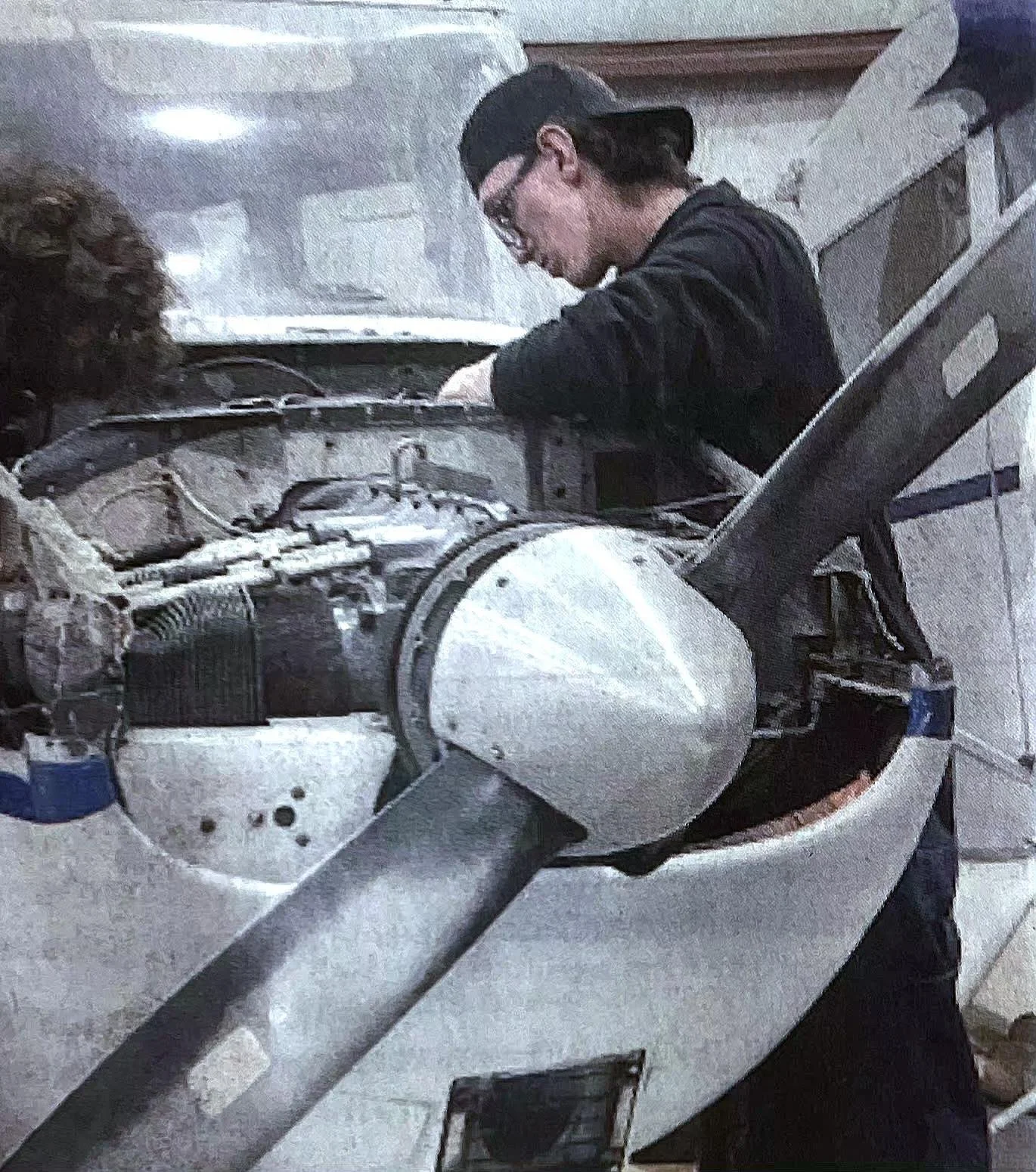
“The Gorge is a really good place for aviation work, there are a ton of opportunities here,” Pyles said.
His interest in mechanical work began long before college.
“My whole childhood I’ve always loved working with mechanical things, especially in my dad’s shop,” Pyles said. “So in high school I knew I wanted to do something mechanical.”
A family friend told him about the aviation maintenance program, and Pyles decided to enroll after high school.
“I loved the program because of how hands-on it is,” he said. “I know my way around the toolbox and car bodies. This class was so different.”
Pyles said aviation maintenance offers an opportunity to continually learn and solve problems.
“I feel that with aviation mechanics you are always learning something new because the field is constantly changing,” he said. “There’s always a puzzle or a new problem to work out. For people who like solving problems, it is terrific.”
The training combines classroom study with hands-on work.
“There were three courses we had to take to learn about aircraft,” Pyles said. “There was both a lot of book study and hands-on work involved. You learn general aviation, air frame, and aircraft power plant. You have to put in the hard work and be committed to what you are doing.”
Money initially played a significant role in his interest in aviation.
“When I first got into the aviation industry, I one hundred percent was interested in the money,” Pyles said. “A six-figure income is very achievable. But as I’ve gotten more time actually working and learning about the career, I’m now more interested in the lifestyle it offers.”
Cody Cox: Building a life in agriculture
Cody Cox
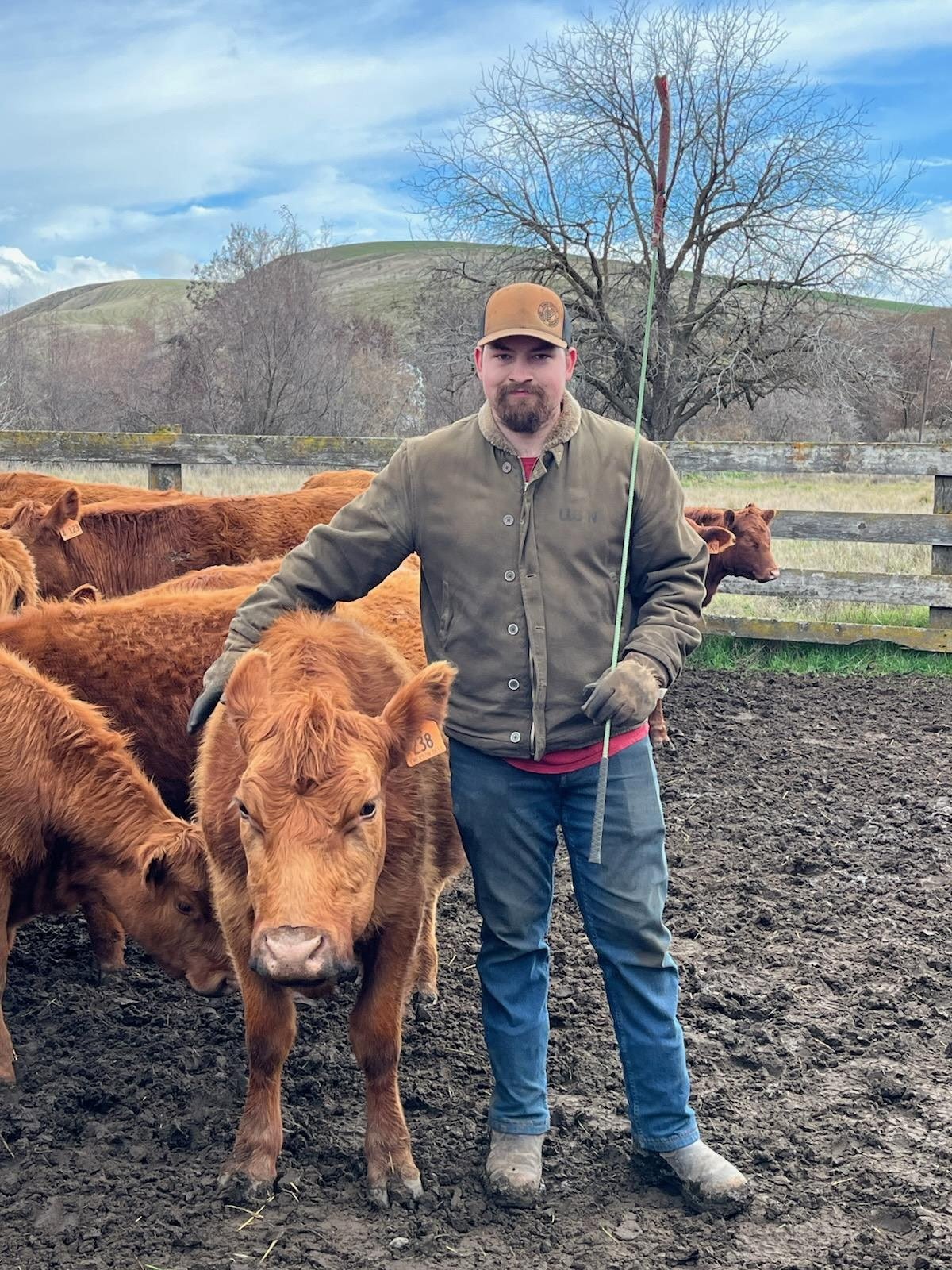
Cody Cox, 24, is a ranch hand at Emerson Dell Farms outside The Dalles. He said he loves the work and hopes to make it a lifelong career while raising his family in the area.
“It’s very hands-on and takes much competence and good problem-solving skills,” Cox said.
His work can change dramatically from one day to the next.
“Depending on the day, I could be fixing the different heavy machinery like semis and combines,” Cox said. “Other days I’m herding cattle. As of now it’s harvest time, and we’re bringing in our soft white wheat, peas, sunflowers, and canola.”
Cox grew up with some exposure to agriculture. His family had a farm where he worked for several summers when he was younger.
He said one of the rewards is seeing the results of months of work emerge from the ground.
“That’s one thing I enjoy. Watching the crops you’ve cultivated and cared for grow and come up out of the ground,” Cox said.
For anyone considering agriculture, Cox recommends embracing the variety of skills the work demands.
“I’d tell anyone who was considering farming to not be afraid to learn a new skill set every day and to get your hands dirty.”