
Thoughts from the Tractor Seat: Columbia Gorge Cherry Growers Face Uncertain Economics Despite Strong Crop
By Ken Polehn
The Dalles, Ore., June 17, 2026 — The cherry harvest is currently underway across the Columbia Gorge.
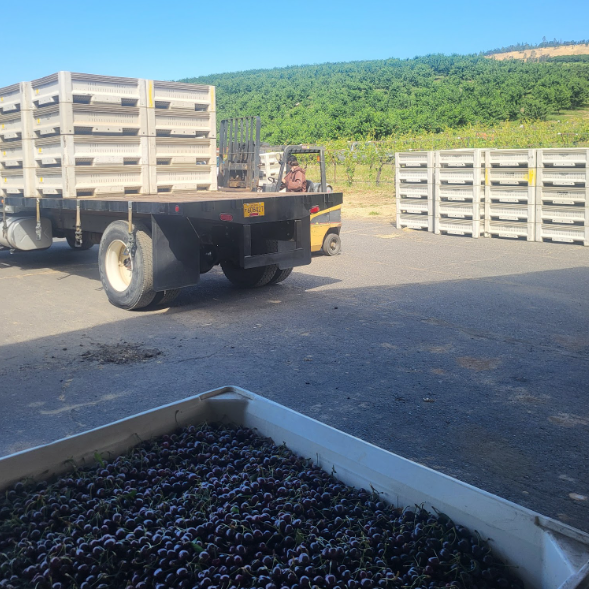
Packing facilities are operating extended hours. Trucks transport fruit from orchards to cold storage. Harvest crews work from early morning until approximately 1 p.m. Forklifts move steadily throughout warehouses, while office teams coordinate orders, logistics, and administrative responsibilities. Activity is constant across every segment of the industry.
From the outside, these signs suggest success.
The orchards are producing high-quality fruit, and many growers have surpassed initial production estimates. Despite a spring marked by rain and quality-related challenges, the Northwest crop continues to move through the supply chain.
Anyone passing a packing facility today would likely conclude that the industry is performing well.
That conclusion is understandable.
However, it does not tell the full story.
The reality is that a busy harvest should not be mistaken for a healthy industry.
This year's market presents a number of unusual challenges.
Export demand remains weaker than many anticipated. Reports continue to indicate that fruit is being sold at discounted prices simply to maintain movement. Some wholesalers have access to lower-priced fruit, while others are receiving open loads without established pricing.
At the same time, retail promotions are beginning to emerge—an encouraging development if the industry hopes to stimulate consumer demand and maintain product flow throughout the market.
What makes the current situation particularly noteworthy is that this is not a record crop.
In fact, it is one of the smaller Northwest cherry crops in recent years.
Historically, smaller crops have supported stronger market conditions. Reduced supply has often translated into improved returns for growers.
Today, that relationship appears less predictable.
Meanwhile, growers continue to manage quality concerns resulting from rain and heat. Some orchards have experienced fruit cracking and softness. As daytime temperatures increase, many crews conclude harvesting by early afternoon to protect fruit quality. Pack-out rates in many operations have declined into the 70 to 80 percent range, and fruit sizing has varied considerably between blocks.
Every percentage point lost has an impact.
Every downgraded box affects profitability.
Every load receives careful scrutiny.
And throughout the season, operating costs continue to rise.
Labor.
Employee housing.
Packaging.
Transportation.
Food safety compliance.
Insurance.
Financing and interest expenses.
These costs do not decrease simply because the crop is smaller.
That is the aspect of agriculture most consumers never see.
A shopper paying $6.99 or $7.99 per pound for cherries may reasonably assume that growers are benefiting from strong returns.
Many are surprised to learn that elevated retail prices do not necessarily result in profitability for the farms producing the fruit.
Somewhere between the orchard and the checkout counter, the economics become disconnected.
Growers are not seeking sympathy.
Agriculture has always involved risk. Farmers accept weather-related challenges, market fluctuations, and the reality that some seasons will outperform others.
What concerns many growers today is something different.
The concern is that even when the crop performs well, the fruit is exceptional, employees work diligently, and consumers pay premium prices, financial returns may still fail to cover the true cost of production.
That should concern all of us.
Because when farms are lost, they are rarely replaced.
The Columbia Gorge did not become one of the world's premier cherry-producing regions by chance. Generations of families invested their lives in developing orchards, packing facilities, irrigation infrastructure, and businesses that support local communities.
The harvest taking place today represents far more than fruit.
It represents employment.
It represents local commerce.
It represents schools, churches, civic organizations, and rural communities.
It represents generations of expertise passed from one season to the next.
As this article is being written, crews are still harvesting, packing facilities are still operating, and orders continue to be filled.
The orchards remain beautiful.
But appearance alone does not ensure economic sustainability.
The challenge facing the Northwest cherry industry is no longer whether it can produce exceptional fruit.
It can.
The challenge is whether the economics of producing that fruit will enable the next generation to remain in the industry.
That may be the most important harvest question of all.
About the Author
Ken Polehn
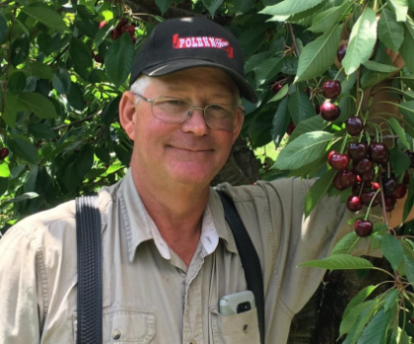
I was born in 1961 into a second-generation farm family in The Dalles. I grew up on a tractor seat, moving irrigation pipe with my sisters before school, and spent my summers picking cherries alongside the children of migrant families who returned year after year. My wife, children, and parents have all worked the same land. I’ve served as county Farm Bureau president, sat on the county fair board, and continue to support 4-H and FFA. I’ve seen firsthand what happens when farmers are squeezed out—not just of business, but of the conversation.

Support Local News!
Available for Everyone; Funded by Readers.