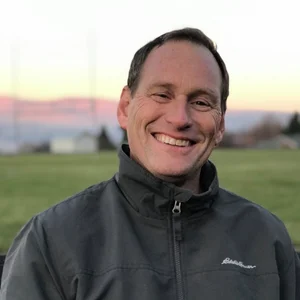
By Tom Peterson
The Dalles, Ore., Nov. 20, 2026 — A University of Oregon student team studying downtown The Dalles has identified several challenges facing local businesses, including vacant storefronts, an uneven mix of businesses and a lack of reliable information about why businesses open, close or leave.
The preliminary findings were presented Nov. 17 to The Dalles Urban Renewal Agency as part of an eight-week Business Retention and Expansion project through the university's Sustainable City Year Program.
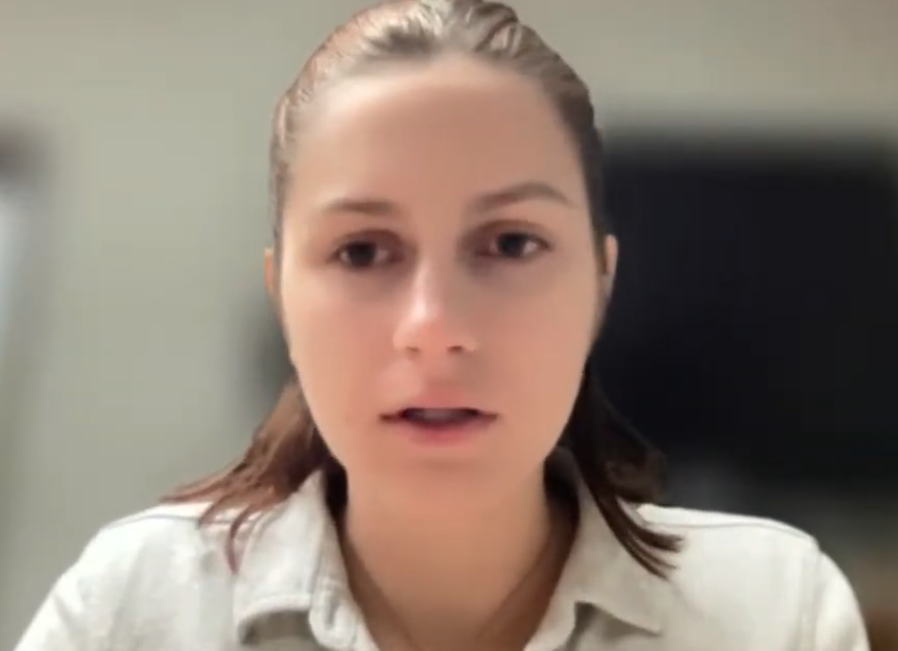
Chelsea Christensen
The team, led by Chelsea Christensen of the Oregon Consulting Group, has been researching downtown conditions and looking at programs used in comparable communities. Christensen said the group spent a day in The Dalles the previous Friday, interviewing about eight business owners and distributing more than 70 surveys to businesses along Second and Third streets.
The research identified four early concerns.
The first is what students described as an uneven business mix, with a high concentration of service businesses and fewer entertainment and other destination-oriented businesses. The team also noted vacant storefronts and unused second-floor spaces.
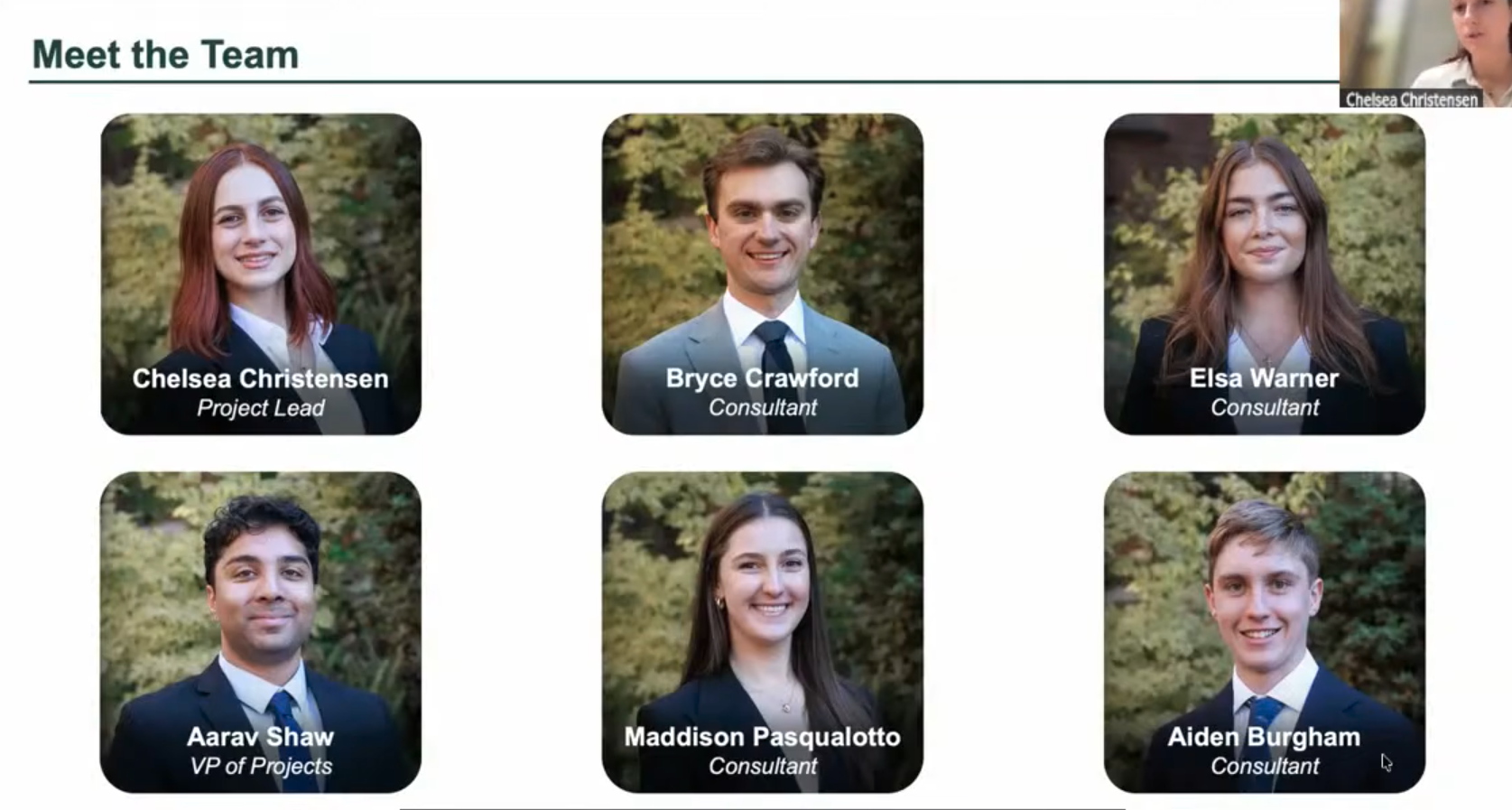
Members of the Consulting team
The students said the city lacks a reliable system for tracking business openings, closures, vacancies and growth. Without consistent information, it is harder to identify why businesses leave, where gaps exist and what kinds of businesses might be needed downtown.
The fourth concern was downtown's identity. Christensen said the team struggled to find a unifying characteristic that distinguishes The Dalles from other communities. Business owners and community members also raised the question during the team's research.
The students heard concerns about communication and coordination, including what they described as a perceived lack of support and activities from the Chamber of Commerce.
Christensen emphasized that those findings reflected conversations with business owners, not a complete assessment of the Chamber. The students had reached out but had not yet been able to interview Chamber representatives. They said they would continue trying to make contact.
Business owners also offered differing views about local marketing. Some said there was too much information about downtown activities to sort through, while others said they were unaware of events because promotion was not reaching them.
The team is now narrowing its research toward potential solutions. Among the ideas are a business red-flagging program to identify struggling businesses before they close, improvements to First Friday events, better communication between the city and businesses, renewed partnerships with cruise ship operators and efforts to attract businesses that would bring more families downtown.
Students also want to examine relatively inexpensive changes to the downtown environment that could improve pedestrian safety and walkability.
One proposed approach is a business barometer modeled on a program in Traverse City, Michigan. Under that system, a team checks in with businesses periodically, asking whether conditions have improved or worsened and whether the local environment is helping them grow.
The information can help identify problems early and connect businesses with available resources.
The students also discussed a possible partnership with RAIN, a Pacific Northwest nonprofit that works with startups. A local representative could help businesses connect with resources and programs offered by the city.
In examining other communities, the team found examples of cities using branding and coordinated marketing to strengthen their identity. Christensen cited Veneta, near Eugene, where the city worked with a consultant and marketing director to develop a brand that was reflected in storefronts, websites and social media.
The group plans to continue gathering survey responses and interviewing business owners before preparing a more complete retention and expansion plan tailored to The Dalles.
Economic Development Officer Jacob Anderson said the work comes at a time when downtown businesses are facing difficult conditions.
Anderson said he noticed businesses leaving while walking downtown with the students. He pointed to rising costs of goods, inflation and borrowing costs as obstacles that can prevent otherwise promising projects from moving forward.
“If we want to continue to move down the path of success downtown, we need to start filling some of these holes,” Anderson told the board.
He said he wants to focus the next month on bringing forward ideas to fill vacant spaces and encourage entrepreneurs to open or expand businesses.
Other downtown projects
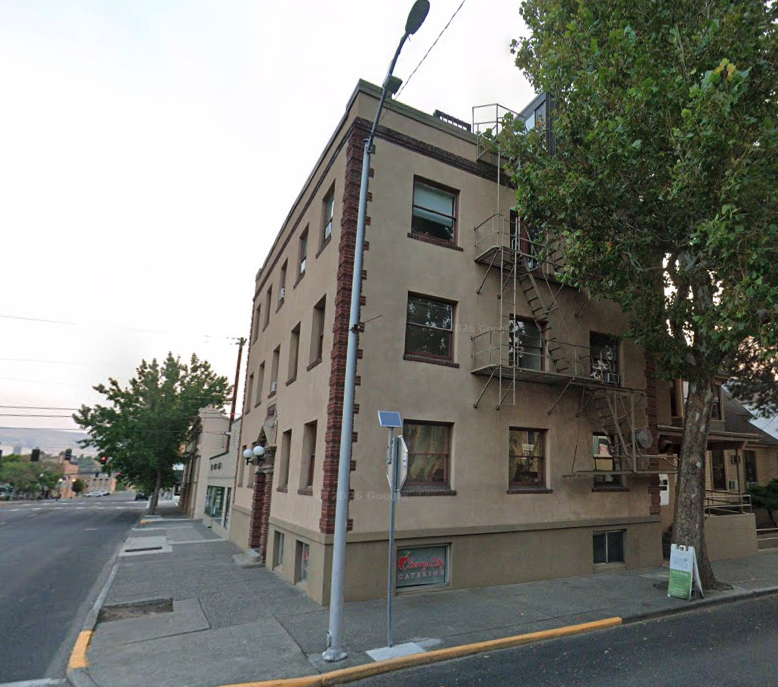
Anderson also updated the agency on two existing programs and a new application for improvements to the Medical Arts Building 301 E. 4th St., near the Wasco County Courthouse.
The building is owned by ENTERPRISE TD LLC with a listing member and agent as Christopher Steven Frick, according to the Oregon Secretary of State.
The agency received an application for heating, ventilation and air conditioning improvements totaling $18,435. The request would seek approximately $9,217 in Urban Renewal support.
Anderson said he had received the application that day and had not yet reviewed it for completeness. No approval was requested or granted at the meeting.
He said the building's owner had previously listed the property for sale, later took it off the market and is now looking to invest additional money in the building.
Refresh Program
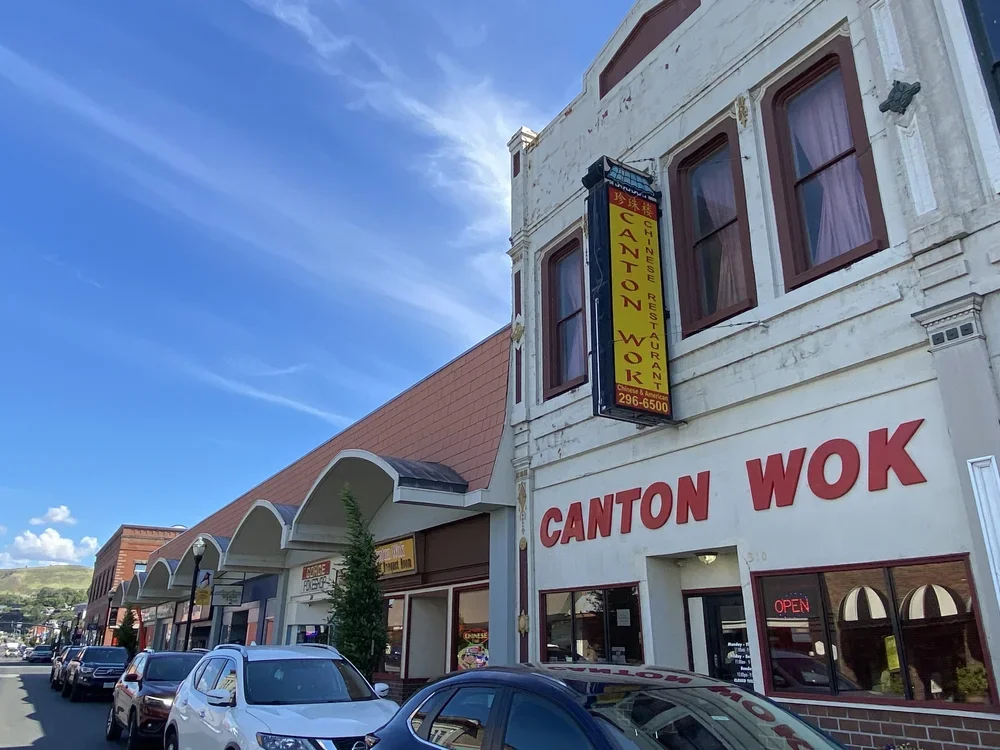
File Photo - Facade renovation include the Canton Wok building as well as the building seen here in this file photo, just to the east in the 300 block of east 2nd Street.
The agency's exterior pilot refresh program has received 14 accepted applications, with payments made on eight projects. Anderson said approximately $45,000 remained available before he would need to return to the board for additional funding authorization.
The program has helped pay for improvements to downtown building exteriors. Anderson said interest has slowed as colder weather approaches, since owners are less likely to undertake outdoor work during winter.
He said several completed projects have made visible improvements downtown and that other businesses continue to express interest. One prospective applicant, however, was facing a scheduling problem because a painter could not complete the work until June. The program generally requires projects to be completed within 180 days, and Anderson said the agency may need to consider whether an extension would be appropriate.
Possible fire sprinkler assistance?

The meeting also included an initial discussion about whether Urban Renewal should help property owners pay for fire sprinkler systems when adding apartments to downtown buildings.
Board member Walt Denstedt raised the idea after noting that fire code does not require sprinklers for a single apartment in some circumstances. He said he was concerned about the fire risk in older downtown buildings and wanted to explore whether financial assistance could encourage owners to install suppression systems.
Denstedt floated the possibility of the agency paying as much as 90% of the cost, but said he did not know how many property owners might be interested or what installation would cost.
Board members did not approve a program or commit funding. Several said they needed more information before deciding whether the proposal fit the agency's mission or how much public assistance would be appropriate.
The board agreed to bring the subject back at a future meeting with a cost analysis and more specific information. Denstedt suggested inviting the fire marshal to explain the issue.
Anderson said the agency is approaching a period in which it will need to make decisions about how to use its remaining resources to support downtown development. The student study, he said, could help identify where those investments would have the greatest effect.