
Wasco County, Arlington, Bickleton eyed for hazardous sediment dumping from Portland; TD pushing back
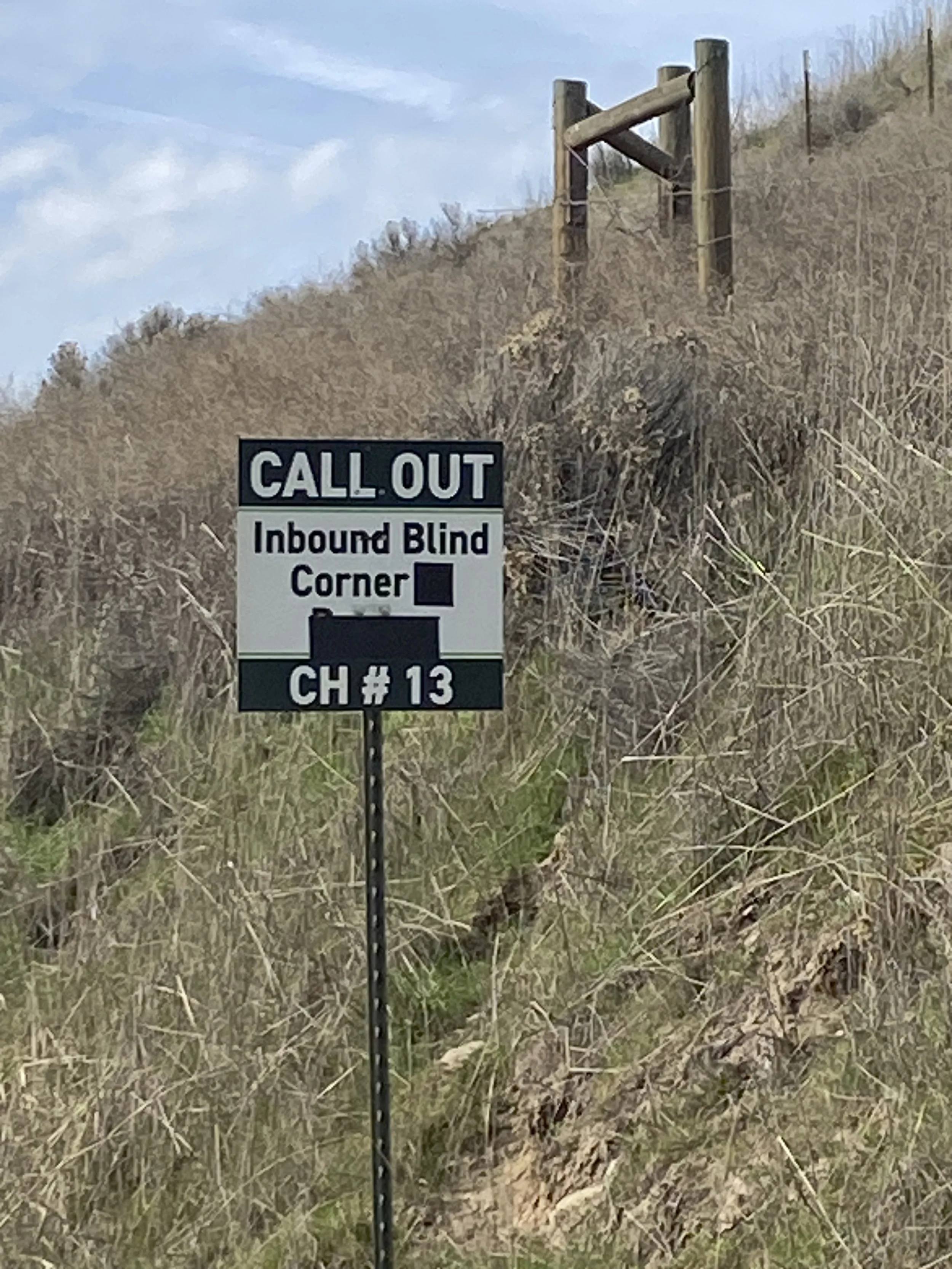
Blind corners, tight turns and heavy traffic have made Five Mile Road to the Wasco County Landfill dangerous and difficult as a new plan to add even more traffic to the busy rural road has emerged.
By Aaron Girdham
The Dalles, Ore., March 17, 2026 — Plans are being considered to haul an estimated 19,000 truck loads of sediment from the Portland Superfund Site to the Wasco County Landfill from July to October of 2028.
This proposition poses several concerns—several hazards—in the community of The Dalles, including road safety, community hazards, and environmental safety.
A Traffic Hazard
The EPA predicts that they will be using 130 trucks a day during a four-month time frame. The trucks would either be hauling the sediment directly from Portland, or from barges along the way.
In Wasco County, the main route to the landfill is Highway 197. This would unavoidably cause heavy congestion, as well as foreseeable road repair outside of the city of The Dalles. A short distance from The Dalles, along Highway 197, the trucks would start to slow on a downward grade to take a sharp angle turn from the highway onto Five Mile Road towards the landfill.
Five Mile is nicknamed “Driveline”, due to how often semi-trucks blow out their drivelines while traveling the road. It is a steep series of switchbacks, blind corners, and sharp turns that force semis to use both lanes. After dumping their loads, the fleet of trucks would trudge back down the same way.
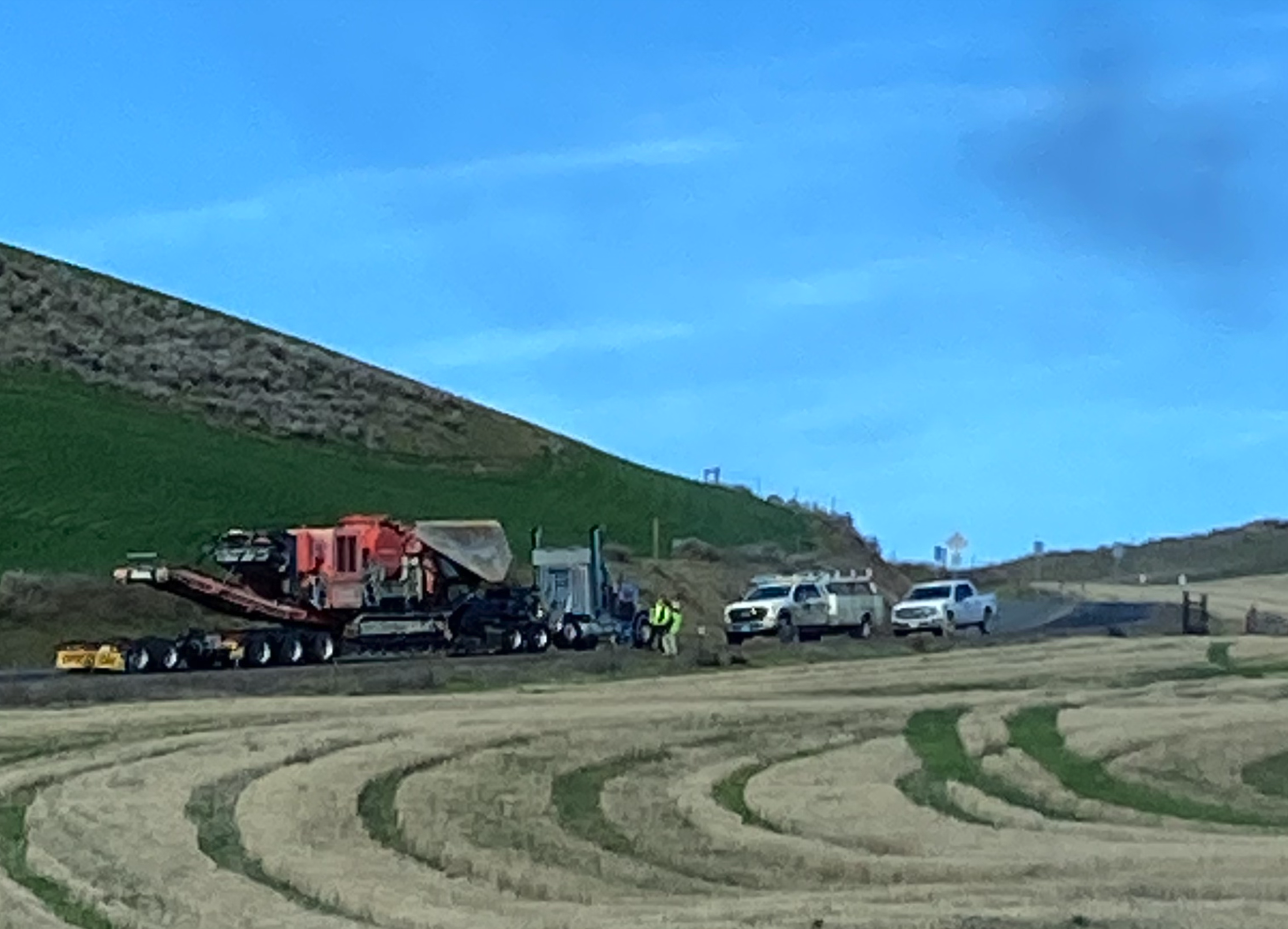
Driveline down - This semi truck carrying a rock crusher lost all power when the U-joint holding its driveline in blew out the side of the vehicle, leaving it stranded on the heavily traveled Five Mile Road near the Wasco County Landfill. The Road built decades ago is steep and filled with blind and tight corners.
Doug Weimar, neighbor to the landfill and local rancher and wheat farmer, is consistently witnessing breakdowns and accidents along this short grade each week. Even as Mr. Weimar drove us up the winding road, generously using the safe middle of the lanes, there sat a semi-truck in the right lane. From a conversation with a landfill employee, Doug related to me “his U-joint's still in one piece laying on the side of the road. Almost made it." He later recounted several stories of accidents happening along this stretch—even one involving the injury of his 90-year-old mother, when a semi collided with her pickup and she had to be Life Flighted.
One entrance, one exit, one road, and 19,000 trucks.
A Community Hazard
500,000 tons is roughly the same proportion as the amount of mortar used in building the Great Pyramid of Giza.
It also happens to be the same amount of sediment that is targeted for removal from Portland Harbor and to be deposited at landfills, including the one in Wasco County. But, a backyard river-mud Pyramid is not the ideal attraction for a town. Nor is its methane perfume an enticing aroma to residents and tourists, according to some locals.
The landfill is approximately 1,000 feet above the city of The Dalles and about two miles away.
According to property owner Doug Weimar, “The Landfill is on a slide and they're putting this material on top of it. Even though it's got a liner underneath, that liner is gonna stretch”, implying that movement could happen under such weight. He was concerned that the waste material and its liquids could leak beyond the barrier and into The Dalles aquifer.
Jim Winterbottom
In a recent interview with Jim Winterbottom, District Manager at Waste Connections Inc. in the Columbia River Gorge, he stated “500,000 tons could not be held in the Wasco County landfill any time soon”, because of the large amount already present.
It was also pointed out by Weimar that by accepting such a large amount of sediment, The Dalles could essentially be accepting a new Superfund site.
The Dalles is already home to two — the Martin-Marietta Aluminum Co. in the Port of The Dalles and the Union Pacific Railroad Co. tie-treating plant.
Excessive waste is a problem. Too much should not be considered, according to Weimar and local officials. By accepting the sediment into the landfill, the community would be piling their inevitable problems and bills for the next generation to pay.
An Environmental Hazard
The mountain of sediment present at the landfill already rises in the landscape of the Five-Mile area, and with it surface several problems.
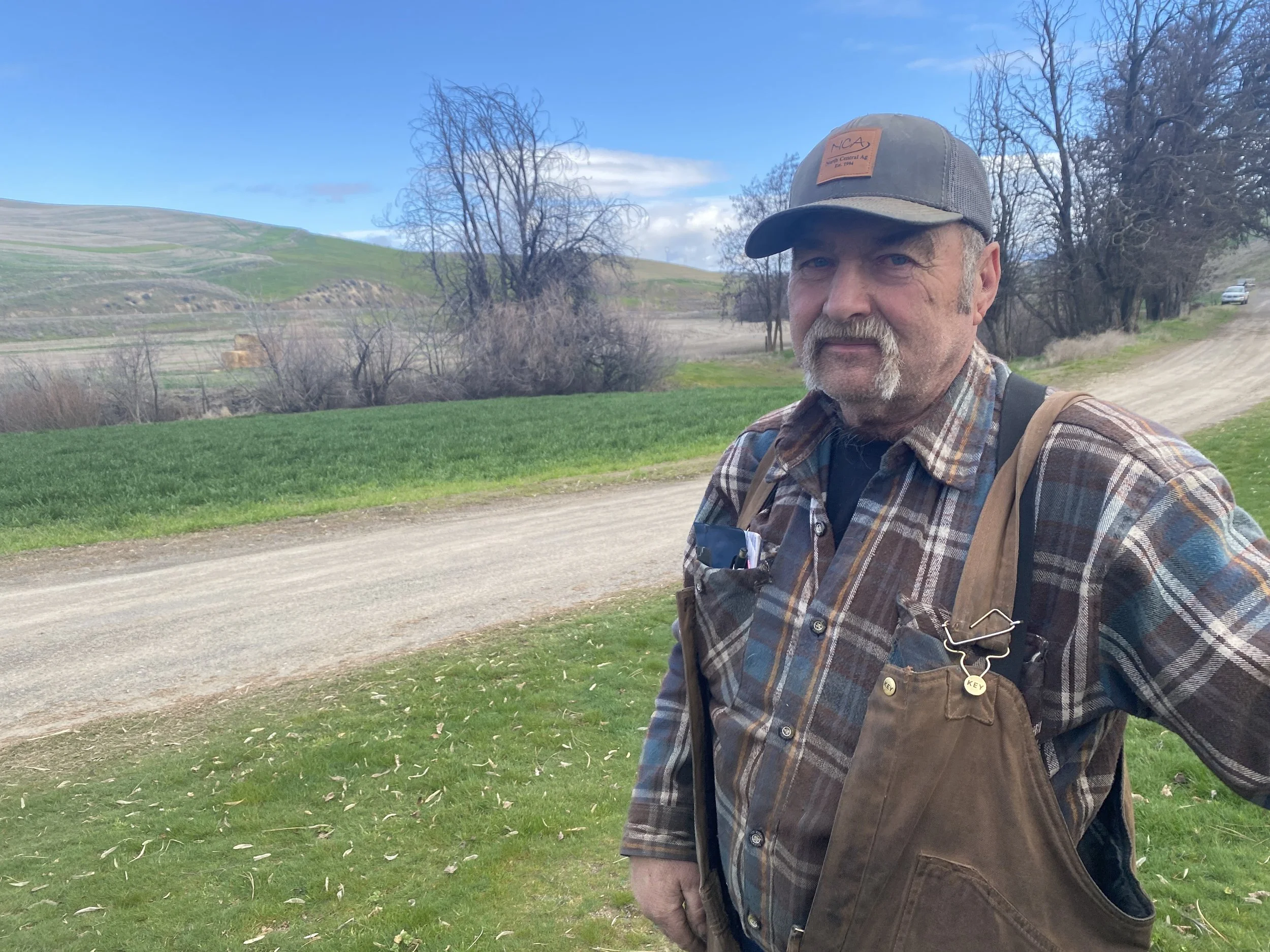
Local farmer and rancher Doug Weimar at his ranch on Five Mile Road.
“Now, what scares me more than the trucks is the material they're bringing in here,” Doug Weimar stated. ” He owns some 2,000 acres of land around the landfill, where he raises cattle and grows soft white wheat.
“There is asbestos stored in this [landfill] which is super hazardous,” he said. “I'm worried about the [other] hazardous things that they're bringing in. The stuff that's already here, ‘sleaching’ into it. I don't know what all they've hauled in. Nitrates.” He said dust blows from the landfill onto his property.
“They drive on [the waste pile], that pad out there…, and in the winter time when it's wet, they track that mud all the way out alongside the road. And in the summer time, it blows out. I'm worried about it. You know, if they find out that that stuff's contaminated in my property. And you can see the difference on the sides of the road—if you were to pick a sample from that [(pointing towards the property by the road)] it would be contaminated.”
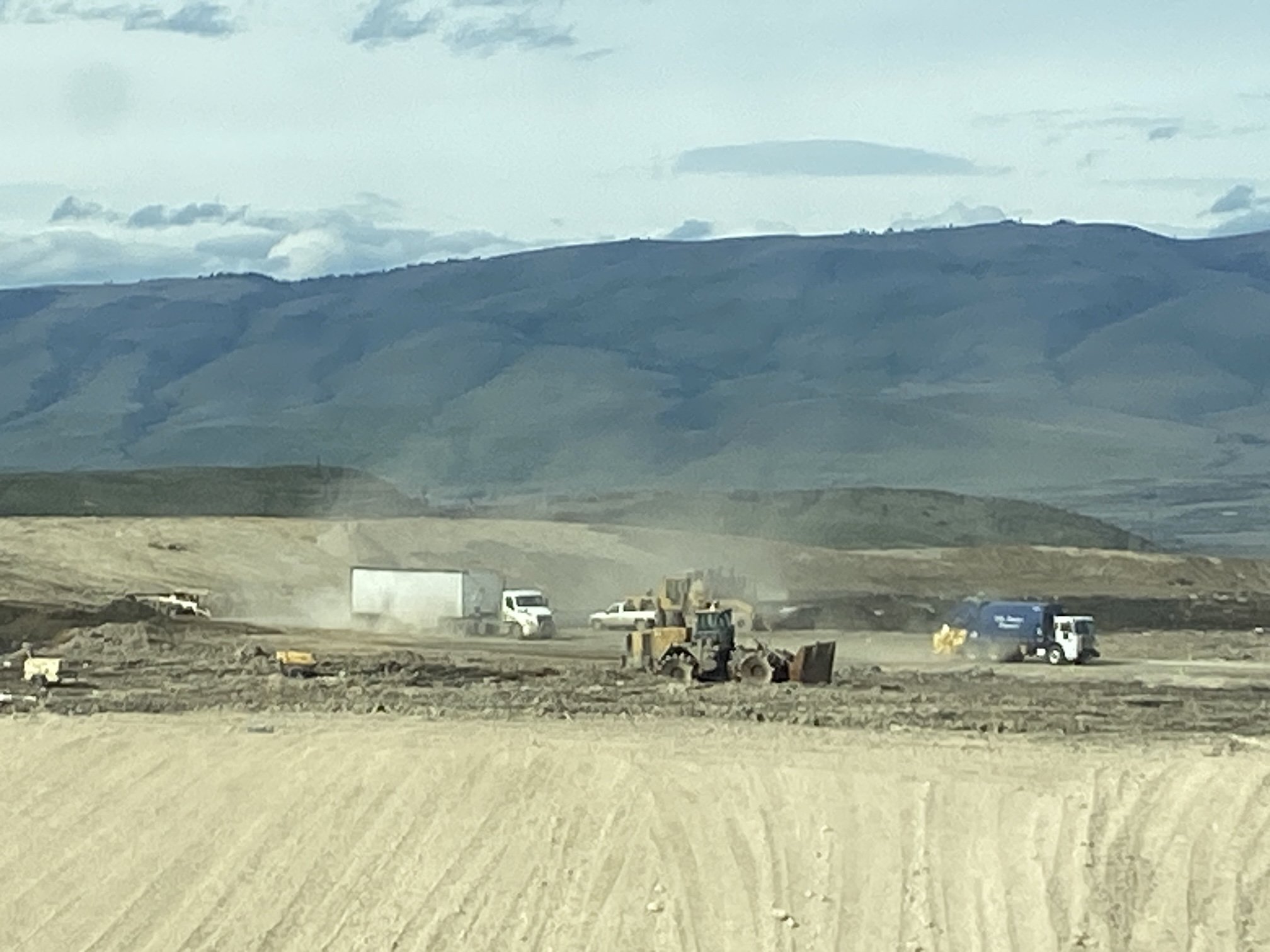
Dust blowing from the Wasco County Landfill traffic.
Like the dust blowing through his shoots of wheat, garbage was strewn and thrown by the wind over his grazing fields - mostly plastic bags.
“That's one thing I worry about the garbage blowing out here”, he said waving his hand across the landscape that was dotted with bits of plastic. This affects both his wheat crops and his cattle, as his cattle — especially the calves — will sometimes eat garbage blown over from the landfill.
The problem isn’t always obvious or at eye-level. He recounted a time digging several wells “150 feet, ended up abandoning the first wells because about 200 foot down it was pudding, I mean just, right slop, oh it was nasty, it was all slop.”
Doug was a consummate good neighbor on our tour - using his CB radio to communicate and cooperate with trucks hauling garbage to the dump so he and they could safely navigate Five Mile together to prevent an accident. He said that was just his nature, but this latest news of more trucks coming had him concerned.
Doug is against sediment from Portland Harbor being dumped at the Wasco County Landfill.
“Personally I'd like to not see that come in here.”
More about Portland Harbor Superfund site
The sediment comes from a 10-mile-long stretch of the Willamette River known as the Portland Harbor. It has been a corridor for ship traffic for nearly 150 years, according to the EPA, and has been essential to several large businesses on its shores.
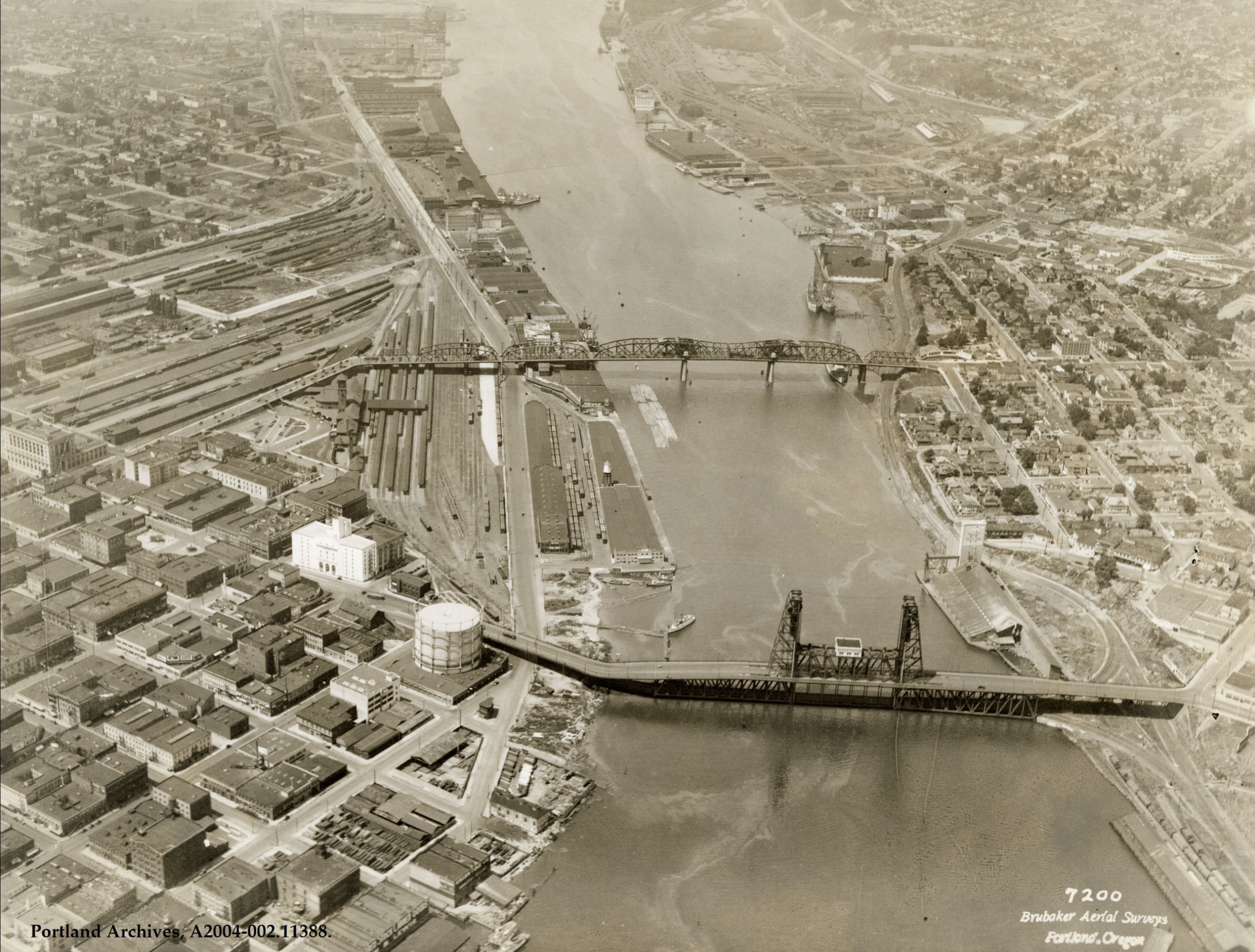
Aerial view of Portland and the Willamette River at the Steel Bridge and Broadway Bridge, circa 1927 - city of Portland archives. The Portland Harbor between the Broadway Bridge and Sauvie Island has been classified a Superfund Site because of the toxins that have been deposited by companies into the sediment in this stretch of the river. Those potentially responsible parties are now working toward a plan to dredge and dump some of the sediment, possibly in Wasco, Gilliam and Klickitat counties.
The site starts where the Willamette meets the Columbia River (near the southern tip of Sauvie Island) and ends at Broadway Bridge in Portland’s Pearl District.
The dredging will be funded and developed by nearly 150 Potentially Responsible Parties (PRP)—industries and businesses potentially responsible or connected to partial pollution in the Willamette River. The PRPs include businesses like: Toyota Motor Sales USA, Inc.; Union Pacific Railroad Company; United States Army Corps of Engineers; United States Coast Guard; US Navy; Chevron; and Shell.
It is these parties that will contract and fund for the removal of the sediment, according to the EPA.
Hazardous Sediment
The City of Portland specifies that the contaminants within the sediment of the river hazardously affect the fish and clams, in turn making those animals harmful to humans once harvested.
The organization Neighbors For Clean Air has been involved in overseeing the safety of sediment removal plan, and stated that they estimate “over 100 contaminants, including polychlorinated biphenyls (PCBs), polycyclic aromatic hydrocarbons (PAHs), dioxins/furans, pesticides and heavy metals” being present in the Willamette river bottom. PCBs are classified as probable or known human carcinogens by major health organizations. Evidence links them to liver, biliary tract, and malignant melanoma cancers, according to the US Center for Disease Control. While banned in 1979, they persist in the environment and bioaccumulate, causing immune, reproductive, and developmental issues, the CDC states.
The EPA and the Wasco County Landfill have confirmed however that the hazardous material, an approximate 7%, will not be coming to the Wasco County Landfill which is a subtitle D permit that does not allow for such hazardous material.
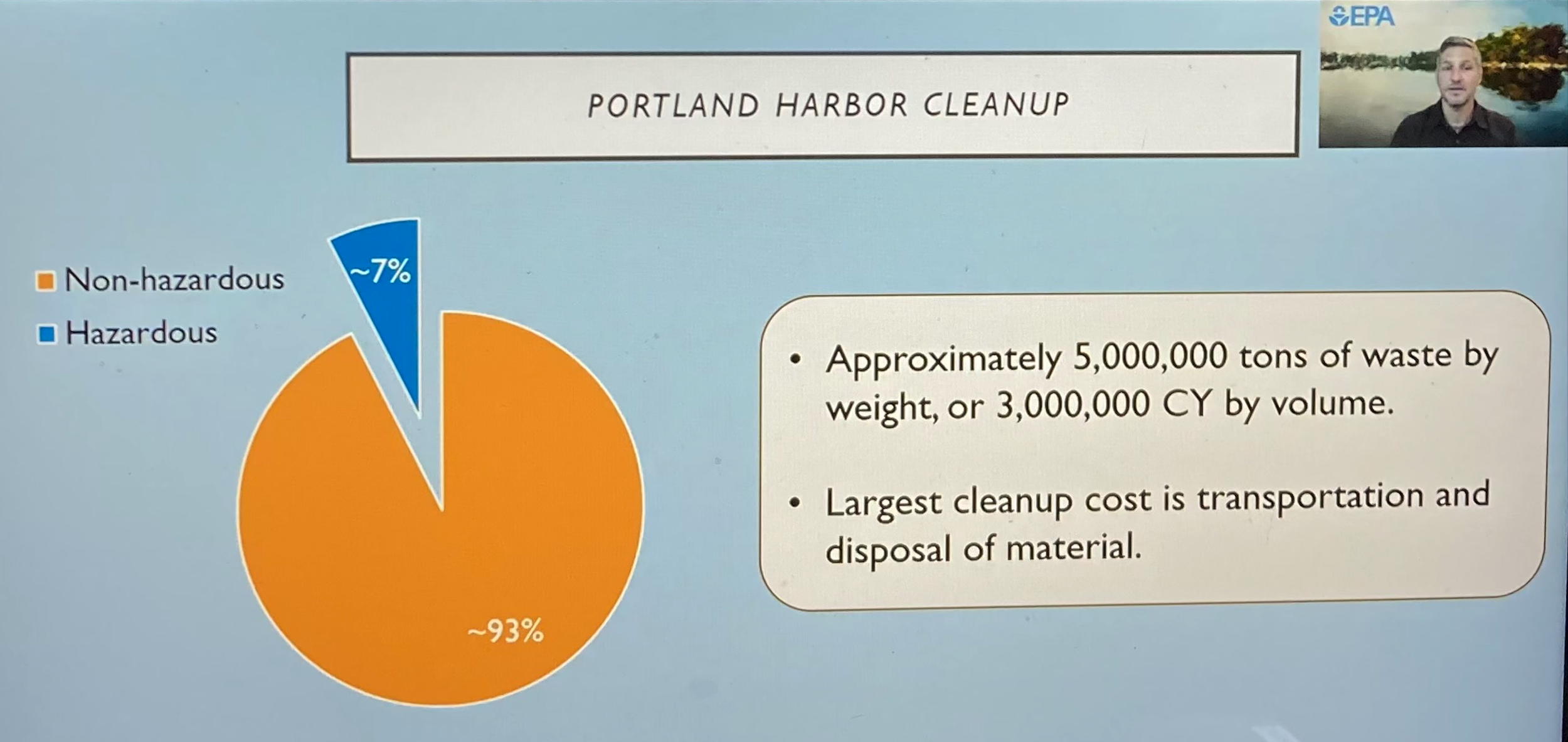
Seven Percent of the Portland Harbor sediment is expected to be hazardous, this EPA video explains.
Alternative Sites for the Superfund Sediment?
Oregon Department of Environmental Quality, or DEQ, spokesperson Antony Sparrow said multiple landfills in Wasco, Gilliam, and Klickitat counties are being considered for sediment placement. He also ensured the material taken by the landfills will meet their permitted standards.
“Facilities in Oregon being considered, that only accept non-hazardous waste, include Wasco County Landfill near The Dalles, Columbia Ridge Landfill near Arlington, and Republic Services Roosevelt Regional Landfill in Bickleton, Wash., is also being considered and accepts non-hazardous waste,” Sparrow said in an email several days ago.
Meanwhile, DEQ officials ensured landfills meet their permitted standards and said the cancer-causing sediments of the superfund site are only permitted in the Chemical Waste Management of the Northwest near Arlington.
What About Ross Island?
Ross Island on the Willamette River is a State clean-up site. It was used for sand and gravel mining from 1926-2001 leaving a 120-foot-deep quarry and major contamination. The quarry became a lagoon upon the island, now having annual blue-green algae blooms. The solution to the problem is to refill the quarry with something that will last.
The EPA has been discussing the usage of the sediment from Portland Harbor to eliminate the algae bloom with Ross Island prospective buyer, Tetra Tech. That idea is still under consideration as they dial in on the cost to do so.
What’s the Big Deal, Anyway?
Locals in The Dalles are passionately opposed to the plan.
City Council member Dan Richardson said “The potential for them to transport the material through The Dalles is concerning. One problem is the traffic that the 130 trucks a day will cause.”
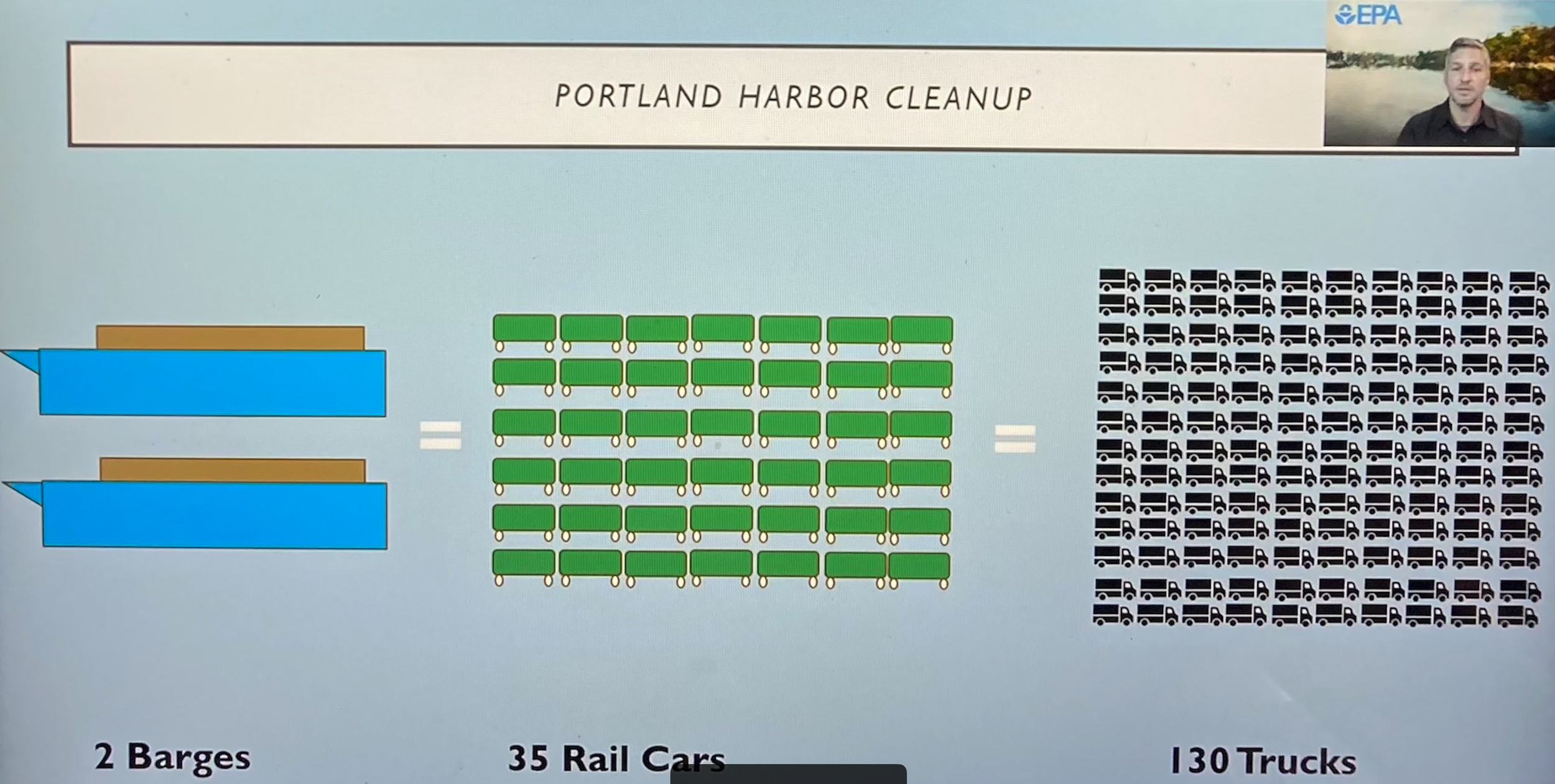
EPA video showing trucks used per day.
Richardson also worried about neighbors to the landfill and how it would decrease their quality of life if the plan is approved.

City Counilor Dan Richardson
Councilor Calls for Governor to Step In
“The capacity of the landfill is also a question I wonder about, and if that will affect the rates for residents of The Dalles,” Richardson said. “I encourage Governor Kotek and her Regional Solutions staff to show leadership on this complex matter, and help guide the Portland Harbor sediment to an appropriate site closer to the Superfund cleanup. Inflicting the traffic hazards, road damage, noise, and other impacts on The Dalles because it's out of sight, out of mind, is not acceptable. There are disposal options in Portland and the Metro area.”
CCCNews reached out to Gov. Kotek’s office for comment and has yet to hear back. We will update this story once their information is received.