
What Oregon Grows — and What Oregon Is Losing
Productivity, resilience, and the quiet reshaping of American agriculture
Thoughts from the Tractor Seat by Ken Polehn
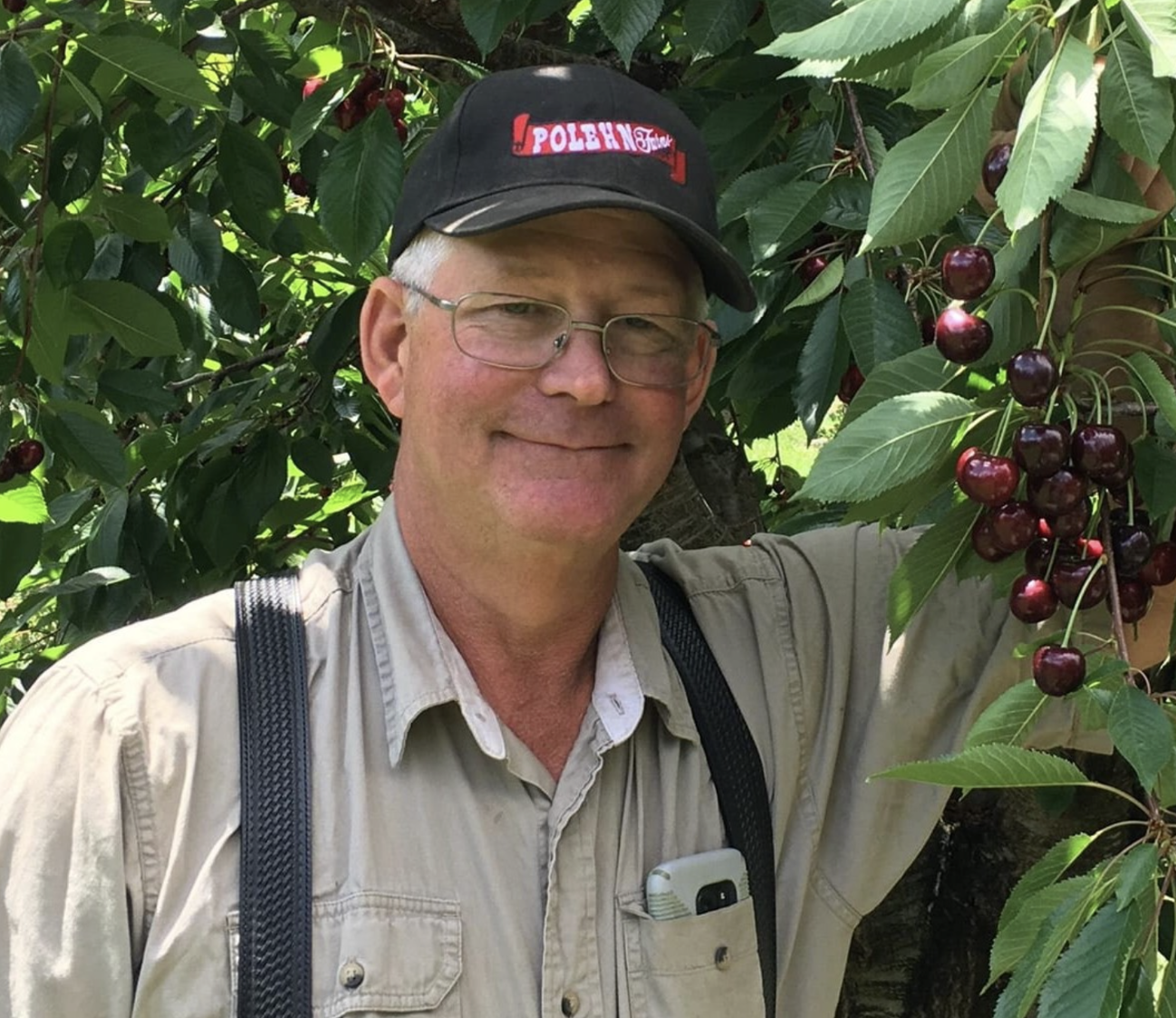
Ken Polehn
January is when optimism meets the math. In farming, that meeting happens quietly at kitchen tables, in shop offices, and over spreadsheets that don’t care how hard you worked or how good your intentions were. By the time lawmakers return to Salem in February, many of the most consequential agricultural decisions of the year have already been made.
What gets planted.
What gets scaled back.
What doesn’t happen again.
The forces behind those decisions are national, but Oregon offers a clear window into how productivity and resilience are drifting apart in American agriculture.
Oregon grows a wide range of crops. We produce bulk commodities like wheat and barley alongside high-value specialty crops such as fruit, nuts, vegetables, seed, and dairy. We are good at both. That matters, and it should be acknowledged.
But it is also true that productivity alone does not equal resilience.
Bulk crops move efficiently through global markets. They store well, ship well, and tolerate consolidation. By conventional measures, Oregon wheat and barley remain success stories, and no honest conversation should dismiss that.
The stress in our food system shows up elsewhere.
It shows up in crops that cannot sit in a bin for months.
In farms that depend on precise timing, skilled labor, and nearby processing.
In operations where rising input costs and layered regulation arrive all at once.
These farms rarely fail in dramatic fashion. They narrow. They reduce acreage. They delay investment. They quietly decide not to replant a block of trees, not to repair a packing line, or not to continue a product that once made sense.
There is another reality farmers understand instinctively but the public rarely hears. In inflation-adjusted terms, many farm commodity prices today have not sustained the peaks last seen during the unusual boom years of the 1970s, even as farm input costs have continued to rise. (USDA data show farm input costs have risen faster than prices received by farmers). Fuel, equipment, land, insurance, labor, and compliance have all moved steadily upward, while prices received by farmers remain volatile and uncertain.
The result is a widening gap between what farming produces and what farming costs. Efficiency can narrow that gap for a time, but it cannot close it indefinitely. Eventually, something gives — acreage, labor, infrastructure, or the farm itself.
One of the least discussed consequences of this pressure is where value is created — and where it is lost.
Oregon increasingly exports raw agricultural products and imports finished food back to itself. This reflects a broader national shift, but its effects are local. Processing moves away. Packing sheds go dark. Skills disappear. Infrastructure erodes. Once those pieces are gone, they rarely return.
A system can look productive while becoming fragile.
We talk often about food affordability, but far less about food dependency. When local production becomes economically unworkable, supply chains lengthen and risk concentrates elsewhere. Communities that once fed themselves become price-takers in markets they no longer influence.
This isn’t an argument against trade, scale, or regulation in principle. It’s an argument for connection between policy and practice, between intention and outcome.
State and federal policies shape agriculture whether they mean to or not. Labor law, water regulation, land-use rules, energy costs, and transportation policy do not operate in isolation. Each adds weight. Taken together, they determine which kinds of farming remain viable and which quietly disappear.
Farms don’t experience policy in pieces. They experience it all at once.
The question facing Oregon agriculture and American agriculture more broadly isn’t whether we can produce crops efficiently. We can. The question is whether we are building a system resilient enough to endure stress and change, or one optimized only for the present moment.
Productivity is easy to measure.
Resilience usually isn’t — until it’s gone.
As this legislative session begins, that distinction deserves more attention than it’s getting.
About the author.
I was born in 1961 into a second-generation farm family in The Dalles. I grew up on a tractor seat, moving irrigation pipe with my sisters before school, and spent my summers picking cherries alongside the children of migrant families who returned year after year. My wife, children, and parents have all worked the same land. I’ve served as county Farm Bureau president, sat on the county fair board, and continue to support 4-H and FFA. I’ve seen firsthand what happens when farmers are squeezed out—not just of business, but of the conversation.