
After contentious townhouse vote, Hood River confronts a larger question: How will it house its future?
By Tom Peterson
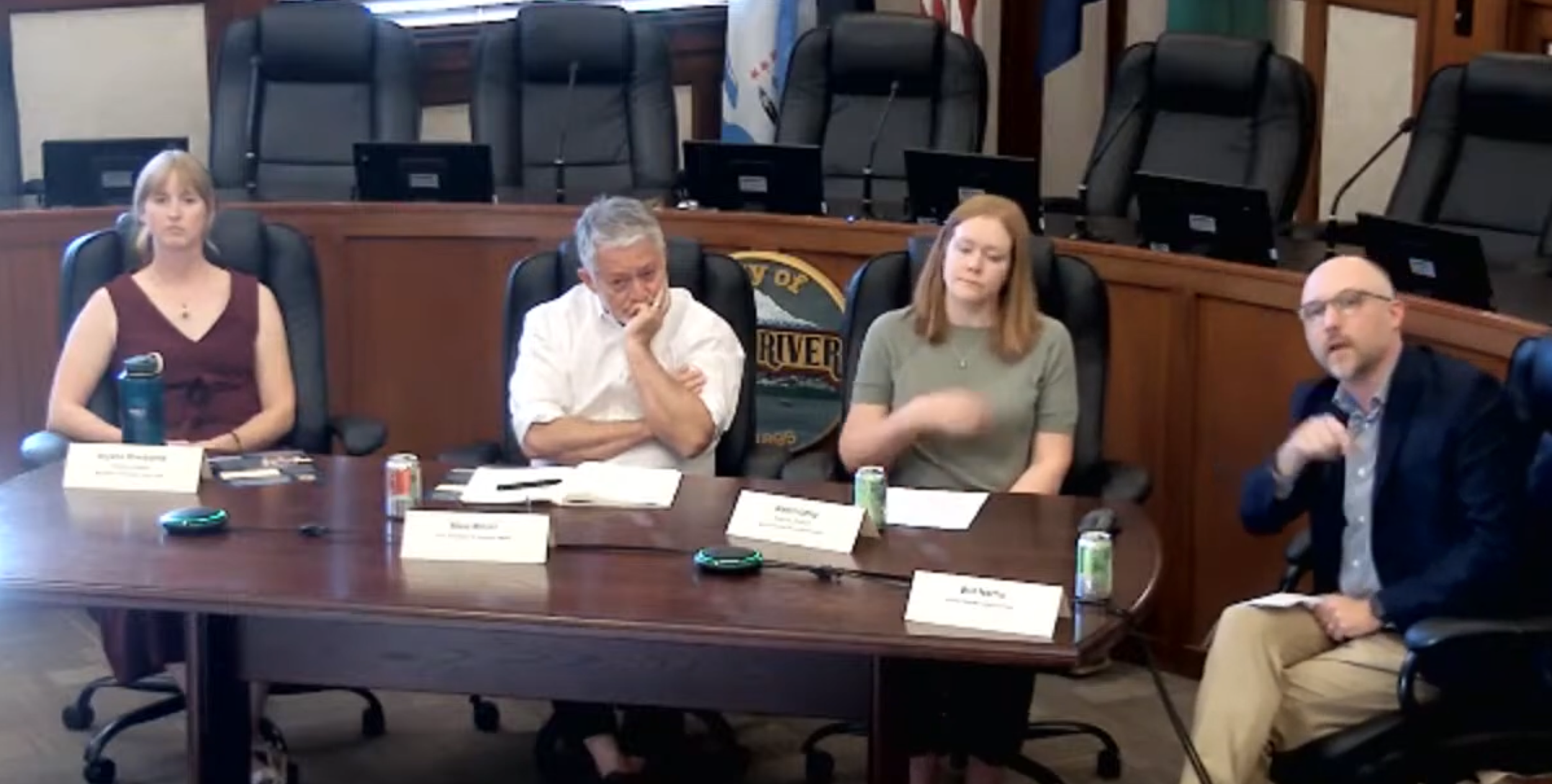
The Dalles, Ore., June 30, 2026 — Less than 24 hours after the Hood River City Council approved a controversial 11-townhouse development over neighborhood objections, city leaders, developers and affordable housing advocates gathered for a candid conversation about an even bigger challenge: how to keep the community from pricing out the very people who keep it running.
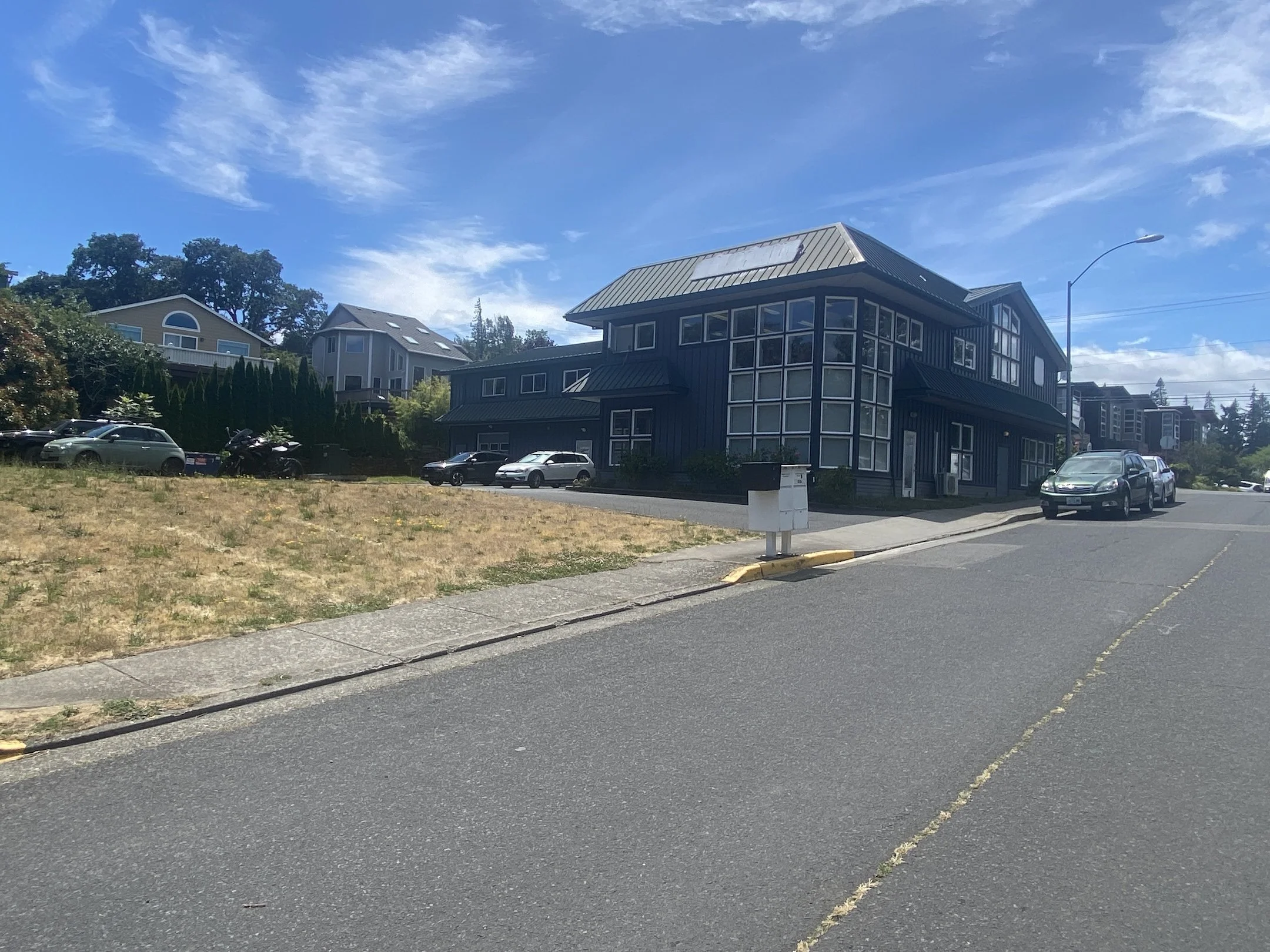
Property at 1225 Wasco Street in Hood River that was rezoned to allow for 11 townhouses to be built on this site. The decision came with much opposition from neighbors.
The June 23 housing town hall came on the heels of the council's 6-1 decision to rezone a former industrial property at 1225 Wasco St. from industrial to commercial to allow a planned unit development of 11 townhomes.
The vote followed months of public debate and opposition from nearby residents, many of whom argued they supported additional housing but believed the project should be developed under surrounding residential zoning rather than a commercial designation that allows greater density. Residents also raised concerns about traffic, parking, neighborhood compatibility, future commercial uses and short-term rentals.
The following evening, however, city officials widened the discussion far beyond one project.
Simply Not Enough Housing
Their message was straightforward: even if projects like the Wasco Street development move forward, Hood River still will not build enough housing to meet current and future demand without additional public investment.
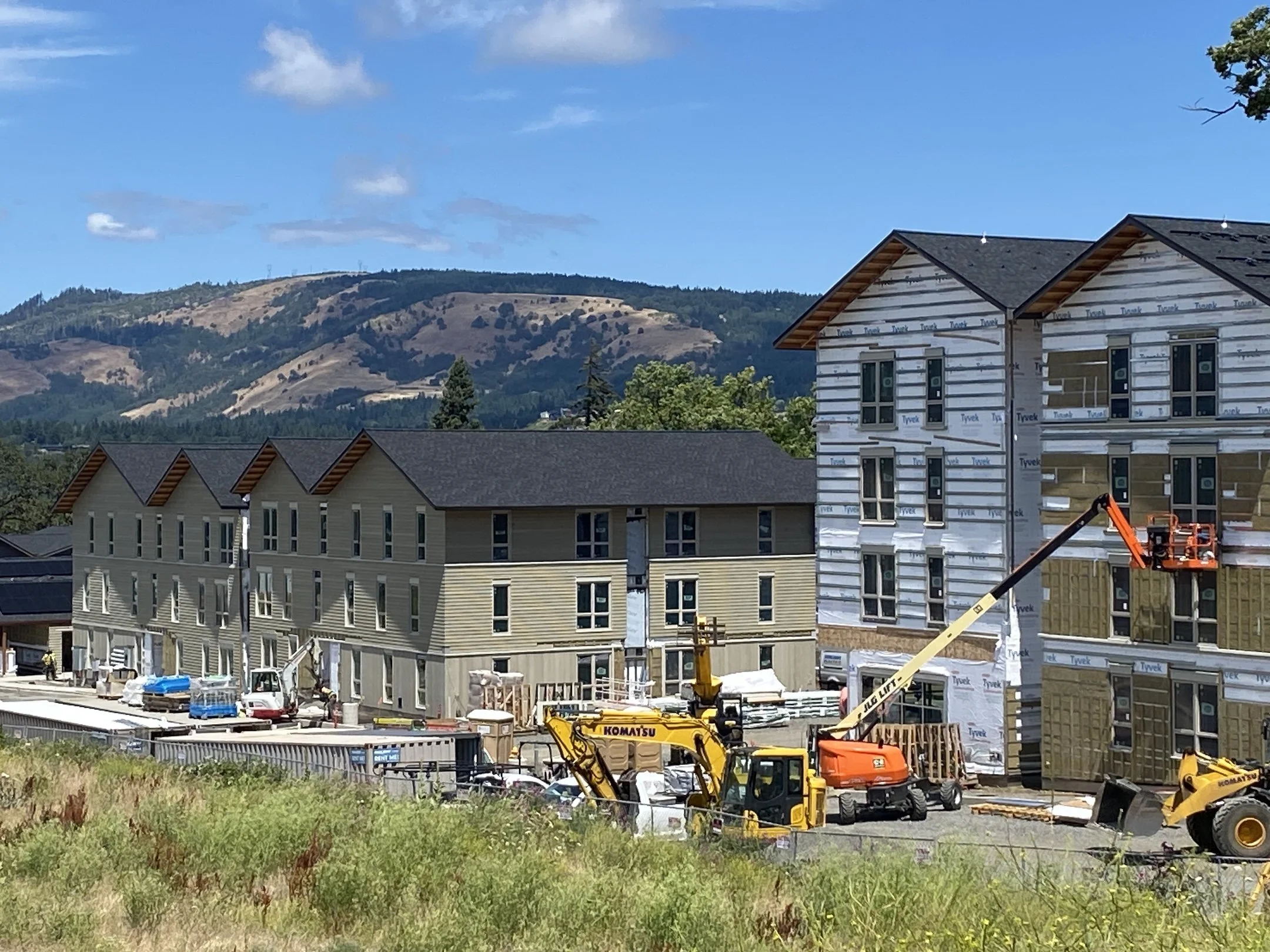
Construction continued at the Mariposa Village affordable housing project on Rand Road on Wednesday, July 1. Back in April, Karen Long, executive director of Mid-Columbia Housing Authority, pointed to recent data from Hood River as a clear indicator for the need of affordable housing.
Long said the Mariposa Village development there — a 130-unit affordable housing complex — drew roughly 450 applications shortly after opening its waitlist. Demand for housing assistance was even steeper: about 150 people applied for just 39 available housing vouchers.
"This isn't specifically a Hood River problem," developer and former Hood River County Commissioner Maui Meyer told attendees. "This is a nationwide issue."
National Issue
Meyer, a real estate broker who has spent decades working in local development, said the economics of housing have fundamentally changed. Construction costs that now commonly range between $350 and $400 per square foot, combined with expensive land and financing, have made it nearly impossible for the private market to build homes affordable to many local workers.
"The private market can't do it," he said.
That admission became one of the defining moments of the evening.
Throughout the town hall, speakers from the city, Mid-Columbia Housing Authority, Columbia Cascade Housing Corporation and Big River Community Land Trust largely agreed that Hood River has spent years changing zoning rules, encouraging accessory dwelling units, allowing more housing types and reducing development barriers.
Yet housing production has continued to lag.
City staff presented data showing that after the Heights subdivision was largely built out, annual housing construction slowed dramatically. In recent years, Hood River has produced only a handful of new homes annually outside of larger multifamily developments, while housing prices have climbed well beyond what many local households can afford.
Takes $135k a year to own a home
Officials said purchasing the median-priced home now requires a household income of roughly $135,000 annually, compared with a community median household income of about $86,000.
The shortage, they argued, has ripple effects throughout the community.
Bedroom communities filling the housing gap
Approximately four out of five people who work in Hood River commute from outside the city because they cannot find or afford housing nearby. Employers struggle to recruit workers. Schools face declining enrollment. Public agencies compete to hire employees who often cannot afford to live in the communities they serve.
For affordable housing providers, the solution is no longer simply building more units.
It Takes Millions
Karen Long, executive director of Mid-Columbia Housing Authority and Columbia Cascade Housing Corporation, described the complex financing required to make affordable housing projects possible.
She pointed to the nearly completed Mariposa Village development as an example. The approximately $76-million project received about $1.7 million from the City of Hood River, with the remainder coming from state and federal programs and other funding sources.
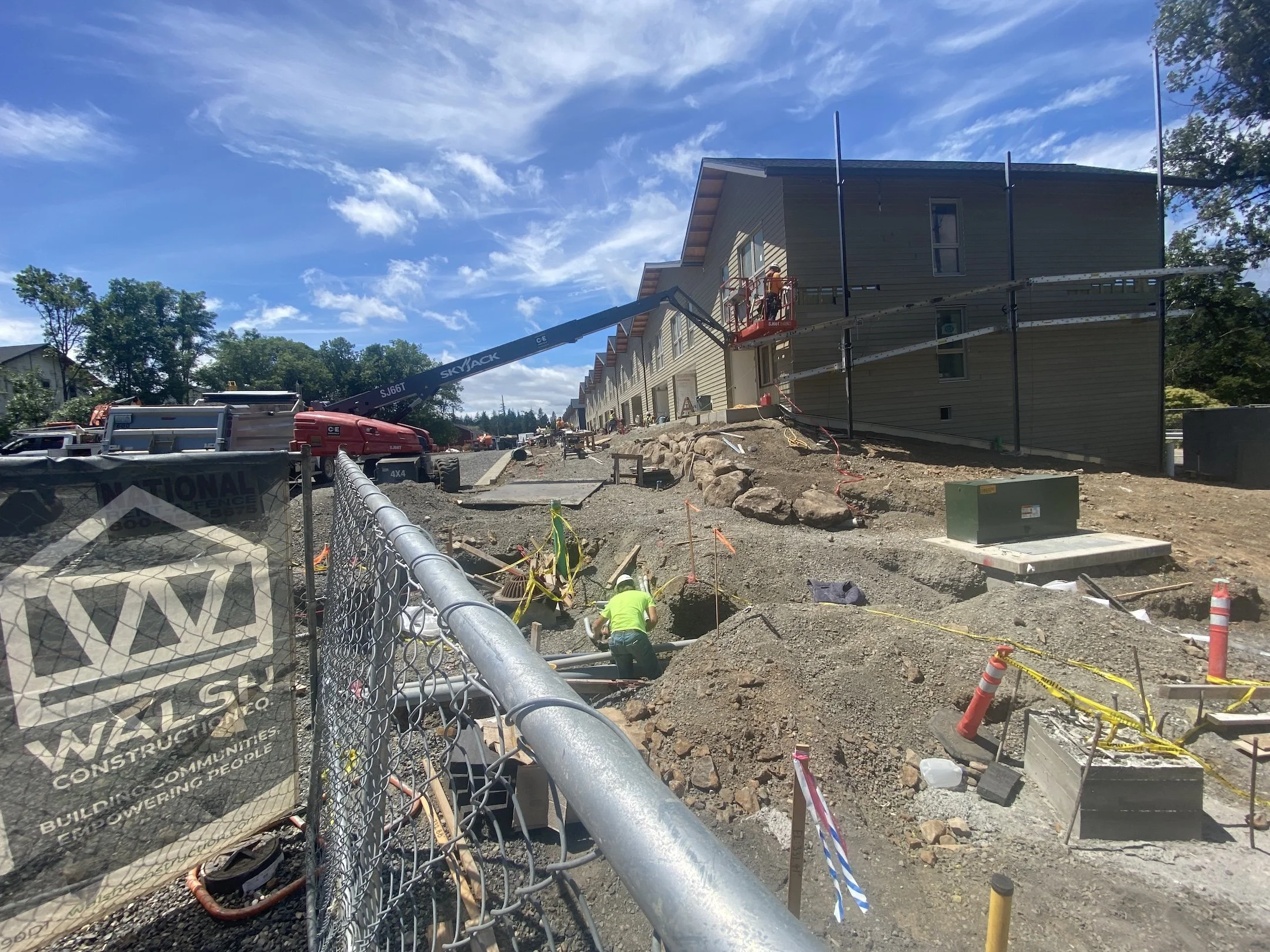
Work at Mariposa Village looking from Rand Road in Hood River on July 1.
Long said local dollars frequently serve as the catalyst that unlocks substantially larger outside investments.
That concept forms the basis of the city's discussion about a potential affordable housing bond.
Is a housing bond in the future?
City officials stressed repeatedly that no decision has been made to ask voters for one. Instead, they are gathering public input before deciding whether to place a measure on the November ballot.
If approved, bond proceeds would be limited to capital projects such as land acquisition and construction rather than rent assistance or housing vouchers.
Speakers emphasized that the bond would not replace private development. Instead, they described it as another tool to fill financing gaps that the market alone cannot address.
The Missing Middle
The discussion also highlighted what affordable housing advocates often call the "missing middle" — households that earn too much to qualify for many subsidized housing programs but still cannot afford to purchase a home in Hood River.
Big River Community Land Trust Executive Director Alysha Sherburne described the nonprofit's planned Avalon Way development as one example. The project would create more than 40 permanently affordable homes through a community land trust model that separates ownership of the home from the land beneath it, reducing purchase prices while preserving long-term affordability.
Unlike lower-income housing developments, however, projects serving middle-income buyers have relatively few public funding sources available, making local investment increasingly important.
Residents attending the town hall raised their own questions.
Getting Priced Out
Some wondered how Hood River reached this point after years of growth. Others questioned whether a bond would help renters struggling today or whether additional development would simply continue pushing prices upward.
One longtime Hood River School District employee described seeing herself in the city's housing statistics.
"I've lived here 44 years," she said while explaining that her income falls near the lowest affordability categories discussed during the presentation.
Long acknowledged that residents with the lowest incomes often require rental assistance and housing vouchers in addition to new construction, noting that waiting lists for those programs can stretch for years.
The evening underscored the growing tension at the heart of Hood River's housing debate.
On one side are residents who worry that higher-density projects will change neighborhood character or create unintended consequences. During the June 22 hearing, opponents of the Wasco Street project argued they supported additional housing but believed fewer units built under residential zoning would better fit the surrounding neighborhood.
On the other are city leaders and housing providers who argue that the community has already spent years adjusting zoning regulations and encouraging different housing types while still falling far short of meeting demand.
The Wasco Street development illustrated that conflict.
During the June 22 hearing, planning staff argued the property represented an appropriate candidate for rezoning because Hood River's adopted economic opportunities analysis found a surplus of similarly sized industrial parcels and little market demand for industrial sites under one acre. Staff also concluded the proposal aligned with the city's housing needs analysis by creating opportunities for higher-density housing within existing city limits.
Whether that strategy — combined with public investment through a housing bond — will be enough remains an open question.
By the end of the town hall, panelists agreed on at least one point: Hood River's housing shortage will not be solved by a single development, a single zoning change or a single funding source.
Instead, they described the challenge as one that will require difficult decisions about how the community grows — and who will be able to call Hood River home in the years ahead.