
Bentz warns trade disputes, tariffs worsening crisis for Oregon farmers
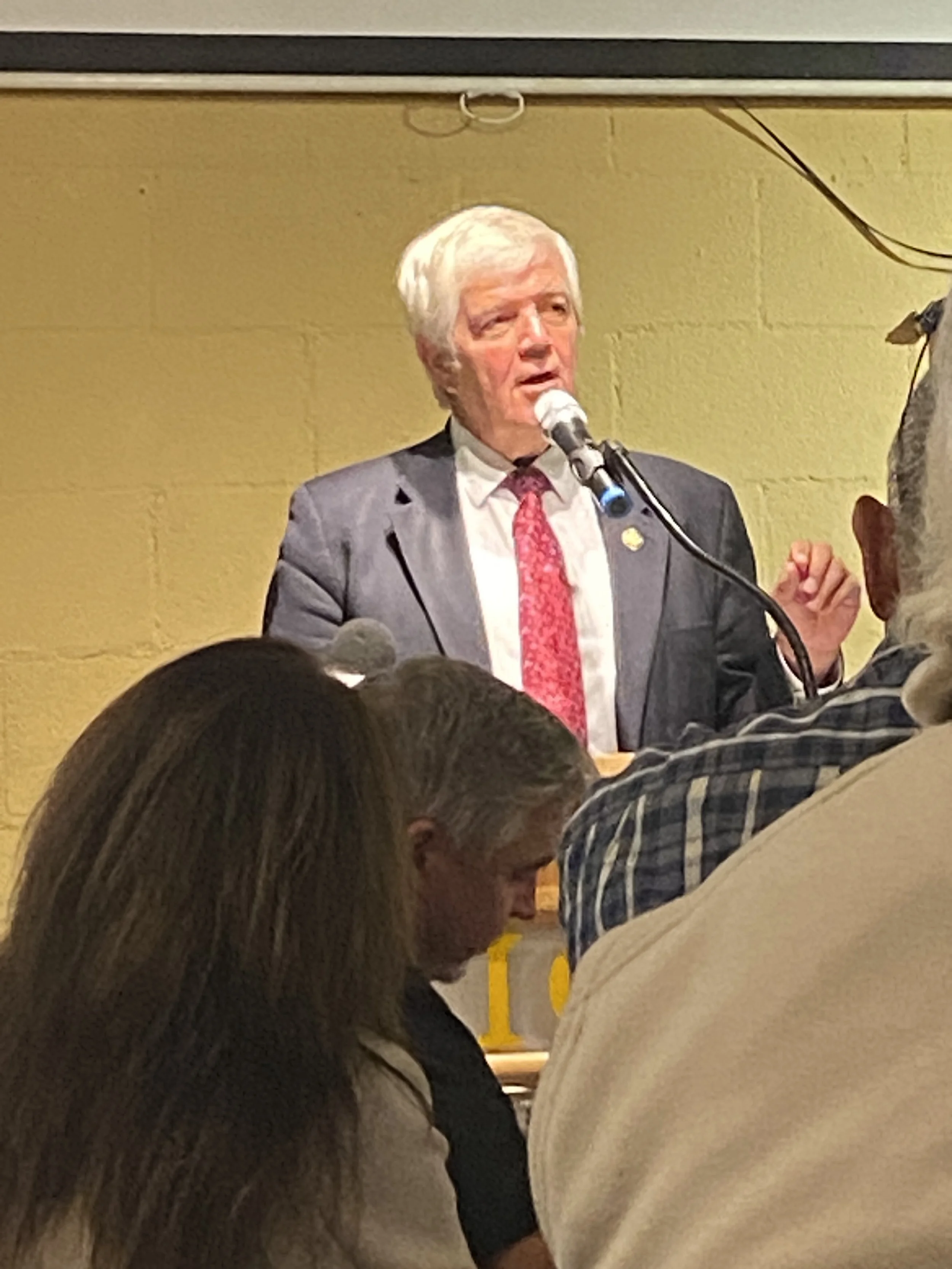
File Photo - Bentz speaking at a Rotary meeting in The Dalles several months ago.
By Tom Peterson
The Dalles, Ore, March 9, 2026 — — U.S. Rep. Cliff Bentz said Oregon farmers are facing an “historically and truly disastrous year” as he pressed federal trade officials to address foreign competition, tariffs and unstable markets affecting agriculture.
Bentz raised the concerns during a Republican member briefing Wednesday, March 4, with U.S. Trade Representative Jamieson Greer at the U.S. Capitol to discuss White House trade policy.
Prices Weak, Markets Unstable
According to Bentz’s communications director, Alexia Spentzas, the congressman told Greer that farmers across Eastern Oregon are struggling as crop prices remain weak and markets unstable.
The pressure is especially clear in the Mid-Columbia region. Wheat and cherries are two of the most important crops in Wasco County, while neighboring Gilliam, Sherman and Morrow counties are heavily invested in wheat production. Together, the four counties produce close to half of Oregon’s roughly 50 million bushels of wheat each year.
Soft white wheat prices have stagnated near $6 per bushel since last summer, only recently rising to about $6.25. Farmers say that price is close to a 10-year low and barely covers the cost of growing the crop. Many growers across Eastern Oregon said the past year was a break-even season at best, with some reporting they pushed through the harvest with little or no profit.
Soft white wheat remains soft
Soft white wheat prices have stayed low partly because of several pressures on the global market. Large harvests in major exporting countries such as Russia, Ukraine, Canada and Australia have increased global supply, pushing prices down. At the same time, weaker export demand and then the advent of trade disruptions can reduce the number of overseas buyers. Tariffs and trade disputes also make U.S. grain more expensive in foreign markets. In past trade conflicts, countries such as China have placed tariffs on U.S. agricultural products, including wheat and other crops, which can make American grain less competitive and reduce export demand.
Bailout
The U.S. Department of Agriculture has opened the enrollment period for the Farmer Bridge Assistance program, providing $11 billion in one-time bridge payments to row crop producers in response to temporary trade market disruptions and increased production costs. The FBA enrollment period opened Feb. 23 and closes April 17, 2026.
Most Beautiful Fruit Left Hangin’
Cherry growers faced a different problem last year — too much fruit and not enough price. A large Northwest crop flooded the market, pushing prices so low that in some orchards it did not make financial sense to pick the fruit. Growers said some cherries were left on the trees because the price being offered would not cover the cost of harvesting them.
During the briefing, Bentz raised concerns affecting multiple agricultural sectors, including potatoes, onions, sugar, wheat, beans, grapes, cherries, alfalfa, nurseries and corn.
Onion Dump And Canadas’ Closed Door
According to Spentzas, Bentz cited what he described as the dumping of onions from Mexico into the U.S. market, large volumes of wine imported from France and sugar imports from Brazil. He also pointed to Canadian retail outlets that have reportedly declined to purchase U.S. onions.
Bentz also raised concerns about the impact tariffs and changing trade policies are having on agricultural markets and export opportunities for U.S. farmers.

US Trade Representative Jamieson Greer
Greer responded that his office would work to address some of the concerns raised and noted that actions had already been taken to support sugar cane and sugar beet producers.
According to Spentzas, Greer also said there may be opportunities to expand exports of fresh potatoes to Pacific Rim markets and asked Bentz’s staff to provide additional details about losses affecting other agricultural sectors.
“I appreciate the time, effort, and experience that Ambassador Greer brings to the job of U.S. Trade Representative,” Bentz said in a statement. “It is apparent that he is working closely with the President to create the bargaining leverage needed to open up markets for our commodities and products.”
Bentz encouraged farmers and business owners in his district to contact his office about how tariffs and trade policies are affecting their operations.
“Consistent with his direction, I ask that my constituents contact my office about the impact of tariffs and trade policy on their businesses,” Bentz said. “We will relay that information to Ambassador Greer.”