
Column: Rigid OHA rules kill local behavioral health housing & treatment facilities
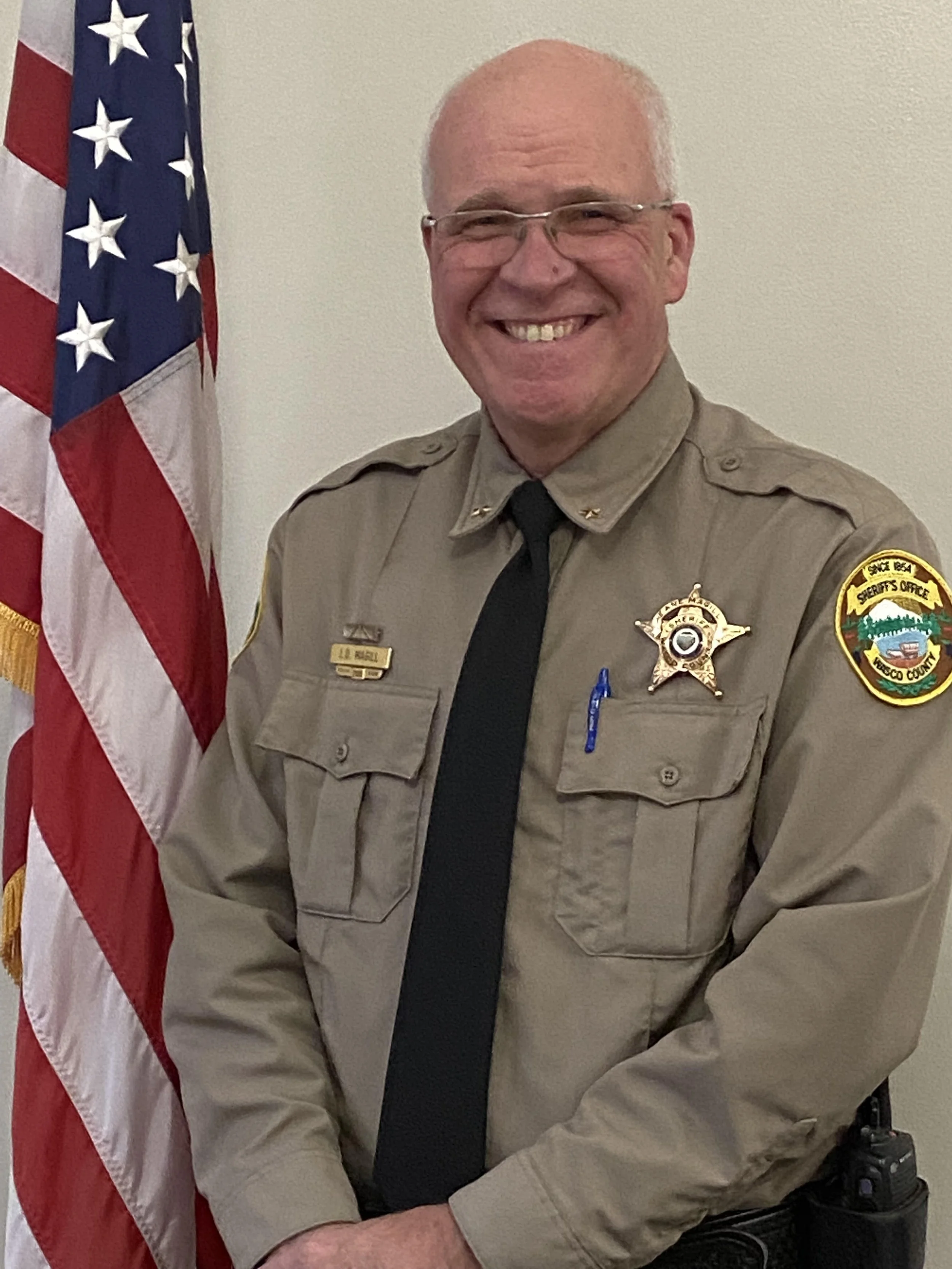
By Wasco County Sheriff Lane Magill
The Dalles, Ore., July 11, 2025 — In October 2019, a coalition of over 75 individuals and organizations from Wasco, Hood River, and Sherman counties united to address a significant gap in regional behavioral health services.
This initiative was a direct response to a March 2019 Sequential Intercept Mapping (SIM) study, which highlighted the urgent need for a local facility to serve individuals experiencing acute mental health crises, substance use disorders (SUD), and dementia-related conditions.
This grassroots movement led to the formation of the Columbia Gorge Resolution Center (CGRC) Advisory Council in 2020, a multidisciplinary group tasked with developing a comprehensive solution.
The CGRC Advisory Council determined that a behavioral health campus in The Dalles would benefit the region and a feasibility study outlined plans for several distinct facilities on a single campus, including:
A 16-bed Secure Residential Treatment Facility (SRTF)
A 16-bed Residential Treatment Facility (RTF)
A 16-bed Substance Use Disorder (SUD) residential treatment facility
A 6-8 chair Crisis Stabilization Center
A Consumer Drop-In Center
A Psychosocial Rehab Office
This campus model was designed to provide a continuum of care, addressing the complex needs of the community, particularly the high prevalence of individuals with a dual diagnosis of mental illness and substance use disorder.
The IMD Exclusion: A Major Legal and Financial Hurdle
The project encountered a significant obstacle in the form of the Oregon Health Authority’s (OHA) interpretation of the federal Medicaid Institutions for Mental Diseases (IMD) exclusion. This federal rule prohibits the use of federal Medicaid funds for the care of most patients in mental health facilities with more than 16 beds.
The CGRC’s plan to co-locate multiple, separately licensed 16-bed facilities on one campus was designed to comply with this rule. However, OHA adopted a restrictive interpretation, asserting that if multiple facilities under common ownership were located within 1,500 feet [1] of each other, their bed counts must be aggregated. This interpretation effectively classified the proposed CGRC campus as a single, large IMD, rendering it ineligible for crucial Medicaid funding and jeopardizing the financial sustainability of the entire project.
Legal Challenge and Findings
In response to OHA’s position, the Oregon Association of Community Mental Health Providers commissioned a legal analysis. The findings, prepared by Hatfield Knivila, LLC, argued that OHA’s interpretation is inconsistent with the plain language of the federal Medicaid Act and guidance from the Centers for Medicare & Medicaid Services (CMS).
The legal analysis made several key points:
1. Statutory Interpretation: The term “institution” in the federal statute refers to a single “facility” or “establishment,” not an “organization” or “corporation” that may operate multiple facilities. Therefore, the 16-bed limit should apply to each individual, separately licensed facility.
2. CMS Guidance: The CMS State Medicaid Manual provides criteria for determining if a component of a larger organization is a separate facility. A facility should be treated as independent if it is separately licensed. Since the CGRC proposal involved separately licensed facilities, each with 16 or fewer beds, they should not be subject to the IMD exclusion.
3. The “1,500-Foot Rule” [1] is an OHA Invention: The legal analysis found no basis in federal law or CMS guidance for OHA’s 1,500-foot [1] proximity rule. The analysis concluded that OHA’s policy was an arbitrary and overly restrictive barrier to the development of needed behavioral health services.
Project Evolution and a New Path Forward
The project faced a significant setback in August 2023 when its initial operating partner withdrew from the project. This led to the closure of an existing residential treatment facility in The Dalles, further deepening the region’s deficit of behavioral health resources.
In the wake of this challenge, the local community mental health program, Mid-Columbia Center for Living (MCCFL), and Wasco County administrative leadership stepped forward to lead the project. Both entities proposed a revised plan to adapt to the new realities:
Take over the project: MCCFL would assume responsibility for developing and operating the new facilities, and Wasco County would become a partner in the project to construct the above-mentioned campus.
Revise the scope: The initial 16-bed SRTF would be reduced to a more manageable 6-8 beds.
Re-purpose funding: The remaining funds from the downsized SRTF would be used to develop a 20-bed residential facility for individuals with SUD and dual diagnoses.
Seek future funding: MCCFL would request the original RTF funding from OHA for future construction.
This revised proposal reflects a pragmatic approach, focusing on the most urgent needs and a more sustainable operational model given the workforce and funding challenges.
OHA’s Policies Obstruct Solutions to Oregon’s Mental Health Crisis
The Oregon Health Authority (OHA) is the primary obstacle to developing crucial mental health infrastructure, such as the Columbia Gorge Resolution Center (CGRC) and similar projects across the state. The core of the problem lies in OHA’s refusal to adopt a legally sound interpretation of the federal Institutions for Mental Diseases (IMD) exclusion.
OHA continues to enforce its “1,500-foot rule,” an arbitrary standard that is inconsistent with federal law and guidance from the Centers for Medicare & Medicaid Services (CMS). On June 24, 2025, OHA stated it will not support the CGRC or other campus-based projects, confirming its commitment to this restrictive policy. Despite receiving a clear legal analysis demonstrating that the rule is a flawed interpretation, the agency has not changed its position. This lack of compromise prevents the development of innovative treatment models and perpetuates the severe shortage of behavioral health services in Oregon.
OHA’s focus on creating bureaucratic barriers rather than facilitating solutions is further exemplified by its rigid application of state statutes like ORS 443.422. This law was intended to prevent the over-saturation of residential facilities in neighborhoods by requiring agencies to consider the number of similar facilities within a 1,200-foot radius before issuing a new license.
However, OHA’s inflexible enforcement of such distance-based rules—both its self-created IMD policy and its application of ORS 443.422—stifles the very integrated, community-based care models that are proven effective. OHA has claimed this is a federal issue, but the power to grant exceptions or adjust the application of ORS 443.422 rests with the state.
By prioritizing restrictive interpretations over collaborative problem-solving, OHA actively obstructs communities from building the infrastructure needed to address the state’s pressing mental health and substance use disorder crises. The consequences are stark.
A 2024 OHA study, the “Behavioral Health Residential+ Facility Study,” revealed that the Columbia Gorge region … has zero residential beds across numerous critical categories, including residential treatment facilities (RTFs), secure residential treatment facilities (SRTFs), residential SUD facilities, adult foster homes (AFHs), and clinically managed withdrawal management facilities.
This lack of essential services is a direct result of prohibitive policies, leaving Oregon’s most vulnerable citizens without access to care.
A Final Word
The bureaucratic roadblocks and failed leadership from the Oregon Health Authority are not abstract policy debates; they have real, tragic consequences. As the Sheriff of Wasco County, I have seen firsthand the devastating damage OHA’s inaction perpetuates. Every day, my deputies and I encounter the human cost of a broken system. We see the residents of the Columbia Gorge who are suffering, and we see the families torn apart by addiction and untreated mental illness.
People are dying on our streets.
They are dying in our communities. This is not hyperbole; it is the grim reality of OHA’s continued failure to support common-sense, community-driven solutions like the Columbia Gorge Resolution Center.
While we work to build solutions from the ground up, OHA’s rigid and legally questionable policies actively stand in our way. The citizens of our counties and all Oregonians deserve better. They deserve an agency that works to save lives, not one that creates barriers that lead to more suffering and death.
Footnote [1]: The 1,500-foot distance is based on the Oregon Health Authority’s cited policy for aggregating beds under the IMD exclusion. The relevant state statute for determining residential facility density, ORS 443.422(2), specifies a 1,200-foot radius.

Support Local News!
Available for Everyone; Funded by Readers.