
Nichols & Cents: They could not knock 23 -year-old Maria Theresa Thaler from her thrones; They put her on a coin instead
When I had money, everyone called me brother.
--Polish Proverb
By Rodger Nichols
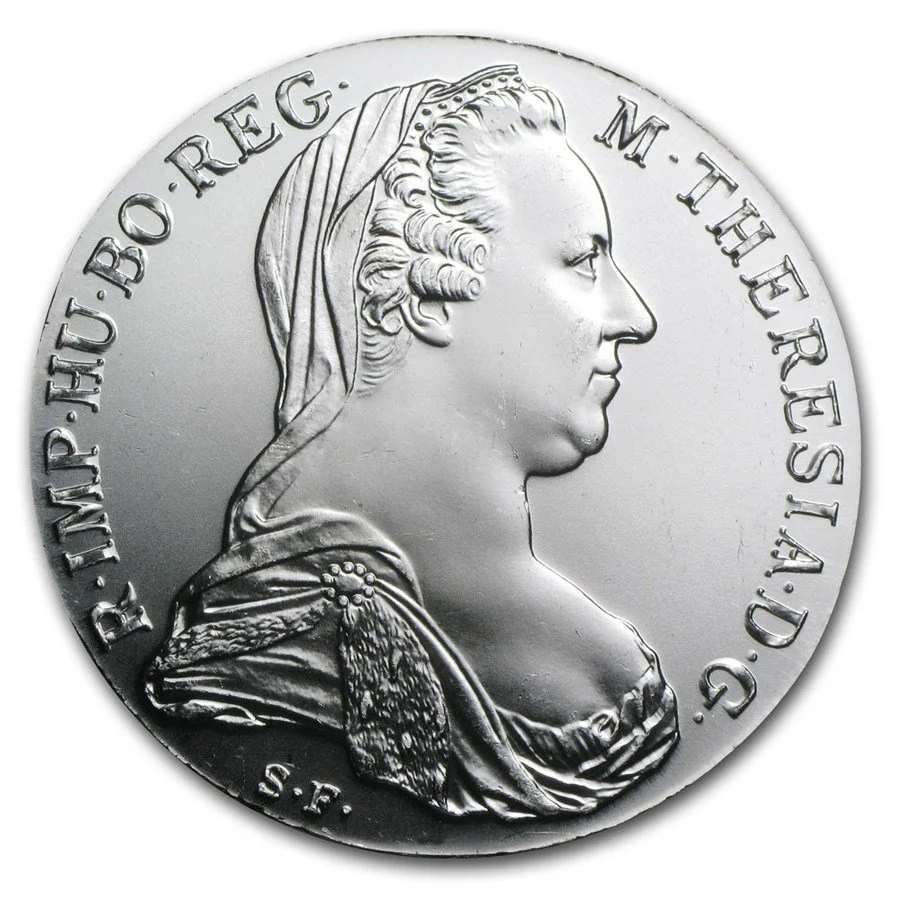
The Dalles, Ore., July 27, 2026 — She was a German empress, Queen of Hungary and Bohemia, Archduchess of Austria, ruler of present-day Belgium and portions of Italy. Her father, husband and son were Holy Roman Emperors and her daughter married the King of France. Her name was Maria Theresa Hapsburg, and her unchanged portrait has appeared on more coins than that of any other person in history.
She came to the Triple Throne of Austria, Hungary and Bohemia Czechoslovakia in 1740. Her father, Charles VI had spent much of his life securing agreement among the European Powers on the Pragmatic Sanction, an agreement recognizing his daughter as his legal heir because he had no sons.
But when her father died, these same rulers saw an inexperienced 23-year-old woman and concluded they had an easy target. The War of Austrian Succession pitted France, Spain, Prussia and Bavaria against Austria and England. When the smoke cleared, Maria Theresa was allowed to keep her thrones but had given up much territory, particularly the rich province of Silesia to Frederich the Great's Prussia.

In the shifting web of European alliances following that war, Austria was able to convince France that Prussia was growing just a little bit too quickly. To cement the alliance, she sent her daughter Marie Antoinette to marry Louis XVI, King of France.
England, always eager to be the balancing power, joined forces with Prussia. The result was known as the Seven Year War (1756-1763) in Europe. In the New World it was known as the French and Indian War, and it’s far-reaching result was the French abandonment of any large-scale claim in North America.
Back on the Continent, the smaller but better trained Prussian army fought the Austrian army to a draw. Frederick the Great kept Silesia and Maria Theresa, now secure on her thrones, turned her hand to the improvement of her Empire. History records that she was largely successful, improving administration, the quality of education and limited freedom for the serfs.
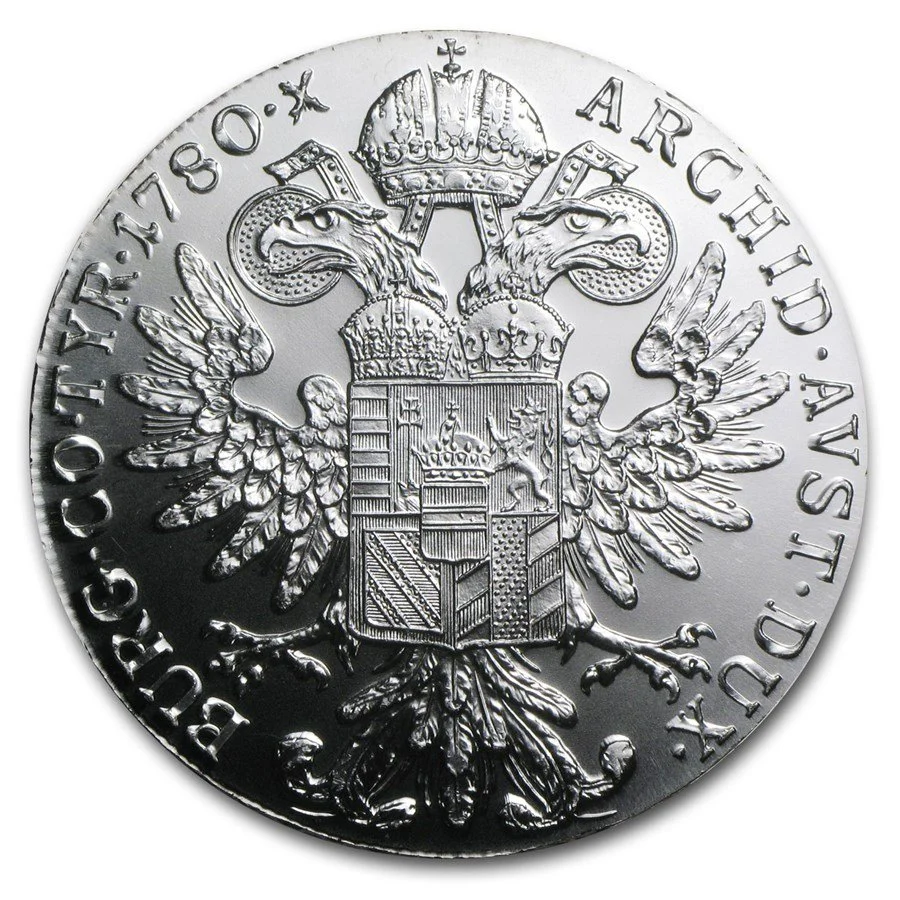
Following her death in 1780 after 40 years on the throne, the government continued to produce the popular silver One Thaler coins (about the size and shape of the later U.S. silver dollar). The thaler grew in popularity as a trade coin of known silver content among parts of Africa and the Near East that lacked a firm local currency. In the 200+ years since her death, over 800 million of the Maria Theresa Thalers have been produced. Mints in Vienna, Prague, Milan, Venice, London, Paris, Brussels, Leningrad, Rome, Bombay and Florence have turned them out. All of them bear the date 1780 and the unchanging portrait of the fascinating Maria Theresa of Austria.
Bonus Dollar

Rodger Nichols
“Thaler” ultimately became “dollar” in the U.S. Today’s coins include a modern copy, with value running around $34-$35. All the other ones today are pre-1900. Some of them are not very valuable, but they are always interesting.
About Rodger Nichols
Rodger Nichols has been evaluating coin and currency estates, both U.S. and foreign, for local lawyers since 2010. If you have gathered or inherited coins and currency, and want to find out their value, call or text Rodger at 541-980-1728.