Sen. Merkley warns of election threat at Parkdale town hall; CCCNews asks about fruit prices
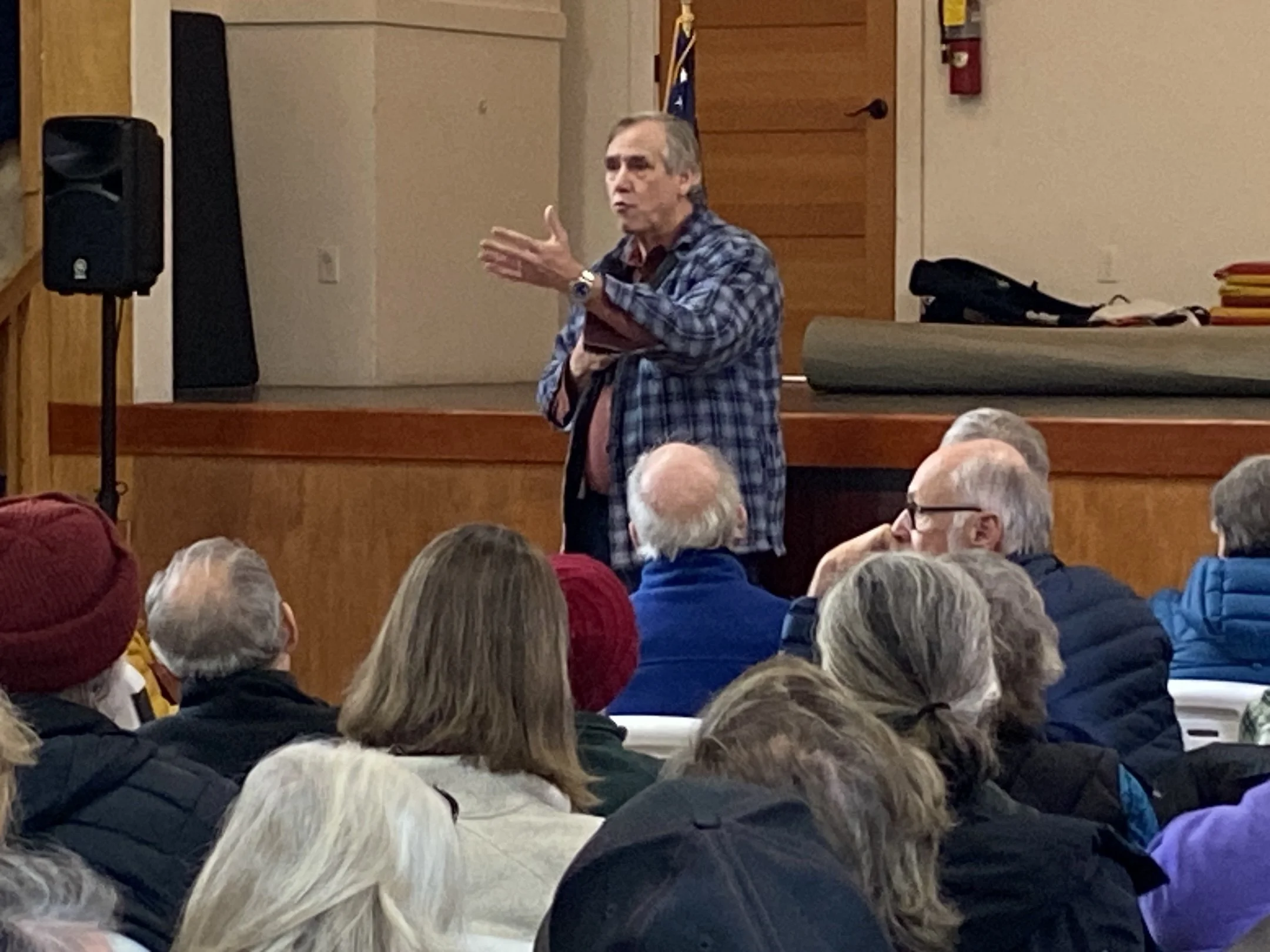
U.S. Sen. Jeff Merkley, D-Ore., speaks at a town hall in Parkdale on Friday, Feb. 6 as cameras from CNN recorded the conversation on a dozen topics including immigration enforcement, affordable housing, elections and price control in fruit markets.
By Tom Peterson with assistance from Aaron Girdham
Parkdale, Ore., Feb. 6, 2026 — U.S. Sen. Jeff Merkley, D-Ore., spoke Friday during a town hall in the Columbia Gorge, warning that democratic norms in the United States are under direct threat as concerns over immigration enforcement, surveillance, affordability, agricultural consolidation and the 2026 elections dominated the discussion.
About 125 people packed the Mt. Hood Community Center in Hood River, applauding as Merkley entered the room. The event opened with the Pledge of Allegiance, with much of the crowd loudly repeating the word “all” during the phrase “with liberty and justice for all.”
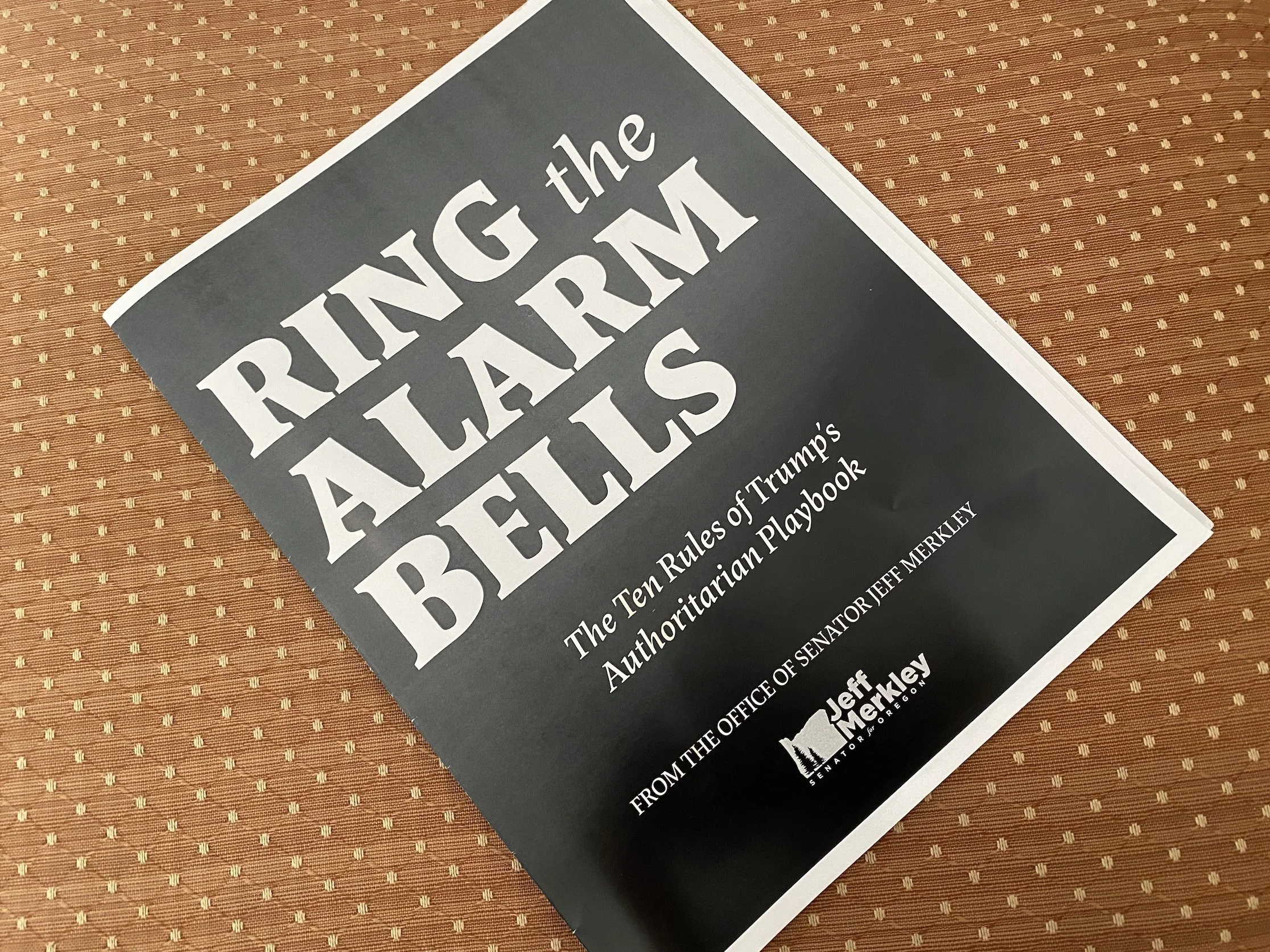
Click photo to read.
One longtime Parkdale resident said he attended the meeting “to hear what Mr. Merkley has to say that relates to our community.” Asked what he thought of the senator’s work in Oregon, the resident pointed to Merkley’s pamphlet, Ring the Alarm Bells.
“I strongly recommend reading the pamphlet Mr. Merkley wrote for this occasion,” he said. “It contains some very divisive language and comments, such as, ‘Being angry and frustrated alone is depressing and discouraging, but being angry and organized is energizing and effective,’ on page 15.”
He said he believes Merkley’s bills and actions have been harmful to the state and criticized what he described as aggressive language toward the presidential administration. “It’s OK to have a different opinion,” he said, “but that does not mean you must lash out against the other party.”
The resident said he attended because Merkley represents the entire state, not just one political party.
‘Authoritarian assault’ and defending democracy
Merkley described what he called an “authoritarian assault” by the Trump administration and said Americans are confronting conditions few believed possible.
“Who would have ever thought we would be in this situation,” Merkley said, referring to the need to defend democracy in the United States.
He held up a 10-page booklet titled Ring the Alarm Bells, summarizing his 22-hour speech on the U.S. Senate floor outlining what he described as the “10 rules of Trump’s authoritarian playbook.” Merkley said those strategies include voter suppression, intimidation tactics and the consolidation of power among a small number of corporations, including in the technology sector, creating oligarchies capable of setting prices.
Elections and voter intimidation
Merkley said he is deeply concerned about voter intimidation ahead of the 2026 midterm elections, particularly following public comments suggesting federal immigration enforcement could be deployed near polling places.
“So after the night before yesterday was when Steve Bannon said to send ICE in,” Merkley said. “I look to the federal laws. The short answer is: federal law doesn’t allow it.”
He said existing federal law already bars federal law enforcement from polling places, but he expressed concern that those protections could be bypassed through an emergency declaration.
“We’re in a place where we normally count on the federal government to follow the law,” Merkley said. “But the problem is this president may declare an emergency and ignore it.”
Merkley said strengthening state and local laws could provide an additional legal backstop.
“If you have state law, you might be able to get court injunctions based on state law,” he said. “That could provide a backup if the federal law is ignored.”
He added that intimidation strategies extend beyond polling places.
“It is the gerrymander, it is a national voter database, it is discouraging vote by mail, and now it is the strategy of sending intimidators,” Merkley said. “We never thought we’d be in a situation where we can’t trust the federal government to run a fair election.”
Immigration enforcement and civil liberties
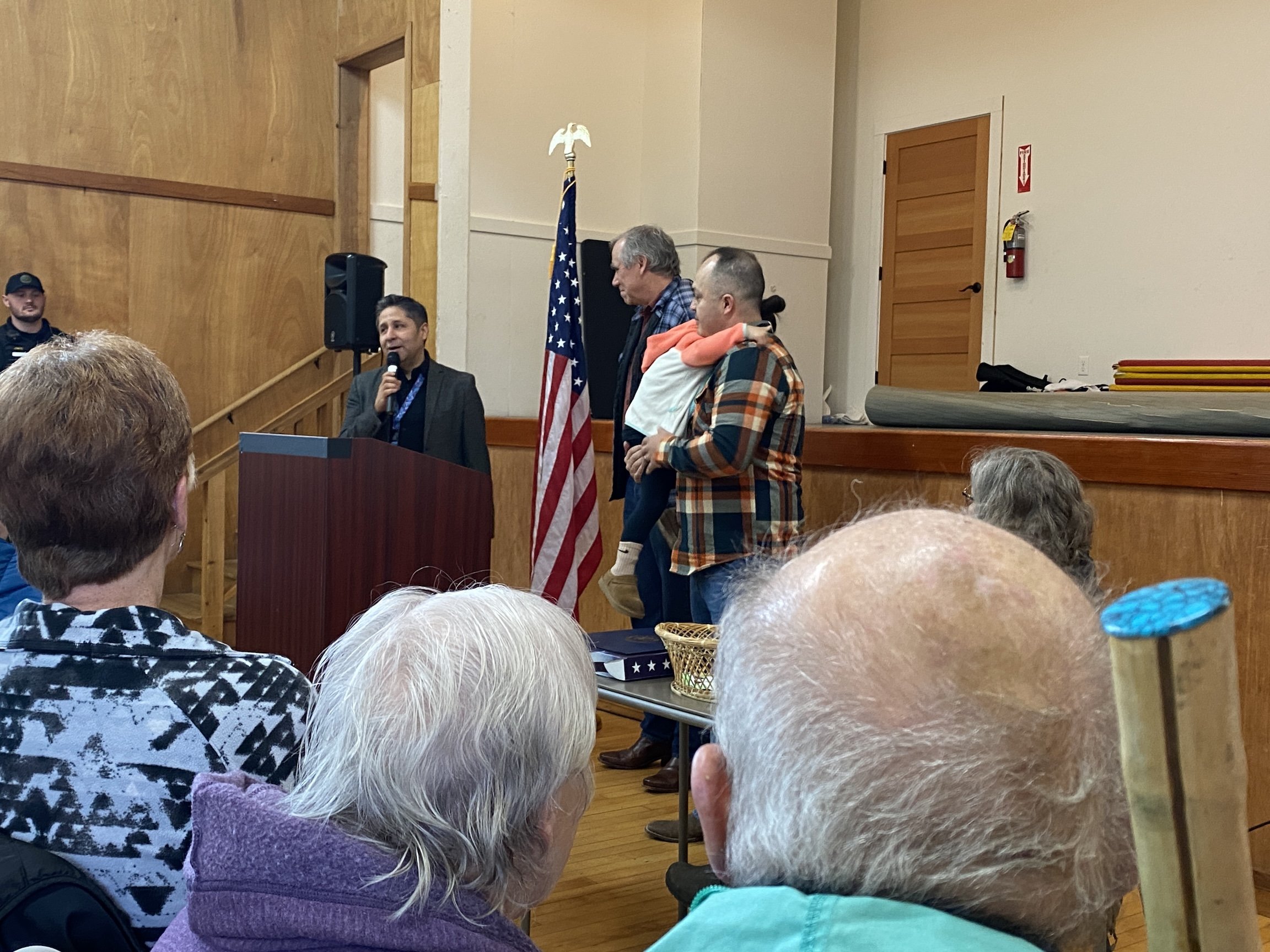
Arturo Leyva with the Hood River Latino Networks speaks the nonprofit received recognition for its hard work in the Gorge for empowering and supporting supports Latino families and immigrants in the Columbia River Gorge through resource navigation, legal aid, and cultural events.
Much of the discussion focused on immigration enforcement and civil liberties. Jennifer Hacket of Hood River said she attended the town hall to hear directly from Merkley, noting her work with the Hood River Latino Network.
“ICE is having a big impact on this community,” Hacket said. “I’m seeing people’s constitutional rights violated.”
She cited what she described as non-judicial search warrants and said she opposed people being taken from their homes and then denied due process in deportation proceedings.
Merkley publicly thanked Arturo Levya and the Hood River Latino Network, calling the organization “a beacon of hope” for immigrant families in what he described as one of the community’s most vulnerable populations. Members of the network wore shirts reading, “Hunger is a policy choice.”
ICE, sensitive locations and ‘secret police’
Responding to a question from a nurse with Healthcare Without Fear, Merkley said he is working on policies to keep Immigration and Customs Enforcement officers out of sensitive locations such as hospitals and polling places.
“The majority party does not want to fix these things,” Merkley said.
“We now have a secret police in America,” he said, citing ICE officers who he said are not wearing badges, are covering their faces, driving unmarked vehicles and detaining people.
“I’m going to do every damn thing I can do” to stop what he described as illegal ICE enforcement practices, Merkley told the crowd.
Land, water and surveillance concerns
One audience member raised concerns about the recent transfer of U.S. Forest Service land to the City of The Dalles, describing a roughly 150-acre area she said includes the headwaters of the Dog River.
She characterized the transfer as a “water grab” by Google, alleging it would divert water away from Hood River to support data centers in The Dalles and contribute to surveillance of Americans.
In response, Merkley said he opposes facial recognition technology and warned that the federal government currently lacks meaningful policies to address artificial intelligence.
“It’s all a huge threat to privacy and freedom in America,” Merkley said.
He said surveillance authorities expanded after the Sept. 11, 2001, terrorist attacks, including provisions of the Patriot Act, have helped normalize facial recognition technologies, including Flock cameras used by law enforcement agencies.
Merkley said AI policy must be debated openly on the floor of the U.S. Senate. When he asked whether the crowd was worried about AI, nearly every hand went up.
Housing, affordability and consolidation
Affordability emerged as the second most common concern Merkley said he hears across Oregon.
“The Federal Poverty Level no longer accurately reflects reality,” he said. “Housing and health care have gone way up, and the GDP is being concentrated at the very top while everyone else is getting squeezed.”
Doug Baker of the Big River Community Land Trust thanked Merkley for supporting legislation that will bring $2 million to affordable housing efforts in Hood River County. Baker said the funding marks the start of Big River’s effort to build 40 homes that will remain “permanently affordable.”
Merkley said the project is one of several recipients under a bill directing $225 million toward community projects statewide, including drinking water and wastewater system improvements.
Merkley also said he supports banning private equity firms and hedge funds from purchasing residential housing, arguing the practice drives up housing costs. He noted that this is one issue on which he and President Trump agree.
Agriculture and fruit growers in the Gorge
Asked about fruit growers in Wasco and Hood River counties, Merkley said consolidation among buyers and processors is a longstanding problem across agricultural markets.
“The consolidation of the middleman is a huge factor,” he said. “We’ve seen it with meat packers—four companies controlling the market—and that kind of informal price-setting is a real problem.”
Merkley said growers have also raised concerns about uncertainty tied to tariffs and trade retaliation.
“With orchards, you don’t just switch crops,” he said. “You plant trees and you’re committed long term.”
He said antitrust enforcement typically runs through the executive branch and the Farm Bill, which has been repeatedly delayed.
“That’s the place where I can try to bring pressure,” Merkley said. “But once folks are consolidated, they’re rarely broken back apart.”
Merkley said he plans to have his field team speak directly with local growers.
“Often co-ops are the response,” he said. “When they’re run by and for orchardists, that’s a beautiful thing—but you have to maintain control.”
Health care and the 2026 elections
Merkley sharply criticized what he called Trump’s “Big Ugly Betrayal,” pointing to cuts in health care tax credits and nutrition assistance while approving $75 billion in funding for ICE.
“Meanwhile, 20 million people are having their health care screwed up,” Merkley said, adding that about 70 percent of those affected live in states that voted for Trump.
He dismissed a recent House vote extending health care tax credits as meaningless, saying the Republican-led Senate has no intention of bringing the measure forward.
“It was cover your ass,” Merkley said.
Merkley said he supports a Medicare option allowing Americans to buy into the program, creating competition he said would lower overall health care costs.
He closed by urging civic engagement ahead of the midterm elections.
“If we’re going to save our republic, the next election matters a hell of a lot,” Merkley said. “On deciding how our country is run.”