
Shell find stops First Street excavation in The Dalles; significance being determined
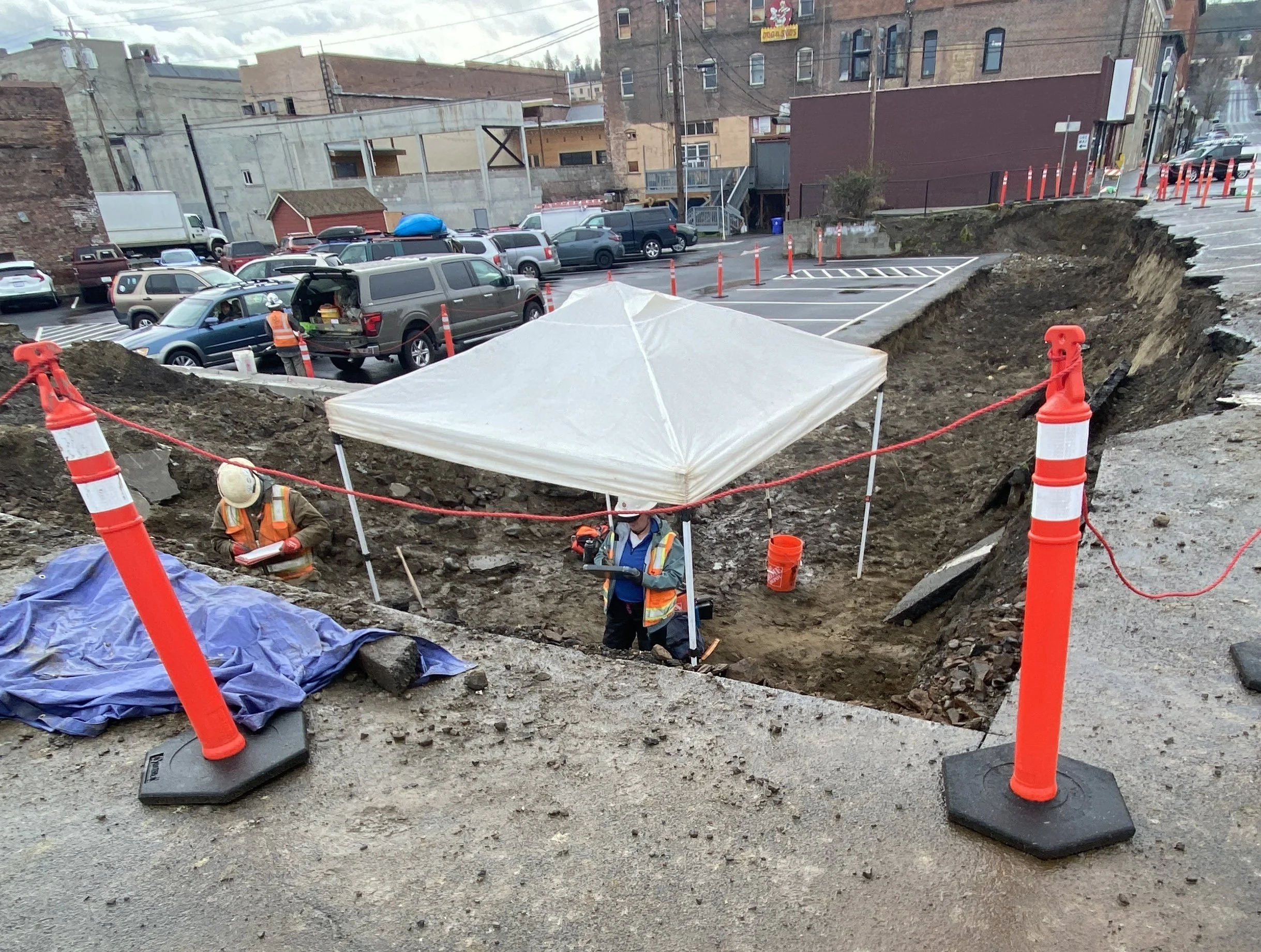
Archeologists with Archeological Investigations Northwest record data and examine layers of dirt after shells were located in the excavation at the corner of First and Court streets in The Dalles. The find occurred as First Street upgrades are underway between Union and Laughlin streets.
The Dalles, Ore., March 11, 2026 — Digging has paused along the southeast corner of the sunken parking lot at First and Court streets after crews working on the First Street improvement project uncovered shells during excavation.
The discovery triggered an archaeological review, temporarily halting digging in that portion of the site while specialists examine the material.
Joshua Chandler, community development director for the City of The Dalles, said the city followed standard procedure once the shells were discovered.
“Everything halted and we immediately sent out our typical notice to Oregon State Historic Preservation Office or SHPO, the tribes and other individuals involved in the permit,” Chandler said.
Archaeologists were on site Tuesday and Wednesday examining the area, and the excavation has since been covered while officials wait for confirmation on how to proceed, Chandler said.
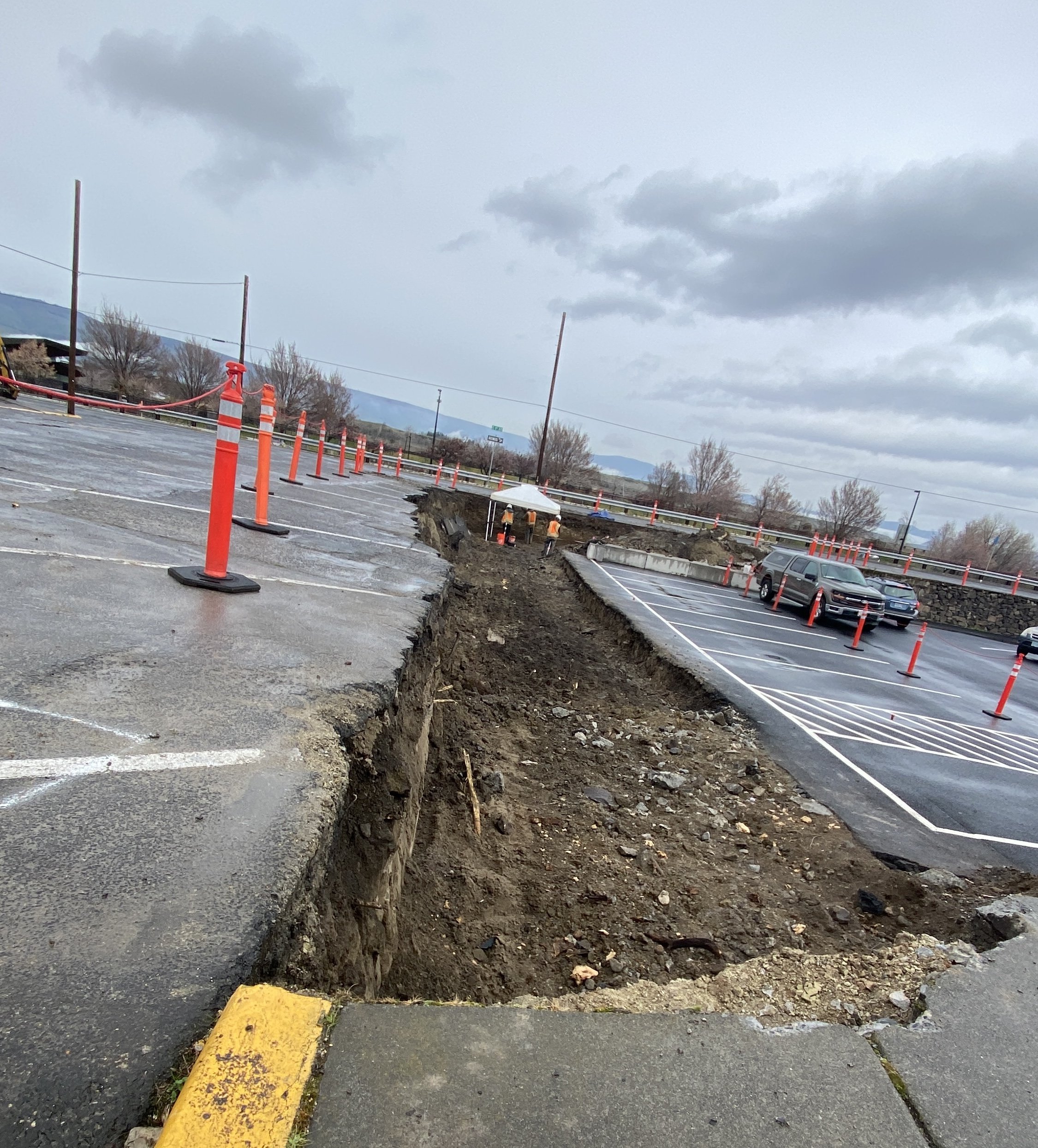
Where the sidewalk ends — Archeologists were examining materials uncovered at the corner of First and Court streets Wednesday as excacation of the sidewalk area was shut down until further study of shells found is completed.
Five archaeologists were present during the initial response, and the project team is now coordinating with Archaeological Investigations Northwest, which is monitoring the work.
If the material turns out to be part of a shell midden, state rules typically require work to pause while specialists evaluate the site.
Shell middens are important archaeological features because they can preserve detailed records of past human life, particularly along rivers and coastal areas such as the Columbia River Gorge.
A shell midden is essentially an ancient refuse deposit made largely of discarded shells from shellfish that people once ate, though they often contain additional evidence such as fish bones, tools and other materials tied to daily life.
Archaeologists value these sites because they can reveal places where people lived or returned repeatedly over long periods of time. In some locations, shell middens accumulate layer by layer over hundreds or even thousands of years as generations gather food in the same area.
It was not immediately clear Wednesday whether the shells uncovered downtown represent a midden or not.
Chandler said the team is also reviewing soil profiles beneath the roadway to better understand whether the shells were found in original soil layers or in historic fill.
Much of First Street was raised during the late 1800s as the downtown developed, meaning layers of imported fill may exist beneath the current roadway.
Because of that history, Chandler said archaeologists expect additional discoveries may occur as excavation continues.
“We’ve been working on segments of this street for two decades,” Chandler said. “We emphasized that we wouldn’t be surprised to see something. Honestly, I’m a little surprised we haven’t found more yet.”
While work has stopped at the discovery location, construction has continued on other portions of the project.
Crews shifted activity to Union Street while archaeologists monitored excavation work along the corridor.
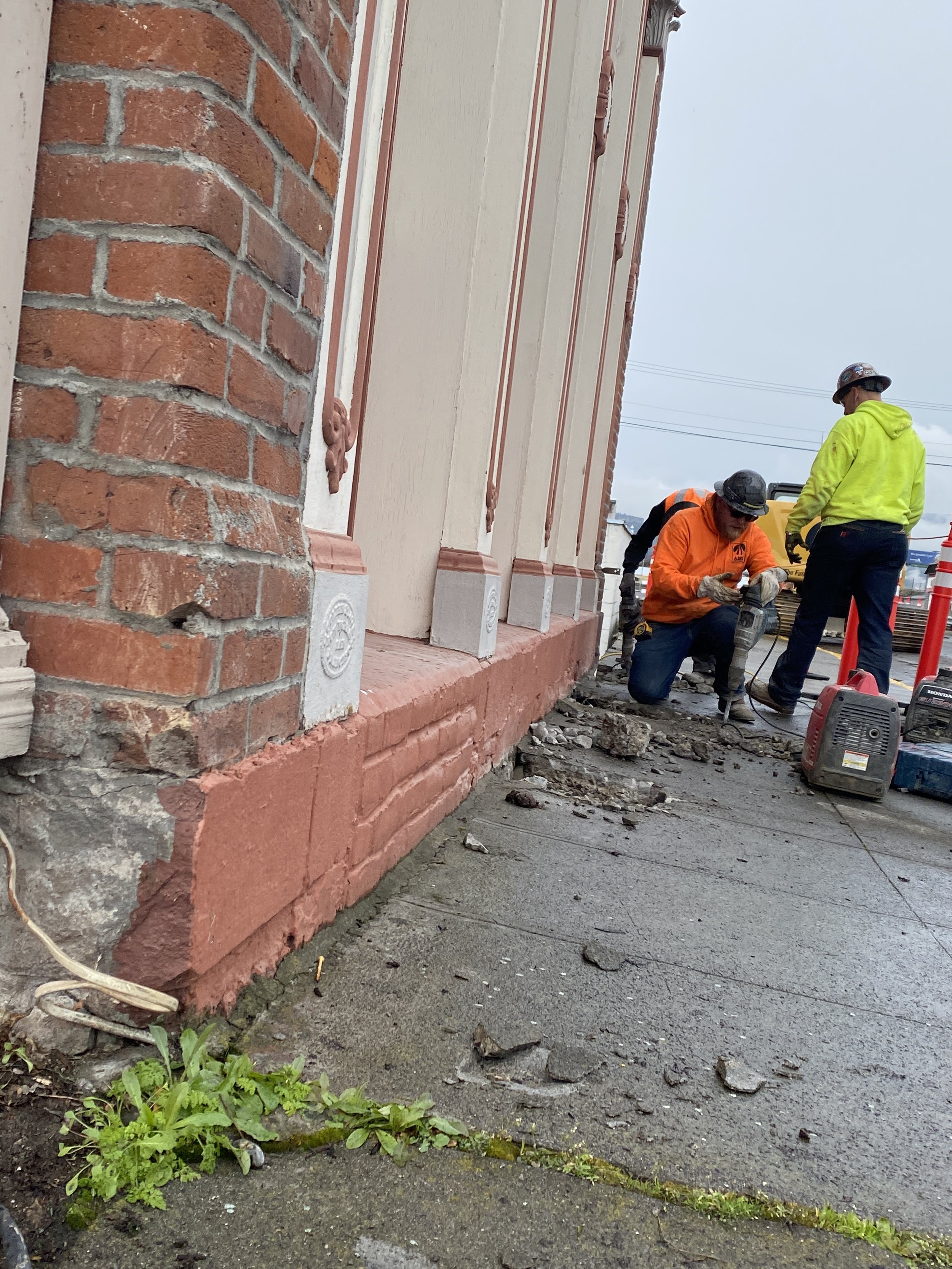
Ajax Northwest crews carried on their work along the sidewalk next to the Baldwin Saloon after a discovery of shells were found during excavation across the street.
Chandler said the city’s contractor, Ajax Northwest, has been cooperative throughout the process.
“They’ve been very understanding,” he said. “It’s difficult to shut down when you have crews on site, but they’ve been very responsive and easy to work with.”
For now, work in the immediate excavation area remains paused while archaeologists review the discovery and determine whether additional investigation is needed.