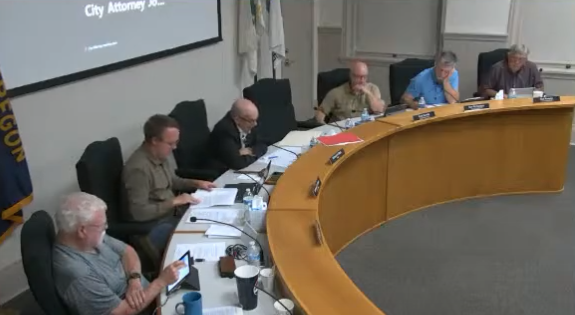
The Dalles City Council on Monday, July 14, discussed new rules around developments in floodplains as well as discussed the effects of a parking regs on a bed and breakfast.
The Dalles, Ore., July 18, 2025 — The Dalles City Council heard two significant proposals on July 14 that could reshape local environmental policy and small business operations, as it considered sweeping new federal floodplain development rules and a possible exception to the city’s strict parking rules for a longtime short-term rental.
At the heart of the meeting was the council’s consideration of a federally mandated update to its floodplain development code, required for the city to remain in the National Flood Insurance Program. The code amendments, which the council must adopt before FEMA’s July 2025 compliance deadline, would impose “no net loss” environmental standards, limit development in flood-prone areas, and push developers to hire qualified habitat assessors.
Community Development Director Joshua Chandler presented a proposal, drafted with outside legal counsel, to adopt FEMA’s model ordinance but modify its most controversial section. Instead of the city reviewing developers’ habitat assessments — which Chandler warned could expose the city to liability and costs — the city’s proposal shifts that burden to applicants while maintaining compliance.
“It’s a risk, but the best path forward,” Chandler said, acknowledging FEMA has not formally approved the city’s modified approach. He warned the new standards will increase costs for developers and likely impact housing affordability, but said failure to adopt the ordinance could jeopardize flood insurance access citywide.
Several councilors expressed concern about the economic impacts of the regulations and noted they would likely need to revisit the ordinance once FEMA finalizes new maps and standards in 2027. Chandler confirmed that updated floodplain maps — expected to significantly expand the designated flood areas downtown and along Mill and Chenowith creeks — won’t be finalized until 2026.
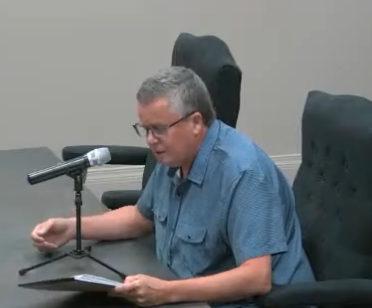
Kevin Ryan
Separately, the council took up the case of Kevin Ryan, owner of a bed-and-breakfast on West 12th Street, who requested relief from the city’s short-term rental parking requirements. Ryan argued he fell into a regulatory gap last year when he let his permit lapse on the advice of city staff, only to find himself out of compliance when stricter rules took effect in January, including a requirement for six off-street spaces that he said is physically impossible to meet.
“This effectively puts us out of business,” Ryan told the council, requesting to be treated as a pre-existing, non-conforming use. Chandler and councilors noted the city had gone through an 18-month public process to update the rules and warned that granting exceptions could undermine the ordinance and invite similar challenges.
Nonetheless, Mayor Mays and several councilors directed staff to draft a recommendation within two weeks that could allow Ryan to operate without setting a precedent that weakens the city’s regulations.
“I don’t want to penalize existing businesses that have done a good job following the rules all these years,” Councilor Renan said.
In other business, the council:
Approved a consent agenda that included purchasing three engineered metal buildings for public works, surplusing two police vehicles, and appointing Dan Richardson to the Columbia Cascade Housing Corporation Board.
Opened a public hearing on zoning and comprehensive plan amendments to align with FEMA’s floodplain mandate and heard public and council comments in preparation for a vote.
Received an update from the city manager about potential state funding changes, the stalled state transportation bill, and ongoing negotiations over the joint operating agreement for the regional airport.
The council is expected to vote on the floodplain ordinance later this month, and to receive a recommendation on Ryan’s short-term rental before its August recess.