
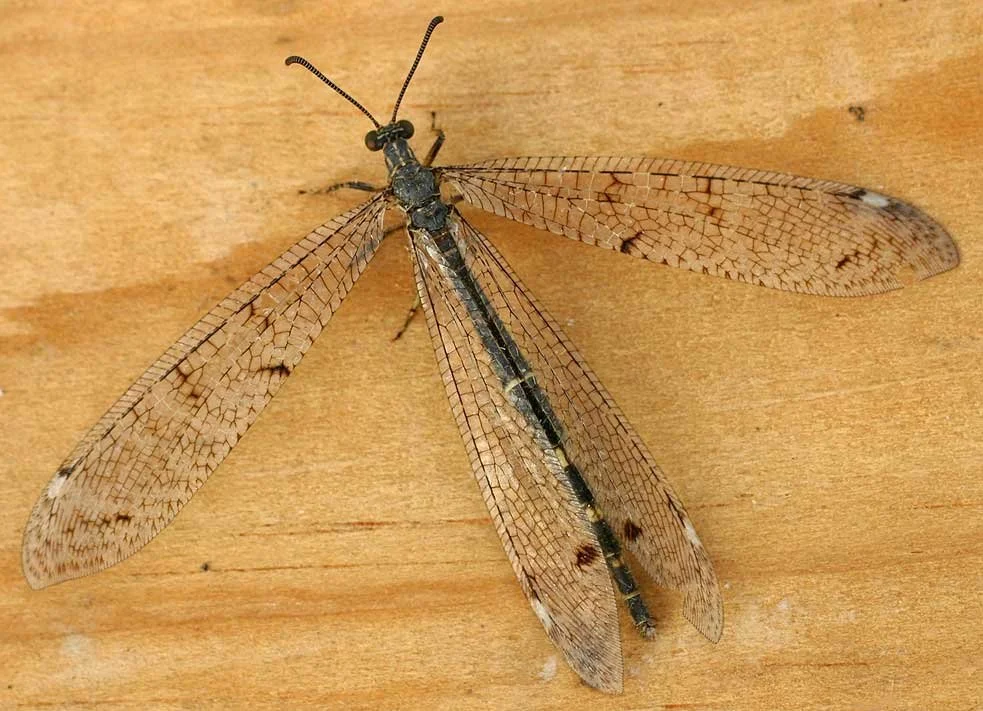
Antlion photo courtesy wikipedia. © Entomart
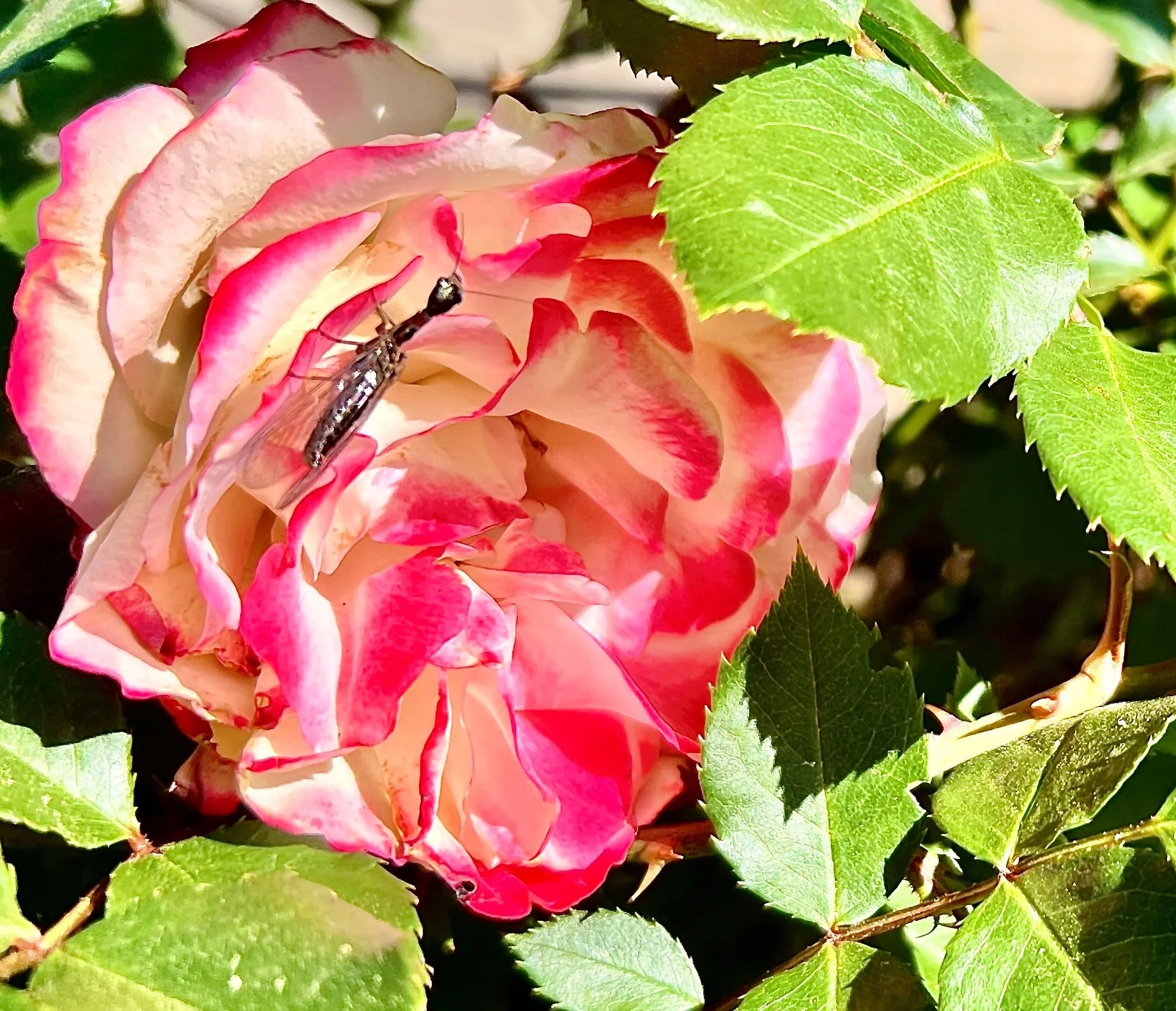
Correction - this is not an antlion as I first believed. Rather, It is a very similar-looking and also beneficial insect called the snakefly. The wings and body are similar, and they even eat similar food as adults. The adult snakefly has a longer neck than the antlion adult.
By Dana Greyson
The Dalles, Ore., July 14, 2026 — Once upon a time, I would’ve freaked when I saw this creepy-looking winged creature in my backyard. It looked like an elongated ant, with wings. I thought it was a flying ant or a termite and was sorting out how to kill it before my wood siding became its next meal.
Fortunately, I didn’t. They’re one of the good guys.
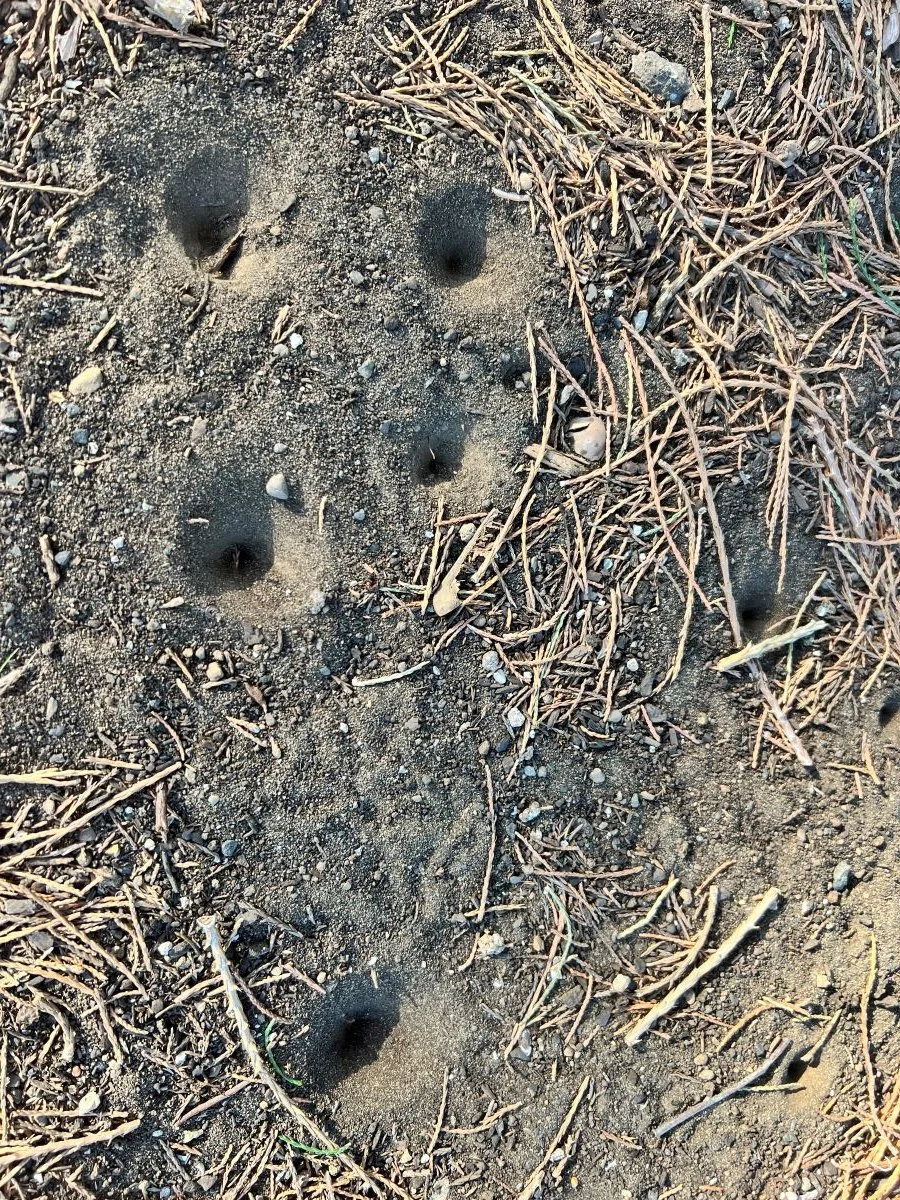
In a Master Gardener class about insects, I asked what the holes in the sandy soil below my redwood tree were from. They looked like deep-holed mini-volcanoes about the size of a quarter; sometimes bigger, sometimes smaller. The instructor beamed at my question, and she also solved the mystery of what I’d thought were winged ants. I would not have guessed the two were connected.
Antlion larvae make the “pits of doom and despair” to trap other insects, like ants, termites, beetles, and pill bugs, then eat them. One antlion larva may eat as many as twenty-two ants a day.
In the adult stage, antlions form wings, eat pollen, nectar, aphids and small flies.
When we had our big storm in May, which called for raking piles of downed debris from where the antlion pits below my redwood, I worried about my predator friends. To my relief, their pits quickly reappeared.
Given their voracious appetite for other creepy crawlers and fliers you don’t want in your garden, if you’re lucky, you might find some helpful antlions in your yard, too. If you’re curious to learn more, check out Oregon Extension Service’s post Antlion Pits of Doom and Despair or J. Morton Galetto’s Funnels of Death.

Support Local News!
Available for Everyone; Funded by Readers.